ABC: A System for Sequential Synthesis and Verification
 
Loading...
Searching...
No Matches
cvrm.c File Reference
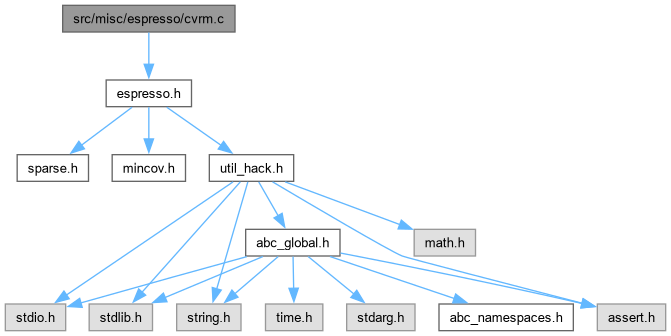
#include "espresso.h"
Include dependency graph for cvrm.c:

Go to the source code of this file.

Functions

pcover unravel_range (IN pcover B, IN int start, IN int end)
 
pcover unravel (IN pcover B, IN int start)
 
pcover lex_sort (pcover T)
 
pcover size_sort (pcover T)
 
pcover mini_sort (pcover F, int *compare)
 
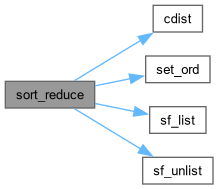
pcover sort_reduce (IN pcover T)
 
pcover random_order (pcover F)
 
int cubelist_partition (pcube *T, pcube **A, pcube **B, unsigned int comp_debug)
 
pcover cof_output (pcover T, int i)
 
pcover uncof_output (pcover T, int i)
 
void foreach_output_function (pPLA PLA, int *func, int *func1)
 
void so_espresso (pPLA PLA, int strategy)
 
void so_both_espresso (pPLA PLA, int strategy)
 
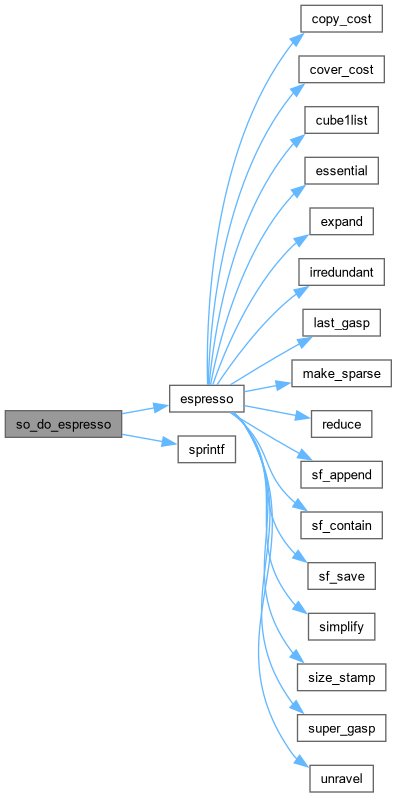
int so_do_espresso (pPLA PLA, int i)
 
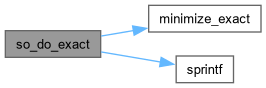
int so_do_exact (pPLA PLA, int i)
 
int so_save (pPLA PLA, int i)
 
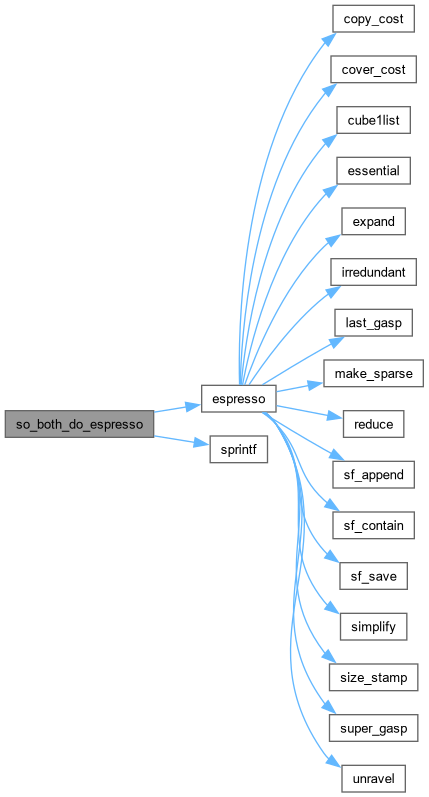
int so_both_do_espresso (pPLA PLA, int i)
 
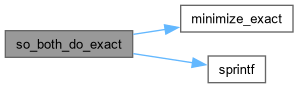
int so_both_do_exact (pPLA PLA, int i)
 
int so_both_save (pPLA PLA, int i)
 

Function Documentation

◆ cof_output()

pcover cof_output ( pcover T,
int i )

Definition at line 312 of file cvrm.c.

315{
316 pcover T1;
317 register pcube p, last, pdest, mask;
318
319 mask = cube.var_mask[cube.output];
320 T1 = new_cover(T->count);
321 foreach_set(T, last, p) {
322 if (is_in_set(p, i)) {
323 pdest = GETSET(T1, T1->count++);
324 INLINEset_or(pdest, p, mask);
325 RESET(pdest, PRIME);
326 }
327 }
328 return T1;
329}
#define pcover
Definition espresso.h:264
#define INLINEset_or(r, a, b)
Definition espresso.h:205
#define is_in_set(set, e)
Definition espresso.h:170
#define pcube
Definition espresso.h:261
#define GETSET(family, index)
Definition espresso.h:161
#define foreach_set(R, last, p)
Definition espresso.h:135
#define RESET(set, flag)
Definition espresso.h:123
#define PRIME
Definition espresso.h:127
#define new_cover(i)
Definition espresso.h:265
Cube * p
Definition exorList.c:222
Definition exor.h:123

◆ cubelist_partition()

int cubelist_partition ( pcube * T,
pcube ** A,
pcube ** B,
unsigned int comp_debug )

Definition at line 234 of file cvrm.c.

238{
239 register pcube *T1, p, seed, cof;
240 pcube *A1, *B1;
241 bool change;
242 int count, numcube;
243
244 numcube = CUBELISTSIZE(T);
245
246 /* Mark all cubes -- covered cubes belong to the partition */
247 for(T1 = T+2; (p = *T1++) != NULL; ) {
248 RESET(p, COVERED);
249 }
250
251 /*
252 * Extract a partition from the cubelist T; start with the first cube as a
253 * seed, and then pull in all cubes which share a variable with the seed;
254 * iterate until no new cubes are brought into the partition.
255 */
256 seed = set_save(T[2]);
257 cof = T[0];
258 SET(T[2], COVERED);
259 count = 1;
260
261 do {
262 change = FALSE;
263 for(T1 = T+2; (p = *T1++) != NULL; ) {
264 if (! TESTP(p, COVERED) && ccommon(p, seed, cof)) {
265 INLINEset_and(seed, seed, p);
266 SET(p, COVERED);
267 change = TRUE;
268 count++;
269 }
270
271 }
272 } while (change);
273
274 set_free(seed);
275
276 if (comp_debug) {
277 (void) printf("COMPONENT_REDUCTION: split into %d %d\n",
278 count, numcube - count);
279 }
280
281 if (count != numcube) {
282 /* Allocate and setup the cubelist's for the two partitions */
283 *A = A1 = ALLOC(pcube, numcube+3);
284 *B = B1 = ALLOC(pcube, numcube+3);
285 (*A)[0] = set_save(T[0]);
286 (*B)[0] = set_save(T[0]);
287 A1 = *A + 2;
288 B1 = *B + 2;
289
290 /* Loop over the cubes in T and distribute to A and B */
291 for(T1 = T+2; (p = *T1++) != NULL; ) {
292 if (TESTP(p, COVERED)) {
293 *A1++ = p;
294 } else {
295 *B1++ = p;
296 }
297 }
298
299 /* Stuff needed at the end of the cubelist's */
300 *A1++ = NULL;
301 (*A)[1] = (pcube) A1;
302 *B1++ = NULL;
303 (*B)[1] = (pcube) B1;
304 }
305
306 return numcube - count;
307}
#define TRUE
Definition abcBm.c:38
#define FALSE
Definition abcBm.c:37
#define ALLOC(type, num)
Definition avl.h:27
#define set_save(r)
Definition espresso.h:166
#define set_free(r)
Definition espresso.h:167
#define TESTP(set, flag)
Definition espresso.h:124
#define COVERED
Definition espresso.h:131
#define SET(set, flag)
Definition espresso.h:122
#define INLINEset_and(r, a, b)
Definition espresso.h:202
#define CUBELISTSIZE(T)
Definition espresso.h:329
bool ccommon()
Here is the call graph for this function:

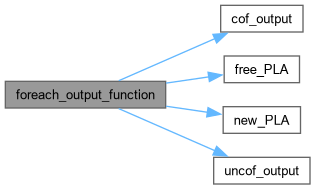
◆ foreach_output_function()

void foreach_output_function ( pPLA PLA,
int * func,
int * func1 )

Definition at line 363 of file cvrm.c.

367{
368 pPLA PLA1;
369 int i;
370
371 /* Loop for each output function */
372 for(i = 0; i < cube.part_size[cube.output]; i++) {
373
374 /* cofactor on the output part */
375 PLA1 = new_PLA();
376 PLA1->F = cof_output(PLA->F, i + cube.first_part[cube.output]);
377 PLA1->R = cof_output(PLA->R, i + cube.first_part[cube.output]);
378 PLA1->D = cof_output(PLA->D, i + cube.first_part[cube.output]);
379
380 /* Call a routine to do something with the cover */
381 if ((*func)(PLA1, i) == 0) {
382 free_PLA(PLA1);
383 return;
384 }
385
386 /* intersect with the particular output part again */
387 PLA1->F = uncof_output(PLA1->F, i + cube.first_part[cube.output]);
388 PLA1->R = uncof_output(PLA1->R, i + cube.first_part[cube.output]);
389 PLA1->D = uncof_output(PLA1->D, i + cube.first_part[cube.output]);
390
391 /* Call a routine to do something with the final result */
392 if ((*func1)(PLA1, i) == 0) {
393 free_PLA(PLA1);
394 return;
395 }
396
397 /* Cleanup for next go-around */
398 free_PLA(PLA1);
399
400
401 }
402}
pPLA new_PLA()
Definition cvrin.c:648
struct PLA_t * pPLA
void free_PLA()
pcover uncof_output()
pcover cof_output()
pcover D
Definition espresso.h:316
pcover R
Definition espresso.h:316
pcover F
Definition espresso.h:316
Here is the call graph for this function:

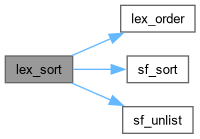
◆ lex_sort()

pcover lex_sort ( pcover T)

Definition at line 121 of file cvrm.c.

123{
124 pcover T1 = sf_unlist(sf_sort(T, lex_order), T->count, T->sf_size);
125 free_cover(T);
126 return T1;
127}
int lex_order()
pset_family sf_unlist()
#define free_cover(r)
Definition espresso.h:266
pset * sf_sort()
Here is the call graph for this function:

◆ mini_sort()

pcover mini_sort ( pcover F,
int * compare )

Definition at line 141 of file cvrm.c.

144{
145 register int *count, cnt, n = cube.size, i;
146 register pcube p, last;
147 pcover F_sorted;
148 pcube *F1;
149
150 /* Perform a column sum over the set family */
151 count = sf_count(F);
152
153 /* weight is "inner product of the cube and the column sums" */
154 foreach_set(F, last, p) {
155 cnt = 0;
156 for(i = 0; i < n; i++)
157 if (is_in_set(p, i))
158 cnt += count[i];
159 PUTSIZE(p, cnt);
160 }
161 FREE(count);
162
163 /* use qsort to sort the array */
164 qsort((char *) (F1 = sf_list(F)), (size_t)F->count, sizeof(pcube), compare);
165 F_sorted = sf_unlist(F1, F->count, F->sf_size);
166 free_cover(F);
167
168 return F_sorted;
169}
#define FREE(obj)
Definition avl.h:31
#define PUTSIZE(set, size)
Definition espresso.h:113
int * sf_count()
pset * sf_list()
Here is the call graph for this function:

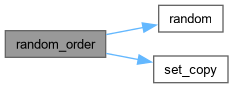
◆ random_order()

pcover random_order ( pcover F)

Definition at line 199 of file cvrm.c.

201{
202 pset temp;
203 register int i, k;
204#ifdef RANDOM
205 long random();
206#endif
207
208 temp = set_new(F->sf_size);
209 for(i = F->count - 1; i > 0; i--) {
210 /* Choose a random number between 0 and i */
211#ifdef RANDOM
212 k = random() % i;
213#else
214 /* this is not meant to be really used; just provides an easy
215 "out" if random() and srandom() aren't around
216 */
217 k = (i*23 + 997) % i;
218#endif
219 /* swap sets i and k */
220 (void) set_copy(temp, GETSET(F, k));
221 (void) set_copy(GETSET(F, k), GETSET(F, i));
222 (void) set_copy(GETSET(F, i), temp);
223 }
224 set_free(temp);
225 return F;
226}
#define set_new(size)
Definition espresso.h:164
unsigned int * pset
Definition espresso.h:73
pset set_copy()
long random()
Here is the call graph for this function:

◆ size_sort()

pcover size_sort ( pcover T)

Definition at line 131 of file cvrm.c.

133{
134 pcover T1 = sf_unlist(sf_sort(T, descend), T->count, T->sf_size);
135 free_cover(T);
136 return T1;
137}
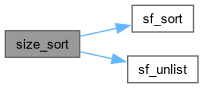
Here is the call graph for this function:

◆ so_both_do_espresso()

int so_both_do_espresso ( pPLA PLA,
int i )

Definition at line 485 of file cvrm.c.

488{
489 char word[32];
490
491 /* minimize the single-output function (on-set) */
492 (void) sprintf(word, "ESPRESSO-POS(%d)", i);
494 EXEC_S(PLA->F = espresso(PLA->F, PLA->D, PLA->R), word, PLA->F);
495
496 /* minimize the single-output function (off-set) */
497 (void) sprintf(word, "ESPRESSO-NEG(%d)", i);
499 EXEC_S(PLA->R = espresso(PLA->R, PLA->D, PLA->F), word, PLA->R);
500
501 return 1;
502}
ABC_NAMESPACE_IMPL_START pcover espresso(pcover F, pcover D1, pcover R)
Definition espresso.c:53
bool skip_make_sparse
Definition globals.c:28
#define EXEC_S(fct, name, S)
Definition espresso.h:420
unsigned __int64 word
DECLARATIONS ///.
Definition kitPerm.c:36
char * sprintf()
Here is the call graph for this function:
Here is the caller graph for this function:

◆ so_both_do_exact()

int so_both_do_exact ( pPLA PLA,
int i )

Definition at line 505 of file cvrm.c.

508{
509 char word[32];
510
511 /* minimize the single-output function (on-set) */
512 (void) sprintf(word, "EXACT-POS(%d)", i);
514 EXEC_S(PLA->F = minimize_exact(PLA->F, PLA->D, PLA->R, 1), word, PLA->F);
515
516 /* minimize the single-output function (off-set) */
517 (void) sprintf(word, "EXACT-NEG(%d)", i);
519 EXEC_S(PLA->R = minimize_exact(PLA->R, PLA->D, PLA->F, 1), word, PLA->R);
520
521 return 1;
522}
pcover minimize_exact()
Here is the call graph for this function:
Here is the caller graph for this function:

◆ so_both_espresso()

void so_both_espresso ( pPLA PLA,
int strategy )

Definition at line 429 of file cvrm.c.

432{
433 phase = set_save(cube.fullset);
434 Fmin = new_cover(PLA->F->count);
435 if (strategy == 0) {
437 } else {
439 }
440 sf_free(PLA->F);
441 PLA->F = Fmin;
442 PLA->phase = phase;
443}
int so_both_do_espresso(pPLA PLA, int i)
Definition cvrm.c:485
int so_both_do_exact(pPLA PLA, int i)
Definition cvrm.c:505
int so_both_save(pPLA PLA, int i)
Definition cvrm.c:525
void sf_free()
void foreach_output_function()
pcube phase
Definition espresso.h:319
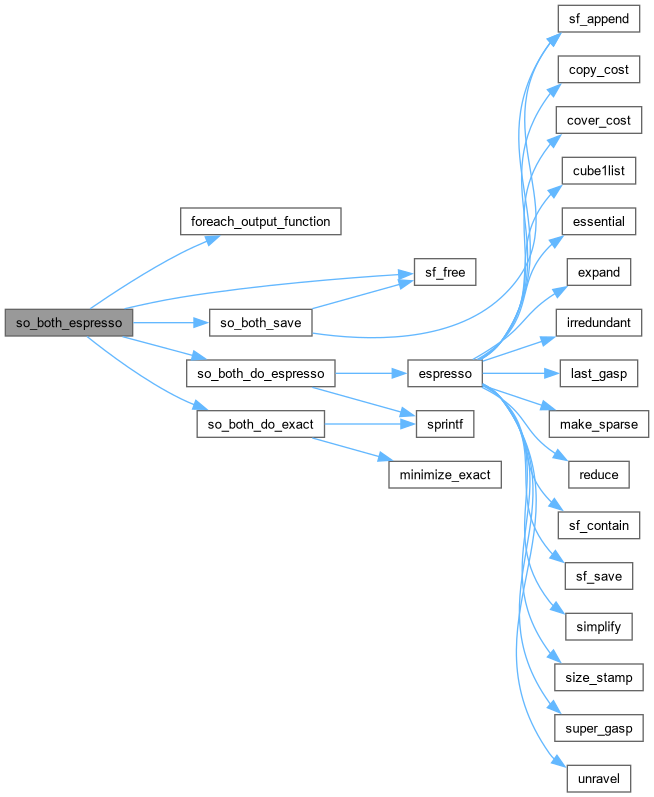
Here is the call graph for this function:

◆ so_both_save()

int so_both_save ( pPLA PLA,
int i )

Definition at line 525 of file cvrm.c.

528{
529 if (PLA->F->count > PLA->R->count) {
530 sf_free(PLA->F);
531 PLA->F = PLA->R;
532 PLA->R = NULL;
533 i += cube.first_part[cube.output];
534 set_remove(phase, i);
535 } else {
536 sf_free(PLA->R);
537 PLA->R = NULL;
538 }
539 Fmin = sf_append(Fmin, PLA->F);
540 PLA->F = NULL;
541 return 1;
542}
#define set_remove(set, e)
Definition espresso.h:171
pset_family sf_append()
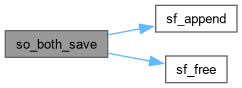
Here is the call graph for this function:
Here is the caller graph for this function:

◆ so_do_espresso()

int so_do_espresso ( pPLA PLA,
int i )

Definition at line 446 of file cvrm.c.

449{
450 char word[32];
451
452 /* minimize the single-output function (on-set) */
454 (void) sprintf(word, "ESPRESSO-POS(%d)", i);
455 EXEC_S(PLA->F = espresso(PLA->F, PLA->D, PLA->R), word, PLA->F);
456 return 1;
457}
Here is the call graph for this function:
Here is the caller graph for this function:

◆ so_do_exact()

int so_do_exact ( pPLA PLA,
int i )

Definition at line 460 of file cvrm.c.

463{
464 char word[32];
465
466 /* minimize the single-output function (on-set) */
468 (void) sprintf(word, "EXACT-POS(%d)", i);
469 EXEC_S(PLA->F = minimize_exact(PLA->F, PLA->D, PLA->R, 1), word, PLA->F);
470 return 1;
471}
Here is the call graph for this function:
Here is the caller graph for this function:

◆ so_espresso()

void so_espresso ( pPLA PLA,
int strategy )

Definition at line 410 of file cvrm.c.

413{
414 Fmin = new_cover(PLA->F->count);
415 if (strategy == 0) {
417 } else {
419 }
420 sf_free(PLA->F);
421 PLA->F = Fmin;
422}
int so_save(pPLA PLA, int i)
Definition cvrm.c:475
int so_do_espresso(pPLA PLA, int i)
Definition cvrm.c:446
int so_do_exact(pPLA PLA, int i)
Definition cvrm.c:460
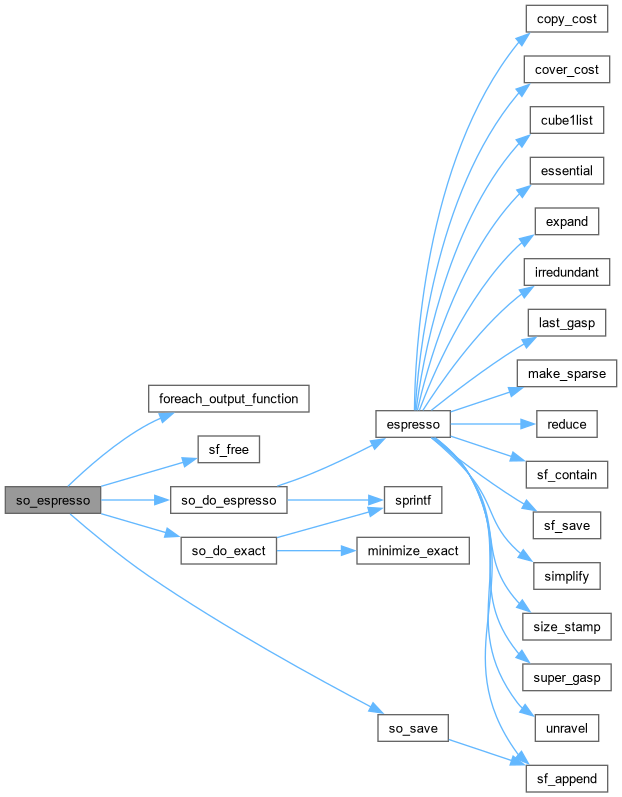
Here is the call graph for this function:

◆ so_save()

int so_save ( pPLA PLA,
int i )

Definition at line 475 of file cvrm.c.

478{
479 Fmin = sf_append(Fmin, PLA->F); /* disposes of PLA->F */
480 PLA->F = NULL;
481 return 1;
482}
Here is the call graph for this function:
Here is the caller graph for this function:

◆ sort_reduce()

pcover sort_reduce ( IN pcover T)

Definition at line 173 of file cvrm.c.

175{
176 register pcube p, last, largest = NULL;
177 register int bestsize = -1, size, n = cube.num_vars;
178 pcover T_sorted;
179 pcube *T1;
180
181 if (T->count == 0)
182 return T;
183
184 /* find largest cube */
185 foreach_set(T, last, p)
186 if ((size = set_ord(p)) > bestsize)
187 largest = p, bestsize = size;
188
189 foreach_set(T, last, p)
190 PUTSIZE(p, ((n - cdist(largest,p)) << 7) + MIN(set_ord(p),127));
191
192 qsort((char *) (T1 = sf_list(T)), (size_t)T->count, sizeof(pcube), (int (*)()) descend);
193 T_sorted = sf_unlist(T1, T->count, T->sf_size);
194 free_cover(T);
195
196 return T_sorted;
197}
int set_ord()
int cdist()
unsigned long long size
Definition giaNewBdd.h:39
#define MIN(a, b)
Definition util_old.h:256
Here is the call graph for this function:

◆ uncof_output()

pcover uncof_output ( pcover T,
int i )

Definition at line 335 of file cvrm.c.

338{
339 register pcube p, last, mask;
340
341 if (T == NULL) {
342 return T;
343 }
344
345 mask = cube.var_mask[cube.output];
346 foreach_set(T, last, p) {
347 INLINEset_diff(p, p, mask);
348 set_insert(p, i);
349 }
350 return T;
351}
#define INLINEset_diff(r, a, b)
Definition espresso.h:208
#define set_insert(set, e)
Definition espresso.h:172

◆ unravel()

pcover unravel ( IN pcover B,
IN int start )

Definition at line 113 of file cvrm.c.

116{
117 return unravel_range(B, start, cube.num_vars-1);
118}
pcover unravel_range()
Here is the call graph for this function:

◆ unravel_range()

pcover unravel_range ( IN pcover B,
IN int start,
IN int end )

Definition at line 77 of file cvrm.c.

80{
81 pcover B1;
82 int var, total_size, expansion, size;
83 register pcube p, last, startbase = cube.temp[1];
84
85 /* Create the starting base for those variables not being unravelled */
86 (void) set_copy(startbase, cube.emptyset);
87 for(var = 0; var < start; var++)
88 (void) set_or(startbase, startbase, cube.var_mask[var]);
89 for(var = end+1; var < cube.num_vars; var++)
90 (void) set_or(startbase, startbase, cube.var_mask[var]);
91
92 /* Determine how many cubes it will blow up into */
93 total_size = 0;
94 foreach_set(B, last, p) {
95 expansion = 1;
96 for(var = start; var <= end; var++)
97 if ((size = set_dist(p, cube.var_mask[var])) >= 2)
98 if ((expansion *= size) > 1000000)
99 fatal("unreasonable expansion in unravel");
100 total_size += expansion;
101 }
102
103 /* We can now allocate a cover of exactly the correct size */
104 B1 = new_cover(total_size);
105 foreach_set(B, last, p) {
106 cb_unravel(p, start, end, startbase, B1);
107 }
108 free_cover(B);
109 return B1;
110}
void fatal()
pset set_or()
int set_dist()
unsigned short var
Definition giaNewBdd.h:35
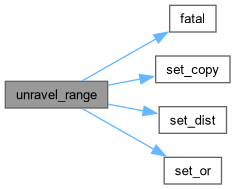
Here is the call graph for this function: