ABC: A System for Sequential Synthesis and Verification
 
Loading...
Searching...
No Matches
epd.c File Reference
#include <stdio.h>
#include <stdlib.h>
#include <string.h>
#include <math.h>
#include "misc/util/util_hack.h"
#include "epd.h"
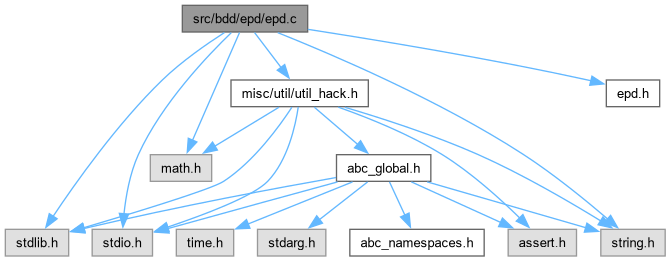
Include dependency graph for epd.c:

Go to the source code of this file.

Functions

ABC_NAMESPACE_IMPL_START EpDoubleEpdAlloc (void)
 
int EpdCmp (const char *key1, const char *key2)
 
void EpdFree (EpDouble *epd)
 
void EpdGetString (EpDouble *epd, char *str)
 
void EpdConvert (double value, EpDouble *epd)
 
void EpdMultiply (EpDouble *epd1, double value)
 
void EpdMultiply2 (EpDouble *epd1, EpDouble *epd2)
 
void EpdMultiply2Decimal (EpDouble *epd1, EpDouble *epd2)
 
void EpdMultiply3 (EpDouble *epd1, EpDouble *epd2, EpDouble *epd3)
 
void EpdMultiply3Decimal (EpDouble *epd1, EpDouble *epd2, EpDouble *epd3)
 
void EpdDivide (EpDouble *epd1, double value)
 
void EpdDivide2 (EpDouble *epd1, EpDouble *epd2)
 
void EpdDivide3 (EpDouble *epd1, EpDouble *epd2, EpDouble *epd3)
 
void EpdAdd (EpDouble *epd1, double value)
 
void EpdAdd2 (EpDouble *epd1, EpDouble *epd2)
 
void EpdAdd3 (EpDouble *epd1, EpDouble *epd2, EpDouble *epd3)
 
void EpdSubtract (EpDouble *epd1, double value)
 
void EpdSubtract2 (EpDouble *epd1, EpDouble *epd2)
 
void EpdSubtract3 (EpDouble *epd1, EpDouble *epd2, EpDouble *epd3)
 
void EpdPow2 (int n, EpDouble *epd)
 
void EpdPow2Decimal (int n, EpDouble *epd)
 
void EpdNormalize (EpDouble *epd)
 
void EpdNormalizeDecimal (EpDouble *epd)
 
void EpdGetValueAndDecimalExponent (EpDouble *epd, double *value, int *exponent)
 
int EpdGetExponent (double value)
 
int EpdGetExponentDecimal (double value)
 
void EpdMakeInf (EpDouble *epd, int sign)
 
void EpdMakeZero (EpDouble *epd, int sign)
 
void EpdMakeNan (EpDouble *epd)
 
void EpdCopy (EpDouble *from, EpDouble *to)
 
int EpdIsInf (EpDouble *epd)
 
int EpdIsZero (EpDouble *epd)
 
int EpdIsNan (EpDouble *epd)
 
int EpdIsNanOrInf (EpDouble *epd)
 
int IsInfDouble (double value)
 
int IsNanDouble (double value)
 
int IsNanOrInfDouble (double value)
 

Function Documentation

◆ EpdAdd()

void EpdAdd ( EpDouble * epd1,
double value )

Function********************************************************************

Synopsis [Adds two arbitrary precision double values.]

Description [Adds two arbitrary precision double values.]

SideEffects []

SeeAlso []

Definition at line 536 of file epd.c.
537{
538 EpDouble epd2;
539 double tmp;
540 int exponent, diff;
541
542 if (EpdIsNan(epd1) || IsNanDouble(value)) {
543 EpdMakeNan(epd1);
544 return;
545 } else if (EpdIsInf(epd1) || IsInfDouble(value)) {
546 int sign;
547
548 EpdConvert(value, &epd2);
549 if (EpdIsInf(epd1) && IsInfDouble(value)) {
550 sign = epd1->type.bits.sign ^ epd2.type.bits.sign;
551 if (sign == 1)
552 EpdMakeNan(epd1);
553 } else if (EpdIsInf(&epd2)) {
554 EpdCopy(&epd2, epd1);
555 }
556 return;
557 }
558
560
561 EpdConvert(value, &epd2);
562 if (epd1->exponent > epd2.exponent) {
563 diff = epd1->exponent - epd2.exponent;
564 if (diff <= EPD_MAX_BIN)
565 tmp = epd1->type.value + epd2.type.value / pow((double)2.0, (double)diff);
566 else
567 tmp = epd1->type.value;
568 exponent = epd1->exponent;
569 } else if (epd1->exponent < epd2.exponent) {
570 diff = epd2.exponent - epd1->exponent;
571 if (diff <= EPD_MAX_BIN)
572 tmp = epd1->type.value / pow((double)2.0, (double)diff) + epd2.type.value;
573 else
574 tmp = epd2.type.value;
575 exponent = epd2.exponent;
576 } else {
577 tmp = epd1->type.value + epd2.type.value;
578 exponent = epd1->exponent;
579 }
580 epd1->type.value = tmp;
581 epd1->exponent = exponent;
582 EpdNormalize(epd1);
583}
ABC_NAMESPACE_IMPL_START typedef signed char value
int IsNanDouble(double value)
Definition epd.c:1305
int EpdIsNan(EpDouble *epd)
Definition epd.c:1240
int EpdIsInf(EpDouble *epd)
Definition epd.c:1201
void EpdMakeNan(EpDouble *epd)
Definition epd.c:1159
void EpdCopy(EpDouble *from, EpDouble *to)
Definition epd.c:1182
void EpdConvert(double value, EpDouble *epd)
Definition epd.c:185
void EpdNormalize(EpDouble *epd)
Definition epd.c:977
int IsInfDouble(double value)
Definition epd.c:1276
#define EPD_MAX_BIN
Definition epd.h:60
struct EpDoubleStruct EpDouble
Definition epd.h:143
bool sign(Lit p)
Definition SolverTypes.h:63
union EpTypeUnion type
Definition epd.h:136
int exponent
Definition epd.h:137
unsigned int sign
Definition epd.h:89
unsigned int exponent
Definition epd.h:88
double value
Definition epd.h:130
struct IeeeDoubleStruct bits
Definition epd.h:131
#define assert(ex)
Definition util_old.h:213
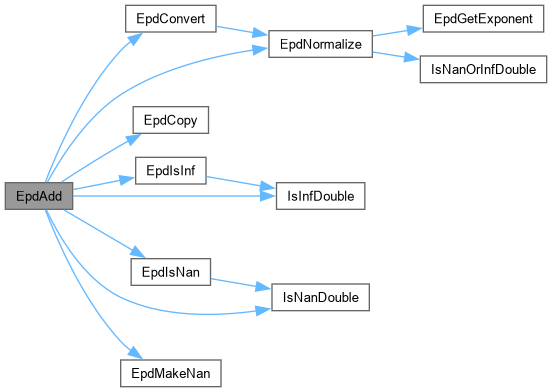
Here is the call graph for this function:

◆ EpdAdd2()

void EpdAdd2 ( EpDouble * epd1,
EpDouble * epd2 )

Function********************************************************************

Synopsis [Adds two arbitrary precision double values.]

Description [Adds two arbitrary precision double values.]

SideEffects []

SeeAlso []

Definition at line 598 of file epd.c.
599{
600 double value;
601 int exponent, diff;
602
603 if (EpdIsNan(epd1) || EpdIsNan(epd2)) {
604 EpdMakeNan(epd1);
605 return;
606 } else if (EpdIsInf(epd1) || EpdIsInf(epd2)) {
607 int sign;
608
609 if (EpdIsInf(epd1) && EpdIsInf(epd2)) {
610 sign = epd1->type.bits.sign ^ epd2->type.bits.sign;
611 if (sign == 1)
612 EpdMakeNan(epd1);
613 } else if (EpdIsInf(epd2)) {
614 EpdCopy(epd2, epd1);
615 }
616 return;
617 }
618
621
622 if (epd1->exponent > epd2->exponent) {
623 diff = epd1->exponent - epd2->exponent;
624 if (diff <= EPD_MAX_BIN) {
625 value = epd1->type.value +
626 epd2->type.value / pow((double)2.0, (double)diff);
627 } else
628 value = epd1->type.value;
629 exponent = epd1->exponent;
630 } else if (epd1->exponent < epd2->exponent) {
631 diff = epd2->exponent - epd1->exponent;
632 if (diff <= EPD_MAX_BIN) {
633 value = epd1->type.value / pow((double)2.0, (double)diff) +
634 epd2->type.value;
635 } else
636 value = epd2->type.value;
637 exponent = epd2->exponent;
638 } else {
639 value = epd1->type.value + epd2->type.value;
640 exponent = epd1->exponent;
641 }
642 epd1->type.value = value;
643 epd1->exponent = exponent;
644 EpdNormalize(epd1);
645}
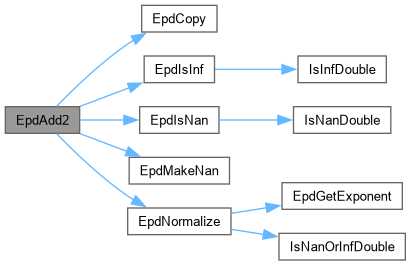
Here is the call graph for this function:

◆ EpdAdd3()

void EpdAdd3 ( EpDouble * epd1,
EpDouble * epd2,
EpDouble * epd3 )

Function********************************************************************

Synopsis [Adds two arbitrary precision double values.]

Description [Adds two arbitrary precision double values.]

SideEffects []

SeeAlso []

Definition at line 660 of file epd.c.
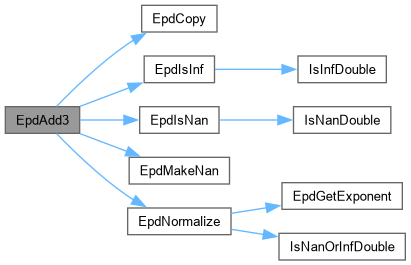
661{
662 double value;
663 int exponent, diff;
664
665 if (EpdIsNan(epd1) || EpdIsNan(epd2)) {
666 EpdMakeNan(epd3);
667 return;
668 } else if (EpdIsInf(epd1) || EpdIsInf(epd2)) {
669 int sign;
670
671 if (EpdIsInf(epd1) && EpdIsInf(epd2)) {
672 sign = epd1->type.bits.sign ^ epd2->type.bits.sign;
673 if (sign == 1)
674 EpdMakeNan(epd3);
675 else
676 EpdCopy(epd1, epd3);
677 } else if (EpdIsInf(epd1)) {
678 EpdCopy(epd1, epd3);
679 } else {
680 EpdCopy(epd2, epd3);
681 }
682 return;
683 }
684
687
688 if (epd1->exponent > epd2->exponent) {
689 diff = epd1->exponent - epd2->exponent;
690 if (diff <= EPD_MAX_BIN) {
691 value = epd1->type.value +
692 epd2->type.value / pow((double)2.0, (double)diff);
693 } else
694 value = epd1->type.value;
695 exponent = epd1->exponent;
696 } else if (epd1->exponent < epd2->exponent) {
697 diff = epd2->exponent - epd1->exponent;
698 if (diff <= EPD_MAX_BIN) {
699 value = epd1->type.value / pow((double)2.0, (double)diff) +
700 epd2->type.value;
701 } else
702 value = epd2->type.value;
703 exponent = epd2->exponent;
704 } else {
705 value = epd1->type.value + epd2->type.value;
706 exponent = epd1->exponent;
707 }
708 epd3->type.value = value;
709 epd3->exponent = exponent;
710 EpdNormalize(epd3);
711}
Here is the call graph for this function:

◆ EpdAlloc()

ABC_NAMESPACE_IMPL_START EpDouble * EpdAlloc ( void )

CFile***********************************************************************

FileName [epd.c]

PackageName [epd]

Synopsis [Arithmetic functions with extended double precision.]

Description []

SeeAlso []

Author [In-Ho Moon]

Copyright [Copyright (c) 1995-2004, Regents of the University of Colorado

All rights reserved.

Redistribution and use in source and binary forms, with or without modification, are permitted provided that the following conditions are met:

Redistributions of source code must retain the above copyright notice, this list of conditions and the following disclaimer.

Redistributions in binary form must reproduce the above copyright notice, this list of conditions and the following disclaimer in the documentation and/or other materials provided with the distribution.

Neither the name of the University of Colorado nor the names of its contributors may be used to endorse or promote products derived from this software without specific prior written permission.

THIS SOFTWARE IS PROVIDED BY THE COPYRIGHT HOLDERS AND CONTRIBUTORS "AS IS" AND ANY EXPRESS OR IMPLIED WARRANTIES, INCLUDING, BUT NOT LIMITED TO, THE IMPLIED WARRANTIES OF MERCHANTABILITY AND FITNESS FOR A PARTICULAR PURPOSE ARE DISCLAIMED. IN NO EVENT SHALL THE COPYRIGHT OWNER OR CONTRIBUTORS BE LIABLE FOR ANY DIRECT, INDIRECT, INCIDENTAL, SPECIAL, EXEMPLARY, OR CONSEQUENTIAL DAMAGES (INCLUDING, BUT NOT LIMITED TO, PROCUREMENT OF SUBSTITUTE GOODS OR SERVICES; LOSS OF USE, DATA, OR PROFITS; OR BUSINESS INTERRUPTION) HOWEVER CAUSED AND ON ANY THEORY OF LIABILITY, WHETHER IN CONTRACT, STRICT LIABILITY, OR TORT (INCLUDING NEGLIGENCE OR OTHERWISE) ARISING IN ANY WAY OUT OF THE USE OF THIS SOFTWARE, EVEN IF ADVISED OF THE POSSIBILITY OF SUCH DAMAGE.]

Revision [

Id
epd.c,v 1.10 2004/08/13 18:20:30 fabio Exp

] Function********************************************************************

Synopsis [Allocates an EpDouble struct.]

Description [Allocates an EpDouble struct.]

SideEffects []

SeeAlso []

Definition at line 72 of file epd.c.

73{
74 EpDouble *epd;
75
76 epd = ABC_ALLOC(EpDouble, 1);
77 return(epd);
78}
#define ABC_ALLOC(type, num)
Definition abc_global.h:264

◆ EpdCmp()

int EpdCmp ( const char * key1,
const char * key2 )

Function********************************************************************

Synopsis [Compares two EpDouble struct.]

Description [Compares two EpDouble struct.]

SideEffects []

SeeAlso []

Definition at line 93 of file epd.c.

94{
95 EpDouble *epd1 = (EpDouble *) key1;
96 EpDouble *epd2 = (EpDouble *) key2;
97 if (epd1->type.value != epd2->type.value ||
98 epd1->exponent != epd2->exponent) {
99 return(1);
100 }
101 return(0);
102}

◆ EpdConvert()

void EpdConvert ( double value,
EpDouble * epd )

Function********************************************************************

Synopsis [Converts double to EpDouble struct.]

Description [Converts double to EpDouble struct.]

SideEffects []

SeeAlso []

Definition at line 185 of file epd.c.
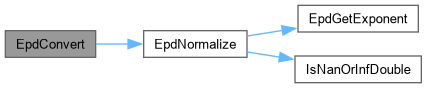
186{
187 epd->type.value = value;
188 epd->exponent = 0;
189 EpdNormalize(epd);
190}
Here is the call graph for this function:
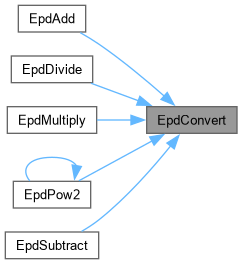
Here is the caller graph for this function:

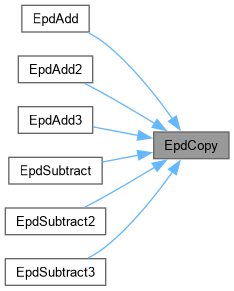
◆ EpdCopy()

void EpdCopy ( EpDouble * from,
EpDouble * to )

Function********************************************************************

Synopsis [Copies a EpDouble struct.]

Description [Copies a EpDouble struct.]

SideEffects []

SeeAlso []

Definition at line 1182 of file epd.c.

1183{
1184 to->type.value = from->type.value;
1185 to->exponent = from->exponent;
1186}
Here is the caller graph for this function:

◆ EpdDivide()

void EpdDivide ( EpDouble * epd1,
double value )

Function********************************************************************

Synopsis [Divides two arbitrary precision double values.]

Description [Divides two arbitrary precision double values.]

SideEffects []

SeeAlso []

Definition at line 386 of file epd.c.
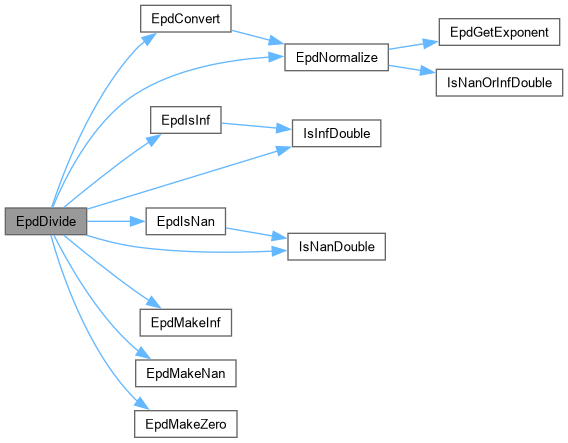
387{
388 EpDouble epd2;
389 double tmp;
390 int exponent;
391
392 if (EpdIsNan(epd1) || IsNanDouble(value)) {
393 EpdMakeNan(epd1);
394 return;
395 } else if (EpdIsInf(epd1) || IsInfDouble(value)) {
396 int sign;
397
398 EpdConvert(value, &epd2);
399 if (EpdIsInf(epd1) && IsInfDouble(value)) {
400 EpdMakeNan(epd1);
401 } else if (EpdIsInf(epd1)) {
402 sign = epd1->type.bits.sign ^ epd2.type.bits.sign;
403 EpdMakeInf(epd1, sign);
404 } else {
405 sign = epd1->type.bits.sign ^ epd2.type.bits.sign;
406 EpdMakeZero(epd1, sign);
407 }
408 return;
409 }
410
411 if (value == 0.0) {
412 EpdMakeNan(epd1);
413 return;
414 }
415
417
418 EpdConvert(value, &epd2);
419 tmp = epd1->type.value / epd2.type.value;
420 exponent = epd1->exponent - epd2.exponent;
421 epd1->type.value = tmp;
422 epd1->exponent = exponent;
423 EpdNormalize(epd1);
424}
void EpdMakeZero(EpDouble *epd, int sign)
Definition epd.c:1137
void EpdMakeInf(EpDouble *epd, int sign)
Definition epd.c:1115
Here is the call graph for this function:

◆ EpdDivide2()

void EpdDivide2 ( EpDouble * epd1,
EpDouble * epd2 )

Function********************************************************************

Synopsis [Divides two arbitrary precision double values.]

Description [Divides two arbitrary precision double values.]

SideEffects []

SeeAlso []

Definition at line 439 of file epd.c.
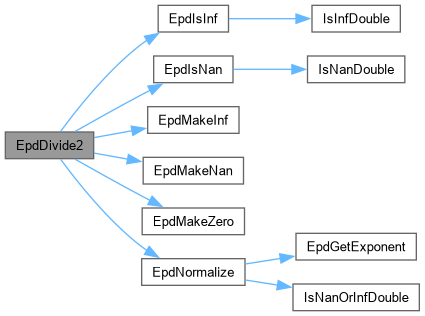
440{
441 double value;
442 int exponent;
443
444 if (EpdIsNan(epd1) || EpdIsNan(epd2)) {
445 EpdMakeNan(epd1);
446 return;
447 } else if (EpdIsInf(epd1) || EpdIsInf(epd2)) {
448 int sign;
449
450 if (EpdIsInf(epd1) && EpdIsInf(epd2)) {
451 EpdMakeNan(epd1);
452 } else if (EpdIsInf(epd1)) {
453 sign = epd1->type.bits.sign ^ epd2->type.bits.sign;
454 EpdMakeInf(epd1, sign);
455 } else {
456 sign = epd1->type.bits.sign ^ epd2->type.bits.sign;
457 EpdMakeZero(epd1, sign);
458 }
459 return;
460 }
461
462 if (epd2->type.value == 0.0) {
463 EpdMakeNan(epd1);
464 return;
465 }
466
469
470 value = epd1->type.value / epd2->type.value;
471 exponent = epd1->exponent - epd2->exponent;
472 epd1->type.value = value;
473 epd1->exponent = exponent;
474 EpdNormalize(epd1);
475}
Here is the call graph for this function:

◆ EpdDivide3()

void EpdDivide3 ( EpDouble * epd1,
EpDouble * epd2,
EpDouble * epd3 )

Function********************************************************************

Synopsis [Divides two arbitrary precision double values.]

Description [Divides two arbitrary precision double values.]

SideEffects []

SeeAlso []

Definition at line 490 of file epd.c.
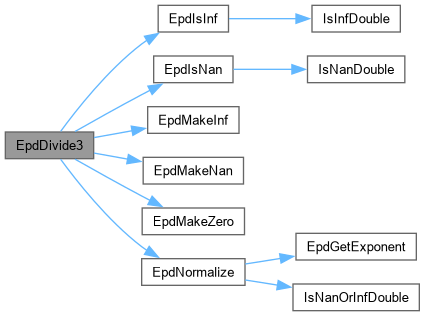
491{
492 if (EpdIsNan(epd1) || EpdIsNan(epd2)) {
493 EpdMakeNan(epd3);
494 return;
495 } else if (EpdIsInf(epd1) || EpdIsInf(epd2)) {
496 int sign;
497
498 if (EpdIsInf(epd1) && EpdIsInf(epd2)) {
499 EpdMakeNan(epd3);
500 } else if (EpdIsInf(epd1)) {
501 sign = epd1->type.bits.sign ^ epd2->type.bits.sign;
502 EpdMakeInf(epd3, sign);
503 } else {
504 sign = epd1->type.bits.sign ^ epd2->type.bits.sign;
505 EpdMakeZero(epd3, sign);
506 }
507 return;
508 }
509
510 if (epd2->type.value == 0.0) {
511 EpdMakeNan(epd3);
512 return;
513 }
514
517
518 epd3->type.value = epd1->type.value / epd2->type.value;
519 epd3->exponent = epd1->exponent - epd2->exponent;
520 EpdNormalize(epd3);
521}
Here is the call graph for this function:

◆ EpdFree()

void EpdFree ( EpDouble * epd)

Function********************************************************************

Synopsis [Frees an EpDouble struct.]

Description [Frees an EpDouble struct.]

SideEffects []

SeeAlso []

Definition at line 117 of file epd.c.

118{
119 ABC_FREE(epd);
120}
#define ABC_FREE(obj)
Definition abc_global.h:267

◆ EpdGetExponent()

int EpdGetExponent ( double value)

Function********************************************************************

Synopsis [Returns the exponent value of a double.]

Description [Returns the exponent value of a double.]

SideEffects []

SeeAlso []

Definition at line 1068 of file epd.c.
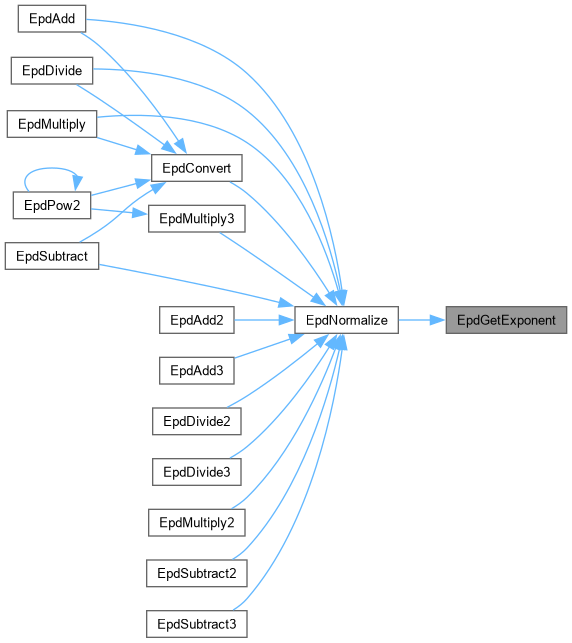
1069{
1070 int exponent;
1071 EpDouble epd;
1072
1073 epd.type.value = value;
1074 exponent = epd.type.bits.exponent;
1075 return(exponent);
1076}
Here is the caller graph for this function:

◆ EpdGetExponentDecimal()

int EpdGetExponentDecimal ( double value)

Function********************************************************************

Synopsis [Returns the decimal exponent value of a double.]

Description [Returns the decimal exponent value of a double.]

SideEffects []

SeeAlso []

Definition at line 1091 of file epd.c.

1092{
1093 char *pos, str[24];
1094 int exponent;
1095
1096 sprintf(str, "%E", value);
1097 pos = strstr(str, "E");
1098 sscanf(pos, "E%d", &exponent);
1099 return(exponent);
1100}
bool pos
Definition globals.c:30
char * sprintf()
char * strstr()
Here is the call graph for this function:
Here is the caller graph for this function:

◆ EpdGetString()

void EpdGetString ( EpDouble * epd,
char * str )

Function********************************************************************

Synopsis [Converts an arbitrary precision double value to a string.]

Description [Converts an arbitrary precision double value to a string.]

SideEffects []

SeeAlso []

Definition at line 135 of file epd.c.
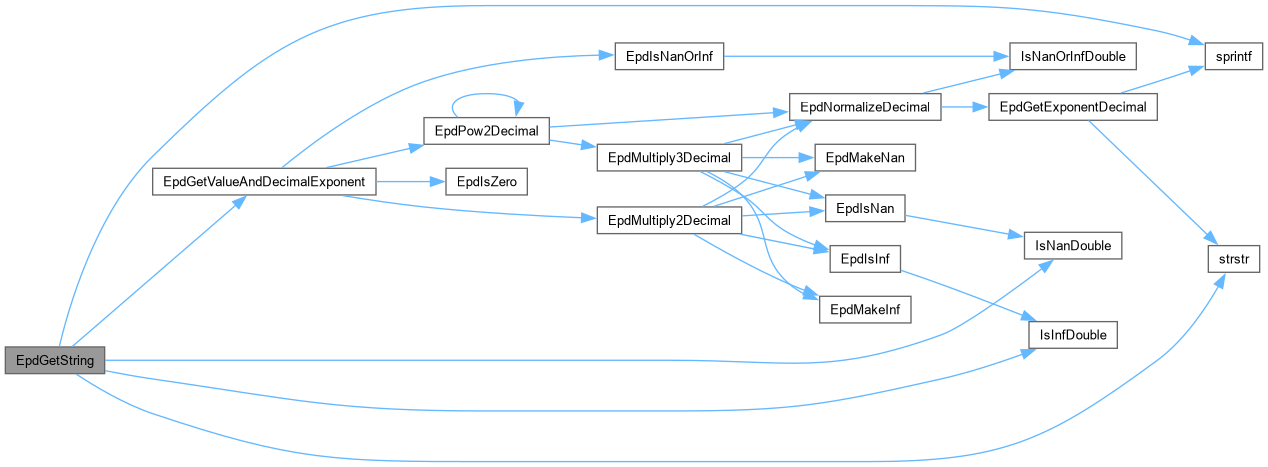
136{
137 double value;
138 int exponent;
139 char *pos;
140
141 if (IsNanDouble(epd->type.value)) {
142 sprintf(str, "NaN");
143 return;
144 } else if (IsInfDouble(epd->type.value)) {
145 if (epd->type.bits.sign == 1)
146 sprintf(str, "-Inf");
147 else
148 sprintf(str, "Inf");
149 return;
150 }
151
153 epd->type.bits.exponent == 0);
154
155 EpdGetValueAndDecimalExponent(epd, &value, &exponent);
156 sprintf(str, "%e", value);
157 pos = strstr(str, "e");
158 if (exponent >= 0) {
159 if (exponent < 10)
160 sprintf(pos + 1, "+0%d", exponent);
161 else
162 sprintf(pos + 1, "+%d", exponent);
163 } else {
164 exponent *= -1;
165 if (exponent < 10)
166 sprintf(pos + 1, "-0%d", exponent);
167 else
168 sprintf(pos + 1, "-%d", exponent);
169 }
170}
void EpdGetValueAndDecimalExponent(EpDouble *epd, double *value, int *exponent)
Definition epd.c:1034
Here is the call graph for this function:

◆ EpdGetValueAndDecimalExponent()

void EpdGetValueAndDecimalExponent ( EpDouble * epd,
double * value,
int * exponent )

Function********************************************************************

Synopsis [Returns value and decimal exponent of EpDouble.]

Description [Returns value and decimal exponent of EpDouble.]

SideEffects []

SeeAlso []

Definition at line 1034 of file epd.c.
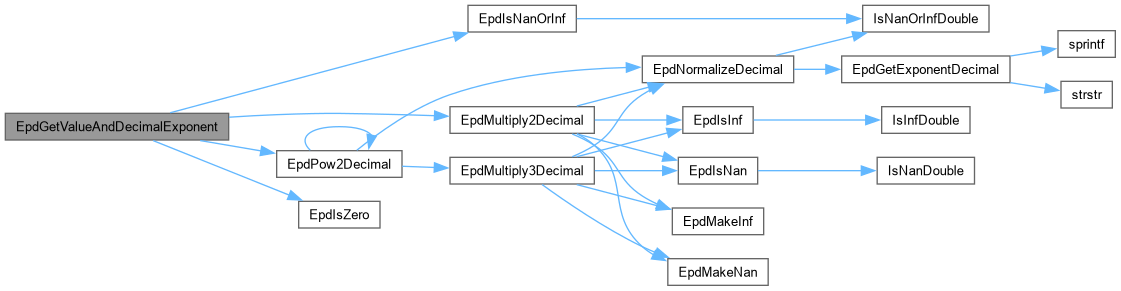
1035{
1036 EpDouble epd1, epd2;
1037
1038 if (EpdIsNanOrInf(epd))
1039 return;
1040
1041 if (EpdIsZero(epd)) {
1042 *value = 0.0;
1043 *exponent = 0;
1044 return;
1045 }
1046
1047 epd1.type.value = epd->type.value;
1048 epd1.exponent = 0;
1049 EpdPow2Decimal(epd->exponent, &epd2);
1050 EpdMultiply2Decimal(&epd1, &epd2);
1051
1052 *value = epd1.type.value;
1053 *exponent = epd1.exponent;
1054}
int EpdIsZero(EpDouble *epd)
Definition epd.c:1219
int EpdIsNanOrInf(EpDouble *epd)
Definition epd.c:1258
void EpdPow2Decimal(int n, EpDouble *epd)
Definition epd.c:946
void EpdMultiply2Decimal(EpDouble *epd1, EpDouble *epd2)
Definition epd.c:285
Here is the call graph for this function:
Here is the caller graph for this function:

◆ EpdIsInf()

int EpdIsInf ( EpDouble * epd)

Function********************************************************************

Synopsis [Checks whether the value is Inf.]

Description [Checks whether the value is Inf.]

SideEffects []

SeeAlso []

Definition at line 1201 of file epd.c.

1202{
1203 return(IsInfDouble(epd->type.value));
1204}
Here is the call graph for this function:
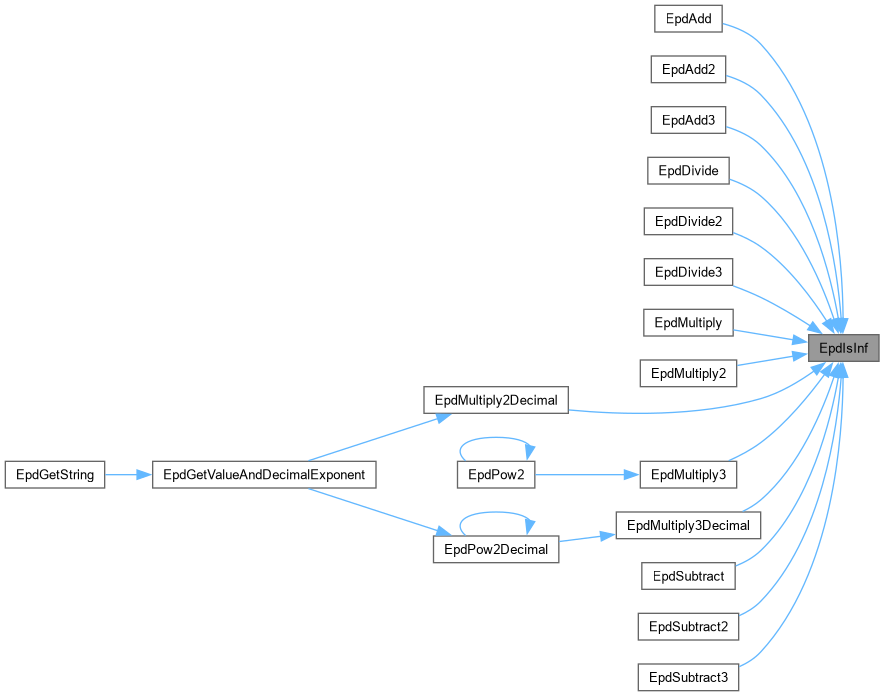
Here is the caller graph for this function:

◆ EpdIsNan()

int EpdIsNan ( EpDouble * epd)

Function********************************************************************

Synopsis [Checks whether the value is NaN.]

Description [Checks whether the value is NaN.]

SideEffects []

SeeAlso []

Definition at line 1240 of file epd.c.

1241{
1242 return(IsNanDouble(epd->type.value));
1243}
Here is the call graph for this function:
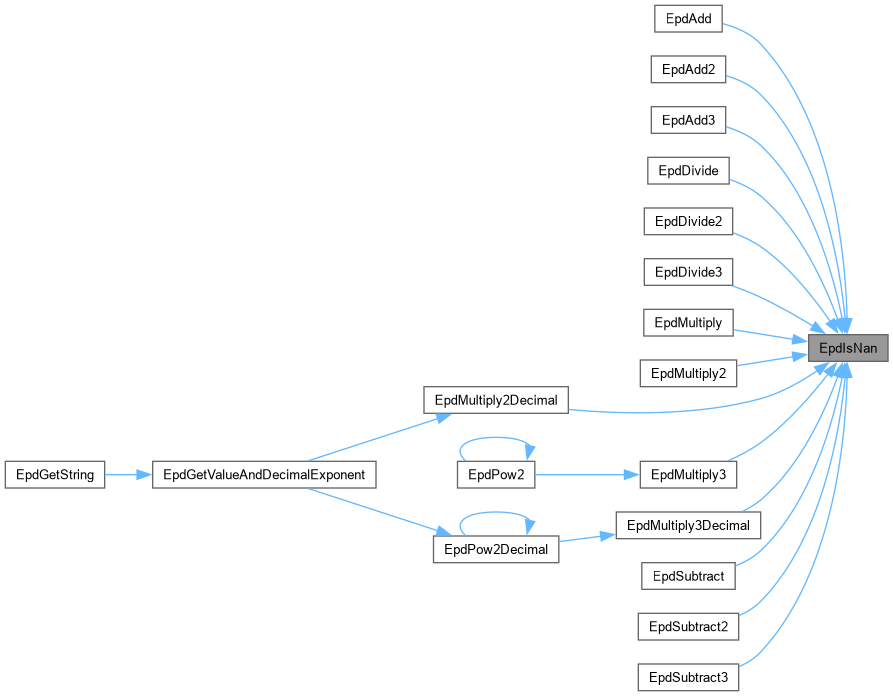
Here is the caller graph for this function:

◆ EpdIsNanOrInf()

int EpdIsNanOrInf ( EpDouble * epd)

Function********************************************************************

Synopsis [Checks whether the value is NaN or Inf.]

Description [Checks whether the value is NaN or Inf.]

SideEffects []

SeeAlso []

Definition at line 1258 of file epd.c.

1259{
1260 return(IsNanOrInfDouble(epd->type.value));
1261}
int IsNanOrInfDouble(double value)
Definition epd.c:1333
Here is the call graph for this function:
Here is the caller graph for this function:

◆ EpdIsZero()

int EpdIsZero ( EpDouble * epd)

Function********************************************************************

Synopsis [Checks whether the value is Zero.]

Description [Checks whether the value is Zero.]

SideEffects []

SeeAlso []

Definition at line 1219 of file epd.c.

1220{
1221 if (epd->type.value == 0.0)
1222 return(1);
1223 else
1224 return(0);
1225}
Here is the caller graph for this function:

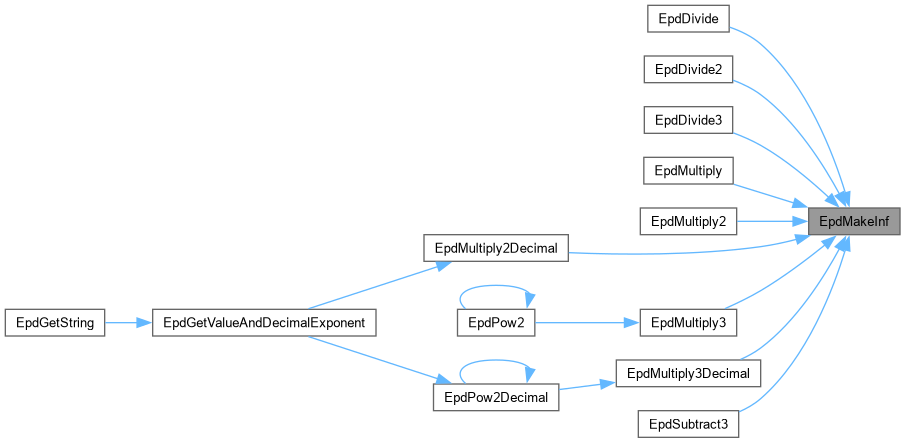
◆ EpdMakeInf()

void EpdMakeInf ( EpDouble * epd,
int sign )

Function********************************************************************

Synopsis [Makes EpDouble Inf.]

Description [Makes EpDouble Inf.]

SideEffects []

SeeAlso []

Definition at line 1115 of file epd.c.

1116{
1117 epd->type.bits.mantissa1 = 0;
1118 epd->type.bits.mantissa0 = 0;
1120 epd->type.bits.sign = sign;
1121 epd->exponent = 0;
1122}
#define EPD_EXP_INF
Definition epd.h:62
unsigned int mantissa0
Definition epd.h:87
unsigned int mantissa1
Definition epd.h:86
Here is the caller graph for this function:

◆ EpdMakeNan()

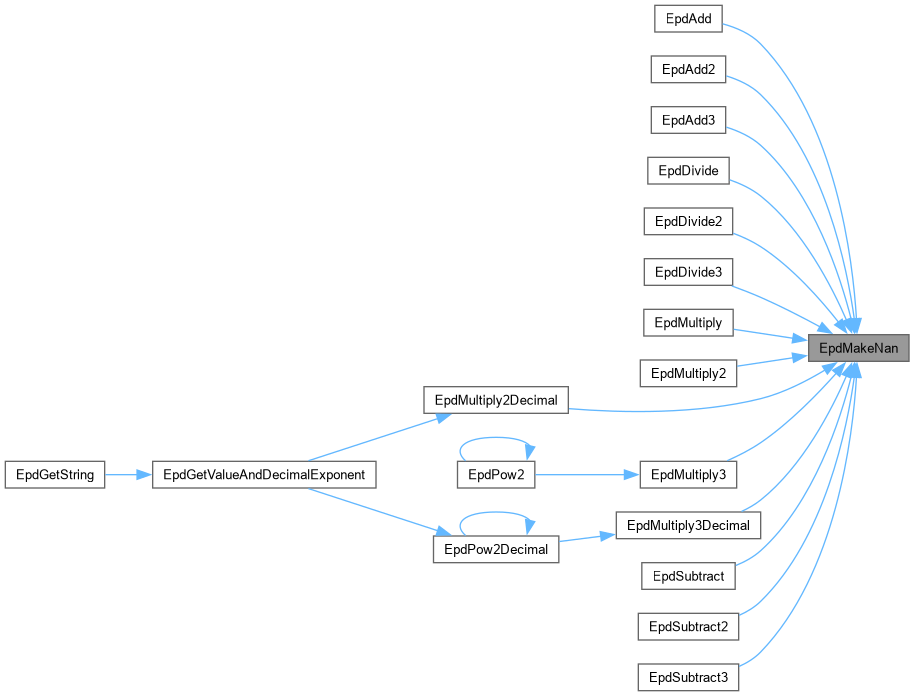
void EpdMakeNan ( EpDouble * epd)

Function********************************************************************

Synopsis [Makes EpDouble NaN.]

Description [Makes EpDouble NaN.]

SideEffects []

SeeAlso []

Definition at line 1159 of file epd.c.

1160{
1161 epd->type.nan.mantissa1 = 0;
1162 epd->type.nan.mantissa0 = 0;
1163 epd->type.nan.quiet_bit = 1;
1165 epd->type.nan.sign = 1;
1166 epd->exponent = 0;
1167}
unsigned int quiet_bit
Definition epd.h:114
unsigned int mantissa1
Definition epd.h:112
unsigned int sign
Definition epd.h:116
unsigned int mantissa0
Definition epd.h:113
unsigned int exponent
Definition epd.h:115
struct IeeeNanStruct nan
Definition epd.h:132
Here is the caller graph for this function:

◆ EpdMakeZero()

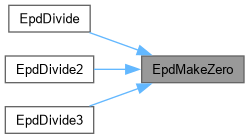
void EpdMakeZero ( EpDouble * epd,
int sign )

Function********************************************************************

Synopsis [Makes EpDouble Zero.]

Description [Makes EpDouble Zero.]

SideEffects []

SeeAlso []

Definition at line 1137 of file epd.c.

1138{
1139 epd->type.bits.mantissa1 = 0;
1140 epd->type.bits.mantissa0 = 0;
1141 epd->type.bits.exponent = 0;
1142 epd->type.bits.sign = sign;
1143 epd->exponent = 0;
1144}
Here is the caller graph for this function:

◆ EpdMultiply()

void EpdMultiply ( EpDouble * epd1,
double value )

Function********************************************************************

Synopsis [Multiplies two arbitrary precision double values.]

Description [Multiplies two arbitrary precision double values.]

SideEffects []

SeeAlso []

Definition at line 205 of file epd.c.
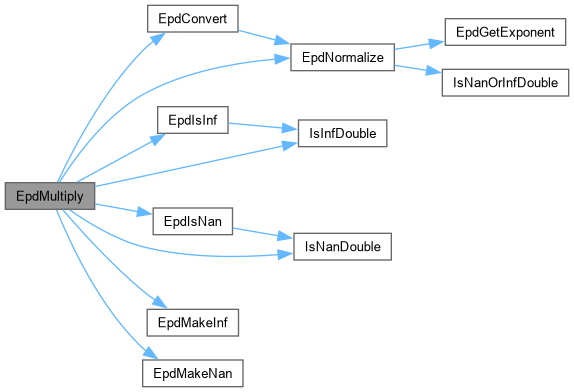
206{
207 EpDouble epd2;
208 double tmp;
209 int exponent;
210
211 if (EpdIsNan(epd1) || IsNanDouble(value)) {
212 EpdMakeNan(epd1);
213 return;
214 } else if (EpdIsInf(epd1) || IsInfDouble(value)) {
215 int sign;
216
217 EpdConvert(value, &epd2);
218 sign = epd1->type.bits.sign ^ epd2.type.bits.sign;
219 EpdMakeInf(epd1, sign);
220 return;
221 }
222
224
225 EpdConvert(value, &epd2);
226 tmp = epd1->type.value * epd2.type.value;
227 exponent = epd1->exponent + epd2.exponent;
228 epd1->type.value = tmp;
229 epd1->exponent = exponent;
230 EpdNormalize(epd1);
231}
Here is the call graph for this function:

◆ EpdMultiply2()

void EpdMultiply2 ( EpDouble * epd1,
EpDouble * epd2 )

Function********************************************************************

Synopsis [Multiplies two arbitrary precision double values.]

Description [Multiplies two arbitrary precision double values.]

SideEffects []

SeeAlso []

Definition at line 246 of file epd.c.
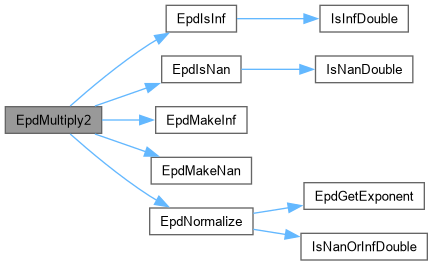
247{
248 double value;
249 int exponent;
250
251 if (EpdIsNan(epd1) || EpdIsNan(epd2)) {
252 EpdMakeNan(epd1);
253 return;
254 } else if (EpdIsInf(epd1) || EpdIsInf(epd2)) {
255 int sign;
256
257 sign = epd1->type.bits.sign ^ epd2->type.bits.sign;
258 EpdMakeInf(epd1, sign);
259 return;
260 }
261
264
265 value = epd1->type.value * epd2->type.value;
266 exponent = epd1->exponent + epd2->exponent;
267 epd1->type.value = value;
268 epd1->exponent = exponent;
269 EpdNormalize(epd1);
270}
Here is the call graph for this function:

◆ EpdMultiply2Decimal()

void EpdMultiply2Decimal ( EpDouble * epd1,
EpDouble * epd2 )

Function********************************************************************

Synopsis [Multiplies two arbitrary precision double values.]

Description [Multiplies two arbitrary precision double values.]

SideEffects []

SeeAlso []

Definition at line 285 of file epd.c.
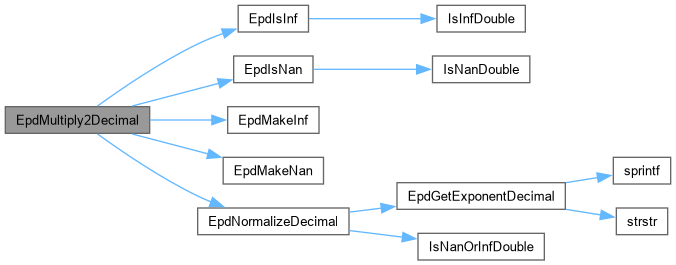
286{
287 double value;
288 int exponent;
289
290 if (EpdIsNan(epd1) || EpdIsNan(epd2)) {
291 EpdMakeNan(epd1);
292 return;
293 } else if (EpdIsInf(epd1) || EpdIsInf(epd2)) {
294 int sign;
295
296 sign = epd1->type.bits.sign ^ epd2->type.bits.sign;
297 EpdMakeInf(epd1, sign);
298 return;
299 }
300
301 value = epd1->type.value * epd2->type.value;
302 exponent = epd1->exponent + epd2->exponent;
303 epd1->type.value = value;
304 epd1->exponent = exponent;
306}
void EpdNormalizeDecimal(EpDouble *epd)
Definition epd.c:1007
Here is the call graph for this function:
Here is the caller graph for this function:

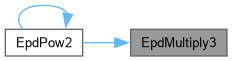
◆ EpdMultiply3()

void EpdMultiply3 ( EpDouble * epd1,
EpDouble * epd2,
EpDouble * epd3 )

Function********************************************************************

Synopsis [Multiplies two arbitrary precision double values.]

Description [Multiplies two arbitrary precision double values.]

SideEffects []

SeeAlso []

Definition at line 321 of file epd.c.
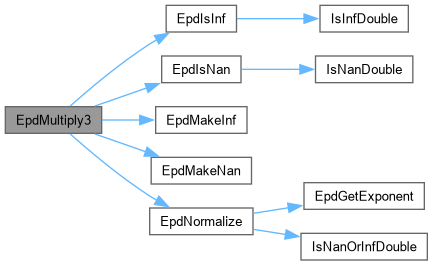
322{
323 if (EpdIsNan(epd1) || EpdIsNan(epd2)) {
324 EpdMakeNan(epd1);
325 return;
326 } else if (EpdIsInf(epd1) || EpdIsInf(epd2)) {
327 int sign;
328
329 sign = epd1->type.bits.sign ^ epd2->type.bits.sign;
330 EpdMakeInf(epd3, sign);
331 return;
332 }
333
336
337 epd3->type.value = epd1->type.value * epd2->type.value;
338 epd3->exponent = epd1->exponent + epd2->exponent;
339 EpdNormalize(epd3);
340}
Here is the call graph for this function:
Here is the caller graph for this function:

◆ EpdMultiply3Decimal()

void EpdMultiply3Decimal ( EpDouble * epd1,
EpDouble * epd2,
EpDouble * epd3 )

Function********************************************************************

Synopsis [Multiplies two arbitrary precision double values.]

Description [Multiplies two arbitrary precision double values.]

SideEffects []

SeeAlso []

Definition at line 355 of file epd.c.

356{
357 if (EpdIsNan(epd1) || EpdIsNan(epd2)) {
358 EpdMakeNan(epd1);
359 return;
360 } else if (EpdIsInf(epd1) || EpdIsInf(epd2)) {
361 int sign;
362
363 sign = epd1->type.bits.sign ^ epd2->type.bits.sign;
364 EpdMakeInf(epd3, sign);
365 return;
366 }
367
368 epd3->type.value = epd1->type.value * epd2->type.value;
369 epd3->exponent = epd1->exponent + epd2->exponent;
371}
Here is the call graph for this function:
Here is the caller graph for this function:

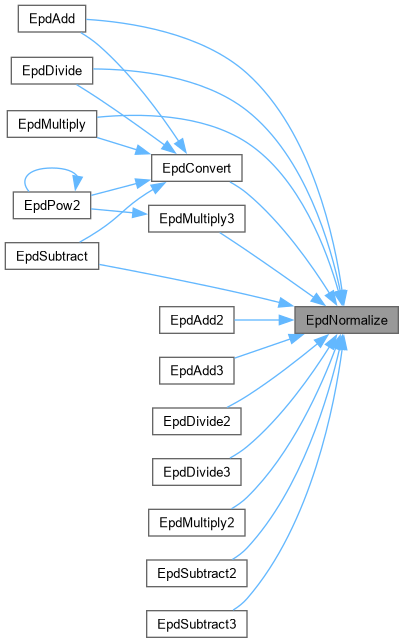
◆ EpdNormalize()

void EpdNormalize ( EpDouble * epd)

Function********************************************************************

Synopsis [Normalize an arbitrary precision double value.]

Description [Normalize an arbitrary precision double value.]

SideEffects []

SeeAlso []

Definition at line 977 of file epd.c.
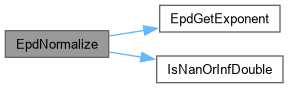
978{
979 int exponent;
980
981 if (IsNanOrInfDouble(epd->type.value)) {
982 epd->exponent = 0;
983 return;
984 }
985
986 exponent = EpdGetExponent(epd->type.value);
987 if (exponent == EPD_MAX_BIN)
988 return;
989 exponent -= EPD_MAX_BIN;
991 epd->exponent += exponent;
992}
int EpdGetExponent(double value)
Definition epd.c:1068
Here is the call graph for this function:
Here is the caller graph for this function:

◆ EpdNormalizeDecimal()

void EpdNormalizeDecimal ( EpDouble * epd)

Function********************************************************************

Synopsis [Normalize an arbitrary precision double value.]

Description [Normalize an arbitrary precision double value.]

SideEffects []

SeeAlso []

Definition at line 1007 of file epd.c.
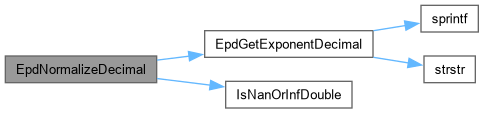
1008{
1009 int exponent;
1010
1011 if (IsNanOrInfDouble(epd->type.value)) {
1012 epd->exponent = 0;
1013 return;
1014 }
1015
1016 exponent = EpdGetExponentDecimal(epd->type.value);
1017 epd->type.value /= pow((double)10.0, (double)exponent);
1018 epd->exponent += exponent;
1019}
int EpdGetExponentDecimal(double value)
Definition epd.c:1091
Here is the call graph for this function:
Here is the caller graph for this function:

◆ EpdPow2()

void EpdPow2 ( int n,
EpDouble * epd )

Function********************************************************************

Synopsis [Computes arbitrary precision pow of base 2.]

Description [Computes arbitrary precision pow of base 2.]

SideEffects []

SeeAlso []

Definition at line 917 of file epd.c.
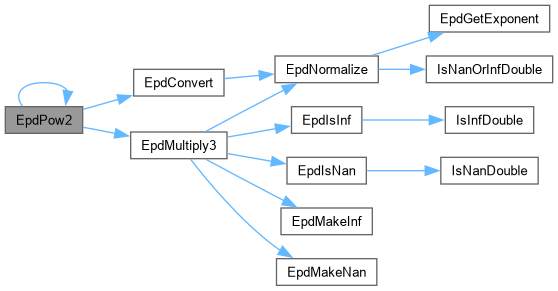
918{
919 if (n <= EPD_MAX_BIN) {
920 EpdConvert(pow((double)2.0, (double)n), epd);
921 } else {
922 EpDouble epd1, epd2;
923 int n1, n2;
924
925 n1 = n / 2;
926 n2 = n - n1;
927 EpdPow2(n1, &epd1);
928 EpdPow2(n2, &epd2);
929 EpdMultiply3(&epd1, &epd2, epd);
930 }
931}
void EpdMultiply3(EpDouble *epd1, EpDouble *epd2, EpDouble *epd3)
Definition epd.c:321
void EpdPow2(int n, EpDouble *epd)
Definition epd.c:917
Here is the call graph for this function:
Here is the caller graph for this function:

◆ EpdPow2Decimal()

void EpdPow2Decimal ( int n,
EpDouble * epd )

Function********************************************************************

Synopsis [Computes arbitrary precision pow of base 2.]

Description [Computes arbitrary precision pow of base 2.]

SideEffects []

SeeAlso []

Definition at line 946 of file epd.c.
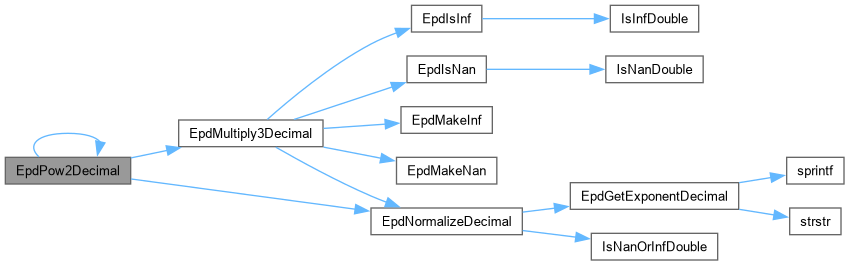
947{
948 if (n <= EPD_MAX_BIN) {
949 epd->type.value = pow((double)2.0, (double)n);
950 epd->exponent = 0;
952 } else {
953 EpDouble epd1, epd2;
954 int n1, n2;
955
956 n1 = n / 2;
957 n2 = n - n1;
958 EpdPow2Decimal(n1, &epd1);
959 EpdPow2Decimal(n2, &epd2);
960 EpdMultiply3Decimal(&epd1, &epd2, epd);
961 }
962}
void EpdMultiply3Decimal(EpDouble *epd1, EpDouble *epd2, EpDouble *epd3)
Definition epd.c:355
Here is the call graph for this function:
Here is the caller graph for this function:

◆ EpdSubtract()

void EpdSubtract ( EpDouble * epd1,
double value )

Function********************************************************************

Synopsis [Subtracts two arbitrary precision double values.]

Description [Subtracts two arbitrary precision double values.]

SideEffects []

SeeAlso []

Definition at line 726 of file epd.c.

727{
728 EpDouble epd2;
729 double tmp;
730 int exponent, diff;
731
732 if (EpdIsNan(epd1) || IsNanDouble(value)) {
733 EpdMakeNan(epd1);
734 return;
735 } else if (EpdIsInf(epd1) || IsInfDouble(value)) {
736 int sign;
737
738 EpdConvert(value, &epd2);
739 if (EpdIsInf(epd1) && IsInfDouble(value)) {
740 sign = epd1->type.bits.sign ^ epd2.type.bits.sign;
741 if (sign == 0)
742 EpdMakeNan(epd1);
743 } else if (EpdIsInf(&epd2)) {
744 EpdCopy(&epd2, epd1);
745 }
746 return;
747 }
748
750
751 EpdConvert(value, &epd2);
752 if (epd1->exponent > epd2.exponent) {
753 diff = epd1->exponent - epd2.exponent;
754 if (diff <= EPD_MAX_BIN)
755 tmp = epd1->type.value - epd2.type.value / pow((double)2.0, (double)diff);
756 else
757 tmp = epd1->type.value;
758 exponent = epd1->exponent;
759 } else if (epd1->exponent < epd2.exponent) {
760 diff = epd2.exponent - epd1->exponent;
761 if (diff <= EPD_MAX_BIN)
762 tmp = epd1->type.value / pow((double)2.0, (double)diff) - epd2.type.value;
763 else
764 tmp = epd2.type.value * (double)(-1.0);
765 exponent = epd2.exponent;
766 } else {
767 tmp = epd1->type.value - epd2.type.value;
768 exponent = epd1->exponent;
769 }
770 epd1->type.value = tmp;
771 epd1->exponent = exponent;
772 EpdNormalize(epd1);
773}
Here is the call graph for this function:

◆ EpdSubtract2()

void EpdSubtract2 ( EpDouble * epd1,
EpDouble * epd2 )

Function********************************************************************

Synopsis [Subtracts two arbitrary precision double values.]

Description [Subtracts two arbitrary precision double values.]

SideEffects []

SeeAlso []

Definition at line 788 of file epd.c.
789{
790 double value;
791 int exponent, diff;
792
793 if (EpdIsNan(epd1) || EpdIsNan(epd2)) {
794 EpdMakeNan(epd1);
795 return;
796 } else if (EpdIsInf(epd1) || EpdIsInf(epd2)) {
797 int sign;
798
799 if (EpdIsInf(epd1) && EpdIsInf(epd2)) {
800 sign = epd1->type.bits.sign ^ epd2->type.bits.sign;
801 if (sign == 0)
802 EpdMakeNan(epd1);
803 } else if (EpdIsInf(epd2)) {
804 EpdCopy(epd2, epd1);
805 }
806 return;
807 }
808
811
812 if (epd1->exponent > epd2->exponent) {
813 diff = epd1->exponent - epd2->exponent;
814 if (diff <= EPD_MAX_BIN) {
815 value = epd1->type.value -
816 epd2->type.value / pow((double)2.0, (double)diff);
817 } else
818 value = epd1->type.value;
819 exponent = epd1->exponent;
820 } else if (epd1->exponent < epd2->exponent) {
821 diff = epd2->exponent - epd1->exponent;
822 if (diff <= EPD_MAX_BIN) {
823 value = epd1->type.value / pow((double)2.0, (double)diff) -
824 epd2->type.value;
825 } else
826 value = epd2->type.value * (double)(-1.0);
827 exponent = epd2->exponent;
828 } else {
829 value = epd1->type.value - epd2->type.value;
830 exponent = epd1->exponent;
831 }
832 epd1->type.value = value;
833 epd1->exponent = exponent;
834 EpdNormalize(epd1);
835}
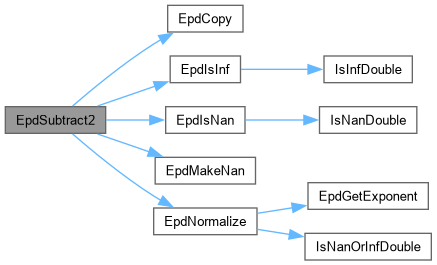
Here is the call graph for this function:

◆ EpdSubtract3()

void EpdSubtract3 ( EpDouble * epd1,
EpDouble * epd2,
EpDouble * epd3 )

Function********************************************************************

Synopsis [Subtracts two arbitrary precision double values.]

Description [Subtracts two arbitrary precision double values.]

SideEffects []

SeeAlso []

Definition at line 850 of file epd.c.
851{
852 double value;
853 int exponent, diff;
854
855 if (EpdIsNan(epd1) || EpdIsNan(epd2)) {
856 EpdMakeNan(epd3);
857 return;
858 } else if (EpdIsInf(epd1) || EpdIsInf(epd2)) {
859 int sign;
860
861 if (EpdIsInf(epd1) && EpdIsInf(epd2)) {
862 sign = epd1->type.bits.sign ^ epd2->type.bits.sign;
863 if (sign == 0)
864 EpdCopy(epd1, epd3);
865 else
866 EpdMakeNan(epd3);
867 } else if (EpdIsInf(epd1)) {
868 EpdCopy(epd1, epd1);
869 } else {
870 sign = epd2->type.bits.sign ^ 0x1;
871 EpdMakeInf(epd3, sign);
872 }
873 return;
874 }
875
878
879 if (epd1->exponent > epd2->exponent) {
880 diff = epd1->exponent - epd2->exponent;
881 if (diff <= EPD_MAX_BIN) {
882 value = epd1->type.value -
883 epd2->type.value / pow((double)2.0, (double)diff);
884 } else
885 value = epd1->type.value;
886 exponent = epd1->exponent;
887 } else if (epd1->exponent < epd2->exponent) {
888 diff = epd2->exponent - epd1->exponent;
889 if (diff <= EPD_MAX_BIN) {
890 value = epd1->type.value / pow((double)2.0, (double)diff) -
891 epd2->type.value;
892 } else
893 value = epd2->type.value * (double)(-1.0);
894 exponent = epd2->exponent;
895 } else {
896 value = epd1->type.value - epd2->type.value;
897 exponent = epd1->exponent;
898 }
899 epd3->type.value = value;
900 epd3->exponent = exponent;
901 EpdNormalize(epd3);
902}
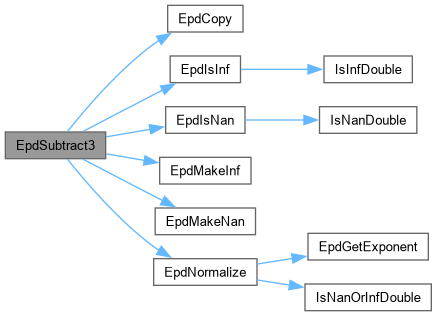
Here is the call graph for this function:

◆ IsInfDouble()

int IsInfDouble ( double value)

Function********************************************************************

Synopsis [Checks whether the value is Inf.]

Description [Checks whether the value is Inf.]

SideEffects []

SeeAlso []

Definition at line 1276 of file epd.c.
1277{
1278 EpType val;
1279
1280 val.value = value;
1281 if (val.bits.exponent == EPD_EXP_INF &&
1282 val.bits.mantissa0 == 0 &&
1283 val.bits.mantissa1 == 0) {
1284 if (val.bits.sign == 0)
1285 return(1);
1286 else
1287 return(-1);
1288 }
1289 return(0);
1290}
union EpTypeUnion EpType
Definition epd.h:146
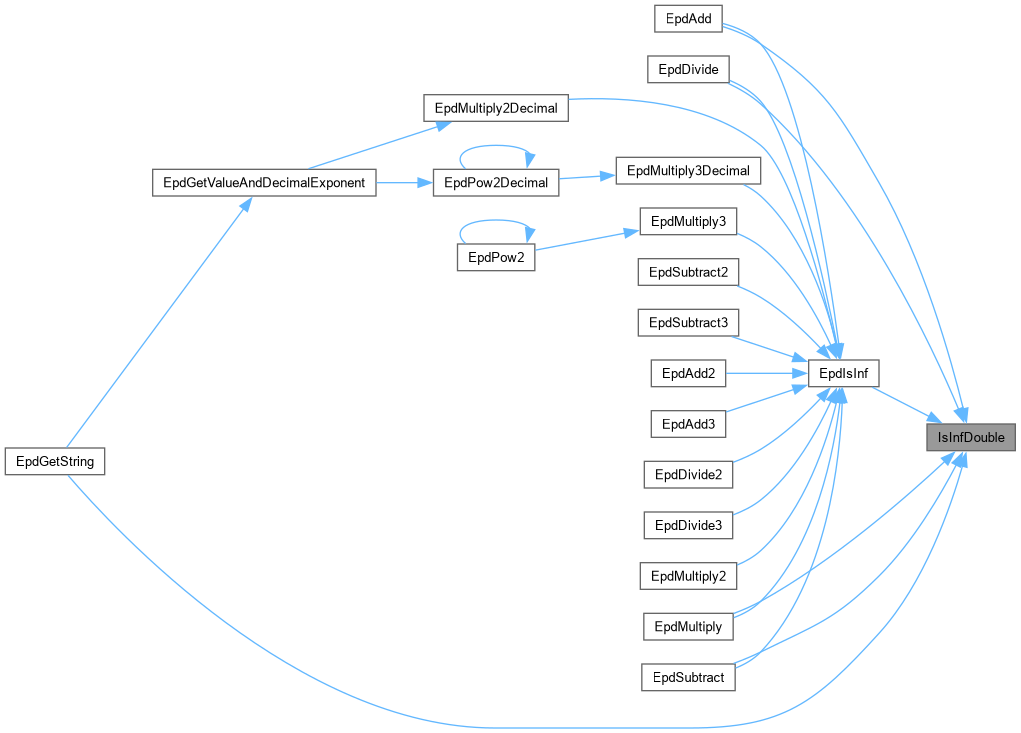
Here is the caller graph for this function:

◆ IsNanDouble()

int IsNanDouble ( double value)

Function********************************************************************

Synopsis [Checks whether the value is NaN.]

Description [Checks whether the value is NaN.]

SideEffects []

SeeAlso []

Definition at line 1305 of file epd.c.
1306{
1307 EpType val;
1308
1309 val.value = value;
1310 if (val.nan.exponent == EPD_EXP_INF &&
1311 val.nan.sign == 1 &&
1312 val.nan.quiet_bit == 1 &&
1313 val.nan.mantissa0 == 0 &&
1314 val.nan.mantissa1 == 0) {
1315 return(1);
1316 }
1317 return(0);
1318}
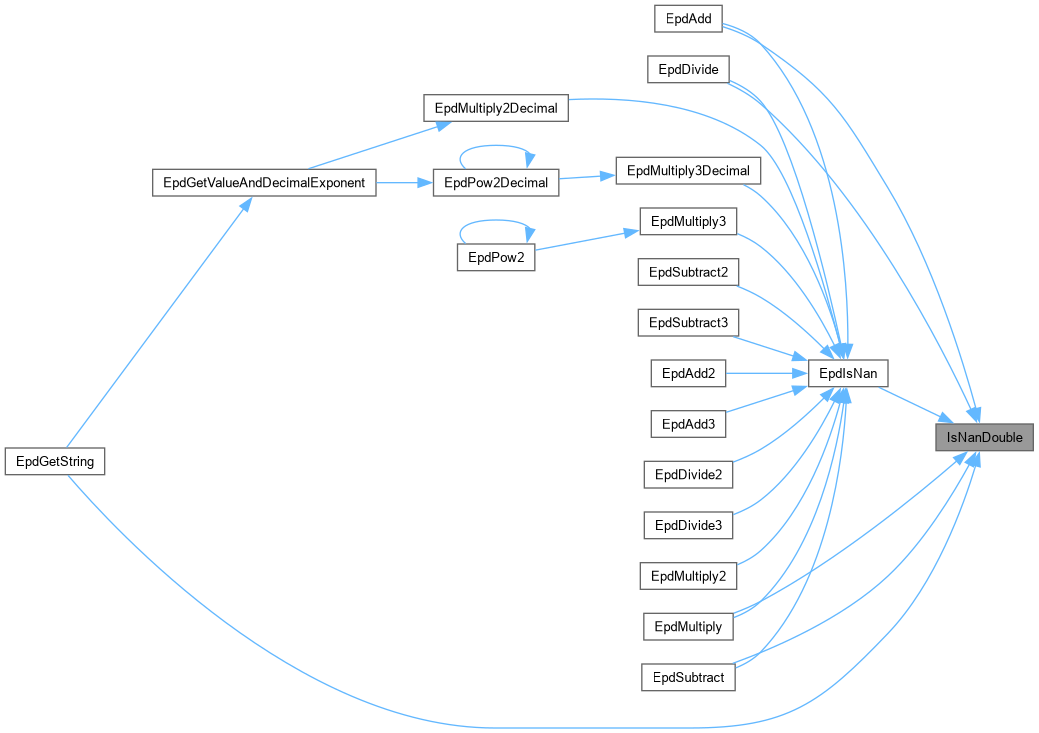
Here is the caller graph for this function:

◆ IsNanOrInfDouble()

int IsNanOrInfDouble ( double value)

Function********************************************************************

Synopsis [Checks whether the value is NaN or Inf.]

Description [Checks whether the value is NaN or Inf.]

SideEffects []

SeeAlso []

Definition at line 1333 of file epd.c.
1334{
1335 EpType val;
1336
1337 val.value = value;
1338 if (val.nan.exponent == EPD_EXP_INF &&
1339 val.nan.mantissa0 == 0 &&
1340 val.nan.mantissa1 == 0 &&
1341 (val.nan.sign == 1 || val.nan.quiet_bit == 0)) {
1342 return(1);
1343 }
1344 return(0);
1345}
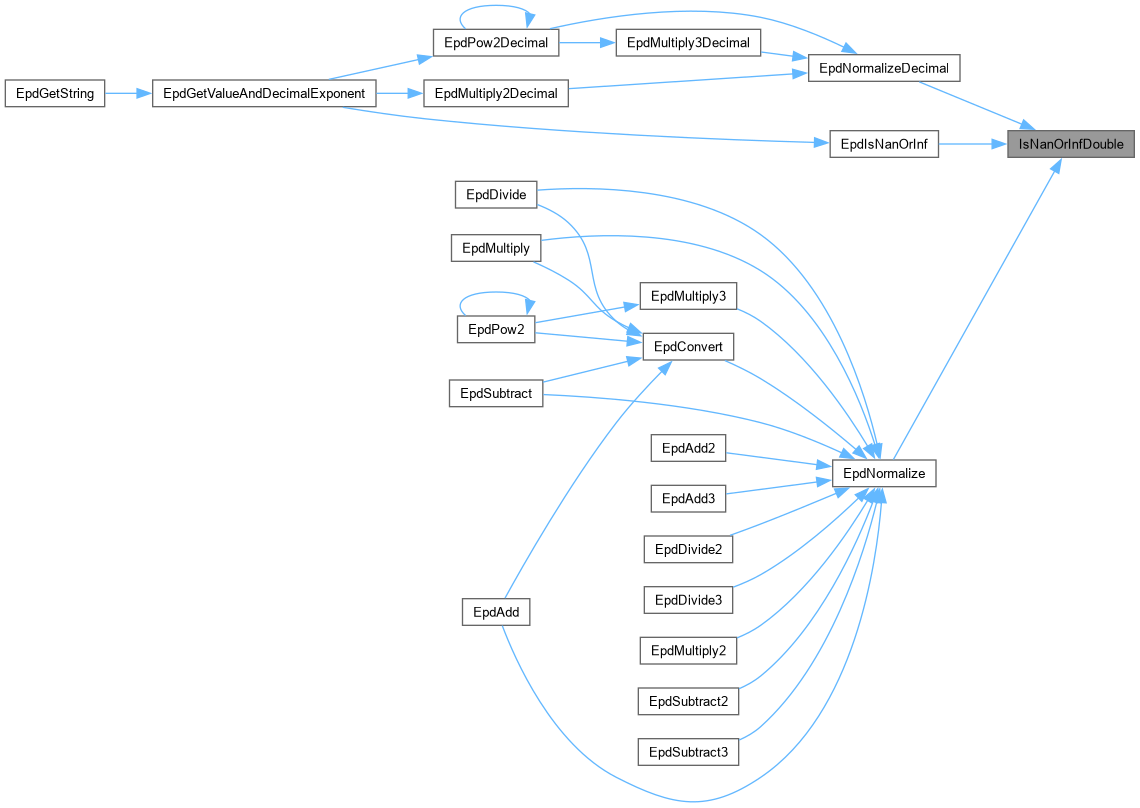
Here is the caller graph for this function: