ABC: A System for Sequential Synthesis and Verification
 
Loading...
Searching...
No Matches
ivyObj.c File Reference
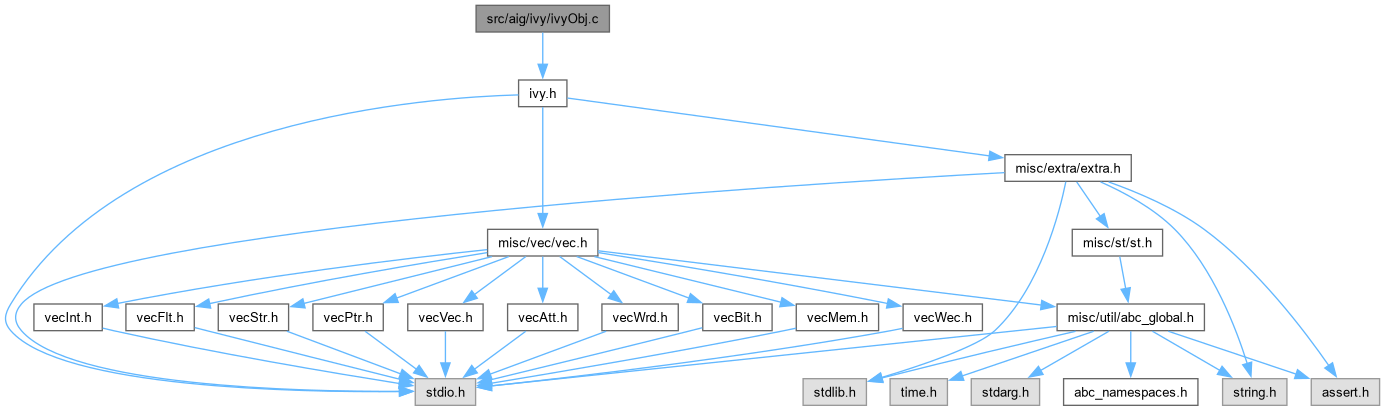
#include "ivy.h"
Include dependency graph for ivyObj.c:

Go to the source code of this file.

Functions

ABC_NAMESPACE_IMPL_START Ivy_Obj_tIvy_ObjCreatePi (Ivy_Man_t *p)
 DECLARATIONS ///.
 
Ivy_Obj_tIvy_ObjCreatePo (Ivy_Man_t *p, Ivy_Obj_t *pDriver)
 
Ivy_Obj_tIvy_ObjCreate (Ivy_Man_t *p, Ivy_Obj_t *pGhost)
 
void Ivy_ObjConnect (Ivy_Man_t *p, Ivy_Obj_t *pObj, Ivy_Obj_t *pFan0, Ivy_Obj_t *pFan1)
 
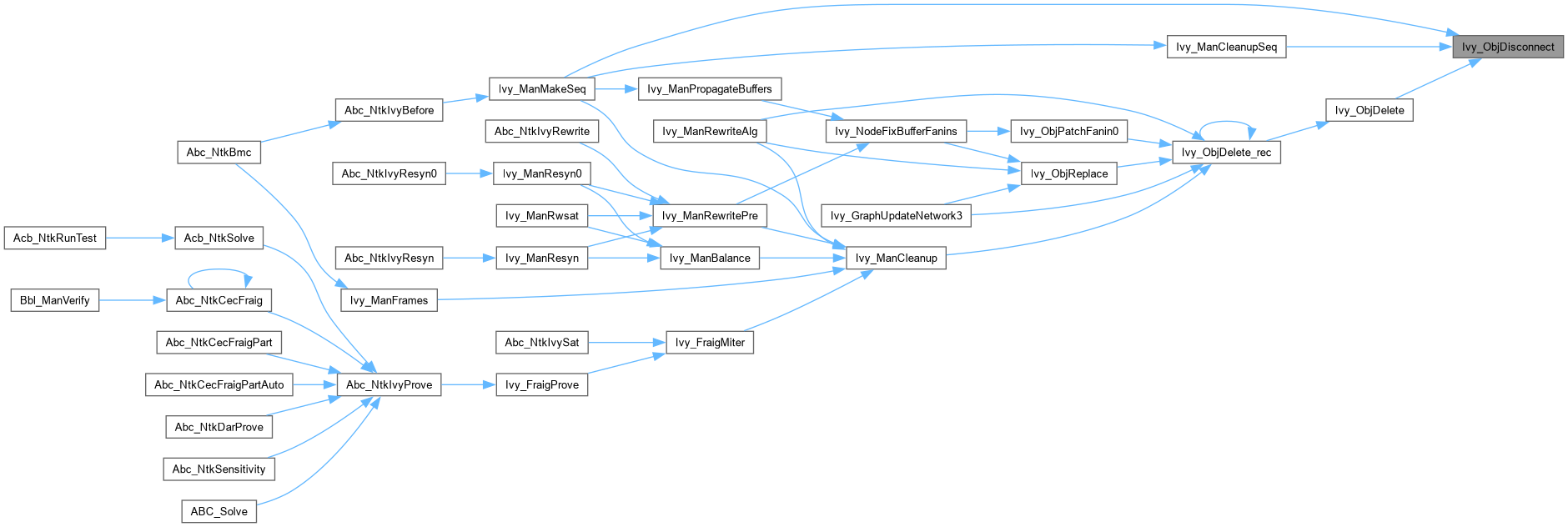
void Ivy_ObjDisconnect (Ivy_Man_t *p, Ivy_Obj_t *pObj)
 
void Ivy_ObjPatchFanin0 (Ivy_Man_t *p, Ivy_Obj_t *pObj, Ivy_Obj_t *pFaninNew)
 
void Ivy_ObjDelete (Ivy_Man_t *p, Ivy_Obj_t *pObj, int fFreeTop)
 
void Ivy_ObjDelete_rec (Ivy_Man_t *p, Ivy_Obj_t *pObj, int fFreeTop)
 
void Ivy_ObjReplace (Ivy_Man_t *p, Ivy_Obj_t *pObjOld, Ivy_Obj_t *pObjNew, int fDeleteOld, int fFreeTop, int fUpdateLevel)
 
void Ivy_NodeFixBufferFanins (Ivy_Man_t *p, Ivy_Obj_t *pNode, int fUpdateLevel)
 

Function Documentation

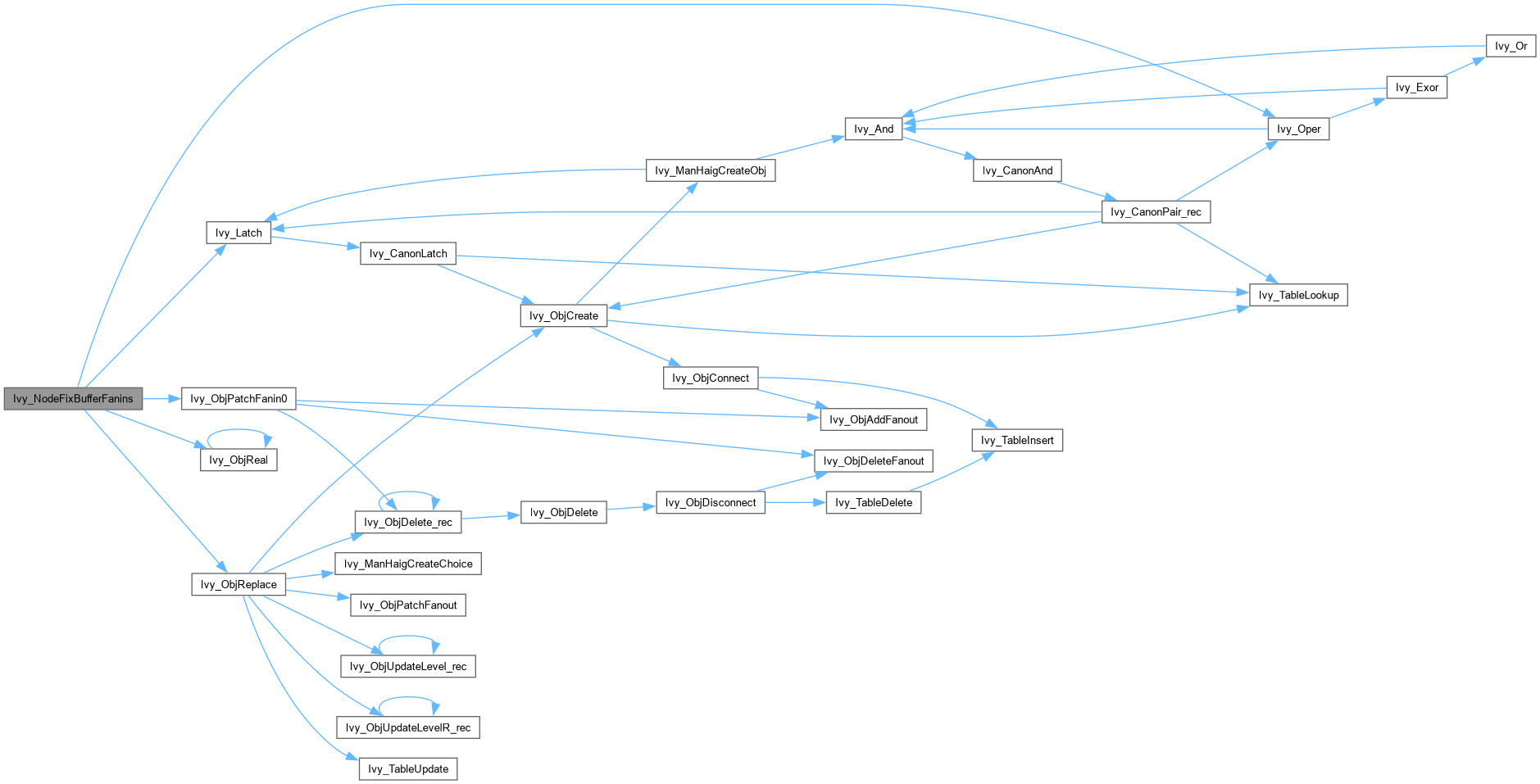
◆ Ivy_NodeFixBufferFanins()

void Ivy_NodeFixBufferFanins ( Ivy_Man_t * p,
Ivy_Obj_t * pNode,
int fUpdateLevel )

Function*************************************************************

Synopsis [Fixes buffer fanins.]

Description [This situation happens because NodeReplace is a lazy procedure, which does not propagate the change to the fanouts but instead records the change in the form of a buf/inv node.]

SideEffects []

SeeAlso []

Definition at line 442 of file ivyObj.c.
443{
444 Ivy_Obj_t * pFanReal0, * pFanReal1, * pResult = NULL;
445 if ( Ivy_ObjIsPo(pNode) )
446 {
447 if ( !Ivy_ObjIsBuf(Ivy_ObjFanin0(pNode)) )
448 return;
449 pFanReal0 = Ivy_ObjReal( Ivy_ObjChild0(pNode) );
450 Ivy_ObjPatchFanin0( p, pNode, pFanReal0 );
451// Ivy_ManCheckFanouts( p );
452 return;
453 }
454 if ( !Ivy_ObjIsBuf(Ivy_ObjFanin0(pNode)) && !Ivy_ObjIsBuf(Ivy_ObjFanin1(pNode)) )
455 return;
456 // get the real fanins
457 pFanReal0 = Ivy_ObjReal( Ivy_ObjChild0(pNode) );
458 pFanReal1 = Ivy_ObjReal( Ivy_ObjChild1(pNode) );
459 // get the new node
460 if ( Ivy_ObjIsNode(pNode) )
461 pResult = Ivy_Oper( p, pFanReal0, pFanReal1, Ivy_ObjType(pNode) );
462 else if ( Ivy_ObjIsLatch(pNode) )
463 pResult = Ivy_Latch( p, pFanReal0, Ivy_ObjInit(pNode) );
464 else
465 assert( 0 );
466
467//printf( "===== Replacing %d by %d.\n", pNode->Id, pResult->Id );
468//Ivy_ObjPrintVerbose( p, pNode, 0 ); printf( "\n" );
469//Ivy_ObjPrintVerbose( p, pResult, 0 ); printf( "\n" );
470
471 // perform the replacement
472 Ivy_ObjReplace( p, pNode, pResult, 1, 0, fUpdateLevel );
473}
Cube * p
Definition exorList.c:222
void Ivy_ObjReplace(Ivy_Man_t *p, Ivy_Obj_t *pObjOld, Ivy_Obj_t *pObjNew, int fDeleteOld, int fFreeTop, int fUpdateLevel)
Definition ivyObj.c:328
void Ivy_ObjPatchFanin0(Ivy_Man_t *p, Ivy_Obj_t *pObj, Ivy_Obj_t *pFaninNew)
Definition ivyObj.c:224
Ivy_Obj_t * Ivy_Latch(Ivy_Man_t *p, Ivy_Obj_t *pObj, Ivy_Init_t Init)
Definition ivyOper.c:287
Ivy_Obj_t * Ivy_ObjReal(Ivy_Obj_t *pObj)
Definition ivyUtil.c:609
Ivy_Obj_t * Ivy_Oper(Ivy_Man_t *p, Ivy_Obj_t *p0, Ivy_Obj_t *p1, Ivy_Type_t Type)
FUNCTION DEFINITIONS ///.
Definition ivyOper.c:63
struct Ivy_Obj_t_ Ivy_Obj_t
Definition ivy.h:47
#define assert(ex)
Definition util_old.h:213
Here is the call graph for this function:
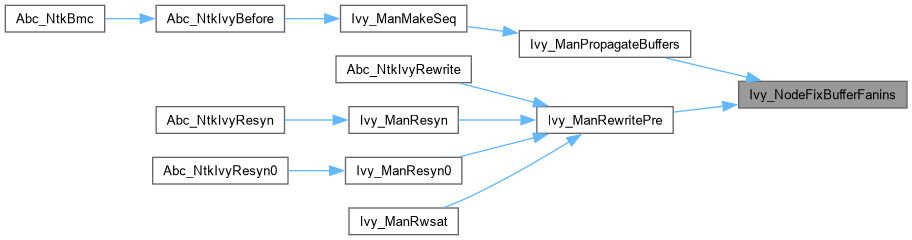
Here is the caller graph for this function:

◆ Ivy_ObjConnect()

void Ivy_ObjConnect ( Ivy_Man_t * p,
Ivy_Obj_t * pObj,
Ivy_Obj_t * pFan0,
Ivy_Obj_t * pFan1 )

Function*************************************************************

Synopsis [Connect the object to the fanin.]

Description []

SideEffects []

SeeAlso []

Definition at line 150 of file ivyObj.c.
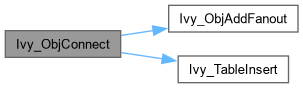
151{
152 assert( !Ivy_IsComplement(pObj) );
153 assert( Ivy_ObjIsPi(pObj) || Ivy_ObjIsOneFanin(pObj) || pFan1 != NULL );
154 // add the first fanin
155 pObj->pFanin0 = pFan0;
156 pObj->pFanin1 = pFan1;
157 // increment references of the fanins and add their fanouts
158 if ( Ivy_ObjFanin0(pObj) != NULL )
159 {
160 Ivy_ObjRefsInc( Ivy_ObjFanin0(pObj) );
161 if ( p->fFanout )
162 Ivy_ObjAddFanout( p, Ivy_ObjFanin0(pObj), pObj );
163 }
164 if ( Ivy_ObjFanin1(pObj) != NULL )
165 {
166 Ivy_ObjRefsInc( Ivy_ObjFanin1(pObj) );
167 if ( p->fFanout )
168 Ivy_ObjAddFanout( p, Ivy_ObjFanin1(pObj), pObj );
169 }
170 // add the node to the structural hash table
171 Ivy_TableInsert( p, pObj );
172}
void Ivy_TableInsert(Ivy_Man_t *p, Ivy_Obj_t *pObj)
Definition ivyTable.c:105
void Ivy_ObjAddFanout(Ivy_Man_t *p, Ivy_Obj_t *pObj, Ivy_Obj_t *pFanout)
Definition ivyFanout.c:183
Ivy_Obj_t * pFanin0
Definition ivy.h:86
Ivy_Obj_t * pFanin1
Definition ivy.h:87
Here is the call graph for this function:
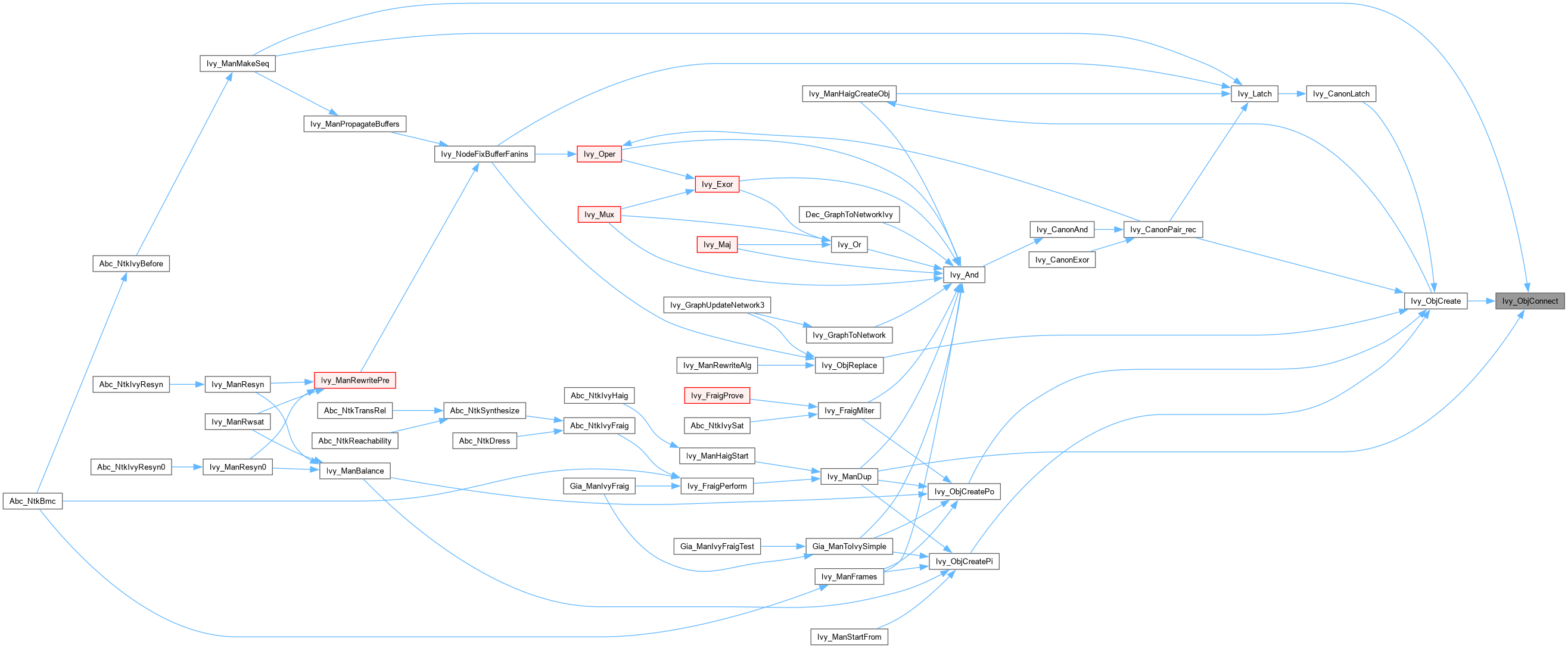
Here is the caller graph for this function:

◆ Ivy_ObjCreate()

Ivy_Obj_t * Ivy_ObjCreate ( Ivy_Man_t * p,
Ivy_Obj_t * pGhost )

Function*************************************************************

Synopsis [Create the new node assuming it does not exist.]

Description []

SideEffects []

SeeAlso []

Definition at line 77 of file ivyObj.c.
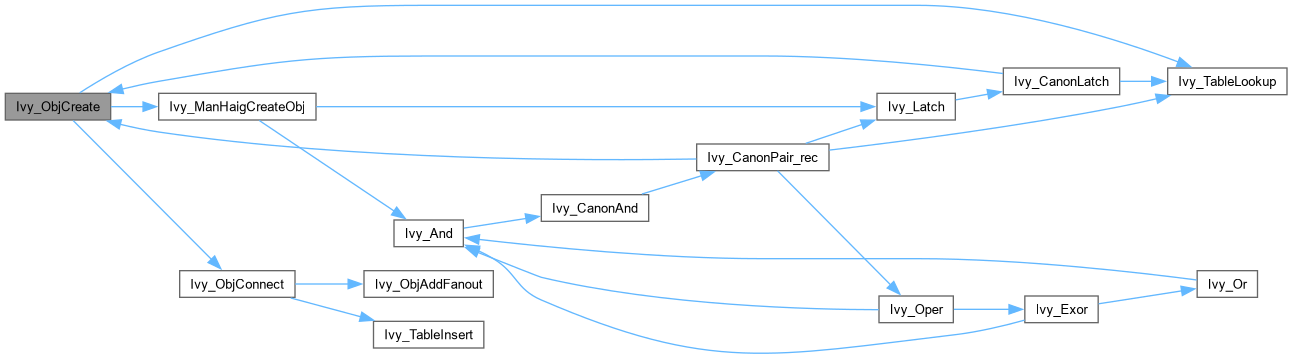
78{
79 Ivy_Obj_t * pObj;
80 assert( !Ivy_IsComplement(pGhost) );
81 assert( Ivy_ObjIsGhost(pGhost) );
82 assert( Ivy_TableLookup(p, pGhost) == NULL );
83 // get memory for the new object
84 pObj = Ivy_ManFetchMemory( p );
85 assert( Ivy_ObjIsNone(pObj) );
86 pObj->Id = Vec_PtrSize(p->vObjs);
87 Vec_PtrPush( p->vObjs, pObj );
88 // add basic info (fanins, compls, type, init)
89 pObj->Type = pGhost->Type;
90 pObj->Init = pGhost->Init;
91 // add connections
92 Ivy_ObjConnect( p, pObj, pGhost->pFanin0, pGhost->pFanin1 );
93 // compute level
94 if ( Ivy_ObjIsNode(pObj) )
95 pObj->Level = Ivy_ObjLevelNew(pObj);
96 else if ( Ivy_ObjIsLatch(pObj) )
97 pObj->Level = 0;
98 else if ( Ivy_ObjIsOneFanin(pObj) )
99 pObj->Level = Ivy_ObjFanin0(pObj)->Level;
100 else if ( !Ivy_ObjIsPi(pObj) )
101 assert( 0 );
102 // create phase
103 if ( Ivy_ObjIsNode(pObj) )
104 pObj->fPhase = Ivy_ObjFaninPhase(Ivy_ObjChild0(pObj)) & Ivy_ObjFaninPhase(Ivy_ObjChild1(pObj));
105 else if ( Ivy_ObjIsOneFanin(pObj) )
106 pObj->fPhase = Ivy_ObjFaninPhase(Ivy_ObjChild0(pObj));
107 // set the fail TFO flag
108 if ( Ivy_ObjIsNode(pObj) )
109 pObj->fFailTfo = Ivy_ObjFanin0(pObj)->fFailTfo | Ivy_ObjFanin1(pObj)->fFailTfo;
110 // mark the fanins in a special way if the node is EXOR
111 if ( Ivy_ObjIsExor(pObj) )
112 {
113 Ivy_ObjFanin0(pObj)->fExFan = 1;
114 Ivy_ObjFanin1(pObj)->fExFan = 1;
115 }
116 // add PIs/POs to the arrays
117 if ( Ivy_ObjIsPi(pObj) )
118 Vec_PtrPush( p->vPis, pObj );
119 else if ( Ivy_ObjIsPo(pObj) )
120 Vec_PtrPush( p->vPos, pObj );
121// else if ( Ivy_ObjIsBuf(pObj) )
122// Vec_PtrPush( p->vBufs, pObj );
123 if ( p->vRequired && Vec_IntSize(p->vRequired) <= pObj->Id )
124 Vec_IntFillExtra( p->vRequired, 2 * Vec_IntSize(p->vRequired), 1000000 );
125 // update node counters of the manager
126 p->nObjs[Ivy_ObjType(pObj)]++;
127 p->nCreated++;
128
129// printf( "Adding %sAIG node: ", p->pHaig==NULL? "H":" " );
130// Ivy_ObjPrintVerbose( p, pObj, p->pHaig==NULL );
131// printf( "\n" );
132
133 // if HAIG is defined, create a corresponding node
134 if ( p->pHaig )
135 Ivy_ManHaigCreateObj( p, pObj );
136 return pObj;
137}
void Ivy_ObjConnect(Ivy_Man_t *p, Ivy_Obj_t *pObj, Ivy_Obj_t *pFan0, Ivy_Obj_t *pFan1)
Definition ivyObj.c:150
Ivy_Obj_t * Ivy_TableLookup(Ivy_Man_t *p, Ivy_Obj_t *pObj)
FUNCTION DEFINITIONS ///.
Definition ivyTable.c:71
void Ivy_ManHaigCreateObj(Ivy_Man_t *p, Ivy_Obj_t *pObj)
Definition ivyHaig.c:183
int Id
Definition ivy.h:75
unsigned Type
Definition ivy.h:77
unsigned fFailTfo
Definition ivy.h:82
unsigned Level
Definition ivy.h:84
unsigned fPhase
Definition ivy.h:81
unsigned Init
Definition ivy.h:83
Here is the call graph for this function:
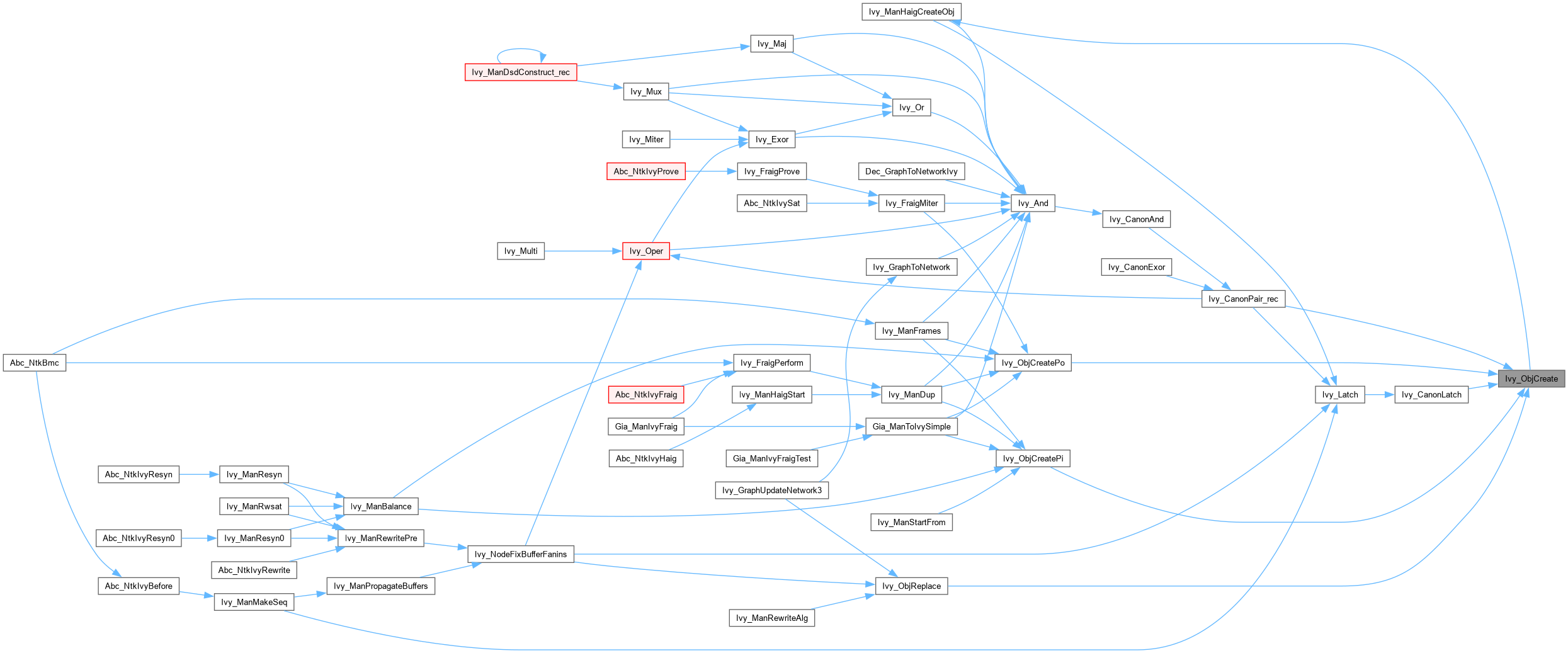
Here is the caller graph for this function:

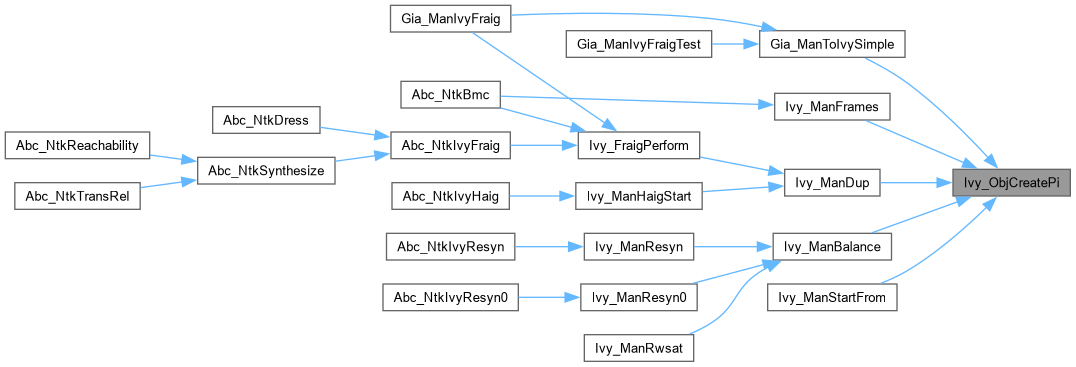
◆ Ivy_ObjCreatePi()

ABC_NAMESPACE_IMPL_START Ivy_Obj_t * Ivy_ObjCreatePi ( Ivy_Man_t * p)

DECLARATIONS ///.

CFile****************************************************************

FileName [ivyObj.c]

SystemName [ABC: Logic synthesis and verification system.]

PackageName [And-Inverter Graph package.]

Synopsis [Adding/removing objects.]

Author [Alan Mishchenko]

Affiliation [UC Berkeley]

Date [Ver. 1.0. Started - May 11, 2006.]

Revision [

Id
ivyObj.c,v 1.00 2006/05/11 00:00:00 alanmi Exp

] FUNCTION DEFINITIONS /// Function*************************************************************

Synopsis [Create the new node assuming it does not exist.]

Description []

SideEffects []

SeeAlso []

Definition at line 45 of file ivyObj.c.
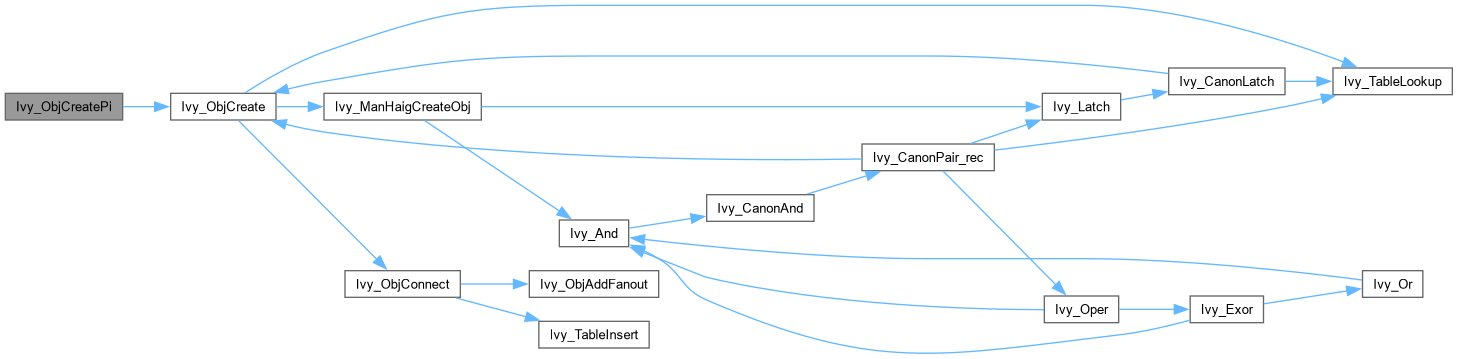
46{
47 return Ivy_ObjCreate( p, Ivy_ObjCreateGhost(p, NULL, NULL, IVY_PI, IVY_INIT_NONE) );
48}
Ivy_Obj_t * Ivy_ObjCreate(Ivy_Man_t *p, Ivy_Obj_t *pGhost)
Definition ivyObj.c:77
@ IVY_INIT_NONE
Definition ivy.h:66
@ IVY_PI
Definition ivy.h:54
Here is the call graph for this function:
Here is the caller graph for this function:

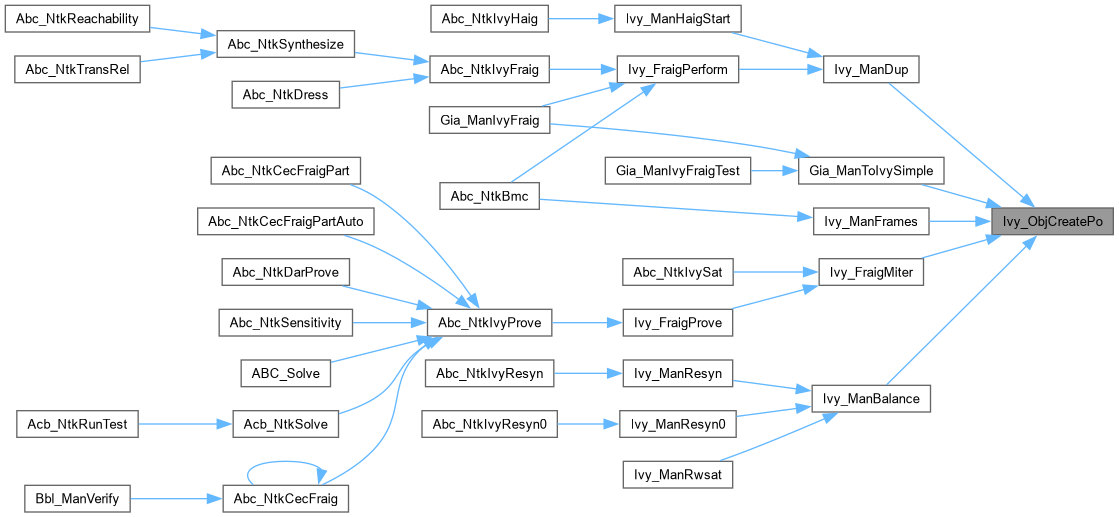
◆ Ivy_ObjCreatePo()

Ivy_Obj_t * Ivy_ObjCreatePo ( Ivy_Man_t * p,
Ivy_Obj_t * pDriver )

Function*************************************************************

Synopsis [Create the new node assuming it does not exist.]

Description []

SideEffects []

SeeAlso []

Definition at line 61 of file ivyObj.c.
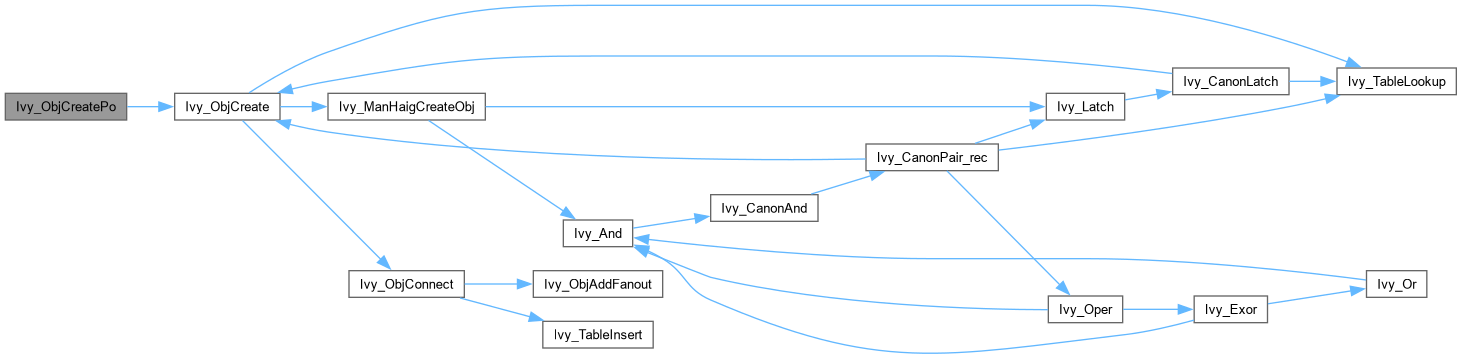
62{
63 return Ivy_ObjCreate( p, Ivy_ObjCreateGhost(p, pDriver, NULL, IVY_PO, IVY_INIT_NONE) );
64}
@ IVY_PO
Definition ivy.h:55
Here is the call graph for this function:
Here is the caller graph for this function:

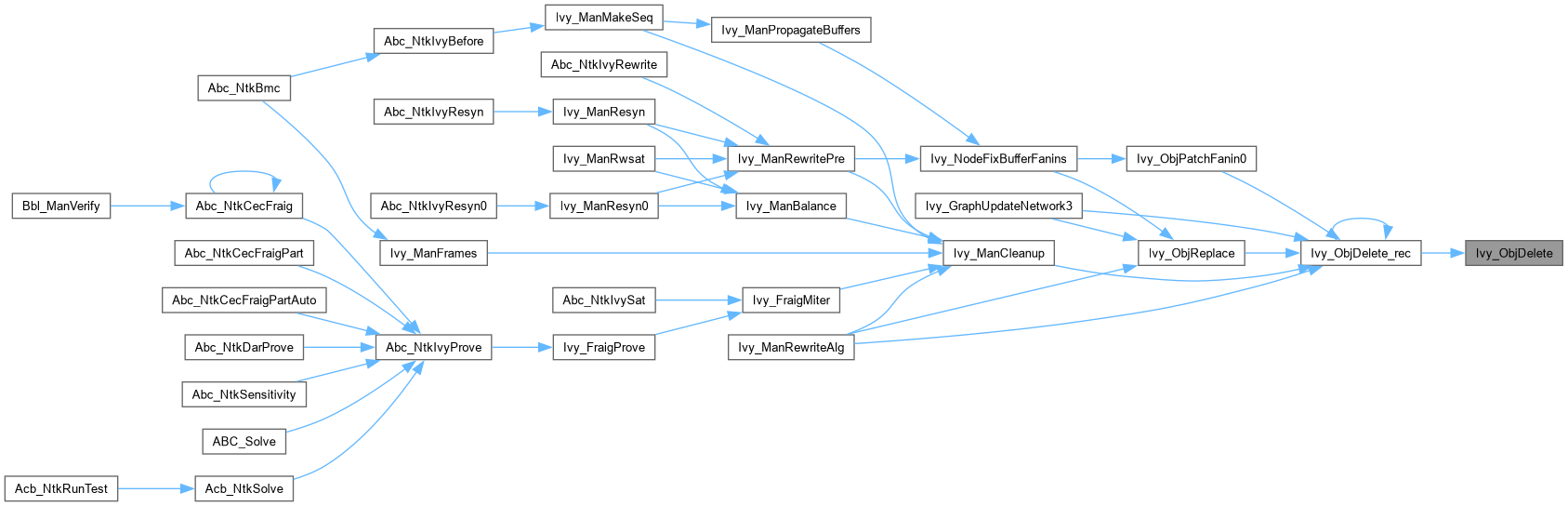
◆ Ivy_ObjDelete()

void Ivy_ObjDelete ( Ivy_Man_t * p,
Ivy_Obj_t * pObj,
int fFreeTop )

Function*************************************************************

Synopsis [Deletes the node.]

Description []

SideEffects []

SeeAlso []

Definition at line 255 of file ivyObj.c.

256{
257 assert( !Ivy_IsComplement(pObj) );
258 assert( Ivy_ObjRefs(pObj) == 0 || !fFreeTop );
259 // update node counters of the manager
260 p->nObjs[pObj->Type]--;
261 p->nDeleted++;
262 // remove connections
263 Ivy_ObjDisconnect( p, pObj );
264 // remove PIs/POs from the arrays
265 if ( Ivy_ObjIsPi(pObj) )
266 Vec_PtrRemove( p->vPis, pObj );
267 else if ( Ivy_ObjIsPo(pObj) )
268 Vec_PtrRemove( p->vPos, pObj );
269 else if ( p->fFanout && Ivy_ObjIsBuf(pObj) )
270 Vec_PtrRemove( p->vBufs, pObj );
271 // clean and recycle the entry
272 if ( fFreeTop )
273 {
274 // free the node
275 Vec_PtrWriteEntry( p->vObjs, pObj->Id, NULL );
276 Ivy_ManRecycleMemory( p, pObj );
277 }
278 else
279 {
280 int nRefsOld = pObj->nRefs;
281 Ivy_Obj_t * pFanout = pObj->pFanout;
282 Ivy_ObjClean( pObj );
283 pObj->pFanout = pFanout;
284 pObj->nRefs = nRefsOld;
285 }
286}
void Ivy_ObjDisconnect(Ivy_Man_t *p, Ivy_Obj_t *pObj)
Definition ivyObj.c:185
Ivy_Obj_t * pFanout
Definition ivy.h:88
int nRefs
Definition ivy.h:85
Here is the call graph for this function:
Here is the caller graph for this function:

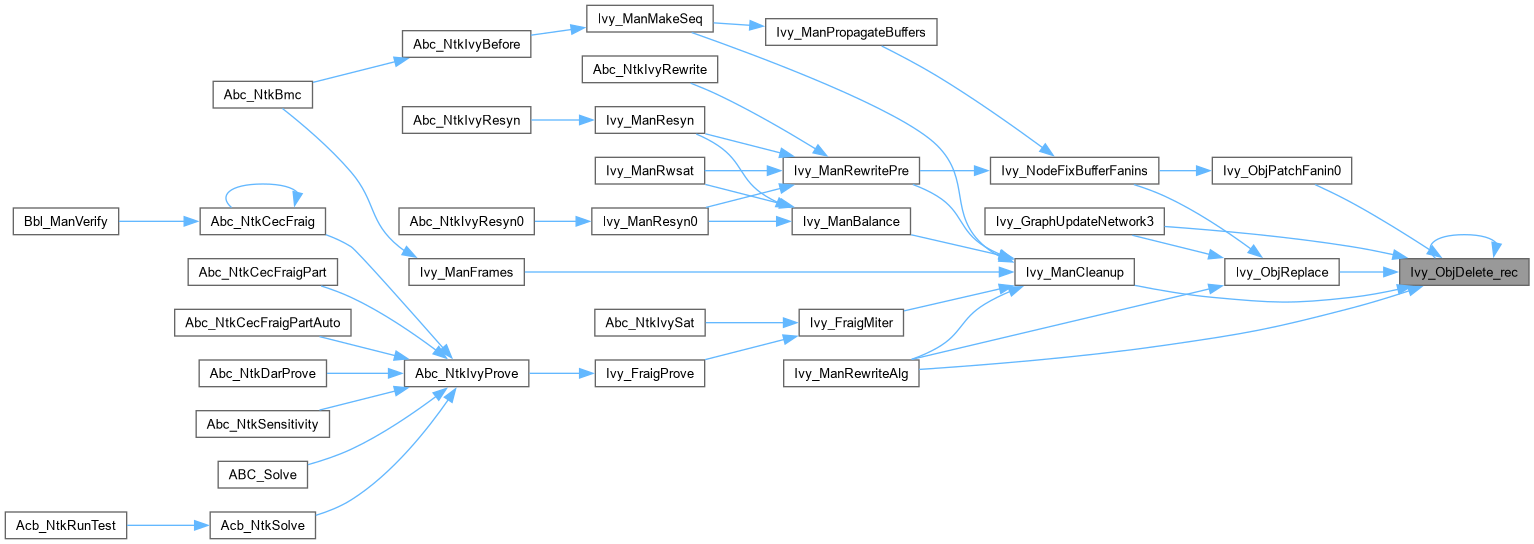
◆ Ivy_ObjDelete_rec()

void Ivy_ObjDelete_rec ( Ivy_Man_t * p,
Ivy_Obj_t * pObj,
int fFreeTop )

Function*************************************************************

Synopsis [Deletes the MFFC of the node.]

Description []

SideEffects []

SeeAlso []

Definition at line 299 of file ivyObj.c.

300{
301 Ivy_Obj_t * pFanin0, * pFanin1;
302 assert( !Ivy_IsComplement(pObj) );
303 assert( !Ivy_ObjIsNone(pObj) );
304 if ( Ivy_ObjIsConst1(pObj) || Ivy_ObjIsPi(pObj) )
305 return;
306 pFanin0 = Ivy_ObjFanin0(pObj);
307 pFanin1 = Ivy_ObjFanin1(pObj);
308 Ivy_ObjDelete( p, pObj, fFreeTop );
309 if ( pFanin0 && !Ivy_ObjIsNone(pFanin0) && Ivy_ObjRefs(pFanin0) == 0 )
310 Ivy_ObjDelete_rec( p, pFanin0, 1 );
311 if ( pFanin1 && !Ivy_ObjIsNone(pFanin1) && Ivy_ObjRefs(pFanin1) == 0 )
312 Ivy_ObjDelete_rec( p, pFanin1, 1 );
313}
void Ivy_ObjDelete(Ivy_Man_t *p, Ivy_Obj_t *pObj, int fFreeTop)
Definition ivyObj.c:255
void Ivy_ObjDelete_rec(Ivy_Man_t *p, Ivy_Obj_t *pObj, int fFreeTop)
Definition ivyObj.c:299
Here is the call graph for this function:
Here is the caller graph for this function:

◆ Ivy_ObjDisconnect()

void Ivy_ObjDisconnect ( Ivy_Man_t * p,
Ivy_Obj_t * pObj )

Function*************************************************************

Synopsis [Connect the object to the fanin.]

Description []

SideEffects []

SeeAlso []

Definition at line 185 of file ivyObj.c.

186{
187 assert( !Ivy_IsComplement(pObj) );
188 assert( Ivy_ObjIsPi(pObj) || Ivy_ObjIsOneFanin(pObj) || Ivy_ObjFanin1(pObj) != NULL );
189 // remove connections
190 if ( pObj->pFanin0 != NULL )
191 {
192 Ivy_ObjRefsDec(Ivy_ObjFanin0(pObj));
193 if ( p->fFanout )
194 Ivy_ObjDeleteFanout( p, Ivy_ObjFanin0(pObj), pObj );
195 }
196 if ( pObj->pFanin1 != NULL )
197 {
198 Ivy_ObjRefsDec(Ivy_ObjFanin1(pObj));
199 if ( p->fFanout )
200 Ivy_ObjDeleteFanout( p, Ivy_ObjFanin1(pObj), pObj );
201 }
202 assert( pObj->pNextFan0 == NULL );
203 assert( pObj->pNextFan1 == NULL );
204 assert( pObj->pPrevFan0 == NULL );
205 assert( pObj->pPrevFan1 == NULL );
206 // remove the node from the structural hash table
207 Ivy_TableDelete( p, pObj );
208 // add the first fanin
209 pObj->pFanin0 = NULL;
210 pObj->pFanin1 = NULL;
211}
void Ivy_ObjDeleteFanout(Ivy_Man_t *p, Ivy_Obj_t *pObj, Ivy_Obj_t *pFanout)
Definition ivyFanout.c:205
void Ivy_TableDelete(Ivy_Man_t *p, Ivy_Obj_t *pObj)
Definition ivyTable.c:132
Ivy_Obj_t * pPrevFan0
Definition ivy.h:91
Ivy_Obj_t * pPrevFan1
Definition ivy.h:92
Ivy_Obj_t * pNextFan1
Definition ivy.h:90
Ivy_Obj_t * pNextFan0
Definition ivy.h:89
Here is the call graph for this function:
Here is the caller graph for this function:

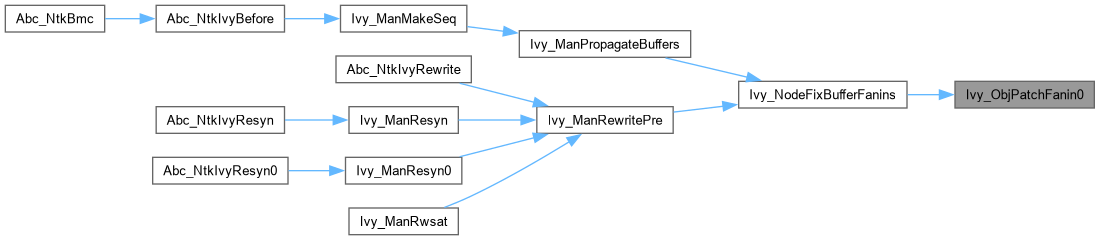
◆ Ivy_ObjPatchFanin0()

void Ivy_ObjPatchFanin0 ( Ivy_Man_t * p,
Ivy_Obj_t * pObj,
Ivy_Obj_t * pFaninNew )

Function*************************************************************

Synopsis [Replaces the first fanin of the node by the new fanin.]

Description []

SideEffects []

SeeAlso []

Definition at line 224 of file ivyObj.c.

225{
226 Ivy_Obj_t * pFaninOld;
227 assert( !Ivy_IsComplement(pObj) );
228 pFaninOld = Ivy_ObjFanin0(pObj);
229 // decrement ref and remove fanout
230 Ivy_ObjRefsDec( pFaninOld );
231 if ( p->fFanout )
232 Ivy_ObjDeleteFanout( p, pFaninOld, pObj );
233 // update the fanin
234 pObj->pFanin0 = pFaninNew;
235 // increment ref and add fanout
236 Ivy_ObjRefsInc( Ivy_Regular(pFaninNew) );
237 if ( p->fFanout )
238 Ivy_ObjAddFanout( p, Ivy_Regular(pFaninNew), pObj );
239 // get rid of old fanin
240 if ( !Ivy_ObjIsPi(pFaninOld) && !Ivy_ObjIsConst1(pFaninOld) && Ivy_ObjRefs(pFaninOld) == 0 )
241 Ivy_ObjDelete_rec( p, pFaninOld, 1 );
242}
Here is the call graph for this function:
Here is the caller graph for this function:

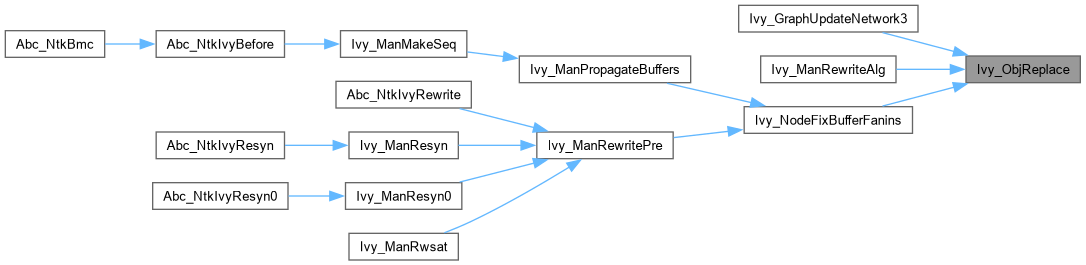
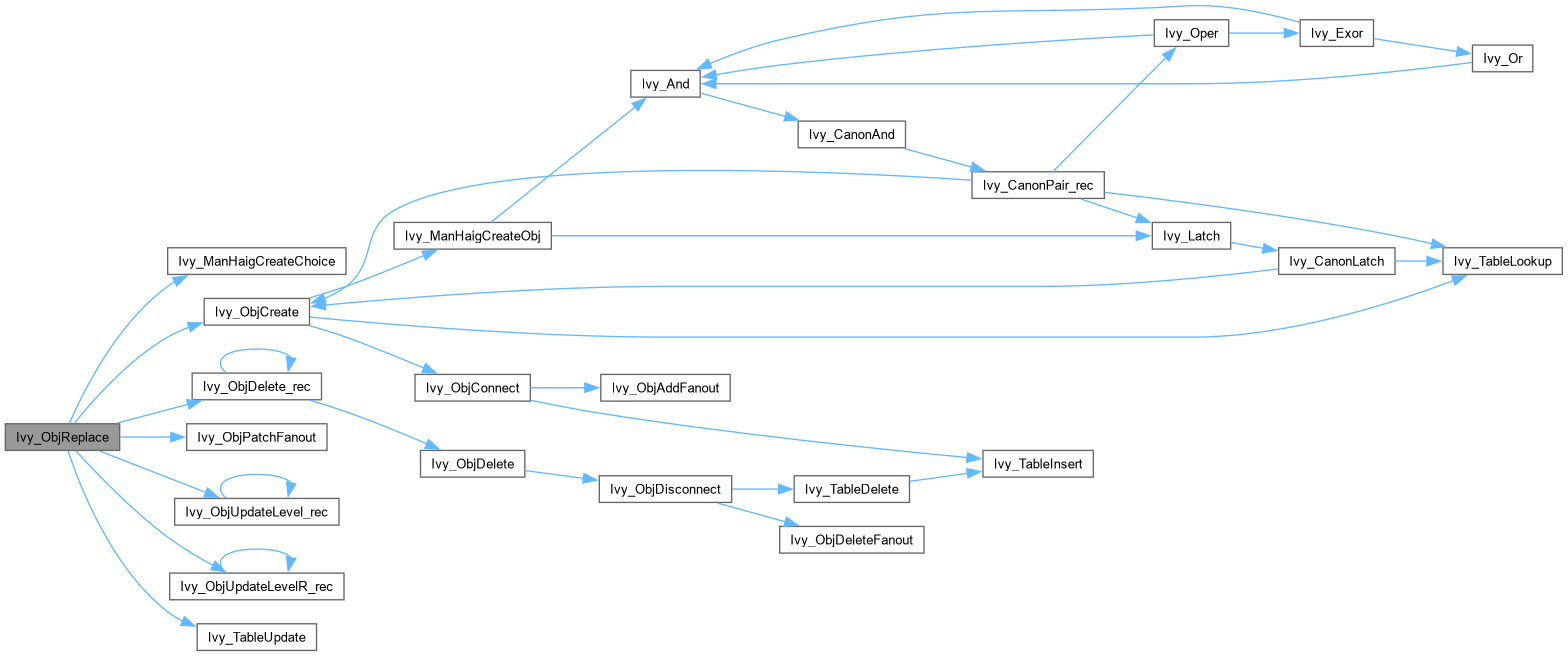
◆ Ivy_ObjReplace()

void Ivy_ObjReplace ( Ivy_Man_t * p,
Ivy_Obj_t * pObjOld,
Ivy_Obj_t * pObjNew,
int fDeleteOld,
int fFreeTop,
int fUpdateLevel )

Function*************************************************************

Synopsis [Replaces one object by another.]

Description [Both objects are currently in the manager. The new object (pObjNew) should be used instead of the old object (pObjOld). If the new object is complemented or used, the buffer is added.]

SideEffects []

SeeAlso []

Definition at line 328 of file ivyObj.c.
329{
330 int nRefsOld;//, clk;
331 // the object to be replaced cannot be complemented
332 assert( !Ivy_IsComplement(pObjOld) );
333 // the object to be replaced cannot be a terminal
334 assert( Ivy_ObjIsNone(pObjOld) || !Ivy_ObjIsPi(pObjOld) );
335 // the object to be used cannot be a PO or assert
336 assert( !Ivy_ObjIsBuf(Ivy_Regular(pObjNew)) );
337 // the object cannot be the same
338 assert( pObjOld != Ivy_Regular(pObjNew) );
339//printf( "Replacing %d by %d.\n", Ivy_Regular(pObjOld)->Id, Ivy_Regular(pObjNew)->Id );
340
341 // if HAIG is defined, create the choice node
342 if ( p->pHaig )
343 {
344// if ( pObjOld->Id == 31 )
345// {
346// Ivy_ManShow( p, 0 );
347// Ivy_ManShow( p->pHaig, 1 );
348// }
349 Ivy_ManHaigCreateChoice( p, pObjOld, pObjNew );
350 }
351 // if the new object is complemented or already used, add the buffer
352 if ( Ivy_IsComplement(pObjNew) || Ivy_ObjIsLatch(pObjNew) || Ivy_ObjRefs(pObjNew) > 0 || Ivy_ObjIsPi(pObjNew) || Ivy_ObjIsConst1(pObjNew) )
353 pObjNew = Ivy_ObjCreate( p, Ivy_ObjCreateGhost(p, pObjNew, NULL, IVY_BUF, IVY_INIT_NONE) );
354 assert( !Ivy_IsComplement(pObjNew) );
355 if ( fUpdateLevel )
356 {
357//clk = Abc_Clock();
358 // if the new node's arrival time is different, recursively update arrival time of the fanouts
359 if ( p->fFanout && !Ivy_ObjIsBuf(pObjNew) && pObjOld->Level != pObjNew->Level )
360 {
361 assert( Ivy_ObjIsNode(pObjOld) );
362 pObjOld->Level = pObjNew->Level;
363 Ivy_ObjUpdateLevel_rec( p, pObjOld );
364 }
365//p->time1 += Abc_Clock() - clk;
366 // if the new node's required time has changed, recursively update required time of the fanins
367//clk = Abc_Clock();
368 if ( p->vRequired )
369 {
370 int ReqNew = Vec_IntEntry(p->vRequired, pObjOld->Id);
371 if ( ReqNew < Vec_IntEntry(p->vRequired, pObjNew->Id) )
372 {
373 Vec_IntWriteEntry( p->vRequired, pObjNew->Id, ReqNew );
374 Ivy_ObjUpdateLevelR_rec( p, pObjNew, ReqNew );
375 }
376 }
377//p->time2 += Abc_Clock() - clk;
378 }
379 // delete the old object
380 if ( fDeleteOld )
381 Ivy_ObjDelete_rec( p, pObjOld, fFreeTop );
382 // make sure object is not pointing to itself
383 assert( Ivy_ObjFanin0(pObjNew) == NULL || pObjOld != Ivy_ObjFanin0(pObjNew) );
384 assert( Ivy_ObjFanin1(pObjNew) == NULL || pObjOld != Ivy_ObjFanin1(pObjNew) );
385 // make sure the old node has no fanin fanout pointers
386 if ( p->fFanout )
387 {
388 assert( pObjOld->pFanout != NULL );
389 assert( pObjNew->pFanout == NULL );
390 pObjNew->pFanout = pObjOld->pFanout;
391 }
392 // transfer the old object
393 assert( Ivy_ObjRefs(pObjNew) == 0 );
394 nRefsOld = pObjOld->nRefs;
395 Ivy_ObjOverwrite( pObjOld, pObjNew );
396 pObjOld->nRefs = nRefsOld;
397 // patch the fanout of the fanins
398 if ( p->fFanout )
399 {
400 Ivy_ObjPatchFanout( p, Ivy_ObjFanin0(pObjOld), pObjNew, pObjOld );
401 if ( Ivy_ObjFanin1(pObjOld) )
402 Ivy_ObjPatchFanout( p, Ivy_ObjFanin1(pObjOld), pObjNew, pObjOld );
403 }
404 // update the hash table
405 Ivy_TableUpdate( p, pObjNew, pObjOld->Id );
406 // recycle the object that was taken over by pObjOld
407 Vec_PtrWriteEntry( p->vObjs, pObjNew->Id, NULL );
408 Ivy_ManRecycleMemory( p, pObjNew );
409 // if the new node is the buffer propagate it
410 if ( p->fFanout && Ivy_ObjIsBuf(pObjOld) )
411 Vec_PtrPush( p->vBufs, pObjOld );
412// Ivy_ManCheckFanouts( p );
413// printf( "\n" );
414/*
415 if ( p->pHaig )
416 {
417 int x;
418 Ivy_ManShow( p, 0, NULL );
419 Ivy_ManShow( p->pHaig, 1, NULL );
420 x = 0;
421 }
422*/
423// if ( Ivy_ManCheckFanoutNums(p) )
424// {
425// int x = 0;
426// }
427}
void Ivy_TableUpdate(Ivy_Man_t *p, Ivy_Obj_t *pObj, int ObjIdNew)
Definition ivyTable.c:165
void Ivy_ManHaigCreateChoice(Ivy_Man_t *p, Ivy_Obj_t *pObjOld, Ivy_Obj_t *pObjNew)
Definition ivyHaig.c:246
void Ivy_ObjUpdateLevel_rec(Ivy_Man_t *p, Ivy_Obj_t *pObj)
Definition ivyUtil.c:382
@ IVY_BUF
Definition ivy.h:60
void Ivy_ObjPatchFanout(Ivy_Man_t *p, Ivy_Obj_t *pObj, Ivy_Obj_t *pFanoutOld, Ivy_Obj_t *pFanoutNew)
Definition ivyFanout.c:237
void Ivy_ObjUpdateLevelR_rec(Ivy_Man_t *p, Ivy_Obj_t *pObj, int ReqNew)
Definition ivyUtil.c:444
Here is the call graph for this function:
Here is the caller graph for this function: