ABC: A System for Sequential Synthesis and Verification
 
Loading...
Searching...
No Matches
ivyUtil.c File Reference
#include "ivy.h"
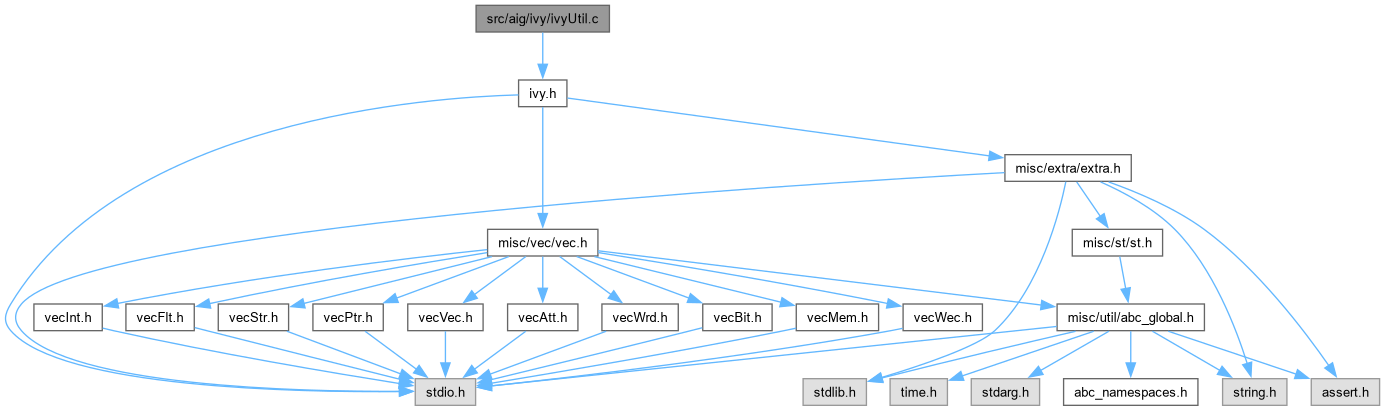
Include dependency graph for ivyUtil.c:

Go to the source code of this file.

Functions

ABC_NAMESPACE_IMPL_START void Ivy_ManIncrementTravId (Ivy_Man_t *p)
 DECLARATIONS ///.
 
void Ivy_ManCleanTravId (Ivy_Man_t *p)
 
void Ivy_ManCollectCut_rec (Ivy_Man_t *p, Ivy_Obj_t *pNode, Vec_Int_t *vNodes)
 
void Ivy_ManCollectCut (Ivy_Man_t *p, Ivy_Obj_t *pRoot, Vec_Int_t *vLeaves, Vec_Int_t *vNodes)
 
unsigned * Ivy_ObjGetTruthStore (int ObjNum, Vec_Int_t *vTruth)
 
void Ivy_ManCutTruthOne (Ivy_Man_t *p, Ivy_Obj_t *pNode, Vec_Int_t *vTruth, int nWords)
 
unsigned * Ivy_ManCutTruth (Ivy_Man_t *p, Ivy_Obj_t *pRoot, Vec_Int_t *vLeaves, Vec_Int_t *vNodes, Vec_Int_t *vTruth)
 
Vec_Int_tIvy_ManLatches (Ivy_Man_t *p)
 
int Ivy_ManLevels (Ivy_Man_t *p)
 
int Ivy_ManResetLevels_rec (Ivy_Obj_t *pObj)
 
void Ivy_ManResetLevels (Ivy_Man_t *p)
 
int Ivy_ObjRefDeref (Ivy_Man_t *p, Ivy_Obj_t *pNode, int fReference, int fLabel)
 
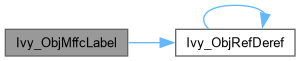
int Ivy_ObjMffcLabel (Ivy_Man_t *p, Ivy_Obj_t *pNode)
 
void Ivy_ObjUpdateLevel_rec (Ivy_Man_t *p, Ivy_Obj_t *pObj)
 
int Ivy_ObjLevelRNew (Ivy_Man_t *p, Ivy_Obj_t *pObj)
 
void Ivy_ObjUpdateLevelR_rec (Ivy_Man_t *p, Ivy_Obj_t *pObj, int ReqNew)
 
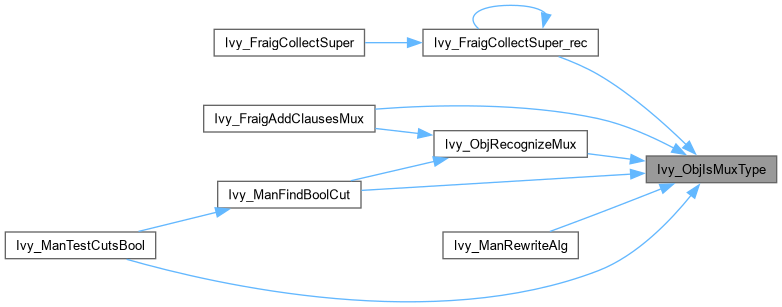
int Ivy_ObjIsMuxType (Ivy_Obj_t *pNode)
 
Ivy_Obj_tIvy_ObjRecognizeMux (Ivy_Obj_t *pNode, Ivy_Obj_t **ppNodeT, Ivy_Obj_t **ppNodeE)
 
Ivy_Obj_tIvy_ObjReal (Ivy_Obj_t *pObj)
 
void Ivy_ObjPrintVerbose (Ivy_Man_t *p, Ivy_Obj_t *pObj, int fHaig)
 
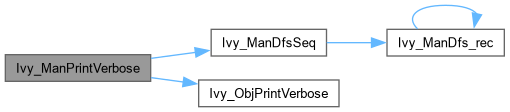
void Ivy_ManPrintVerbose (Ivy_Man_t *p, int fHaig)
 
int Ivy_CutTruthPrint2 (Ivy_Man_t *p, Ivy_Cut_t *pCut, unsigned uTruth)
 
int Ivy_CutTruthPrint (Ivy_Man_t *p, Ivy_Cut_t *pCut, unsigned uTruth)
 

Function Documentation

◆ Ivy_CutTruthPrint()

int Ivy_CutTruthPrint ( Ivy_Man_t * p,
Ivy_Cut_t * pCut,
unsigned uTruth )

Function*************************************************************

Synopsis [Performs incremental rewriting of the AIG.]

Description []

SideEffects []

SeeAlso []

Definition at line 771 of file ivyUtil.c.

772{
773 Vec_Ptr_t * vArray;
774 Ivy_Obj_t * pObj, * pFanout;
775 int nLatches = 0;
776 int nPresent = 0;
777 int i, k;
778 int fVerbose = 0;
779
780 if ( fVerbose )
781 printf( "Trying cut : {" );
782 for ( i = 0; i < pCut->nSize; i++ )
783 {
784 if ( fVerbose )
785 printf( " %6d(%d)", Ivy_LeafId(pCut->pArray[i]), Ivy_LeafLat(pCut->pArray[i]) );
786 nLatches += Ivy_LeafLat(pCut->pArray[i]);
787 }
788 if ( fVerbose )
789 printf( " } " );
790 if ( fVerbose )
791 printf( "Latches = %d. ", nLatches );
792
793 // check if there are latches on the fanout edges
794 vArray = Vec_PtrAlloc( 100 );
795 for ( i = 0; i < pCut->nSize; i++ )
796 {
797 pObj = Ivy_ManObj( p, Ivy_LeafId(pCut->pArray[i]) );
798 Ivy_ObjForEachFanout( p, pObj, vArray, pFanout, k )
799 {
800 if ( Ivy_ObjIsLatch(pFanout) )
801 {
802 nPresent++;
803 break;
804 }
805 }
806 }
807 Vec_PtrSize( vArray );
808 if ( fVerbose )
809 {
810 printf( "Present = %d. ", nPresent );
811 if ( nLatches > nPresent )
812 printf( "Clauses = %d. ", 2*(nLatches - nPresent) );
813 printf( "\n" );
814 }
815 return ( nLatches > nPresent ) ? 2*(nLatches - nPresent) : 0;
816}
Cube * p
Definition exorList.c:222
#define Ivy_ObjForEachFanout(p, pObj, vArray, pFanout, i)
Definition ivy.h:411
struct Ivy_Obj_t_ Ivy_Obj_t
Definition ivy.h:47
short nSize
Definition ivy.h:159
int pArray[IVY_CUT_INPUT]
Definition ivy.h:161
typedefABC_NAMESPACE_HEADER_START struct Vec_Ptr_t_ Vec_Ptr_t
INCLUDES ///.
Definition vecPtr.h:42

◆ Ivy_CutTruthPrint2()

int Ivy_CutTruthPrint2 ( Ivy_Man_t * p,
Ivy_Cut_t * pCut,
unsigned uTruth )

Function*************************************************************

Synopsis [Performs incremental rewriting of the AIG.]

Description []

SideEffects []

SeeAlso []

Definition at line 749 of file ivyUtil.c.

750{
751 int i;
752 printf( "Trying cut : {" );
753 for ( i = 0; i < pCut->nSize; i++ )
754 printf( " %6d(%d)", Ivy_LeafId(pCut->pArray[i]), Ivy_LeafLat(pCut->pArray[i]) );
755 printf( " } " );
756 Extra_PrintBinary( stdout, &uTruth, 16 ); printf( "\n" );
757 return 0;
758}
void Extra_PrintBinary(FILE *pFile, unsigned Sign[], int nBits)
Here is the call graph for this function:

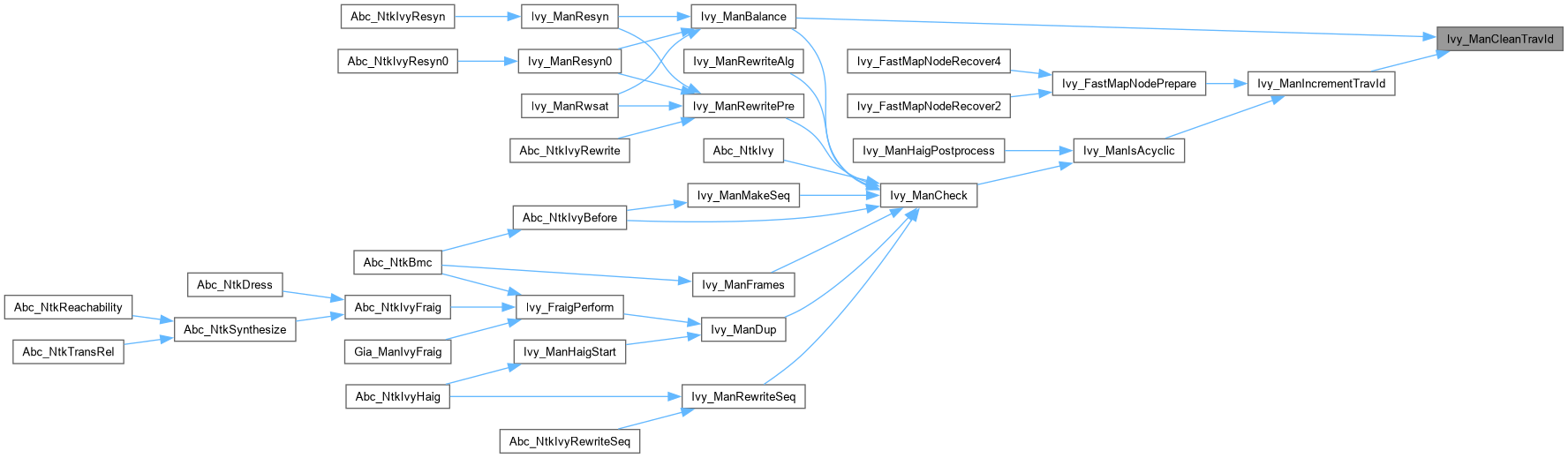
◆ Ivy_ManCleanTravId()

void Ivy_ManCleanTravId ( Ivy_Man_t * p)

Function*************************************************************

Synopsis [Sets the DFS ordering of the nodes.]

Description []

SideEffects []

SeeAlso []

Definition at line 63 of file ivyUtil.c.
64{
65 Ivy_Obj_t * pObj;
66 int i;
67 p->nTravIds = 1;
68 Ivy_ManForEachObj( p, pObj, i )
69 pObj->TravId = 0;
70}
#define Ivy_ManForEachObj(p, pObj, i)
Definition ivy.h:393
int TravId
Definition ivy.h:76
Here is the caller graph for this function:

◆ Ivy_ManCollectCut()

void Ivy_ManCollectCut ( Ivy_Man_t * p,
Ivy_Obj_t * pRoot,
Vec_Int_t * vLeaves,
Vec_Int_t * vNodes )

Function*************************************************************

Synopsis [Computes truth table of the cut.]

Description [Does not modify the array of leaves. Uses array vTruth to store temporary truth tables. The returned pointer should be used immediately.]

SideEffects []

SeeAlso []

Definition at line 106 of file ivyUtil.c.

107{
108 int i, Leaf;
109 // collect and mark the leaves
110 Vec_IntClear( vNodes );
111 Vec_IntForEachEntry( vLeaves, Leaf, i )
112 {
113 Vec_IntPush( vNodes, Leaf );
114 Ivy_ManObj(p, Leaf)->fMarkA = 1;
115 }
116 // collect and mark the nodes
117 Ivy_ManCollectCut_rec( p, pRoot, vNodes );
118 // clean the nodes
119 Vec_IntForEachEntry( vNodes, Leaf, i )
120 Ivy_ManObj(p, Leaf)->fMarkA = 0;
121}
void Ivy_ManCollectCut_rec(Ivy_Man_t *p, Ivy_Obj_t *pNode, Vec_Int_t *vNodes)
Definition ivyUtil.c:83
#define Vec_IntForEachEntry(vVec, Entry, i)
MACRO DEFINITIONS ///.
Definition vecInt.h:54
Here is the call graph for this function:
Here is the caller graph for this function:

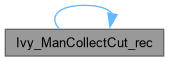
◆ Ivy_ManCollectCut_rec()

void Ivy_ManCollectCut_rec ( Ivy_Man_t * p,
Ivy_Obj_t * pNode,
Vec_Int_t * vNodes )

Function*************************************************************

Synopsis [Computes truth table of the cut.]

Description []

SideEffects []

SeeAlso []

Definition at line 83 of file ivyUtil.c.
84{
85 if ( pNode->fMarkA )
86 return;
87 pNode->fMarkA = 1;
88 assert( Ivy_ObjIsAnd(pNode) || Ivy_ObjIsExor(pNode) );
89 Ivy_ManCollectCut_rec( p, Ivy_ObjFanin0(pNode), vNodes );
90 Ivy_ManCollectCut_rec( p, Ivy_ObjFanin1(pNode), vNodes );
91 Vec_IntPush( vNodes, pNode->Id );
92}
int Id
Definition ivy.h:75
unsigned fMarkA
Definition ivy.h:78
#define assert(ex)
Definition util_old.h:213
Here is the call graph for this function:
Here is the caller graph for this function:

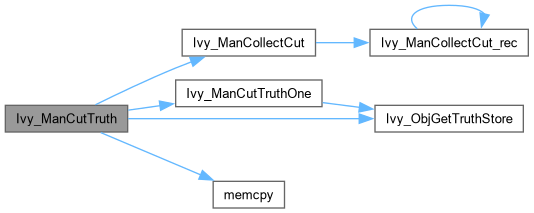
◆ Ivy_ManCutTruth()

unsigned * Ivy_ManCutTruth ( Ivy_Man_t * p,
Ivy_Obj_t * pRoot,
Vec_Int_t * vLeaves,
Vec_Int_t * vNodes,
Vec_Int_t * vTruth )

Function*************************************************************

Synopsis [Computes truth table of the cut.]

Description [Does not modify the array of leaves. Uses array vTruth to store temporary truth tables. The returned pointer should be used immediately.]

SideEffects []

SeeAlso []

Definition at line 186 of file ivyUtil.c.
187{
188 static unsigned uTruths[8][8] = { // elementary truth tables
189 { 0xAAAAAAAA,0xAAAAAAAA,0xAAAAAAAA,0xAAAAAAAA,0xAAAAAAAA,0xAAAAAAAA,0xAAAAAAAA,0xAAAAAAAA },
190 { 0xCCCCCCCC,0xCCCCCCCC,0xCCCCCCCC,0xCCCCCCCC,0xCCCCCCCC,0xCCCCCCCC,0xCCCCCCCC,0xCCCCCCCC },
191 { 0xF0F0F0F0,0xF0F0F0F0,0xF0F0F0F0,0xF0F0F0F0,0xF0F0F0F0,0xF0F0F0F0,0xF0F0F0F0,0xF0F0F0F0 },
192 { 0xFF00FF00,0xFF00FF00,0xFF00FF00,0xFF00FF00,0xFF00FF00,0xFF00FF00,0xFF00FF00,0xFF00FF00 },
193 { 0xFFFF0000,0xFFFF0000,0xFFFF0000,0xFFFF0000,0xFFFF0000,0xFFFF0000,0xFFFF0000,0xFFFF0000 },
194 { 0x00000000,0xFFFFFFFF,0x00000000,0xFFFFFFFF,0x00000000,0xFFFFFFFF,0x00000000,0xFFFFFFFF },
195 { 0x00000000,0x00000000,0xFFFFFFFF,0xFFFFFFFF,0x00000000,0x00000000,0xFFFFFFFF,0xFFFFFFFF },
196 { 0x00000000,0x00000000,0x00000000,0x00000000,0xFFFFFFFF,0xFFFFFFFF,0xFFFFFFFF,0xFFFFFFFF }
197 };
198 int i, Leaf;
199 // collect the cut
200 Ivy_ManCollectCut( p, pRoot, vLeaves, vNodes );
201 // set the node numbers
202 Vec_IntForEachEntry( vNodes, Leaf, i )
203 Ivy_ManObj(p, Leaf)->TravId = i;
204 // alloc enough memory
205 Vec_IntClear( vTruth );
206 Vec_IntGrow( vTruth, 8 * Vec_IntSize(vNodes) );
207 // set the elementary truth tables
208 Vec_IntForEachEntry( vLeaves, Leaf, i )
209 memcpy( Ivy_ObjGetTruthStore(i, vTruth), uTruths[i], 8 * sizeof(unsigned) );
210 // compute truths for other nodes
211 Vec_IntForEachEntryStart( vNodes, Leaf, i, Vec_IntSize(vLeaves) )
212 Ivy_ManCutTruthOne( p, Ivy_ManObj(p, Leaf), vTruth, 8 );
213 return Ivy_ObjGetTruthStore( pRoot->TravId, vTruth );
214}
void Ivy_ManCutTruthOne(Ivy_Man_t *p, Ivy_Obj_t *pNode, Vec_Int_t *vTruth, int nWords)
Definition ivyUtil.c:150
unsigned * Ivy_ObjGetTruthStore(int ObjNum, Vec_Int_t *vTruth)
Definition ivyUtil.c:134
void Ivy_ManCollectCut(Ivy_Man_t *p, Ivy_Obj_t *pRoot, Vec_Int_t *vLeaves, Vec_Int_t *vNodes)
Definition ivyUtil.c:106
char * memcpy()
#define Vec_IntForEachEntryStart(vVec, Entry, i, Start)
Definition vecInt.h:56
Here is the call graph for this function:

◆ Ivy_ManCutTruthOne()

void Ivy_ManCutTruthOne ( Ivy_Man_t * p,
Ivy_Obj_t * pNode,
Vec_Int_t * vTruth,
int nWords )

Function*************************************************************

Synopsis [Computes truth table of the cut.]

Description []

SideEffects []

SeeAlso []

Definition at line 150 of file ivyUtil.c.

151{
152 unsigned * pTruth, * pTruth0, * pTruth1;
153 int i;
154 pTruth = Ivy_ObjGetTruthStore( pNode->TravId, vTruth );
155 pTruth0 = Ivy_ObjGetTruthStore( Ivy_ObjFanin0(pNode)->TravId, vTruth );
156 pTruth1 = Ivy_ObjGetTruthStore( Ivy_ObjFanin1(pNode)->TravId, vTruth );
157 if ( Ivy_ObjIsExor(pNode) )
158 for ( i = 0; i < nWords; i++ )
159 pTruth[i] = pTruth0[i] ^ pTruth1[i];
160 else if ( !Ivy_ObjFaninC0(pNode) && !Ivy_ObjFaninC1(pNode) )
161 for ( i = 0; i < nWords; i++ )
162 pTruth[i] = pTruth0[i] & pTruth1[i];
163 else if ( !Ivy_ObjFaninC0(pNode) && Ivy_ObjFaninC1(pNode) )
164 for ( i = 0; i < nWords; i++ )
165 pTruth[i] = pTruth0[i] & ~pTruth1[i];
166 else if ( Ivy_ObjFaninC0(pNode) && !Ivy_ObjFaninC1(pNode) )
167 for ( i = 0; i < nWords; i++ )
168 pTruth[i] = ~pTruth0[i] & pTruth1[i];
169 else // if ( Ivy_ObjFaninC0(pNode) && Ivy_ObjFaninC1(pNode) )
170 for ( i = 0; i < nWords; i++ )
171 pTruth[i] = ~pTruth0[i] & ~pTruth1[i];
172}
int nWords
Definition abcNpn.c:127
Here is the call graph for this function:
Here is the caller graph for this function:

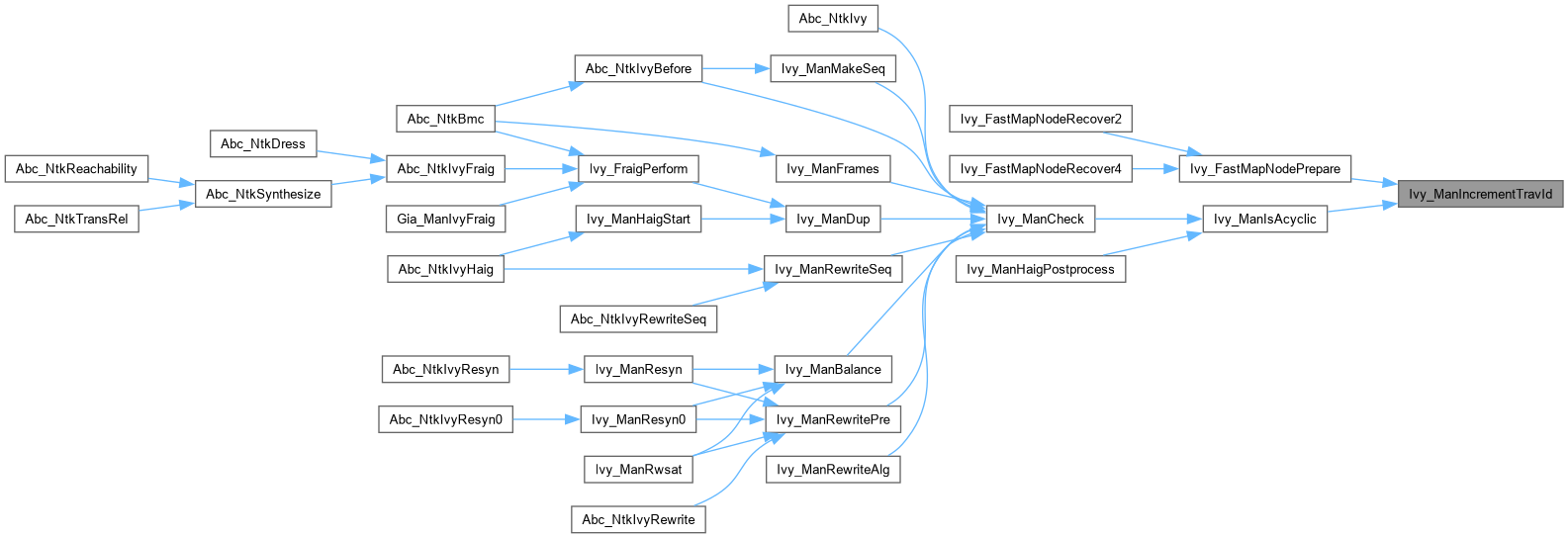
◆ Ivy_ManIncrementTravId()

ABC_NAMESPACE_IMPL_START void Ivy_ManIncrementTravId ( Ivy_Man_t * p)

DECLARATIONS ///.

CFile****************************************************************

FileName [ivyUtil.c]

SystemName [ABC: Logic synthesis and verification system.]

PackageName [And-Inverter Graph package.]

Synopsis [Various procedures.]

Author [Alan Mishchenko]

Affiliation [UC Berkeley]

Date [Ver. 1.0. Started - May 11, 2006.]

Revision [

Id
ivyUtil.c,v 1.00 2006/05/11 00:00:00 alanmi Exp

] FUNCTION DEFINITIONS /// Function*************************************************************

Synopsis [Increments the current traversal ID of the network.]

Description []

SideEffects []

SeeAlso []

Definition at line 45 of file ivyUtil.c.

46{
47 if ( p->nTravIds >= (1<<30)-1 - 1000 )
49 p->nTravIds++;
50}
void Ivy_ManCleanTravId(Ivy_Man_t *p)
Definition ivyUtil.c:63
Here is the call graph for this function:
Here is the caller graph for this function:

◆ Ivy_ManLatches()

Vec_Int_t * Ivy_ManLatches ( Ivy_Man_t * p)

Function*************************************************************

Synopsis [Collect the latches.]

Description []

SideEffects []

SeeAlso []

Definition at line 227 of file ivyUtil.c.

228{
229 Vec_Int_t * vLatches;
230 Ivy_Obj_t * pObj;
231 int i;
232 vLatches = Vec_IntAlloc( Ivy_ManLatchNum(p) );
233 Ivy_ManForEachLatch( p, pObj, i )
234 Vec_IntPush( vLatches, pObj->Id );
235 return vLatches;
236}
typedefABC_NAMESPACE_IMPL_START struct Vec_Int_t_ Vec_Int_t
DECLARATIONS ///.
Definition bblif.c:37
#define Ivy_ManForEachLatch(p, pObj, i)
Definition ivy.h:405

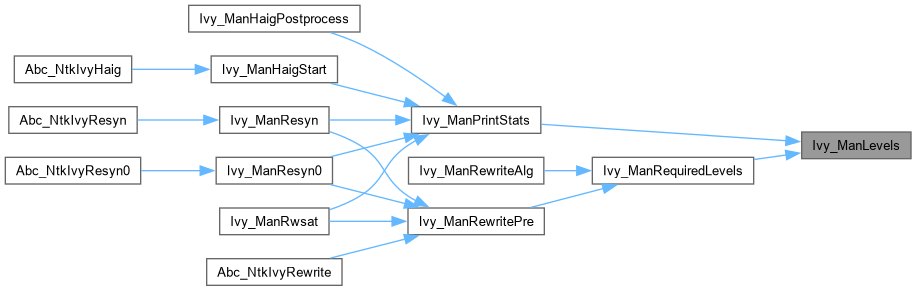
◆ Ivy_ManLevels()

int Ivy_ManLevels ( Ivy_Man_t * p)

Function*************************************************************

Synopsis [Collect the latches.]

Description []

SideEffects []

SeeAlso []

Definition at line 249 of file ivyUtil.c.
250{
251 Ivy_Obj_t * pObj;
252 int i, LevelMax = 0;
253 Ivy_ManForEachPo( p, pObj, i )
254 LevelMax = IVY_MAX( LevelMax, (int)Ivy_ObjFanin0(pObj)->Level );
255 return LevelMax;
256}
#define IVY_MAX(a, b)
Definition ivy.h:183
#define Ivy_ManForEachPo(p, pObj, i)
Definition ivy.h:390
Here is the caller graph for this function:

◆ Ivy_ManPrintVerbose()

void Ivy_ManPrintVerbose ( Ivy_Man_t * p,
int fHaig )

Function*************************************************************

Synopsis [Prints node in HAIG.]

Description []

SideEffects []

SeeAlso []

Definition at line 714 of file ivyUtil.c.
715{
716 Vec_Int_t * vNodes;
717 Ivy_Obj_t * pObj;
718 int i;
719 printf( "PIs: " );
720 Ivy_ManForEachPi( p, pObj, i )
721 printf( " %d", pObj->Id );
722 printf( "\n" );
723 printf( "POs: " );
724 Ivy_ManForEachPo( p, pObj, i )
725 printf( " %d", pObj->Id );
726 printf( "\n" );
727 printf( "Latches: " );
728 Ivy_ManForEachLatch( p, pObj, i )
729 printf( " %d=%d%s", pObj->Id, Ivy_ObjFanin0(pObj)->Id, (Ivy_ObjFaninC0(pObj)? "\'" : " ") );
730 printf( "\n" );
731 vNodes = Ivy_ManDfsSeq( p, NULL );
732 Ivy_ManForEachNodeVec( p, vNodes, pObj, i )
733 Ivy_ObjPrintVerbose( p, pObj, fHaig ), printf( "\n" );
734 printf( "\n" );
735 Vec_IntFree( vNodes );
736}
void Ivy_ObjPrintVerbose(Ivy_Man_t *p, Ivy_Obj_t *pObj, int fHaig)
Definition ivyUtil.c:629
Vec_Int_t * Ivy_ManDfsSeq(Ivy_Man_t *p, Vec_Int_t **pvLatches)
Definition ivyDfs.c:121
#define Ivy_ManForEachNodeVec(p, vIds, pObj, i)
Definition ivy.h:408
#define Ivy_ManForEachPi(p, pObj, i)
ITERATORS ///.
Definition ivy.h:387
Here is the call graph for this function:

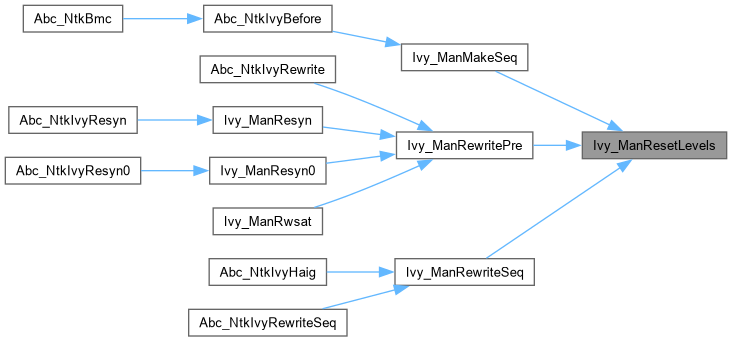
◆ Ivy_ManResetLevels()

void Ivy_ManResetLevels ( Ivy_Man_t * p)

Function*************************************************************

Synopsis [Collect the latches.]

Description []

SideEffects []

SeeAlso []

Definition at line 292 of file ivyUtil.c.

293{
294 Ivy_Obj_t * pObj;
295 int i;
296 Ivy_ManForEachObj( p, pObj, i )
297 pObj->Level = 0;
298 Ivy_ManForEachCo( p, pObj, i )
299 Ivy_ManResetLevels_rec( Ivy_ObjFanin0(pObj) );
300}
int Ivy_ManResetLevels_rec(Ivy_Obj_t *pObj)
Definition ivyUtil.c:269
#define Ivy_ManForEachCo(p, pObj, i)
Definition ivy.h:399
unsigned Level
Definition ivy.h:84
Here is the call graph for this function:
Here is the caller graph for this function:

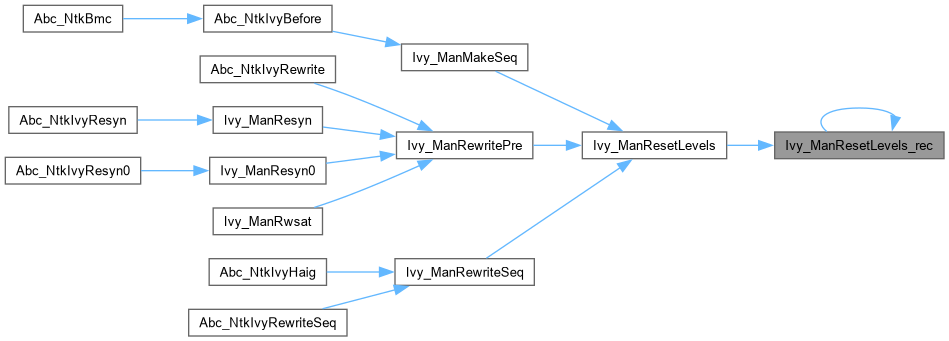
◆ Ivy_ManResetLevels_rec()

int Ivy_ManResetLevels_rec ( Ivy_Obj_t * pObj)

Function*************************************************************

Synopsis [Collect the latches.]

Description []

SideEffects []

SeeAlso []

Definition at line 269 of file ivyUtil.c.
270{
271 if ( pObj->Level || Ivy_ObjIsCi(pObj) || Ivy_ObjIsConst1(pObj) )
272 return pObj->Level;
273 if ( Ivy_ObjIsBuf(pObj) )
274 return pObj->Level = Ivy_ManResetLevels_rec( Ivy_ObjFanin0(pObj) );
275 assert( Ivy_ObjIsNode(pObj) );
276 Ivy_ManResetLevels_rec( Ivy_ObjFanin0(pObj) );
277 Ivy_ManResetLevels_rec( Ivy_ObjFanin1(pObj) );
278 return pObj->Level = Ivy_ObjLevelNew( pObj );
279}
Here is the call graph for this function:
Here is the caller graph for this function:

◆ Ivy_ObjGetTruthStore()

unsigned * Ivy_ObjGetTruthStore ( int ObjNum,
Vec_Int_t * vTruth )

Function*************************************************************

Synopsis [Returns the pointer to the truth table.]

Description []

SideEffects []

SeeAlso []

Definition at line 134 of file ivyUtil.c.

135{
136 return ((unsigned *)Vec_IntArray(vTruth)) + 8 * ObjNum;
137}
Here is the caller graph for this function:

◆ Ivy_ObjIsMuxType()

int Ivy_ObjIsMuxType ( Ivy_Obj_t * pNode)

Function*************************************************************

Synopsis [Returns 1 if the node is the root of MUX or EXOR/NEXOR.]

Description []

SideEffects []

SeeAlso []

Definition at line 479 of file ivyUtil.c.
480{
481 Ivy_Obj_t * pNode0, * pNode1;
482 // check that the node is regular
483 assert( !Ivy_IsComplement(pNode) );
484 // if the node is not AND, this is not MUX
485 if ( !Ivy_ObjIsAnd(pNode) )
486 return 0;
487 // if the children are not complemented, this is not MUX
488 if ( !Ivy_ObjFaninC0(pNode) || !Ivy_ObjFaninC1(pNode) )
489 return 0;
490 // get children
491 pNode0 = Ivy_ObjFanin0(pNode);
492 pNode1 = Ivy_ObjFanin1(pNode);
493 // if the children are not ANDs, this is not MUX
494 if ( !Ivy_ObjIsAnd(pNode0) || !Ivy_ObjIsAnd(pNode1) )
495 return 0;
496 // otherwise the node is MUX iff it has a pair of equal grandchildren
497 return (Ivy_ObjFaninId0(pNode0) == Ivy_ObjFaninId0(pNode1) && (Ivy_ObjFaninC0(pNode0) ^ Ivy_ObjFaninC0(pNode1))) ||
498 (Ivy_ObjFaninId0(pNode0) == Ivy_ObjFaninId1(pNode1) && (Ivy_ObjFaninC0(pNode0) ^ Ivy_ObjFaninC1(pNode1))) ||
499 (Ivy_ObjFaninId1(pNode0) == Ivy_ObjFaninId0(pNode1) && (Ivy_ObjFaninC1(pNode0) ^ Ivy_ObjFaninC0(pNode1))) ||
500 (Ivy_ObjFaninId1(pNode0) == Ivy_ObjFaninId1(pNode1) && (Ivy_ObjFaninC1(pNode0) ^ Ivy_ObjFaninC1(pNode1)));
501}
Here is the caller graph for this function:

◆ Ivy_ObjLevelRNew()

int Ivy_ObjLevelRNew ( Ivy_Man_t * p,
Ivy_Obj_t * pObj )

Function*************************************************************

Synopsis [Compute the new required level.]

Description []

SideEffects []

SeeAlso []

Definition at line 417 of file ivyUtil.c.

418{
419 Ivy_Obj_t * pFanout;
420 Vec_Ptr_t * vFanouts;
421 int i, Required, LevelNew = 1000000;
422 assert( p->fFanout && p->vRequired );
423 vFanouts = Vec_PtrAlloc( 10 );
424 Ivy_ObjForEachFanout( p, pObj, vFanouts, pFanout, i )
425 {
426 Required = Vec_IntEntry(p->vRequired, pFanout->Id);
427 LevelNew = IVY_MIN( LevelNew, Required );
428 }
429 Vec_PtrFree( vFanouts );
430 return LevelNew - 1;
431}
#define IVY_MIN(a, b)
MACRO DEFINITIONS ///.
Definition ivy.h:182

◆ Ivy_ObjMffcLabel()

int Ivy_ObjMffcLabel ( Ivy_Man_t * p,
Ivy_Obj_t * pNode )

Function*************************************************************

Synopsis [Labels MFFC with the current label.]

Description []

SideEffects []

SeeAlso []

Definition at line 359 of file ivyUtil.c.
360{
361 int nConeSize1, nConeSize2;
362 assert( !Ivy_IsComplement( pNode ) );
363 assert( Ivy_ObjIsNode( pNode ) );
364 nConeSize1 = Ivy_ObjRefDeref( p, pNode, 0, 1 ); // dereference
365 nConeSize2 = Ivy_ObjRefDeref( p, pNode, 1, 0 ); // reference
366 assert( nConeSize1 == nConeSize2 );
367 assert( nConeSize1 > 0 );
368 return nConeSize1;
369}
int Ivy_ObjRefDeref(Ivy_Man_t *p, Ivy_Obj_t *pNode, int fReference, int fLabel)
Definition ivyUtil.c:313
Here is the call graph for this function:

◆ Ivy_ObjPrintVerbose()

void Ivy_ObjPrintVerbose ( Ivy_Man_t * p,
Ivy_Obj_t * pObj,
int fHaig )

Function*************************************************************

Synopsis [Prints node in HAIG.]

Description []

SideEffects []

SeeAlso []

Definition at line 629 of file ivyUtil.c.

630{
631 Ivy_Obj_t * pTemp;
632 int fShowFanouts = 0;
633 assert( !Ivy_IsComplement(pObj) );
634 printf( "Node %5d : ", Ivy_ObjId(pObj) );
635 if ( Ivy_ObjIsConst1(pObj) )
636 printf( "constant 1" );
637 else if ( Ivy_ObjIsPi(pObj) )
638 printf( "PI" );
639 else if ( Ivy_ObjIsPo(pObj) )
640 printf( "PO" );
641 else if ( Ivy_ObjIsLatch(pObj) )
642 printf( "latch (%d%s)", Ivy_ObjFanin0(pObj)->Id, (Ivy_ObjFaninC0(pObj)? "\'" : " ") );
643 else if ( Ivy_ObjIsBuf(pObj) )
644 printf( "buffer (%d%s)", Ivy_ObjFanin0(pObj)->Id, (Ivy_ObjFaninC0(pObj)? "\'" : " ") );
645 else
646 printf( "AND( %5d%s, %5d%s )",
647 Ivy_ObjFanin0(pObj)->Id, (Ivy_ObjFaninC0(pObj)? "\'" : " "),
648 Ivy_ObjFanin1(pObj)->Id, (Ivy_ObjFaninC1(pObj)? "\'" : " ") );
649 printf( " (refs = %3d)", Ivy_ObjRefs(pObj) );
650 if ( fShowFanouts )
651 {
652 Vec_Ptr_t * vFanouts;
653 Ivy_Obj_t * pFanout;
654 int i;
655 vFanouts = Vec_PtrAlloc( 10 );
656 printf( "\nFanouts:\n" );
657 Ivy_ObjForEachFanout( p, pObj, vFanouts, pFanout, i )
658 {
659 printf( " " );
660 printf( "Node %5d : ", Ivy_ObjId(pFanout) );
661 if ( Ivy_ObjIsPo(pFanout) )
662 printf( "PO" );
663 else if ( Ivy_ObjIsLatch(pFanout) )
664 printf( "latch (%d%s)", Ivy_ObjFanin0(pFanout)->Id, (Ivy_ObjFaninC0(pFanout)? "\'" : " ") );
665 else if ( Ivy_ObjIsBuf(pFanout) )
666 printf( "buffer (%d%s)", Ivy_ObjFanin0(pFanout)->Id, (Ivy_ObjFaninC0(pFanout)? "\'" : " ") );
667 else
668 printf( "AND( %5d%s, %5d%s )",
669 Ivy_ObjFanin0(pFanout)->Id, (Ivy_ObjFaninC0(pFanout)? "\'" : " "),
670 Ivy_ObjFanin1(pFanout)->Id, (Ivy_ObjFaninC1(pFanout)? "\'" : " ") );
671 printf( "\n" );
672 }
673 Vec_PtrFree( vFanouts );
674 return;
675 }
676 if ( !fHaig )
677 {
678 if ( pObj->pEquiv == NULL )
679 printf( " HAIG node not given" );
680 else
681 printf( " HAIG node = %d%s", Ivy_Regular(pObj->pEquiv)->Id, (Ivy_IsComplement(pObj->pEquiv)? "\'" : " ") );
682 return;
683 }
684 if ( pObj->pEquiv == NULL )
685 return;
686 // there are choices
687 if ( Ivy_ObjRefs(pObj) > 0 )
688 {
689 // print equivalence class
690 printf( " { %5d ", pObj->Id );
691 assert( !Ivy_IsComplement(pObj->pEquiv) );
692 for ( pTemp = pObj->pEquiv; pTemp != pObj; pTemp = Ivy_Regular(pTemp->pEquiv) )
693 printf( " %5d%s", pTemp->Id, (Ivy_IsComplement(pTemp->pEquiv)? "\'" : " ") );
694 printf( " }" );
695 return;
696 }
697 // this is a secondary node
698 for ( pTemp = Ivy_Regular(pObj->pEquiv); Ivy_ObjRefs(pTemp) == 0; pTemp = Ivy_Regular(pTemp->pEquiv) );
699 assert( Ivy_ObjRefs(pTemp) > 0 );
700 printf( " class of %d", pTemp->Id );
701}
Ivy_Obj_t * pEquiv
Definition ivy.h:93
Here is the caller graph for this function:

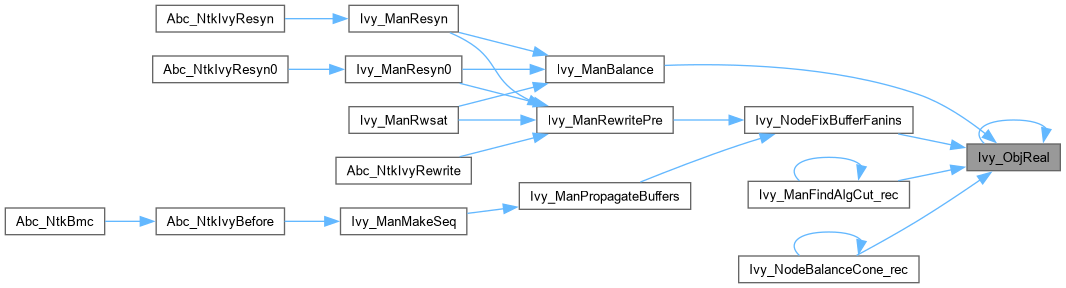
◆ Ivy_ObjReal()

Ivy_Obj_t * Ivy_ObjReal ( Ivy_Obj_t * pObj)

Function*************************************************************

Synopsis [Returns the real fanin.]

Description []

SideEffects []

SeeAlso []

Definition at line 609 of file ivyUtil.c.
610{
611 Ivy_Obj_t * pFanin;
612 if ( pObj == NULL || !Ivy_ObjIsBuf( Ivy_Regular(pObj) ) )
613 return pObj;
614 pFanin = Ivy_ObjReal( Ivy_ObjChild0(Ivy_Regular(pObj)) );
615 return Ivy_NotCond( pFanin, Ivy_IsComplement(pObj) );
616}
Ivy_Obj_t * Ivy_ObjReal(Ivy_Obj_t *pObj)
Definition ivyUtil.c:609
Here is the call graph for this function:
Here is the caller graph for this function:

◆ Ivy_ObjRecognizeMux()

Ivy_Obj_t * Ivy_ObjRecognizeMux ( Ivy_Obj_t * pNode,
Ivy_Obj_t ** ppNodeT,
Ivy_Obj_t ** ppNodeE )

Function*************************************************************

Synopsis [Recognizes what nodes are control and data inputs of a MUX.]

Description [If the node is a MUX, returns the control variable C. Assigns nodes T and E to be the then and else variables of the MUX. Node C is never complemented. Nodes T and E can be complemented. This function also recognizes EXOR/NEXOR gates as MUXes.]

SideEffects []

SeeAlso []

Definition at line 517 of file ivyUtil.c.

518{
519 Ivy_Obj_t * pNode0, * pNode1;
520 assert( !Ivy_IsComplement(pNode) );
521 assert( Ivy_ObjIsMuxType(pNode) );
522 // get children
523 pNode0 = Ivy_ObjFanin0(pNode);
524 pNode1 = Ivy_ObjFanin1(pNode);
525 // find the control variable
526// if ( pNode1->p1 == Fraig_Not(pNode2->p1) )
527 if ( Ivy_ObjFaninId0(pNode0) == Ivy_ObjFaninId0(pNode1) && (Ivy_ObjFaninC0(pNode0) ^ Ivy_ObjFaninC0(pNode1)) )
528 {
529// if ( Fraig_IsComplement(pNode1->p1) )
530 if ( Ivy_ObjFaninC0(pNode0) )
531 { // pNode2->p1 is positive phase of C
532 *ppNodeT = Ivy_Not(Ivy_ObjChild1(pNode1));//pNode2->p2);
533 *ppNodeE = Ivy_Not(Ivy_ObjChild1(pNode0));//pNode1->p2);
534 return Ivy_ObjChild0(pNode1);//pNode2->p1;
535 }
536 else
537 { // pNode1->p1 is positive phase of C
538 *ppNodeT = Ivy_Not(Ivy_ObjChild1(pNode0));//pNode1->p2);
539 *ppNodeE = Ivy_Not(Ivy_ObjChild1(pNode1));//pNode2->p2);
540 return Ivy_ObjChild0(pNode0);//pNode1->p1;
541 }
542 }
543// else if ( pNode1->p1 == Fraig_Not(pNode2->p2) )
544 else if ( Ivy_ObjFaninId0(pNode0) == Ivy_ObjFaninId1(pNode1) && (Ivy_ObjFaninC0(pNode0) ^ Ivy_ObjFaninC1(pNode1)) )
545 {
546// if ( Fraig_IsComplement(pNode1->p1) )
547 if ( Ivy_ObjFaninC0(pNode0) )
548 { // pNode2->p2 is positive phase of C
549 *ppNodeT = Ivy_Not(Ivy_ObjChild0(pNode1));//pNode2->p1);
550 *ppNodeE = Ivy_Not(Ivy_ObjChild1(pNode0));//pNode1->p2);
551 return Ivy_ObjChild1(pNode1);//pNode2->p2;
552 }
553 else
554 { // pNode1->p1 is positive phase of C
555 *ppNodeT = Ivy_Not(Ivy_ObjChild1(pNode0));//pNode1->p2);
556 *ppNodeE = Ivy_Not(Ivy_ObjChild0(pNode1));//pNode2->p1);
557 return Ivy_ObjChild0(pNode0);//pNode1->p1;
558 }
559 }
560// else if ( pNode1->p2 == Fraig_Not(pNode2->p1) )
561 else if ( Ivy_ObjFaninId1(pNode0) == Ivy_ObjFaninId0(pNode1) && (Ivy_ObjFaninC1(pNode0) ^ Ivy_ObjFaninC0(pNode1)) )
562 {
563// if ( Fraig_IsComplement(pNode1->p2) )
564 if ( Ivy_ObjFaninC1(pNode0) )
565 { // pNode2->p1 is positive phase of C
566 *ppNodeT = Ivy_Not(Ivy_ObjChild1(pNode1));//pNode2->p2);
567 *ppNodeE = Ivy_Not(Ivy_ObjChild0(pNode0));//pNode1->p1);
568 return Ivy_ObjChild0(pNode1);//pNode2->p1;
569 }
570 else
571 { // pNode1->p2 is positive phase of C
572 *ppNodeT = Ivy_Not(Ivy_ObjChild0(pNode0));//pNode1->p1);
573 *ppNodeE = Ivy_Not(Ivy_ObjChild1(pNode1));//pNode2->p2);
574 return Ivy_ObjChild1(pNode0);//pNode1->p2;
575 }
576 }
577// else if ( pNode1->p2 == Fraig_Not(pNode2->p2) )
578 else if ( Ivy_ObjFaninId1(pNode0) == Ivy_ObjFaninId1(pNode1) && (Ivy_ObjFaninC1(pNode0) ^ Ivy_ObjFaninC1(pNode1)) )
579 {
580// if ( Fraig_IsComplement(pNode1->p2) )
581 if ( Ivy_ObjFaninC1(pNode0) )
582 { // pNode2->p2 is positive phase of C
583 *ppNodeT = Ivy_Not(Ivy_ObjChild0(pNode1));//pNode2->p1);
584 *ppNodeE = Ivy_Not(Ivy_ObjChild0(pNode0));//pNode1->p1);
585 return Ivy_ObjChild1(pNode1);//pNode2->p2;
586 }
587 else
588 { // pNode1->p2 is positive phase of C
589 *ppNodeT = Ivy_Not(Ivy_ObjChild0(pNode0));//pNode1->p1);
590 *ppNodeE = Ivy_Not(Ivy_ObjChild0(pNode1));//pNode2->p1);
591 return Ivy_ObjChild1(pNode0);//pNode1->p2;
592 }
593 }
594 assert( 0 ); // this is not MUX
595 return NULL;
596}
int Ivy_ObjIsMuxType(Ivy_Obj_t *pNode)
Definition ivyUtil.c:479
Here is the call graph for this function:
Here is the caller graph for this function:

◆ Ivy_ObjRefDeref()

int Ivy_ObjRefDeref ( Ivy_Man_t * p,
Ivy_Obj_t * pNode,
int fReference,
int fLabel )

Function*************************************************************

Synopsis [References/references the node and returns MFFC size.]

Description []

SideEffects []

SeeAlso []

Definition at line 313 of file ivyUtil.c.
314{
315 Ivy_Obj_t * pNode0, * pNode1;
316 int Counter;
317 // label visited nodes
318 if ( fLabel )
319 Ivy_ObjSetTravIdCurrent( p, pNode );
320 // skip the CI
321 if ( Ivy_ObjIsPi(pNode) )
322 return 0;
323 assert( Ivy_ObjIsNode(pNode) || Ivy_ObjIsBuf(pNode) || Ivy_ObjIsLatch(pNode) );
324 // process the internal node
325 pNode0 = Ivy_ObjFanin0(pNode);
326 pNode1 = Ivy_ObjFanin1(pNode);
327 Counter = Ivy_ObjIsNode(pNode);
328 if ( fReference )
329 {
330 if ( pNode0->nRefs++ == 0 )
331 Counter += Ivy_ObjRefDeref( p, pNode0, fReference, fLabel );
332 if ( pNode1 && pNode1->nRefs++ == 0 )
333 Counter += Ivy_ObjRefDeref( p, pNode1, fReference, fLabel );
334 }
335 else
336 {
337 assert( pNode0->nRefs > 0 );
338 assert( pNode1 == NULL || pNode1->nRefs > 0 );
339 if ( --pNode0->nRefs == 0 )
340 Counter += Ivy_ObjRefDeref( p, pNode0, fReference, fLabel );
341 if ( pNode1 && --pNode1->nRefs == 0 )
342 Counter += Ivy_ObjRefDeref( p, pNode1, fReference, fLabel );
343 }
344 return Counter;
345}
int nRefs
Definition ivy.h:85
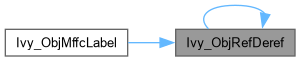
Here is the call graph for this function:
Here is the caller graph for this function:

◆ Ivy_ObjUpdateLevel_rec()

void Ivy_ObjUpdateLevel_rec ( Ivy_Man_t * p,
Ivy_Obj_t * pObj )

Function*************************************************************

Synopsis [Recursively updates fanout levels.]

Description []

SideEffects []

SeeAlso []

Definition at line 382 of file ivyUtil.c.
383{
384 Ivy_Obj_t * pFanout;
385 Vec_Ptr_t * vFanouts;
386 int i, LevelNew;
387 assert( p->fFanout );
388 assert( Ivy_ObjIsNode(pObj) );
389 vFanouts = Vec_PtrAlloc( 10 );
390 Ivy_ObjForEachFanout( p, pObj, vFanouts, pFanout, i )
391 {
392 if ( Ivy_ObjIsCo(pFanout) )
393 {
394// assert( (int)Ivy_ObjFanin0(pFanout)->Level <= p->nLevelMax );
395 continue;
396 }
397 LevelNew = Ivy_ObjLevelNew( pFanout );
398 if ( (int)pFanout->Level == LevelNew )
399 continue;
400 pFanout->Level = LevelNew;
401 Ivy_ObjUpdateLevel_rec( p, pFanout );
402 }
403 Vec_PtrFree( vFanouts );
404}
void Ivy_ObjUpdateLevel_rec(Ivy_Man_t *p, Ivy_Obj_t *pObj)
Definition ivyUtil.c:382
Here is the call graph for this function:
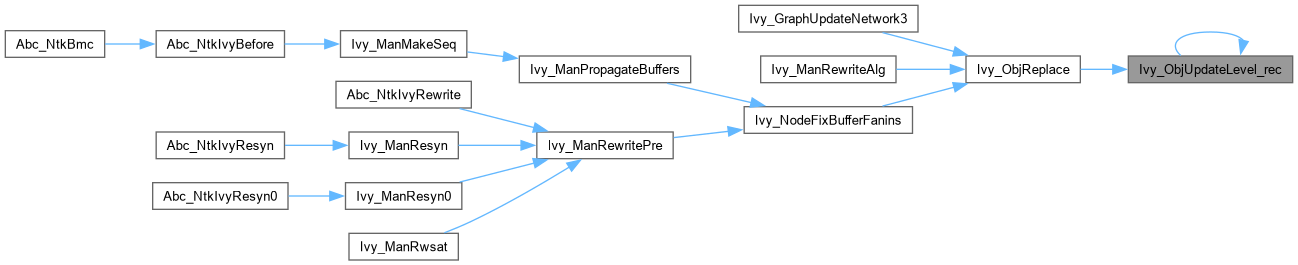
Here is the caller graph for this function:

◆ Ivy_ObjUpdateLevelR_rec()

void Ivy_ObjUpdateLevelR_rec ( Ivy_Man_t * p,
Ivy_Obj_t * pObj,
int ReqNew )

Function*************************************************************

Synopsis [Recursively updates fanout levels.]

Description []

SideEffects []

SeeAlso []

Definition at line 444 of file ivyUtil.c.
445{
446 Ivy_Obj_t * pFanin;
447 if ( Ivy_ObjIsConst1(pObj) || Ivy_ObjIsCi(pObj) )
448 return;
449 assert( Ivy_ObjIsNode(pObj) || Ivy_ObjIsBuf(pObj) );
450 // process the first fanin
451 pFanin = Ivy_ObjFanin0(pObj);
452 if ( Vec_IntEntry(p->vRequired, pFanin->Id) > ReqNew - 1 )
453 {
454 Vec_IntWriteEntry( p->vRequired, pFanin->Id, ReqNew - 1 );
455 Ivy_ObjUpdateLevelR_rec( p, pFanin, ReqNew - 1 );
456 }
457 if ( Ivy_ObjIsBuf(pObj) )
458 return;
459 // process the second fanin
460 pFanin = Ivy_ObjFanin1(pObj);
461 if ( Vec_IntEntry(p->vRequired, pFanin->Id) > ReqNew - 1 )
462 {
463 Vec_IntWriteEntry( p->vRequired, pFanin->Id, ReqNew - 1 );
464 Ivy_ObjUpdateLevelR_rec( p, pFanin, ReqNew - 1 );
465 }
466}
void Ivy_ObjUpdateLevelR_rec(Ivy_Man_t *p, Ivy_Obj_t *pObj, int ReqNew)
Definition ivyUtil.c:444
Here is the call graph for this function:
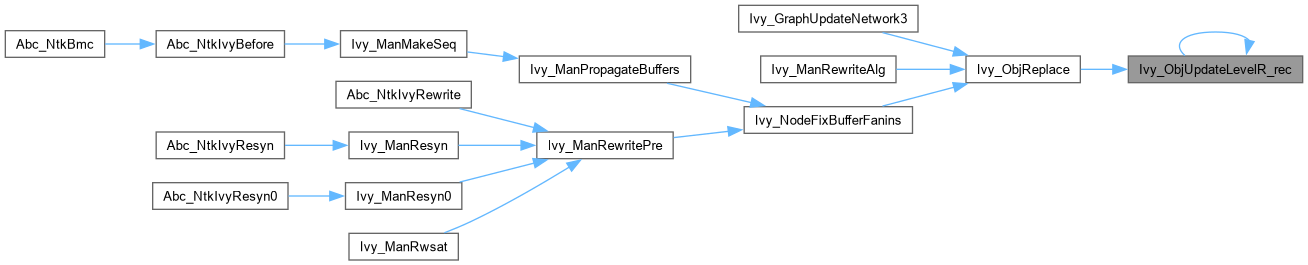
Here is the caller graph for this function: