ABC: A System for Sequential Synthesis and Verification
 
Loading...
Searching...
No Matches
trees.c File Reference
#include <stdio.h>
#include <stdlib.h>
#include <string.h>
#include "misc/util/abc_global.h"
#include "deflate.h"
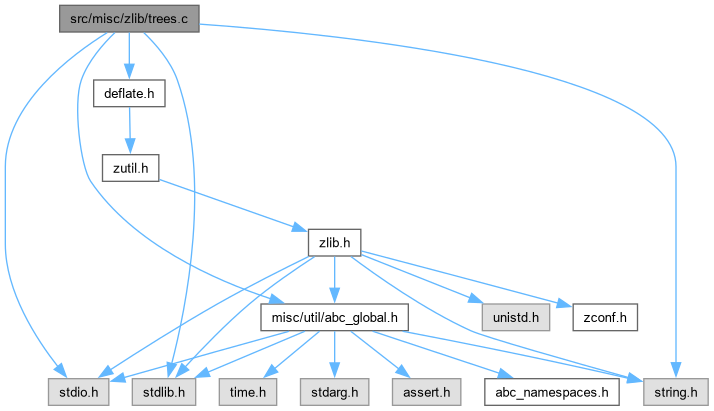
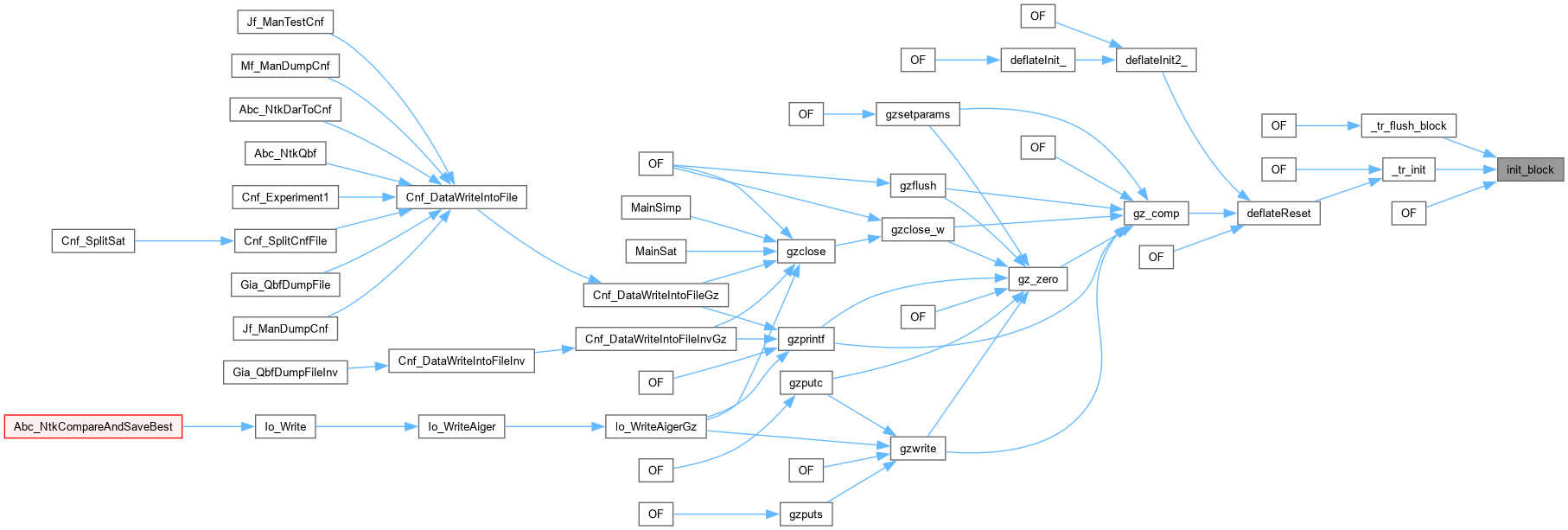
Include dependency graph for trees.c:

Go to the source code of this file.

Classes

struct  static_tree_desc_s
 

Macros

#define MAX_BL_BITS   7
 
#define END_BLOCK   256
 
#define REP_3_6   16
 
#define REPZ_3_10   17
 
#define REPZ_11_138   18
 
#define Buf_size   (8 * 2*sizeof(char))
 
#define DIST_CODE_LEN   512 /* see definition of array dist_code below */
 
#define send_code(s, c, tree)
 
#define put_short(s, w)
 
#define send_bits(s, value, length)
 
#define SMALLEST   1
 
#define pqremove(s, tree, top)
 
#define smaller(tree, n, m, depth)
 

Functions

local void tr_static_init OF ((void))
 
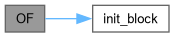
local void init_block OF ((deflate_state *s))
 
local void pqdownheap OF ((deflate_state *s, ct_data *tree, int k))
 
local void gen_bitlen OF ((deflate_state *s, tree_desc *desc))
 
local void gen_codes OF ((ct_data *tree, int max_code, ushf *bl_count))
 
local void scan_tree OF ((deflate_state *s, ct_data *tree, int max_code))
 
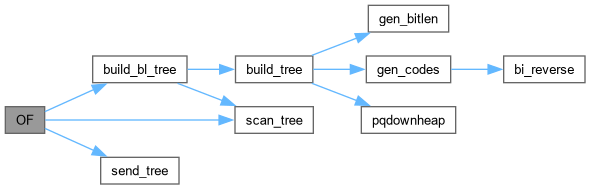
local void send_all_trees OF ((deflate_state *s, int lcodes, int dcodes, int blcodes))
 
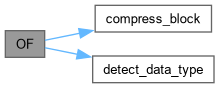
local void compress_block OF ((deflate_state *s, ct_data *ltree, ct_data *dtree))
 
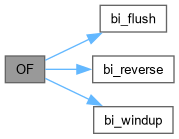
local unsigned bi_reverse OF ((unsigned value, int length))
 
local void copy_block OF ((deflate_state *s, charf *buf, unsigned len, int header))
 
local void tr_static_init ()
 
void ZLIB_INTERNAL _tr_init (deflate_state *s)
 
local void init_block (deflate_state *s)
 
local void pqdownheap (deflate_state *s, ct_data *tree, int k)
 
local void gen_bitlen (deflate_state *s, tree_desc *desc)
 
local void gen_codes (ct_data *tree, int max_code, ushf *bl_count)
 
local void build_tree (deflate_state *s, tree_desc *desc)
 
local void scan_tree (deflate_state *s, ct_data *tree, int max_code)
 
local void send_tree (deflate_state *s, ct_data *tree, int max_code)
 
local int build_bl_tree (deflate_state *s)
 
local void send_all_trees (deflate_state *s, int lcodes, int dcodes, int blcodes)
 
void ZLIB_INTERNAL _tr_stored_block (deflate_state *s, charf *buf, ulg stored_len, int last)
 
void ZLIB_INTERNAL _tr_align (deflate_state *s)
 
void ZLIB_INTERNAL _tr_flush_block (deflate_state *s, charf *buf, ulg stored_len, int last)
 
int ZLIB_INTERNAL _tr_tally (deflate_state *s, unsigned dist, unsigned lc)
 
local void compress_block (deflate_state *s, ct_data *ltree, ct_data *dtree)
 
local int detect_data_type (deflate_state *s)
 
local unsigned bi_reverse (unsigned code, int len)
 
local void bi_flush (deflate_state *s)
 
local void bi_windup (deflate_state *s)
 
local void copy_block (deflate_state *s, charf *buf, unsigned len, int header)
 

Variables

local const int extra_lbits [LENGTH_CODES] = {0,0,0,0,0,0,0,0,1,1,1,1,2,2,2,2,3,3,3,3,4,4,4,4,5,5,5,5,0}
 
local const int extra_dbits [D_CODES] = {0,0,0,0,1,1,2,2,3,3,4,4,5,5,6,6,7,7,8,8,9,9,10,10,11,11,12,12,13,13}
 
local const int extra_blbits [BL_CODES] = {0,0,0,0,0,0,0,0,0,0,0,0,0,0,0,0,2,3,7}
 
local const uch bl_order [BL_CODES] = {16,17,18,0,8,7,9,6,10,5,11,4,12,3,13,2,14,1,15}
 
local ct_data static_ltree [L_CODES+2]
 
local ct_data static_dtree [D_CODES]
 
uch _dist_code [DIST_CODE_LEN]
 
uch _length_code [MAX_MATCH-MIN_MATCH+1]
 
local int base_length [LENGTH_CODES]
 
local int base_dist [D_CODES]
 
local static_tree_desc static_l_desc
 
local static_tree_desc static_d_desc
 
local static_tree_desc static_bl_desc
 

Macro Definition Documentation

◆ Buf_size

#define Buf_size   (8 * 2*sizeof(char))

Definition at line 84 of file trees.c.

◆ DIST_CODE_LEN

#define DIST_CODE_LEN   512 /* see definition of array dist_code below */

Definition at line 93 of file trees.c.

◆ END_BLOCK

#define END_BLOCK   256

Definition at line 57 of file trees.c.

◆ MAX_BL_BITS

#define MAX_BL_BITS   7

Definition at line 54 of file trees.c.

◆ pqremove

#define pqremove ( s,
tree,
top )
Value:
{\
top = s->heap[SMALLEST]; \
s->heap[SMALLEST] = s->heap[s->heap_len--]; \
pqdownheap(s, tree, SMALLEST); \
}
#define SMALLEST
Definition trees.c:436

Definition at line 444 of file trees.c.

444#define pqremove(s, tree, top) \
445{\
446 top = s->heap[SMALLEST]; \
447 s->heap[SMALLEST] = s->heap[s->heap_len--]; \
448 pqdownheap(s, tree, SMALLEST); \
449}

◆ put_short

#define put_short ( s,
w )
Value:
{ \
put_byte(s, (uch)((w) & 0xff)); \
put_byte(s, (uch)((ush)(w) >> 8)); \
}
unsigned short ush
Definition zutil.h:41
unsigned char uch
Definition zutil.h:39

Definition at line 190 of file trees.c.

190#define put_short(s, w) { \
191 put_byte(s, (uch)((w) & 0xff)); \
192 put_byte(s, (uch)((ush)(w) >> 8)); \
193}

◆ REP_3_6

#define REP_3_6   16

Definition at line 60 of file trees.c.

◆ REPZ_11_138

#define REPZ_11_138   18

Definition at line 66 of file trees.c.

◆ REPZ_3_10

#define REPZ_3_10   17

Definition at line 63 of file trees.c.

◆ send_bits

#define send_bits ( s,
value,
length )
Value:
{ int len = length;\
if (s->bi_valid > (int)Buf_size - len) {\
int val = value;\
s->bi_buf |= (ush)val << s->bi_valid;\
put_short(s, s->bi_buf);\
s->bi_buf = (ush)val >> (Buf_size - s->bi_valid);\
s->bi_valid += len - Buf_size;\
} else {\
s->bi_buf |= (ush)(value) << s->bi_valid;\
s->bi_valid += len;\
}\
}
ABC_NAMESPACE_IMPL_START typedef signed char value
#define Buf_size
Definition trees.c:84

Definition at line 224 of file trees.c.

224#define send_bits(s, value, length) \
225{ int len = length;\
226 if (s->bi_valid > (int)Buf_size - len) {\
227 int val = value;\
228 s->bi_buf |= (ush)val << s->bi_valid;\
229 put_short(s, s->bi_buf);\
230 s->bi_buf = (ush)val >> (Buf_size - s->bi_valid);\
231 s->bi_valid += len - Buf_size;\
232 } else {\
233 s->bi_buf |= (ush)(value) << s->bi_valid;\
234 s->bi_valid += len;\
235 }\
236}

◆ send_code

#define send_code ( s,
c,
tree )
Value:
send_bits(s, tree[c].Code, tree[c].Len)
#define Code
Definition deflate.h:76
#define Len
Definition deflate.h:78
#define send_bits(s, value, length)
Definition trees.c:224

Definition at line 177 of file trees.c.

◆ smaller

#define smaller ( tree,
n,
m,
depth )
Value:
(tree[n].Freq < tree[m].Freq || \
(tree[n].Freq == tree[m].Freq && depth[n] <= depth[m]))

Definition at line 455 of file trees.c.

455#define smaller(tree, n, m, depth) \
456 (tree[n].Freq < tree[m].Freq || \
457 (tree[n].Freq == tree[m].Freq && depth[n] <= depth[m]))

◆ SMALLEST

#define SMALLEST   1

Definition at line 436 of file trees.c.

Function Documentation

◆ _tr_align()

void ZLIB_INTERNAL _tr_align ( deflate_state * s)

Definition at line 882 of file trees.c.

883{
884 send_bits(s, STATIC_TREES<<1, 3);
886#ifdef DEBUG
887 s->compressed_len += 10L; /* 3 for block type, 7 for EOB */
888#endif
889 bi_flush(s);
890 /* Of the 10 bits for the empty block, we have already sent
891 * (10 - bi_valid) bits. The lookahead for the last real code (before
892 * the EOB of the previous block) was thus at least one plus the length
893 * of the EOB plus what we have just sent of the empty static block.
894 */
895 if (1 + s->last_eob_len + 10 - s->bi_valid < 9) {
896 send_bits(s, STATIC_TREES<<1, 3);
898#ifdef DEBUG
899 s->compressed_len += 10L;
900#endif
901 bi_flush(s);
902 }
903 s->last_eob_len = 7;
904}
#define END_BLOCK
Definition trees.c:57
#define send_code(s, c, tree)
Definition trees.c:177
local ct_data static_ltree[L_CODES+2]
Definition trees.c:98
local void bi_flush(deflate_state *s)
Definition trees.c:1158
#define STATIC_TREES
Definition zutil.h:69
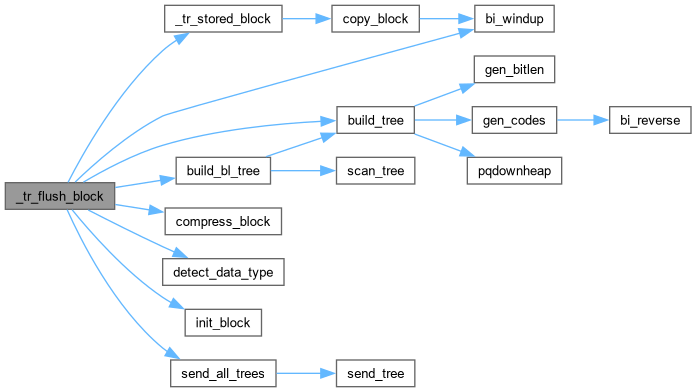
Here is the call graph for this function:
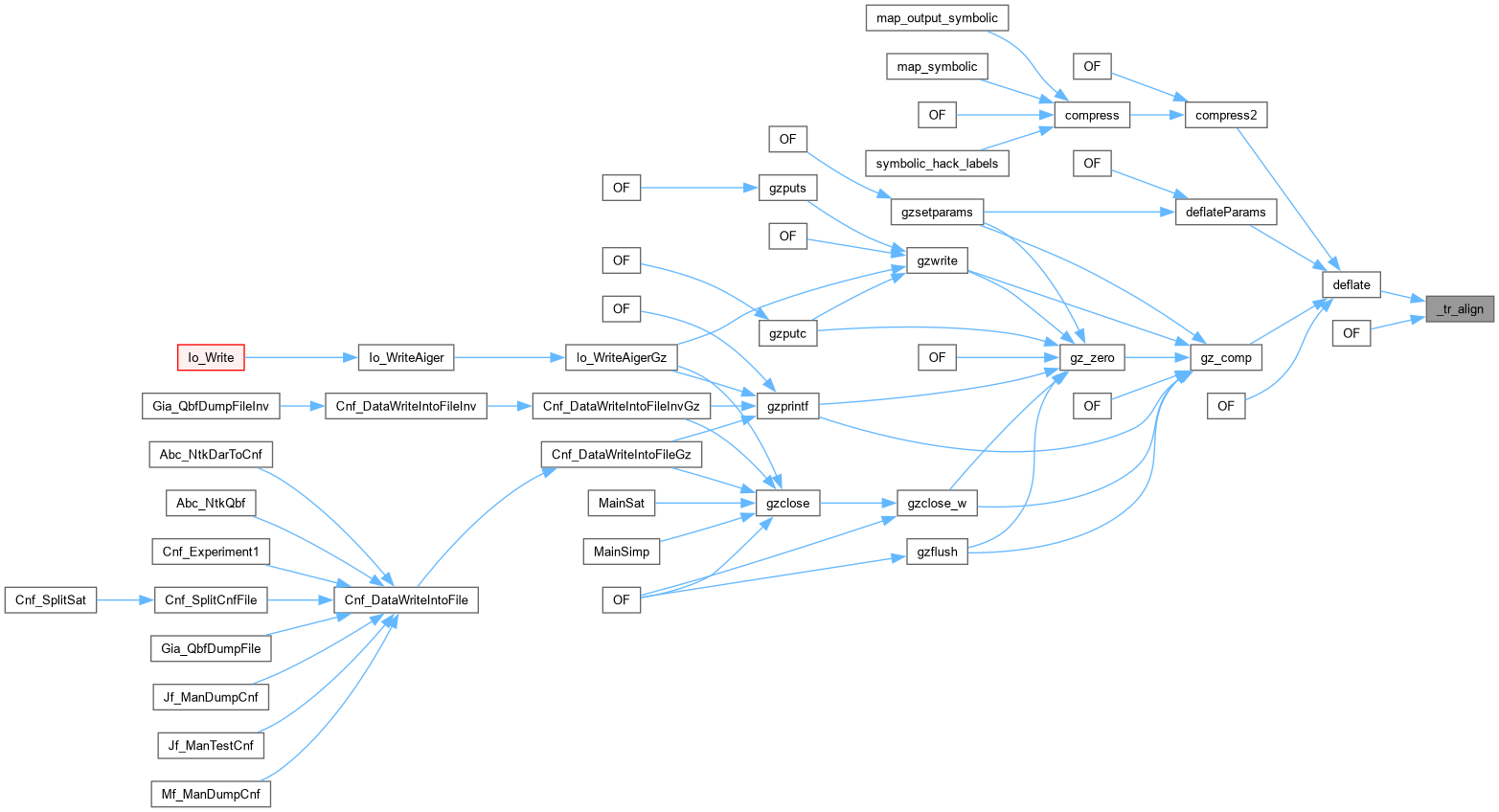
Here is the caller graph for this function:

◆ _tr_flush_block()

void ZLIB_INTERNAL _tr_flush_block ( deflate_state * s,
charf * buf,
ulg stored_len,
int last )

Definition at line 910 of file trees.c.
911{
912 ulg opt_lenb, static_lenb; /* opt_len and static_len in bytes */
913 int max_blindex = 0; /* index of last bit length code of non zero freq */
914
915 /* Build the Huffman trees unless a stored block is forced */
916 if (s->level > 0) {
917
918 /* Check if the file is binary or text */
919 if (s->strm->data_type == Z_UNKNOWN)
920 s->strm->data_type = detect_data_type(s);
921
922 /* Construct the literal and distance trees */
923 build_tree(s, (tree_desc *)(&(s->l_desc)));
924 Tracev((stderr, "\nlit data: dyn %ld, stat %ld", s->opt_len,
925 s->static_len));
926
927 build_tree(s, (tree_desc *)(&(s->d_desc)));
928 Tracev((stderr, "\ndist data: dyn %ld, stat %ld", s->opt_len,
929 s->static_len));
930 /* At this point, opt_len and static_len are the total bit lengths of
931 * the compressed block data, excluding the tree representations.
932 */
933
934 /* Build the bit length tree for the above two trees, and get the index
935 * in bl_order of the last bit length code to send.
936 */
937 max_blindex = build_bl_tree(s);
938
939 /* Determine the best encoding. Compute the block lengths in bytes. */
940 opt_lenb = (s->opt_len+3+7)>>3;
941 static_lenb = (s->static_len+3+7)>>3;
942
943 Tracev((stderr, "\nopt %lu(%lu) stat %lu(%lu) stored %lu lit %u ",
944 opt_lenb, s->opt_len, static_lenb, s->static_len, stored_len,
945 s->last_lit));
946
947 if (static_lenb <= opt_lenb) opt_lenb = static_lenb;
948
949 } else {
950 Assert(buf != (char*)0, "lost buf");
951 opt_lenb = static_lenb = stored_len + 5; /* force a stored block */
952 }
953
954#ifdef FORCE_STORED
955 if (buf != (char*)0) { /* force stored block */
956#else
957 if (stored_len+4 <= opt_lenb && buf != (char*)0) {
958 /* 4: two words for the lengths */
959#endif
960 /* The test buf != NULL is only necessary if LIT_BUFSIZE > WSIZE.
961 * Otherwise we can't have processed more than WSIZE input bytes since
962 * the last block flush, because compression would have been
963 * successful. If LIT_BUFSIZE <= WSIZE, it is never too late to
964 * transform a block into a stored block.
965 */
966 _tr_stored_block(s, buf, stored_len, last);
967
968#ifdef FORCE_STATIC
969 } else if (static_lenb >= 0) { /* force static trees */
970#else
971 } else if (s->strategy == Z_FIXED || static_lenb == opt_lenb) {
972#endif
973 send_bits(s, (STATIC_TREES<<1)+last, 3);
975#ifdef DEBUG
976 s->compressed_len += 3 + s->static_len;
977#endif
978 } else {
979 send_bits(s, (DYN_TREES<<1)+last, 3);
981 max_blindex+1);
983#ifdef DEBUG
984 s->compressed_len += 3 + s->opt_len;
985#endif
986 }
987 Assert (s->compressed_len == s->bits_sent, "bad compressed size");
988 /* The above check is made mod 2^32, for files larger than 512 MB
989 * and uLong implemented on 32 bits.
990 */
991 init_block(s);
992
993 if (last) {
994 bi_windup(s);
995#ifdef DEBUG
996 s->compressed_len += 7; /* align on byte boundary */
997#endif
998 }
999 Tracev((stderr,"\ncomprlen %lu(%lu) ", s->compressed_len>>3,
1000 s->compressed_len-7*last));
1001}
struct ct_data_s ct_data
struct tree_desc_s tree_desc
struct tree_desc_s l_desc
Definition deflate.h:198
struct ct_data_s dyn_dtree[2 *D_CODES+1]
Definition deflate.h:195
z_streamp strm
Definition deflate.h:97
struct tree_desc_s d_desc
Definition deflate.h:199
struct ct_data_s dyn_ltree[HEAP_SIZE]
Definition deflate.h:194
int max_code
Definition deflate.h:84
local ct_data static_dtree[D_CODES]
Definition trees.c:105
local void compress_block(deflate_state *s, ct_data *ltree, ct_data *dtree)
Definition trees.c:1054
void ZLIB_INTERNAL _tr_stored_block(deflate_state *s, charf *buf, ulg stored_len, int last)
Definition trees.c:861
local void bi_windup(deflate_state *s)
Definition trees.c:1174
local void send_all_trees(deflate_state *s, int lcodes, int dcodes, int blcodes)
Definition trees.c:834
local int detect_data_type(deflate_state *s)
Definition trees.c:1112
local void init_block(deflate_state *s)
Definition trees.c:422
local void build_tree(deflate_state *s, tree_desc *desc)
Definition trees.c:624
local int build_bl_tree(deflate_state *s)
Definition trees.c:800
#define Z_UNKNOWN
Definition zlib.h:210
#define Z_FIXED
Definition zlib.h:203
#define DYN_TREES
Definition zutil.h:70
#define Assert(cond, msg)
Definition zutil.h:268
#define Tracev(x)
Definition zutil.h:270
unsigned long ulg
Definition zutil.h:43
Here is the call graph for this function:
Here is the caller graph for this function:

◆ _tr_init()

void ZLIB_INTERNAL _tr_init ( deflate_state * s)

Definition at line 394 of file trees.c.
395{
397
398 s->l_desc.dyn_tree = s->dyn_ltree;
400
401 s->d_desc.dyn_tree = s->dyn_dtree;
403
404 s->bl_desc.dyn_tree = s->bl_tree;
406
407 s->bi_buf = 0;
408 s->bi_valid = 0;
409 s->last_eob_len = 8; /* enough lookahead for inflate */
410#ifdef DEBUG
411 s->compressed_len = 0L;
412 s->bits_sent = 0L;
413#endif
414
415 /* Initialize the first block of the first file: */
416 init_block(s);
417}
struct ct_data_s bl_tree[2 *BL_CODES+1]
Definition deflate.h:196
struct tree_desc_s bl_desc
Definition deflate.h:200
ct_data * dyn_tree
Definition deflate.h:83
static_tree_desc * stat_desc
Definition deflate.h:85
local static_tree_desc static_bl_desc
Definition trees.c:145
local static_tree_desc static_d_desc
Definition trees.c:142
local static_tree_desc static_l_desc
Definition trees.c:139
local void tr_static_init()
Definition trees.c:245
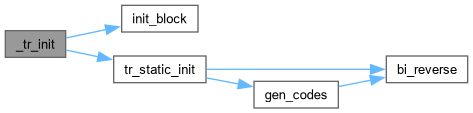
Here is the call graph for this function:
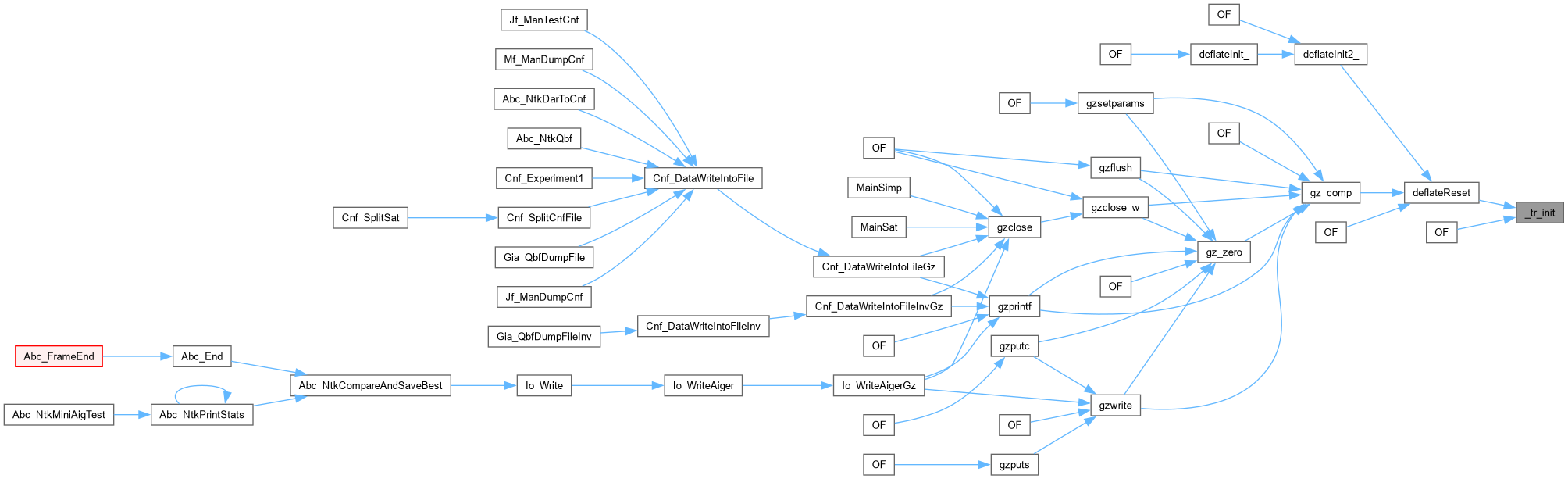
Here is the caller graph for this function:

◆ _tr_stored_block()

void ZLIB_INTERNAL _tr_stored_block ( deflate_state * s,
charf * buf,
ulg stored_len,
int last )

Definition at line 861 of file trees.c.

862{
863 send_bits(s, (STORED_BLOCK<<1)+last, 3); /* send block type */
864#ifdef DEBUG
865 s->compressed_len = (s->compressed_len + 3 + 7) & (ulg)~7L;
866 s->compressed_len += (stored_len + 4) << 3;
867#endif
868 copy_block(s, buf, (unsigned)stored_len, 1); /* with header */
869}
local void copy_block(deflate_state *s, charf *buf, unsigned len, int header)
Definition trees.c:1192
#define STORED_BLOCK
Definition zutil.h:68
Here is the call graph for this function:
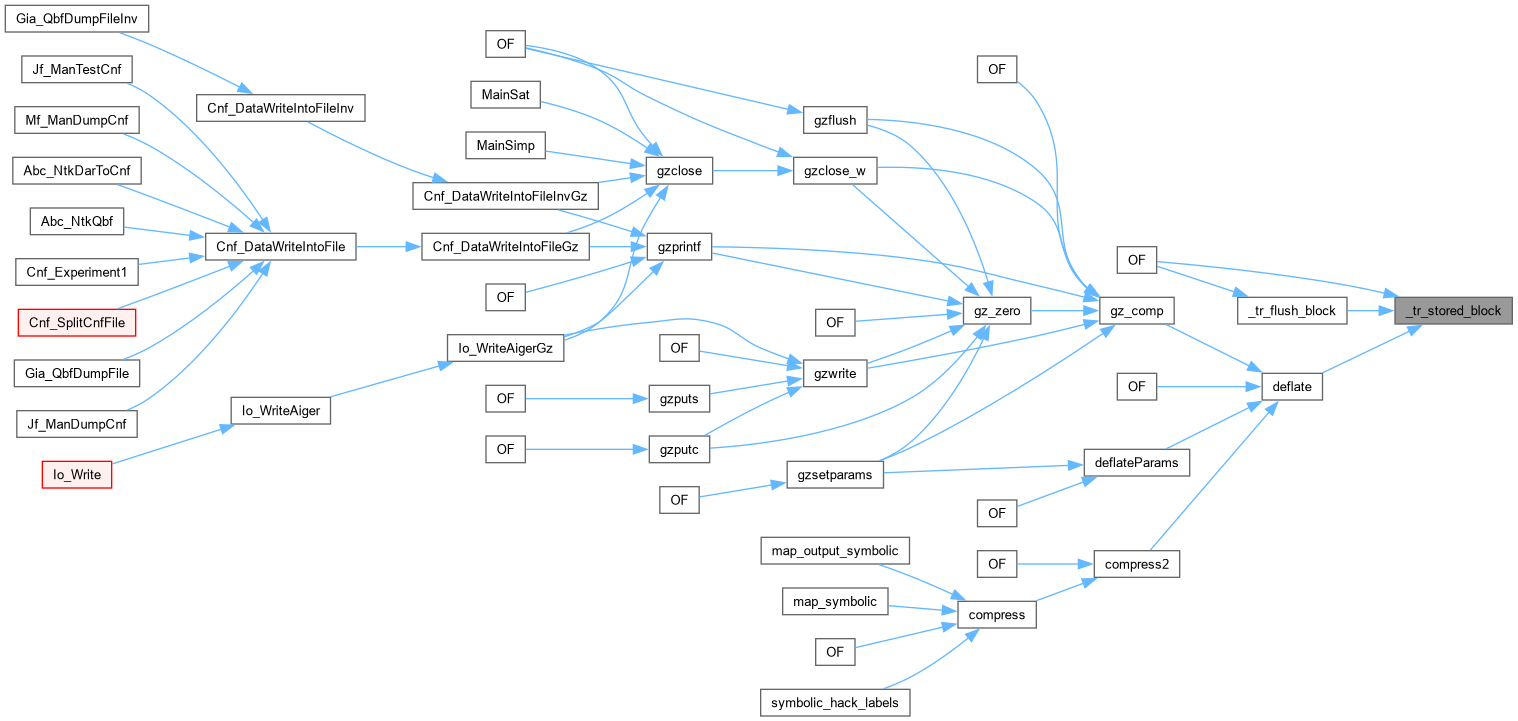
Here is the caller graph for this function:

◆ _tr_tally()

int ZLIB_INTERNAL _tr_tally ( deflate_state * s,
unsigned dist,
unsigned lc )

Definition at line 1007 of file trees.c.

1008{
1009 s->d_buf[s->last_lit] = (ush)dist;
1010 s->l_buf[s->last_lit++] = (uch)lc;
1011 if (dist == 0) {
1012 /* lc is the unmatched char */
1013 s->dyn_ltree[lc].Freq++;
1014 } else {
1015 s->matches++;
1016 /* Here, lc is the match length - MIN_MATCH */
1017 dist--; /* dist = match distance - 1 */
1018 Assert((ush)dist < (ush)MAX_DIST(s) &&
1019 (ush)lc <= (ush)(MAX_MATCH-MIN_MATCH) &&
1020 (ush)d_code(dist) < (ush)D_CODES, "_tr_tally: bad match");
1021
1022 s->dyn_ltree[_length_code[lc]+LITERALS+1].Freq++;
1023 s->dyn_dtree[d_code(dist)].Freq++;
1024 }
1025
1026#ifdef TRUNCATE_BLOCK
1027 /* Try to guess if it is profitable to stop the current block here */
1028 if ((s->last_lit & 0x1fff) == 0 && s->level > 2) {
1029 /* Compute an upper bound for the compressed length */
1030 ulg out_length = (ulg)s->last_lit*8L;
1031 ulg in_length = (ulg)((long)s->strstart - s->block_start);
1032 int dcode;
1033 for (dcode = 0; dcode < D_CODES; dcode++) {
1034 out_length += (ulg)s->dyn_dtree[dcode].Freq *
1035 (5L+extra_dbits[dcode]);
1036 }
1037 out_length >>= 3;
1038 Tracev((stderr,"\nlast_lit %u, in %ld, out ~%ld(%ld%%) ",
1039 s->last_lit, in_length, out_length,
1040 100L - out_length*100L/in_length));
1041 if (s->matches < s->last_lit/2 && out_length < in_length/2) return 1;
1042 }
1043#endif
1044 return (s->last_lit == s->lit_bufsize-1);
1045 /* We avoid equality with lit_bufsize because of wraparound at 64K
1046 * on 16 bit machines and because stored blocks are restricted to
1047 * 64K-1 bytes.
1048 */
1049}
#define MAX_DIST(s)
Definition deflate.h:285
#define LITERALS
Definition deflate.h:35
#define d_code(dist)
Definition deflate.h:303
#define D_CODES
Definition deflate.h:41
uch ZLIB_INTERNAL _length_code[]
Definition trees.c:116
uInt lit_bufsize
Definition deflate.h:218
long block_start
Definition deflate.h:150
uchf * l_buf
Definition deflate.h:216
ushf * d_buf
Definition deflate.h:240
local const int extra_dbits[D_CODES]
Definition trees.c:73
#define MIN_MATCH
Definition zutil.h:73
#define MAX_MATCH
Definition zutil.h:74
Here is the caller graph for this function:

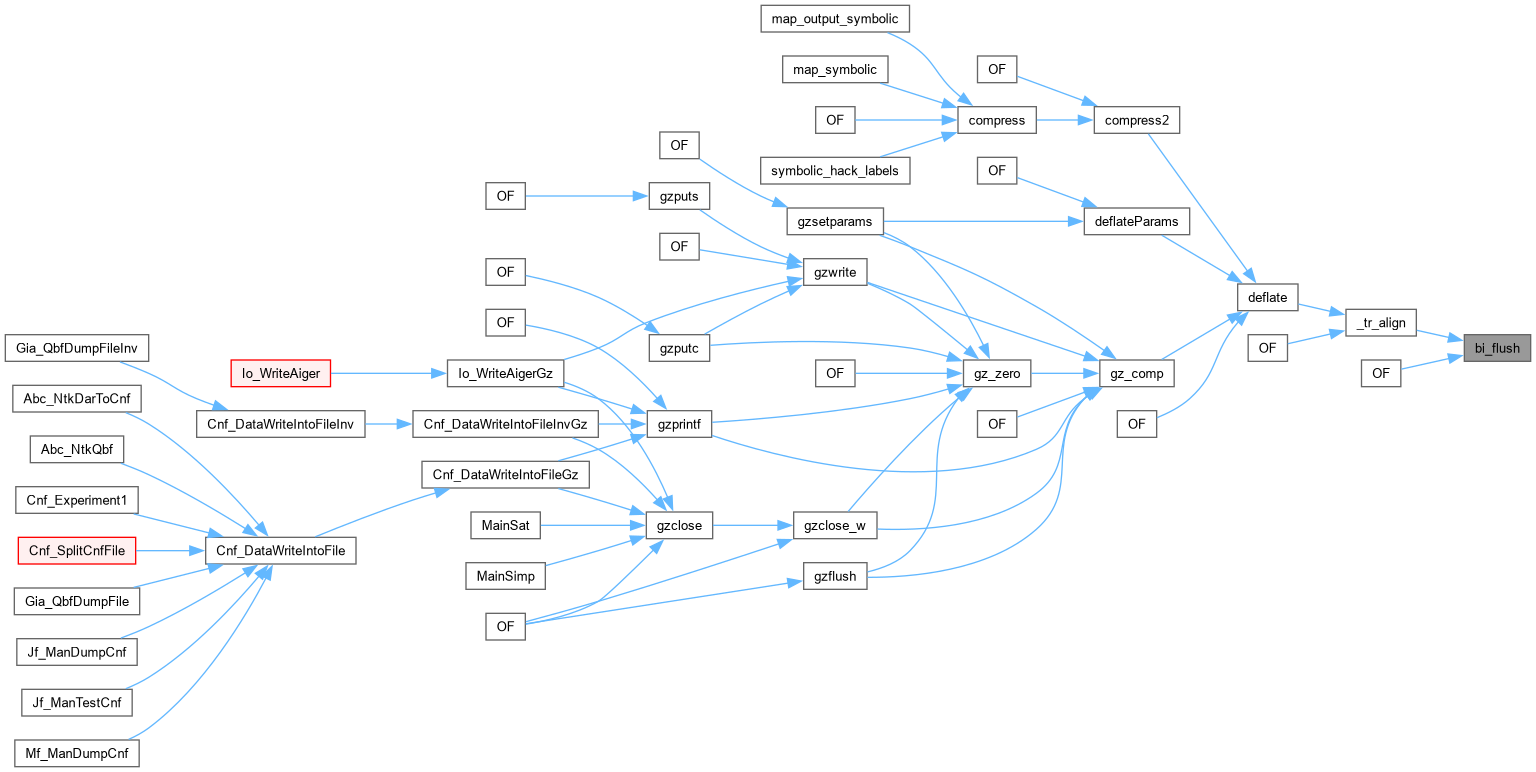
◆ bi_flush()

local void bi_flush ( deflate_state * s)

Definition at line 1158 of file trees.c.

1159{
1160 if (s->bi_valid == 16) {
1161 put_short(s, s->bi_buf);
1162 s->bi_buf = 0;
1163 s->bi_valid = 0;
1164 } else if (s->bi_valid >= 8) {
1165 put_byte(s, (Byte)s->bi_buf);
1166 s->bi_buf >>= 8;
1167 s->bi_valid -= 8;
1168 }
1169}
#define put_byte(s, c)
Definition deflate.h:277
#define put_short(s, w)
Definition trees.c:190
unsigned char Byte
Definition zconf.h:333
Here is the caller graph for this function:

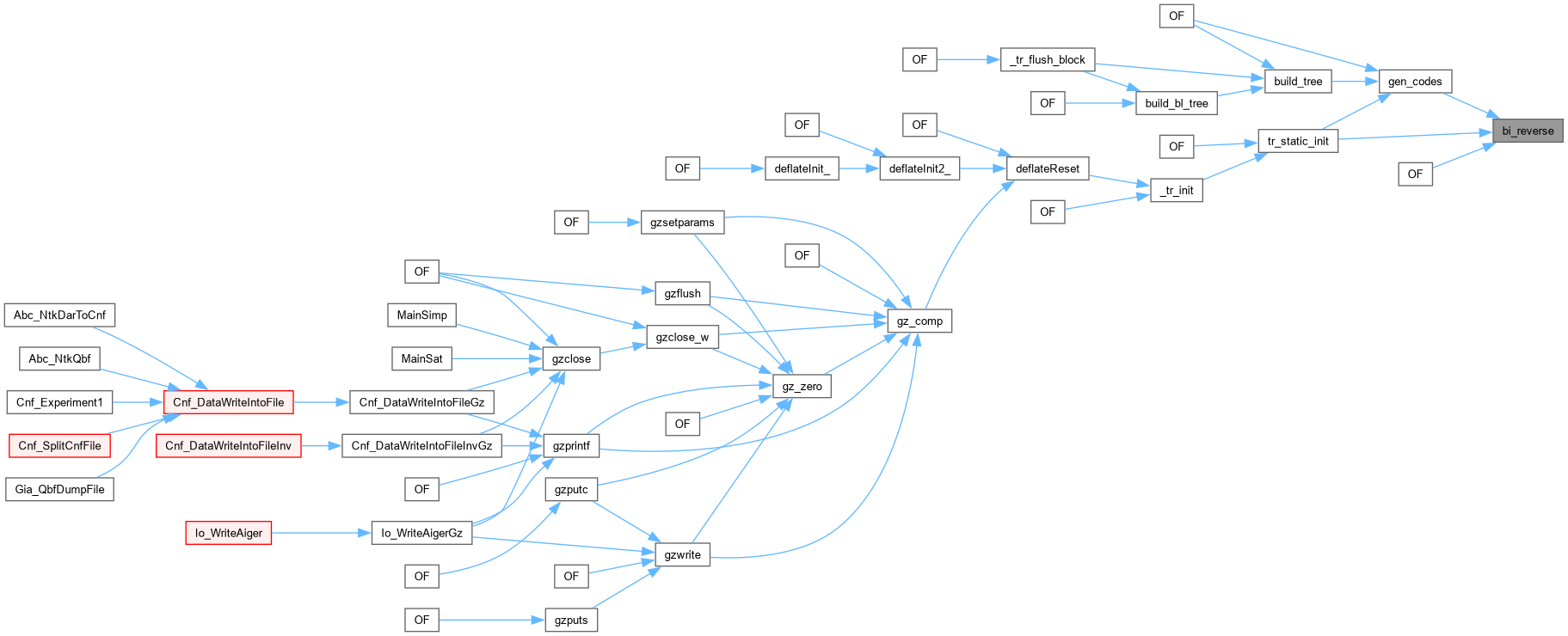
◆ bi_reverse()

local unsigned bi_reverse ( unsigned code,
int len )

Definition at line 1145 of file trees.c.

1146{
1147 unsigned res = 0;
1148 do {
1149 res |= code & 1;
1150 code >>= 1, res <<= 1;
1151 } while (--len > 0);
1152 return res >> 1;
1153}
Here is the caller graph for this function:

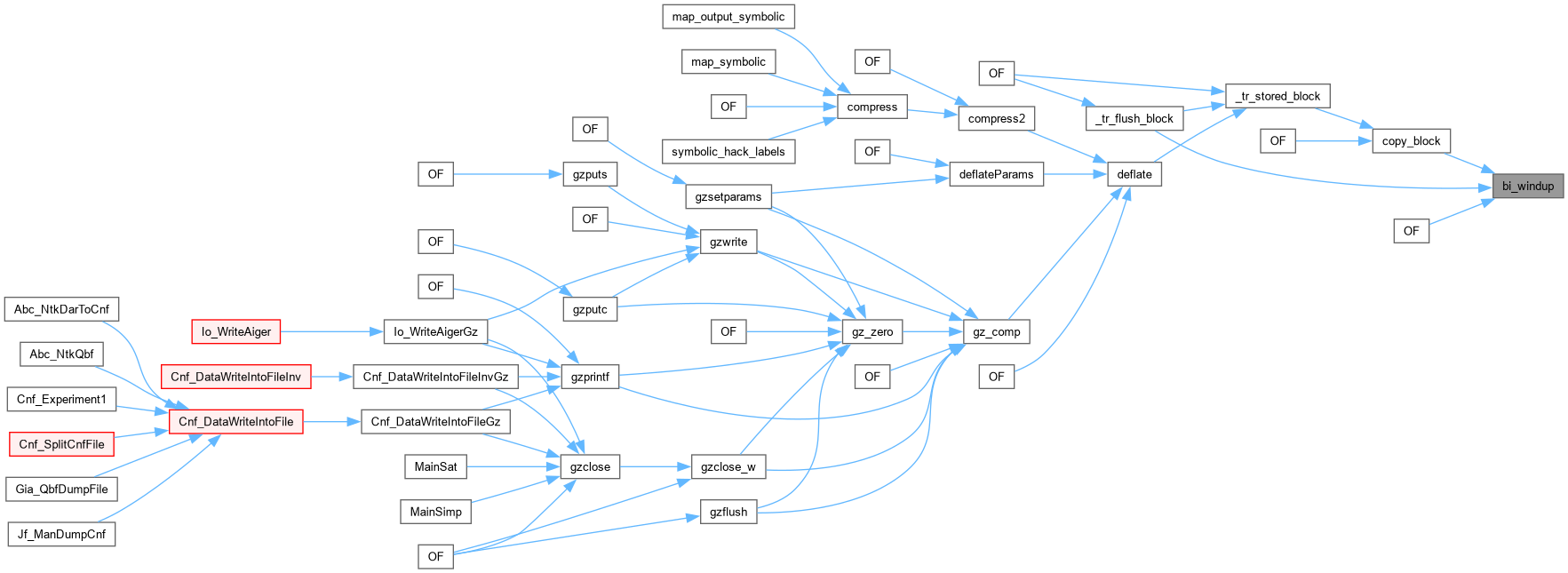
◆ bi_windup()

local void bi_windup ( deflate_state * s)

Definition at line 1174 of file trees.c.

1175{
1176 if (s->bi_valid > 8) {
1177 put_short(s, s->bi_buf);
1178 } else if (s->bi_valid > 0) {
1179 put_byte(s, (Byte)s->bi_buf);
1180 }
1181 s->bi_buf = 0;
1182 s->bi_valid = 0;
1183#ifdef DEBUG
1184 s->bits_sent = (s->bits_sent+7) & ~7;
1185#endif
1186}
Here is the caller graph for this function:

◆ build_bl_tree()

local int build_bl_tree ( deflate_state * s)

Definition at line 800 of file trees.c.

801{
802 int max_blindex; /* index of last bit length code of non zero freq */
803
804 /* Determine the bit length frequencies for literal and distance trees */
807
808 /* Build the bit length tree: */
809 build_tree(s, (tree_desc *)(&(s->bl_desc)));
810 /* opt_len now includes the length of the tree representations, except
811 * the lengths of the bit lengths codes and the 5+5+4 bits for the counts.
812 */
813
814 /* Determine the number of bit length codes to send. The pkzip format
815 * requires that at least 4 bit length codes be sent. (appnote.txt says
816 * 3 but the actual value used is 4.)
817 */
818 for (max_blindex = BL_CODES-1; max_blindex >= 3; max_blindex--) {
819 if (s->bl_tree[bl_order[max_blindex]].Len != 0) break;
820 }
821 /* Update opt_len to include the bit length tree and counts */
822 s->opt_len += 3*(max_blindex+1) + 5+5+4;
823 Tracev((stderr, "\ndyn trees: dyn %ld, stat %ld",
824 s->opt_len, s->static_len));
825
826 return max_blindex;
827}
#define BL_CODES
Definition deflate.h:44
local const uch bl_order[BL_CODES]
Definition trees.c:79
local void scan_tree(deflate_state *s, ct_data *tree, int max_code)
Definition trees.c:710
Here is the call graph for this function:
Here is the caller graph for this function:

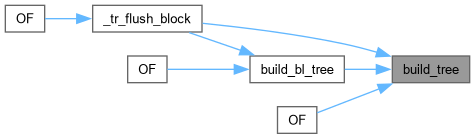
◆ build_tree()

local void build_tree ( deflate_state * s,
tree_desc * desc )

Definition at line 624 of file trees.c.
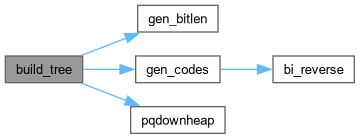
625{
626 ct_data *tree = desc->dyn_tree;
627 const ct_data *stree = desc->stat_desc->static_tree;
628 int elems = desc->stat_desc->elems;
629 int n, m; /* iterate over heap elements */
630 int max_code = -1; /* largest code with non zero frequency */
631 int node; /* new node being created */
632
633 /* Construct the initial heap, with least frequent element in
634 * heap[SMALLEST]. The sons of heap[n] are heap[2*n] and heap[2*n+1].
635 * heap[0] is not used.
636 */
637 s->heap_len = 0, s->heap_max = HEAP_SIZE;
638
639 for (n = 0; n < elems; n++) {
640 if (tree[n].Freq != 0) {
641 s->heap[++(s->heap_len)] = max_code = n;
642 s->depth[n] = 0;
643 } else {
644 tree[n].Len = 0;
645 }
646 }
647
648 /* The pkzip format requires that at least one distance code exists,
649 * and that at least one bit should be sent even if there is only one
650 * possible code. So to avoid special checks later on we force at least
651 * two codes of non zero frequency.
652 */
653 while (s->heap_len < 2) {
654 node = s->heap[++(s->heap_len)] = (max_code < 2 ? ++max_code : 0);
655 tree[node].Freq = 1;
656 s->depth[node] = 0;
657 s->opt_len--; if (stree) s->static_len -= stree[node].Len;
658 /* node is 0 or 1 so it does not have extra bits */
659 }
660 desc->max_code = max_code;
661
662 /* The elements heap[heap_len/2+1 .. heap_len] are leaves of the tree,
663 * establish sub-heaps of increasing lengths:
664 */
665 for (n = s->heap_len/2; n >= 1; n--) pqdownheap(s, tree, n);
666
667 /* Construct the Huffman tree by repeatedly combining the least two
668 * frequent nodes.
669 */
670 node = elems; /* next internal node of the tree */
671 do {
672 pqremove(s, tree, n); /* n = node of least frequency */
673 m = s->heap[SMALLEST]; /* m = node of next least frequency */
674
675 s->heap[--(s->heap_max)] = n; /* keep the nodes sorted by frequency */
676 s->heap[--(s->heap_max)] = m;
677
678 /* Create a new node father of n and m */
679 tree[node].Freq = tree[n].Freq + tree[m].Freq;
680 s->depth[node] = (uch)((s->depth[n] >= s->depth[m] ?
681 s->depth[n] : s->depth[m]) + 1);
682 tree[n].Dad = tree[m].Dad = (ush)node;
683#ifdef DUMP_BL_TREE
684 if (tree == s->bl_tree) {
685 fprintf(stderr,"\nnode %d(%d), sons %d(%d) %d(%d)",
686 node, tree[node].Freq, n, tree[n].Freq, m, tree[m].Freq);
687 }
688#endif
689 /* and insert the new node in the heap */
690 s->heap[SMALLEST] = node++;
691 pqdownheap(s, tree, SMALLEST);
692
693 } while (s->heap_len >= 2);
694
695 s->heap[--(s->heap_max)] = s->heap[SMALLEST];
696
697 /* At this point, the fields freq and dad are set. We can now
698 * generate the bit lengths.
699 */
700 gen_bitlen(s, (tree_desc *)desc);
701
702 /* The field len is now set, we can generate the bit codes */
703 gen_codes ((ct_data *)tree, max_code, s->bl_count);
704}
#define HEAP_SIZE
Definition deflate.h:47
#define Freq
Definition deflate.h:75
uch depth[2 *L_CODES+1]
Definition deflate.h:212
ush bl_count[MAX_BITS+1]
Definition deflate.h:202
int heap[2 *L_CODES+1]
Definition deflate.h:205
const ct_data * static_tree
Definition trees.c:132
local void gen_bitlen(deflate_state *s, tree_desc *desc)
Definition trees.c:497
local void pqdownheap(deflate_state *s, ct_data *tree, int k)
Definition trees.c:465
local void gen_codes(ct_data *tree, int max_code, ushf *bl_count)
Definition trees.c:582
#define pqremove(s, tree, top)
Definition trees.c:444
Here is the call graph for this function:
Here is the caller graph for this function:

◆ compress_block()

local void compress_block ( deflate_state * s,
ct_data * ltree,
ct_data * dtree )

Definition at line 1054 of file trees.c.
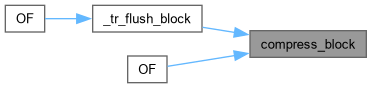
1055{
1056 unsigned dist; /* distance of matched string */
1057 int lc; /* match length or unmatched char (if dist == 0) */
1058 unsigned lx = 0; /* running index in l_buf */
1059 unsigned code; /* the code to send */
1060 int extra; /* number of extra bits to send */
1061
1062 if (s->last_lit != 0) do {
1063 dist = s->d_buf[lx];
1064 lc = s->l_buf[lx++];
1065 if (dist == 0) {
1066 send_code(s, lc, ltree); /* send a literal byte */
1067 Tracecv(isgraph(lc), (stderr," '%c' ", lc));
1068 } else {
1069 /* Here, lc is the match length - MIN_MATCH */
1070 code = _length_code[lc];
1071 send_code(s, code+LITERALS+1, ltree); /* send the length code */
1072 extra = extra_lbits[code];
1073 if (extra != 0) {
1074 lc -= base_length[code];
1075 send_bits(s, lc, extra); /* send the extra length bits */
1076 }
1077 dist--; /* dist is now the match distance - 1 */
1078 code = d_code(dist);
1079 Assert (code < D_CODES, "bad d_code");
1080
1081 send_code(s, code, dtree); /* send the distance code */
1082 extra = extra_dbits[code];
1083 if (extra != 0) {
1084 dist -= base_dist[code];
1085 send_bits(s, dist, extra); /* send the extra distance bits */
1086 }
1087 } /* literal or match pair ? */
1088
1089 /* Check that the overlay between pending_buf and d_buf+l_buf is ok: */
1090 Assert((uInt)(s->pending) < s->lit_bufsize + 2*lx,
1091 "pendingBuf overflow");
1092
1093 } while (lx < s->last_lit);
1094
1095 send_code(s, END_BLOCK, ltree);
1096 s->last_eob_len = ltree[END_BLOCK].Len;
1097}
local const int extra_lbits[LENGTH_CODES]
Definition trees.c:70
local int base_length[LENGTH_CODES]
Definition trees.c:119
local int base_dist[D_CODES]
Definition trees.c:122
unsigned int uInt
Definition zconf.h:335
#define Tracecv(c, x)
Definition zutil.h:273
Here is the caller graph for this function:

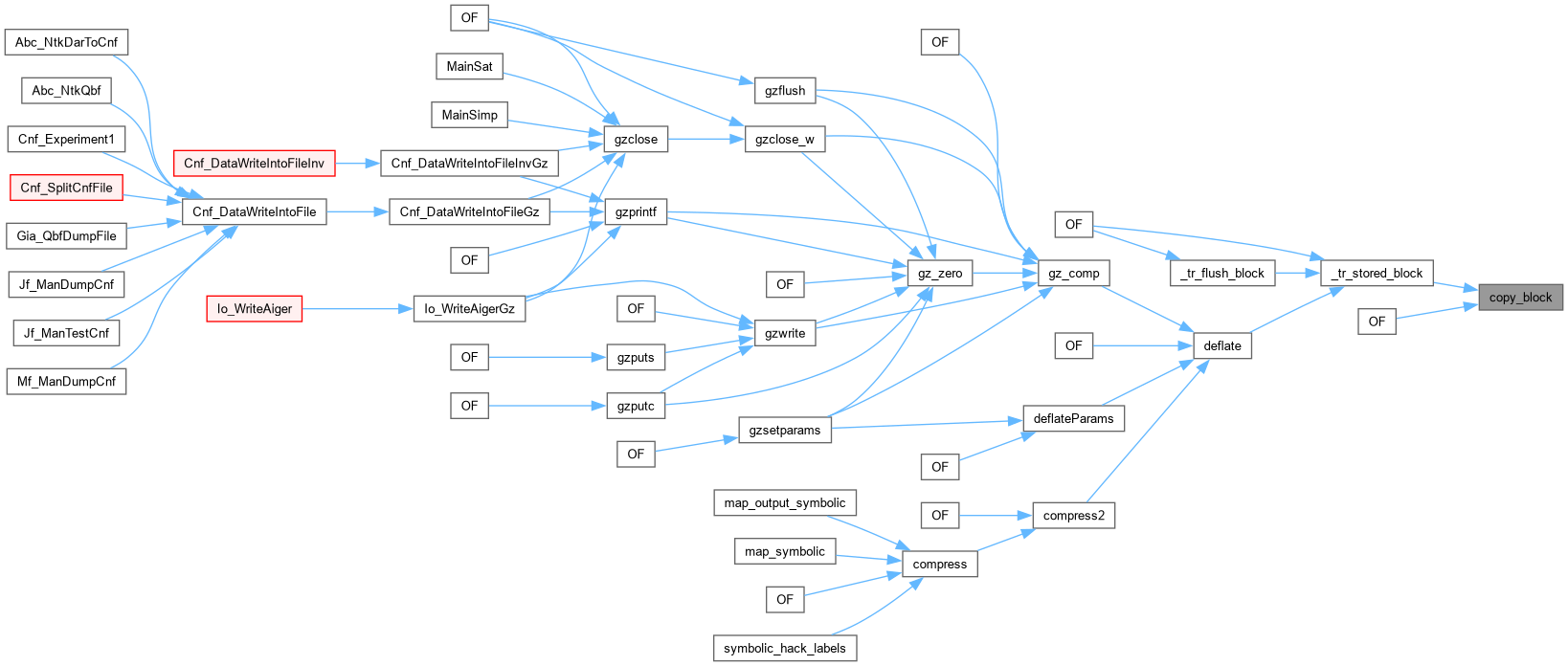
◆ copy_block()

local void copy_block ( deflate_state * s,
charf * buf,
unsigned len,
int header )

Definition at line 1192 of file trees.c.

1193{
1194 bi_windup(s); /* align on byte boundary */
1195 s->last_eob_len = 8; /* enough lookahead for inflate */
1196
1197 if (header) {
1198 put_short(s, (ush)len);
1199 put_short(s, (ush)~len);
1200#ifdef DEBUG
1201 s->bits_sent += 2*16;
1202#endif
1203 }
1204#ifdef DEBUG
1205 s->bits_sent += (ulg)len<<3;
1206#endif
1207 while (len--) {
1208 put_byte(s, *buf++);
1209 }
1210}
Here is the call graph for this function:
Here is the caller graph for this function:

◆ detect_data_type()

local int detect_data_type ( deflate_state * s)

Definition at line 1112 of file trees.c.
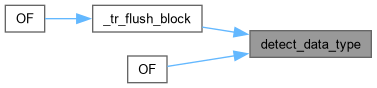
1113{
1114 /* black_mask is the bit mask of black-listed bytes
1115 * set bits 0..6, 14..25, and 28..31
1116 * 0xf3ffc07f = binary 11110011111111111100000001111111
1117 */
1118 unsigned long black_mask = 0xf3ffc07fUL;
1119 int n;
1120
1121 /* Check for non-textual ("black-listed") bytes. */
1122 for (n = 0; n <= 31; n++, black_mask >>= 1)
1123 if ((black_mask & 1) && (s->dyn_ltree[n].Freq != 0))
1124 return Z_BINARY;
1125
1126 /* Check for textual ("white-listed") bytes. */
1127 if (s->dyn_ltree[9].Freq != 0 || s->dyn_ltree[10].Freq != 0
1128 || s->dyn_ltree[13].Freq != 0)
1129 return Z_TEXT;
1130 for (n = 32; n < LITERALS; n++)
1131 if (s->dyn_ltree[n].Freq != 0)
1132 return Z_TEXT;
1133
1134 /* There are no "black-listed" or "white-listed" bytes:
1135 * this stream either is empty or has tolerated ("gray-listed") bytes only.
1136 */
1137 return Z_BINARY;
1138}
#define Z_BINARY
Definition zlib.h:207
#define Z_TEXT
Definition zlib.h:208
Here is the caller graph for this function:

◆ gen_bitlen()

local void gen_bitlen ( deflate_state * s,
tree_desc * desc )

Definition at line 497 of file trees.c.
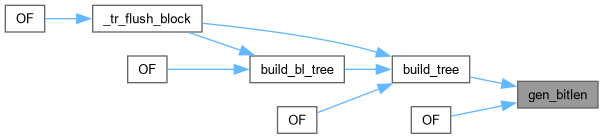
498{
499 ct_data *tree = desc->dyn_tree;
500 int max_code = desc->max_code;
501 const ct_data *stree = desc->stat_desc->static_tree;
502 const intf *extra = desc->stat_desc->extra_bits;
503 int base = desc->stat_desc->extra_base;
504 int max_length = desc->stat_desc->max_length;
505 int h; /* heap index */
506 int n, m; /* iterate over the tree elements */
507 int bits; /* bit length */
508 int xbits; /* extra bits */
509 ush f; /* frequency */
510 int overflow = 0; /* number of elements with bit length too large */
511
512 for (bits = 0; bits <= MAX_BITS; bits++) s->bl_count[bits] = 0;
513
514 /* In a first pass, compute the optimal bit lengths (which may
515 * overflow in the case of the bit length tree).
516 */
517 tree[s->heap[s->heap_max]].Len = 0; /* root of the heap */
518
519 for (h = s->heap_max+1; h < HEAP_SIZE; h++) {
520 n = s->heap[h];
521 bits = tree[tree[n].Dad].Len + 1;
522 if (bits > max_length) bits = max_length, overflow++;
523 tree[n].Len = (ush)bits;
524 /* We overwrite tree[n].Dad which is no longer needed */
525
526 if (n > max_code) continue; /* not a leaf node */
527
528 s->bl_count[bits]++;
529 xbits = 0;
530 if (n >= base) xbits = extra[n-base];
531 f = tree[n].Freq;
532 s->opt_len += (ulg)f * (bits + xbits);
533 if (stree) s->static_len += (ulg)f * (stree[n].Len + xbits);
534 }
535 if (overflow == 0) return;
536
537 Trace((stderr,"\nbit length overflow\n"));
538 /* This happens for example on obj2 and pic of the Calgary corpus */
539
540 /* Find the first bit length which could increase: */
541 do {
542 bits = max_length-1;
543 while (s->bl_count[bits] == 0) bits--;
544 s->bl_count[bits]--; /* move one leaf down the tree */
545 s->bl_count[bits+1] += 2; /* move one overflow item as its brother */
546 s->bl_count[max_length]--;
547 /* The brother of the overflow item also moves one step up,
548 * but this does not affect bl_count[max_length]
549 */
550 overflow -= 2;
551 } while (overflow > 0);
552
553 /* Now recompute all bit lengths, scanning in increasing frequency.
554 * h is still equal to HEAP_SIZE. (It is simpler to reconstruct all
555 * lengths instead of fixing only the wrong ones. This idea is taken
556 * from 'ar' written by Haruhiko Okumura.)
557 */
558 for (bits = max_length; bits != 0; bits--) {
559 n = s->bl_count[bits];
560 while (n != 0) {
561 m = s->heap[--h];
562 if (m > max_code) continue;
563 if ((unsigned) tree[m].Len != (unsigned) bits) {
564 Trace((stderr,"code %d bits %d->%d\n", m, tree[m].Len, bits));
565 s->opt_len += ((long)bits - (long)tree[m].Len)
566 *(long)tree[m].Freq;
567 tree[m].Len = (ush)bits;
568 }
569 n--;
570 }
571 }
572}
#define MAX_BITS
Definition deflate.h:50
const intf * extra_bits
Definition trees.c:133
int FAR intf
Definition zconf.h:345
#define Trace(x)
Definition zutil.h:269
Here is the caller graph for this function:

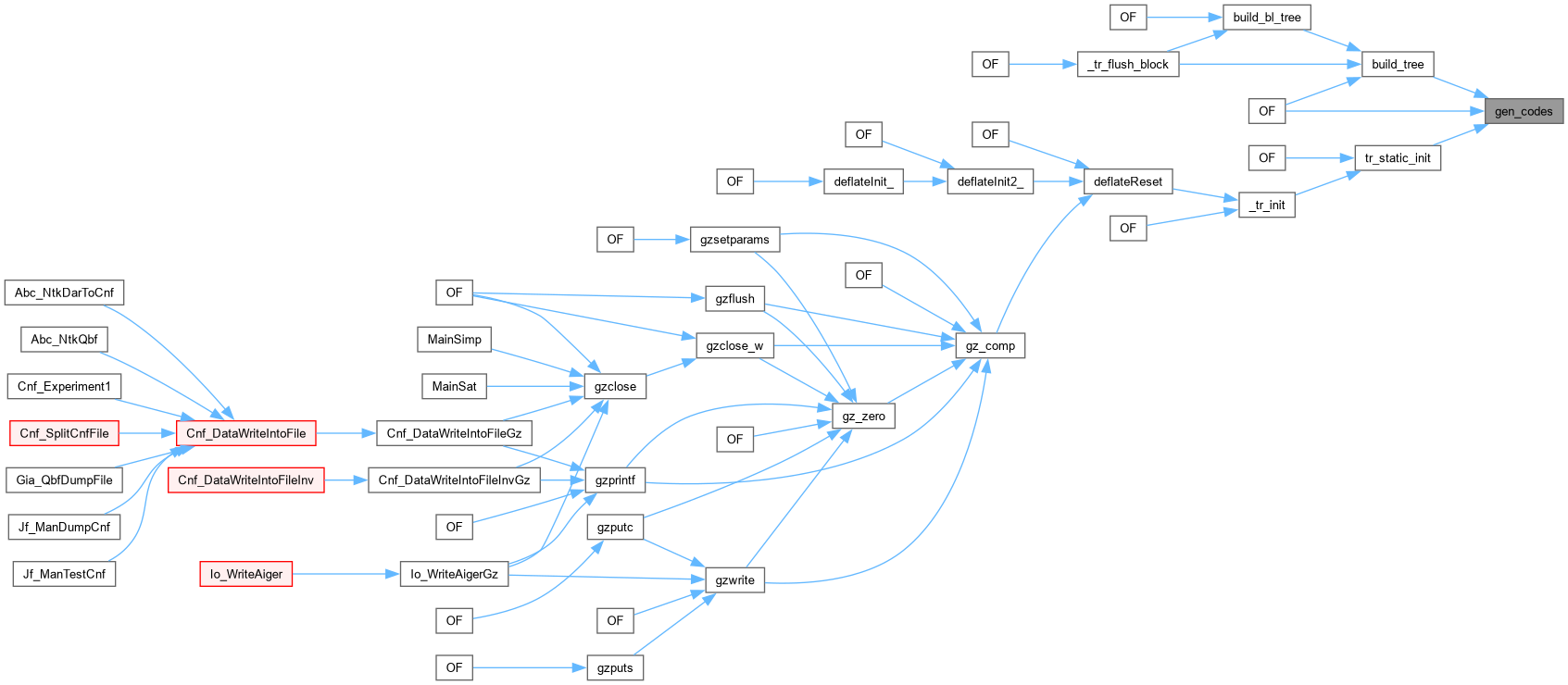
◆ gen_codes()

local void gen_codes ( ct_data * tree,
int max_code,
ushf * bl_count )

Definition at line 582 of file trees.c.

586{
587 ush next_code[MAX_BITS+1]; /* next code value for each bit length */
588 ush code = 0; /* running code value */
589 int bits; /* bit index */
590 int n; /* code index */
591
592 /* The distribution counts are first used to generate the code values
593 * without bit reversal.
594 */
595 for (bits = 1; bits <= MAX_BITS; bits++) {
596 next_code[bits] = code = (code + bl_count[bits-1]) << 1;
597 }
598 /* Check that the bit counts in bl_count are consistent. The last code
599 * must be all ones.
600 */
601 Assert (code + bl_count[MAX_BITS]-1 == (1<<MAX_BITS)-1,
602 "inconsistent bit counts");
603 Tracev((stderr,"\ngen_codes: max_code %d ", max_code));
604
605 for (n = 0; n <= max_code; n++) {
606 int len = tree[n].Len;
607 if (len == 0) continue;
608 /* Now reverse the bits */
609 tree[n].Code = bi_reverse(next_code[len]++, len);
610
611 Tracecv(tree != static_ltree, (stderr,"\nn %3d %c l %2d c %4x (%x) ",
612 n, (isgraph(n) ? n : ' '), len, tree[n].Code, next_code[len]-1));
613 }
614}
local unsigned bi_reverse(unsigned code, int len)
Definition trees.c:1145
Here is the call graph for this function:
Here is the caller graph for this function:

◆ init_block()

local void init_block ( deflate_state * s)

Definition at line 422 of file trees.c.

423{
424 int n; /* iterates over tree elements */
425
426 /* Initialize the trees. */
427 for (n = 0; n < L_CODES; n++) s->dyn_ltree[n].Freq = 0;
428 for (n = 0; n < D_CODES; n++) s->dyn_dtree[n].Freq = 0;
429 for (n = 0; n < BL_CODES; n++) s->bl_tree[n].Freq = 0;
430
431 s->dyn_ltree[END_BLOCK].Freq = 1;
432 s->opt_len = s->static_len = 0L;
433 s->last_lit = s->matches = 0;
434}
#define L_CODES
Definition deflate.h:38
Here is the caller graph for this function:

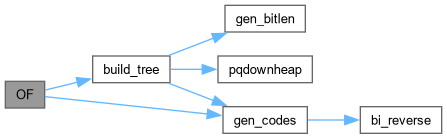
◆ OF() [1/10]

local void gen_codes OF ( (ct_data *tree, int max_code, ushf *bl_count) )
Here is the call graph for this function:

◆ OF() [2/10]

local void init_block OF ( (deflate_state *s) )
Here is the call graph for this function:

◆ OF() [3/10]

local void copy_block OF ( (deflate_state *s, charf *buf, unsigned len, int header) )
Here is the call graph for this function:

◆ OF() [4/10]

local void compress_block OF ( (deflate_state *s, ct_data *ltree, ct_data *dtree) )
Here is the call graph for this function:

◆ OF() [5/10]

local void pqdownheap OF ( (deflate_state *s, ct_data *tree, int k) )
Here is the call graph for this function:

◆ OF() [6/10]

local void scan_tree OF ( (deflate_state *s, ct_data *tree, int max_code) )
Here is the call graph for this function:

◆ OF() [7/10]

local void send_all_trees OF ( (deflate_state *s, int lcodes, int dcodes, int blcodes) )
Here is the call graph for this function:

◆ OF() [8/10]

local void gen_bitlen OF ( (deflate_state *s, tree_desc *desc) )
Here is the call graph for this function:

◆ OF() [9/10]

local unsigned bi_reverse OF ( (unsigned value, int length) )
Here is the call graph for this function:

◆ OF() [10/10]

local void tr_static_init OF ( (void) )
Here is the call graph for this function:

◆ pqdownheap()

local void pqdownheap ( deflate_state * s,
ct_data * tree,
int k )

Definition at line 465 of file trees.c.

466{
467 int v = s->heap[k];
468 int j = k << 1; /* left son of k */
469 while (j <= s->heap_len) {
470 /* Set j to the smallest of the two sons: */
471 if (j < s->heap_len &&
472 smaller(tree, s->heap[j+1], s->heap[j], s->depth)) {
473 j++;
474 }
475 /* Exit if v is smaller than both sons */
476 if (smaller(tree, v, s->heap[j], s->depth)) break;
477
478 /* Exchange v with the smallest son */
479 s->heap[k] = s->heap[j]; k = j;
480
481 /* And continue down the tree, setting j to the left son of k */
482 j <<= 1;
483 }
484 s->heap[k] = v;
485}
#define smaller(tree, n, m, depth)
Definition trees.c:455
Here is the caller graph for this function:

◆ scan_tree()

local void scan_tree ( deflate_state * s,
ct_data * tree,
int max_code )

Definition at line 710 of file trees.c.

711{
712 int n; /* iterates over all tree elements */
713 int prevlen = -1; /* last emitted length */
714 int curlen; /* length of current code */
715 int nextlen = tree[0].Len; /* length of next code */
716 int count = 0; /* repeat count of the current code */
717 int max_count = 7; /* max repeat count */
718 int min_count = 4; /* min repeat count */
719
720 if (nextlen == 0) max_count = 138, min_count = 3;
721 tree[max_code+1].Len = (ush)0xffff; /* guard */
722
723 for (n = 0; n <= max_code; n++) {
724 curlen = nextlen; nextlen = tree[n+1].Len;
725 if (++count < max_count && curlen == nextlen) {
726 continue;
727 } else if (count < min_count) {
728 s->bl_tree[curlen].Freq += count;
729 } else if (curlen != 0) {
730 if (curlen != prevlen) s->bl_tree[curlen].Freq++;
731 s->bl_tree[REP_3_6].Freq++;
732 } else if (count <= 10) {
733 s->bl_tree[REPZ_3_10].Freq++;
734 } else {
735 s->bl_tree[REPZ_11_138].Freq++;
736 }
737 count = 0; prevlen = curlen;
738 if (nextlen == 0) {
739 max_count = 138, min_count = 3;
740 } else if (curlen == nextlen) {
741 max_count = 6, min_count = 3;
742 } else {
743 max_count = 7, min_count = 4;
744 }
745 }
746}
#define REPZ_11_138
Definition trees.c:66
#define REPZ_3_10
Definition trees.c:63
#define REP_3_6
Definition trees.c:60
Here is the caller graph for this function:

◆ send_all_trees()

local void send_all_trees ( deflate_state * s,
int lcodes,
int dcodes,
int blcodes )

Definition at line 834 of file trees.c.

835{
836 int rank; /* index in bl_order */
837
838 Assert (lcodes >= 257 && dcodes >= 1 && blcodes >= 4, "not enough codes");
839 Assert (lcodes <= L_CODES && dcodes <= D_CODES && blcodes <= BL_CODES,
840 "too many codes");
841 Tracev((stderr, "\nbl counts: "));
842 send_bits(s, lcodes-257, 5); /* not +255 as stated in appnote.txt */
843 send_bits(s, dcodes-1, 5);
844 send_bits(s, blcodes-4, 4); /* not -3 as stated in appnote.txt */
845 for (rank = 0; rank < blcodes; rank++) {
846 Tracev((stderr, "\nbl code %2d ", bl_order[rank]));
847 send_bits(s, s->bl_tree[bl_order[rank]].Len, 3);
848 }
849 Tracev((stderr, "\nbl tree: sent %ld", s->bits_sent));
850
851 send_tree(s, (ct_data *)s->dyn_ltree, lcodes-1); /* literal tree */
852 Tracev((stderr, "\nlit tree: sent %ld", s->bits_sent));
853
854 send_tree(s, (ct_data *)s->dyn_dtree, dcodes-1); /* distance tree */
855 Tracev((stderr, "\ndist tree: sent %ld", s->bits_sent));
856}
local void send_tree(deflate_state *s, ct_data *tree, int max_code)
Definition trees.c:752
unsigned rank
Definition vector.c:142
Here is the call graph for this function:
Here is the caller graph for this function:

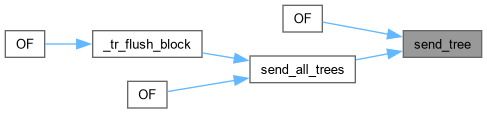
◆ send_tree()

local void send_tree ( deflate_state * s,
ct_data * tree,
int max_code )

Definition at line 752 of file trees.c.
753{
754 int n; /* iterates over all tree elements */
755 int prevlen = -1; /* last emitted length */
756 int curlen; /* length of current code */
757 int nextlen = tree[0].Len; /* length of next code */
758 int count = 0; /* repeat count of the current code */
759 int max_count = 7; /* max repeat count */
760 int min_count = 4; /* min repeat count */
761
762 /* tree[max_code+1].Len = -1; */ /* guard already set */
763 if (nextlen == 0) max_count = 138, min_count = 3;
764
765 for (n = 0; n <= max_code; n++) {
766 curlen = nextlen; nextlen = tree[n+1].Len;
767 if (++count < max_count && curlen == nextlen) {
768 continue;
769 } else if (count < min_count) {
770 do { send_code(s, curlen, s->bl_tree); } while (--count != 0);
771
772 } else if (curlen != 0) {
773 if (curlen != prevlen) {
774 send_code(s, curlen, s->bl_tree); count--;
775 }
776 Assert(count >= 3 && count <= 6, " 3_6?");
777 send_code(s, REP_3_6, s->bl_tree); send_bits(s, count-3, 2);
778
779 } else if (count <= 10) {
780 send_code(s, REPZ_3_10, s->bl_tree); send_bits(s, count-3, 3);
781
782 } else {
783 send_code(s, REPZ_11_138, s->bl_tree); send_bits(s, count-11, 7);
784 }
785 count = 0; prevlen = curlen;
786 if (nextlen == 0) {
787 max_count = 138, min_count = 3;
788 } else if (curlen == nextlen) {
789 max_count = 6, min_count = 3;
790 } else {
791 max_count = 7, min_count = 4;
792 }
793 }
794}
Here is the caller graph for this function:

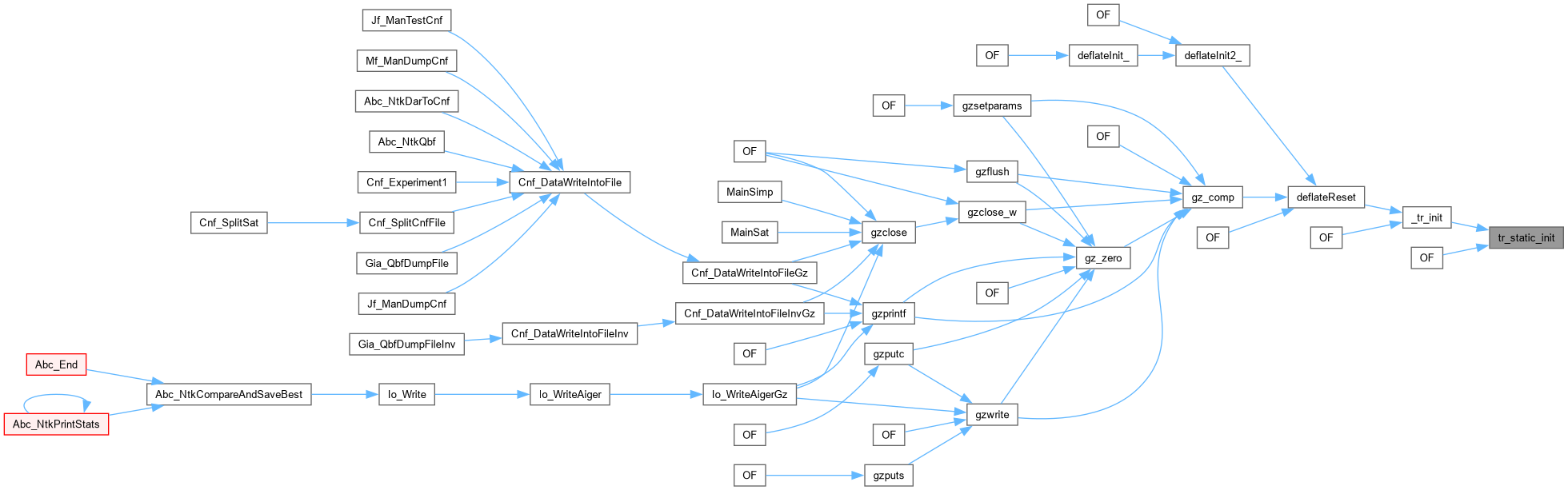
◆ tr_static_init()

local void tr_static_init ( )

Definition at line 245 of file trees.c.

246{
247#if defined(GEN_TREES_H) || !defined(STDC)
248 static int static_init_done = 0;
249 int n; /* iterates over tree elements */
250 int bits; /* bit counter */
251 int length; /* length value */
252 int code; /* code value */
253 int dist; /* distance index */
254 ush bl_count[MAX_BITS+1];
255 /* number of codes at each bit length for an optimal tree */
256
257 if (static_init_done) return;
258
259 /* For some embedded targets, global variables are not initialized: */
260#ifdef NO_INIT_GLOBAL_POINTERS
261 static_l_desc.static_tree = static_ltree;
262 static_l_desc.extra_bits = extra_lbits;
263 static_d_desc.static_tree = static_dtree;
264 static_d_desc.extra_bits = extra_dbits;
265 static_bl_desc.extra_bits = extra_blbits;
266#endif
267
268 /* Initialize the mapping length (0..255) -> length code (0..28) */
269 length = 0;
270 for (code = 0; code < LENGTH_CODES-1; code++) {
271 base_length[code] = length;
272 for (n = 0; n < (1<<extra_lbits[code]); n++) {
273 _length_code[length++] = (uch)code;
274 }
275 }
276 Assert (length == 256, "tr_static_init: length != 256");
277 /* Note that the length 255 (match length 258) can be represented
278 * in two different ways: code 284 + 5 bits or code 285, so we
279 * overwrite length_code[255] to use the best encoding:
280 */
281 _length_code[length-1] = (uch)code;
282
283 /* Initialize the mapping dist (0..32K) -> dist code (0..29) */
284 dist = 0;
285 for (code = 0 ; code < 16; code++) {
286 base_dist[code] = dist;
287 for (n = 0; n < (1<<extra_dbits[code]); n++) {
288 _dist_code[dist++] = (uch)code;
289 }
290 }
291 Assert (dist == 256, "tr_static_init: dist != 256");
292 dist >>= 7; /* from now on, all distances are divided by 128 */
293 for ( ; code < D_CODES; code++) {
294 base_dist[code] = dist << 7;
295 for (n = 0; n < (1<<(extra_dbits[code]-7)); n++) {
296 _dist_code[256 + dist++] = (uch)code;
297 }
298 }
299 Assert (dist == 256, "tr_static_init: 256+dist != 512");
300
301 /* Construct the codes of the static literal tree */
302 for (bits = 0; bits <= MAX_BITS; bits++) bl_count[bits] = 0;
303 n = 0;
304 while (n <= 143) static_ltree[n++].Len = 8, bl_count[8]++;
305 while (n <= 255) static_ltree[n++].Len = 9, bl_count[9]++;
306 while (n <= 279) static_ltree[n++].Len = 7, bl_count[7]++;
307 while (n <= 287) static_ltree[n++].Len = 8, bl_count[8]++;
308 /* Codes 286 and 287 do not exist, but we must include them in the
309 * tree construction to get a canonical Huffman tree (longest code
310 * all ones)
311 */
312 gen_codes((ct_data *)static_ltree, L_CODES+1, bl_count);
313
314 /* The static distance tree is trivial: */
315 for (n = 0; n < D_CODES; n++) {
316 static_dtree[n].Len = 5;
317 static_dtree[n].Code = bi_reverse((unsigned)n, 5);
318 }
319 static_init_done = 1;
320
321# ifdef GEN_TREES_H
322 gen_trees_header();
323# endif
324#endif /* defined(GEN_TREES_H) || !defined(STDC) */
325}
#define LENGTH_CODES
Definition deflate.h:32
uch ZLIB_INTERNAL _dist_code[]
Definition trees.c:110
local const int extra_blbits[BL_CODES]
Definition trees.c:76
Here is the call graph for this function:
Here is the caller graph for this function:

Variable Documentation

◆ _dist_code

uch _dist_code[DIST_CODE_LEN]

Definition at line 110 of file trees.c.

◆ _length_code

uch _length_code[MAX_MATCH-MIN_MATCH+1]

Definition at line 116 of file trees.c.

◆ base_dist

local int base_dist[D_CODES]

Definition at line 122 of file trees.c.

◆ base_length

local int base_length[LENGTH_CODES]

Definition at line 119 of file trees.c.

◆ bl_order

local const uch bl_order[BL_CODES] = {16,17,18,0,8,7,9,6,10,5,11,4,12,3,13,2,14,1,15}

Definition at line 78 of file trees.c.

79{16,17,18,0,8,7,9,6,10,5,11,4,12,3,13,2,14,1,15};

◆ extra_blbits

local const int extra_blbits[BL_CODES] = {0,0,0,0,0,0,0,0,0,0,0,0,0,0,0,0,2,3,7}

Definition at line 75 of file trees.c.

76{0,0,0,0,0,0,0,0,0,0,0,0,0,0,0,0,2,3,7};

◆ extra_dbits

local const int extra_dbits[D_CODES] = {0,0,0,0,1,1,2,2,3,3,4,4,5,5,6,6,7,7,8,8,9,9,10,10,11,11,12,12,13,13}

Definition at line 72 of file trees.c.

73{0,0,0,0,1,1,2,2,3,3,4,4,5,5,6,6,7,7,8,8,9,9,10,10,11,11,12,12,13,13};

◆ extra_lbits

local const int extra_lbits[LENGTH_CODES] = {0,0,0,0,0,0,0,0,1,1,1,1,2,2,2,2,3,3,3,3,4,4,4,4,5,5,5,5,0}

Definition at line 69 of file trees.c.

70{0,0,0,0,0,0,0,0,1,1,1,1,2,2,2,2,3,3,3,3,4,4,4,4,5,5,5,5,0};

◆ static_bl_desc

local static_tree_desc static_bl_desc
Initial value:
=
#define MAX_BL_BITS
Definition trees.c:54

Definition at line 145 of file trees.c.

146{(const ct_data *)0, extra_blbits, 0, BL_CODES, MAX_BL_BITS};

◆ static_d_desc

local static_tree_desc static_d_desc
Initial value:

Definition at line 142 of file trees.c.

◆ static_dtree

local ct_data static_dtree[D_CODES]

Definition at line 105 of file trees.c.

◆ static_l_desc

local static_tree_desc static_l_desc
Initial value:

Definition at line 139 of file trees.c.

◆ static_ltree

local ct_data static_ltree[L_CODES+2]

Definition at line 98 of file trees.c.