ABC: A System for Sequential Synthesis and Verification
 
Loading...
Searching...
No Matches
aigDup.c File Reference
#include "aig/saig/saig.h"
#include "misc/tim/tim.h"
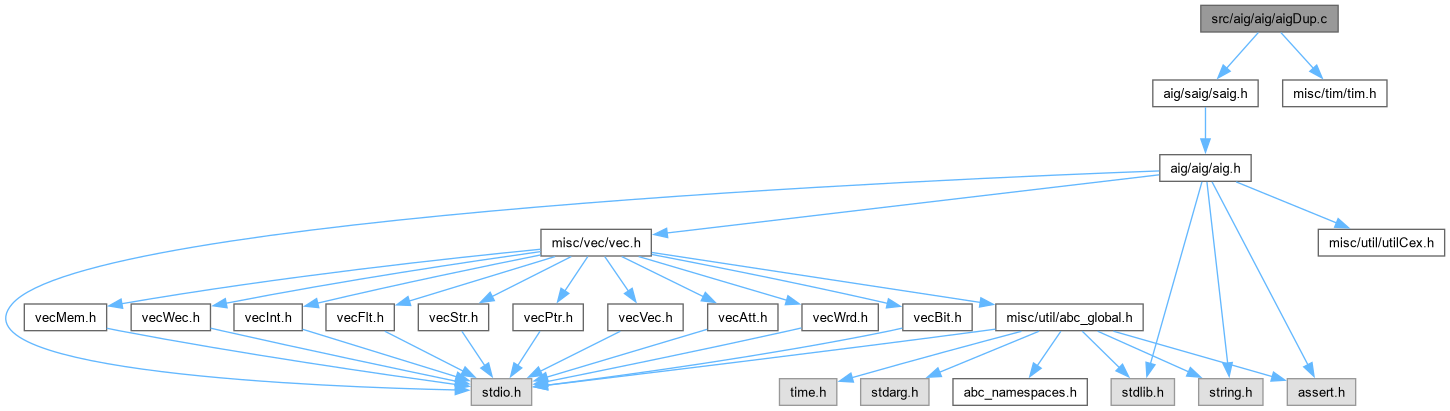
Include dependency graph for aigDup.c:

Go to the source code of this file.

Functions

ABC_NAMESPACE_IMPL_START Aig_Man_tAig_ManDupSimple (Aig_Man_t *p)
 DECLARATIONS ///.
 
Aig_Man_tAig_ManDupSimpleWithHints (Aig_Man_t *p, Vec_Int_t *vHints)
 
Aig_Obj_tAig_ManDupSimpleDfs_rec (Aig_Man_t *pNew, Aig_Man_t *p, Aig_Obj_t *pObj)
 
Aig_Man_tAig_ManDupSimpleDfs (Aig_Man_t *p)
 
Aig_Man_tAig_ManDupSimpleDfsPart (Aig_Man_t *p, Vec_Ptr_t *vPis, Vec_Ptr_t *vPos)
 
Aig_Man_tAig_ManDupOrdered (Aig_Man_t *p)
 
Aig_Man_tAig_ManDupCof (Aig_Man_t *p, int iInput, int Value)
 
Aig_Man_tAig_ManDupTrim (Aig_Man_t *p)
 
Aig_Man_tAig_ManDupExor (Aig_Man_t *p)
 
Aig_Obj_tAig_ManDupDfs_rec (Aig_Man_t *pNew, Aig_Man_t *p, Aig_Obj_t *pObj)
 
Aig_Man_tAig_ManDupDfs (Aig_Man_t *p)
 
Vec_Ptr_tAig_ManOrderPios (Aig_Man_t *p, Aig_Man_t *pOrder)
 
Aig_Obj_tAig_ManDupDfsGuided_rec (Aig_Man_t *pNew, Aig_Man_t *p, Aig_Obj_t *pObj)
 
Aig_Man_tAig_ManDupDfsGuided (Aig_Man_t *p, Vec_Ptr_t *vPios)
 
Aig_Man_tAig_ManDupLevelized (Aig_Man_t *p)
 
Aig_Man_tAig_ManDupWithoutPos (Aig_Man_t *p)
 
Aig_Man_tAig_ManDupFlopsOnly (Aig_Man_t *p)
 
Aig_Man_tAig_ManDupRepres (Aig_Man_t *p)
 
Aig_Obj_tAig_ManDupRepres_rec (Aig_Man_t *pNew, Aig_Man_t *p, Aig_Obj_t *pObj)
 
Aig_Man_tAig_ManDupRepresDfs (Aig_Man_t *p)
 
Aig_Man_tAig_ManCreateMiter (Aig_Man_t *p1, Aig_Man_t *p2, int Oper)
 
Aig_Man_tAig_ManDupOrpos (Aig_Man_t *p, int fAddRegs)
 
Aig_Man_tAig_ManDupOneOutput (Aig_Man_t *p, int iPoNum, int fAddRegs)
 
Aig_Man_tAig_ManDupUnsolvedOutputs (Aig_Man_t *p, int fAddRegs)
 
Aig_Man_tAig_ManDupArray (Vec_Ptr_t *vArray)
 
Aig_Man_tAig_ManDupNodes (Aig_Man_t *pMan, Vec_Ptr_t *vArray)
 

Function Documentation

◆ Aig_ManCreateMiter()

Aig_Man_t * Aig_ManCreateMiter ( Aig_Man_t * p1,
Aig_Man_t * p2,
int Oper )

Function*************************************************************

Synopsis [Creates the miter of the two AIG managers.]

Description [Oper is the operation to perform on the outputs of the miter. Oper == 0 is XOR Oper == 1 is complemented implication (p1 => p2) Oper == 2 is OR Oper == 3 is AND ]

SideEffects []

SeeAlso []

Definition at line 1049 of file aigDup.c.
1050{
1051 Aig_Man_t * pNew;
1052 Aig_Obj_t * pObj = NULL;
1053 int i;
1054 assert( Aig_ManRegNum(p1) == 0 );
1055 assert( Aig_ManRegNum(p2) == 0 );
1056 assert( Aig_ManCoNum(p1) == 1 );
1057 assert( Aig_ManCoNum(p2) == 1 );
1058 assert( Aig_ManCiNum(p1) == Aig_ManCiNum(p2) );
1059 pNew = Aig_ManStart( Aig_ManObjNumMax(p1) + Aig_ManObjNumMax(p2) );
1060 // add first AIG
1061 Aig_ManConst1(p1)->pData = Aig_ManConst1(pNew);
1062 Aig_ManForEachCi( p1, pObj, i )
1063 pObj->pData = Aig_ObjCreateCi( pNew );
1064 Aig_ManForEachNode( p1, pObj, i )
1065 pObj->pData = Aig_And( pNew, Aig_ObjChild0Copy(pObj), Aig_ObjChild1Copy(pObj) );
1066 // add second AIG
1067 Aig_ManConst1(p2)->pData = Aig_ManConst1(pNew);
1068 Aig_ManForEachCi( p2, pObj, i )
1069 pObj->pData = Aig_ManCi( pNew, i );
1070 Aig_ManForEachNode( p2, pObj, i )
1071 pObj->pData = Aig_And( pNew, Aig_ObjChild0Copy(pObj), Aig_ObjChild1Copy(pObj) );
1072 // add the output
1073 if ( Oper == 0 ) // XOR
1074 pObj = Aig_Exor( pNew, Aig_ObjChild0Copy(Aig_ManCo(p1,0)), Aig_ObjChild0Copy(Aig_ManCo(p2,0)) );
1075 else if ( Oper == 1 ) // implication is PO(p1) -> PO(p2) ... complement is PO(p1) & !PO(p2)
1076 pObj = Aig_And( pNew, Aig_ObjChild0Copy(Aig_ManCo(p1,0)), Aig_Not(Aig_ObjChild0Copy(Aig_ManCo(p2,0))) );
1077 else if ( Oper == 2 ) // OR
1078 pObj = Aig_Or( pNew, Aig_ObjChild0Copy(Aig_ManCo(p1,0)), Aig_ObjChild0Copy(Aig_ManCo(p2,0)) );
1079 else if ( Oper == 3 ) // AND
1080 pObj = Aig_And( pNew, Aig_ObjChild0Copy(Aig_ManCo(p1,0)), Aig_ObjChild0Copy(Aig_ManCo(p2,0)) );
1081 else
1082 assert( 0 );
1083 Aig_ObjCreateCo( pNew, pObj );
1084 Aig_ManCleanup( pNew );
1085 return pNew;
1086}
#define Aig_ManForEachCi(p, pObj, i)
ITERATORS ///.
Definition aig.h:393
Aig_Obj_t * Aig_And(Aig_Man_t *p, Aig_Obj_t *p0, Aig_Obj_t *p1)
Definition aigOper.c:104
Aig_Obj_t * Aig_ObjCreateCo(Aig_Man_t *p, Aig_Obj_t *pDriver)
Definition aigObj.c:66
struct Aig_Obj_t_ Aig_Obj_t
Definition aig.h:51
Aig_Obj_t * Aig_Exor(Aig_Man_t *p, Aig_Obj_t *p0, Aig_Obj_t *p1)
Definition aigOper.c:220
Aig_Man_t * Aig_ManStart(int nNodesMax)
DECLARATIONS ///.
Definition aigMan.c:47
#define Aig_ManForEachNode(p, pObj, i)
Definition aig.h:413
typedefABC_NAMESPACE_HEADER_START struct Aig_Man_t_ Aig_Man_t
INCLUDES ///.
Definition aig.h:50
int Aig_ManCleanup(Aig_Man_t *p)
Definition aigMan.c:265
Aig_Obj_t * Aig_ObjCreateCi(Aig_Man_t *p)
DECLARATIONS ///.
Definition aigObj.c:45
Aig_Obj_t * Aig_Or(Aig_Man_t *p, Aig_Obj_t *p0, Aig_Obj_t *p1)
Definition aigOper.c:259
void * pData
Definition aig.h:87
#define assert(ex)
Definition util_old.h:213
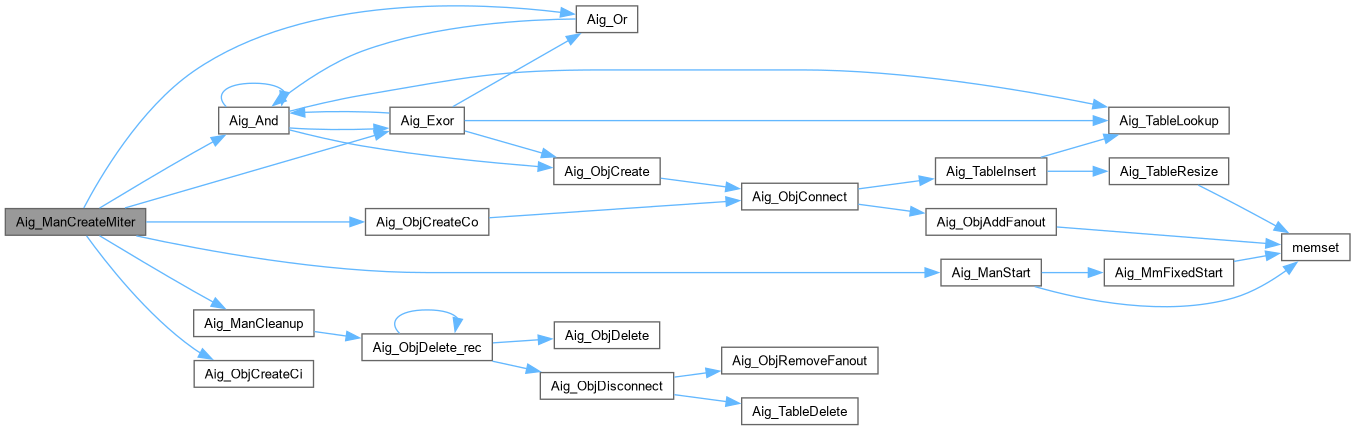
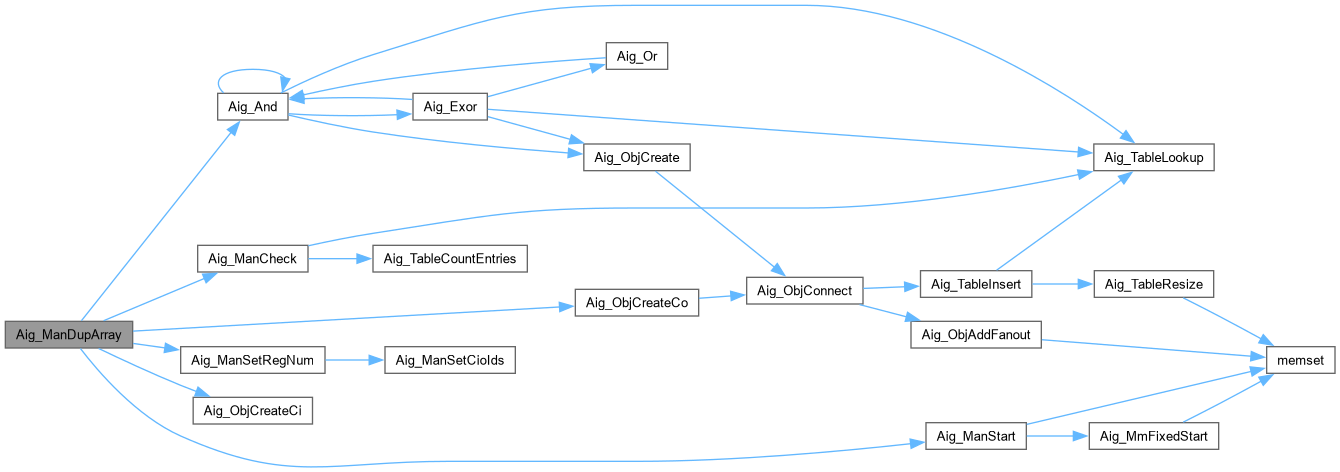
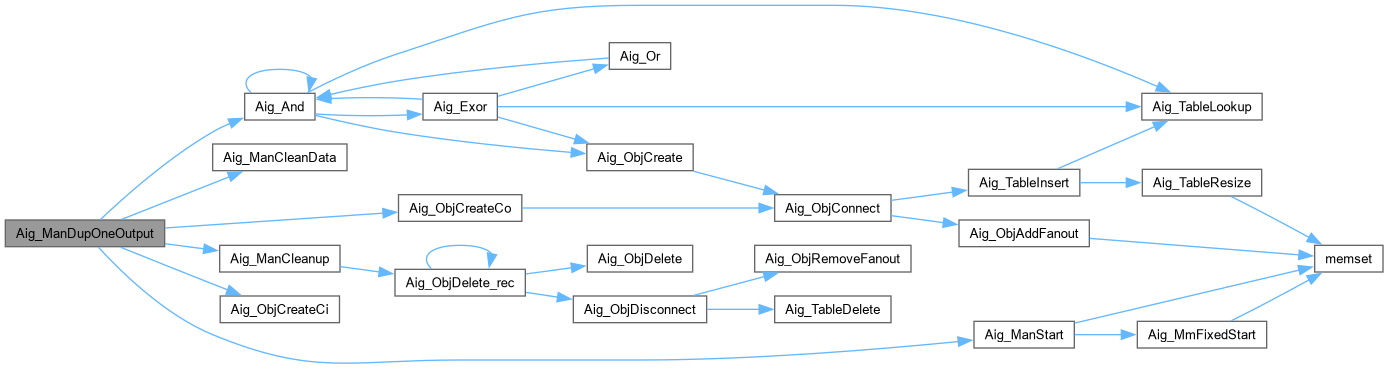
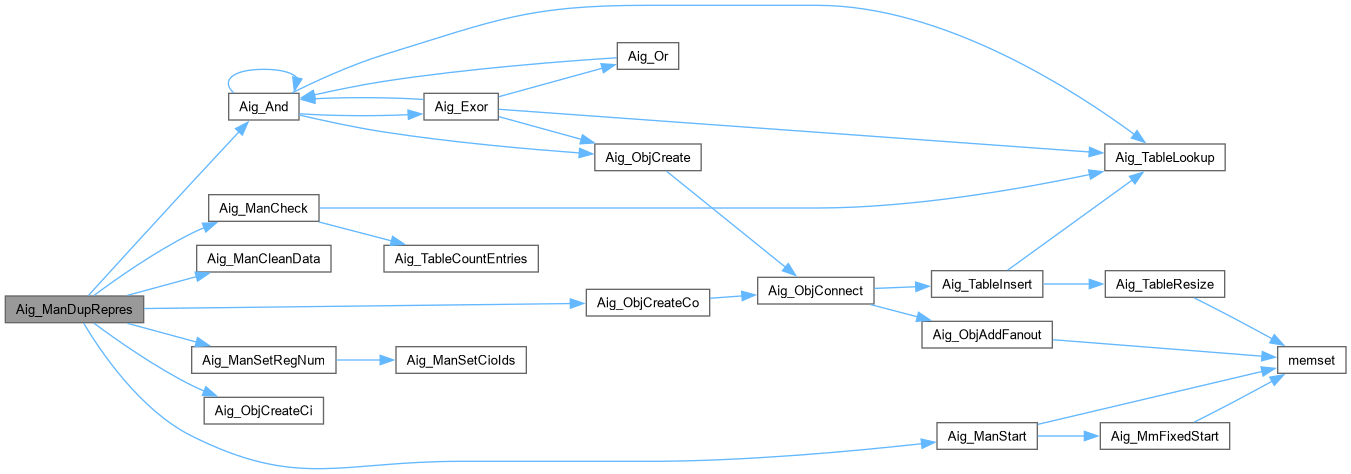
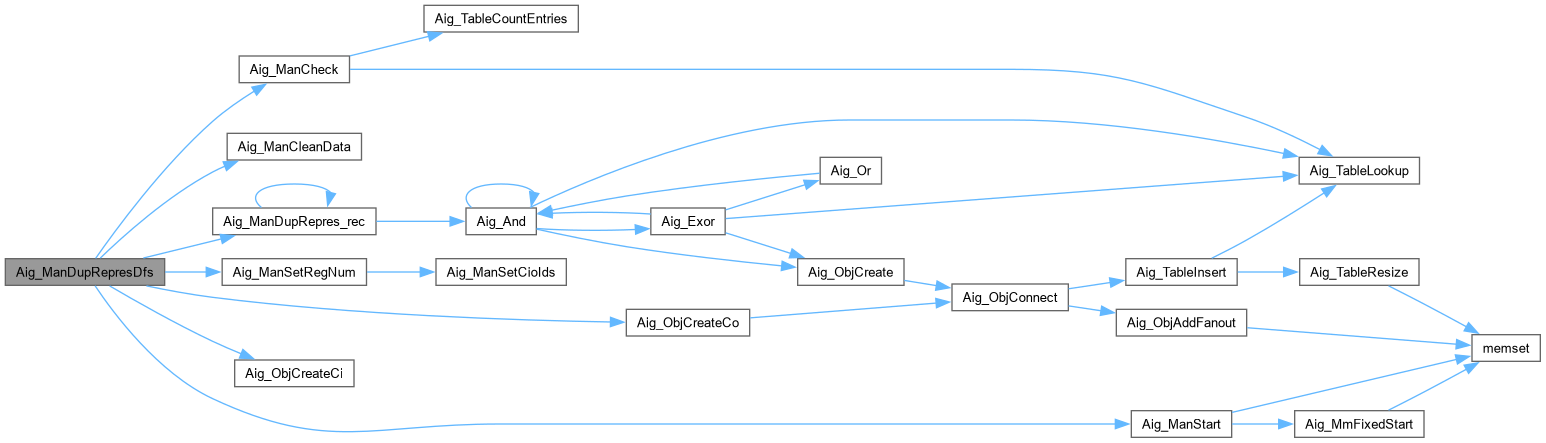
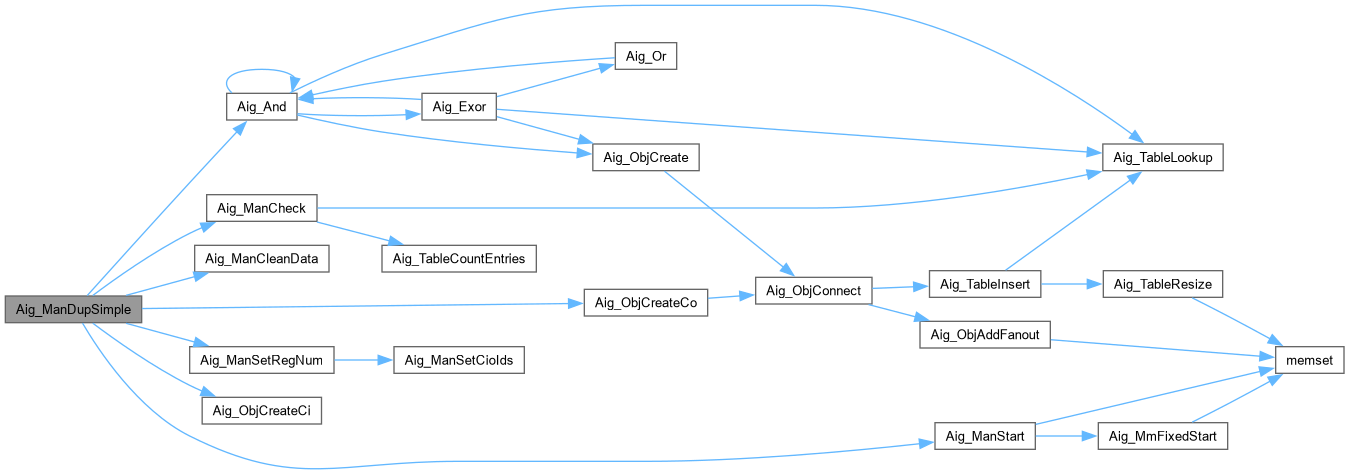
Here is the call graph for this function:
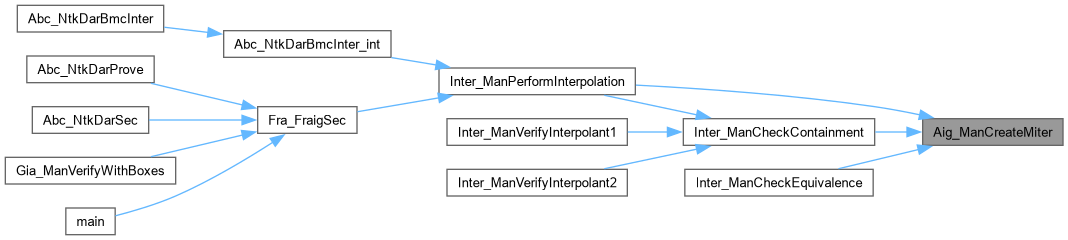
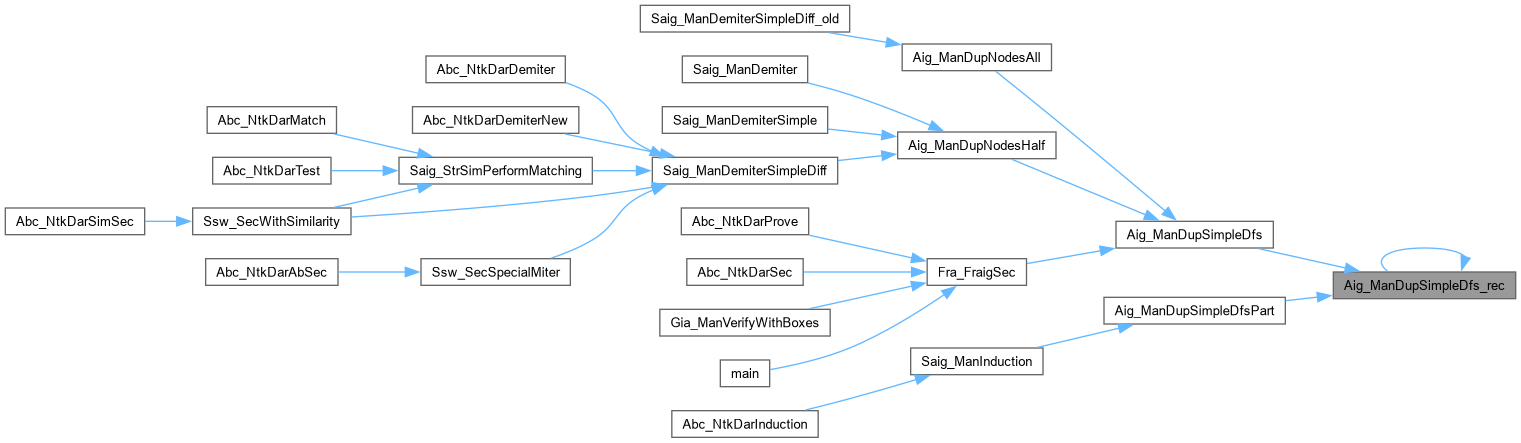
Here is the caller graph for this function:

◆ Aig_ManDupArray()

Aig_Man_t * Aig_ManDupArray ( Vec_Ptr_t * vArray)

Function*************************************************************

Synopsis [Duplicates AIG with only one primary output.]

Description []

SideEffects []

SeeAlso []

Definition at line 1255 of file aigDup.c.
1256{
1257 Aig_Man_t * p, * pNew;
1258 Aig_Obj_t * pObj = NULL;
1259 int i, k;
1260 if ( Vec_PtrSize(vArray) == 0 )
1261 return NULL;
1262 p = (Aig_Man_t *)Vec_PtrEntry( vArray, 0 );
1263 Vec_PtrForEachEntry( Aig_Man_t *, vArray, pNew, k )
1264 {
1265 assert( Aig_ManRegNum(pNew) == 0 );
1266 assert( Aig_ManCiNum(pNew) == Aig_ManCiNum(p) );
1267 }
1268 // create the new manager
1269 pNew = Aig_ManStart( 10000 );
1270 pNew->pName = Abc_UtilStrsav( p->pName );
1271 Aig_ManForEachCi( p, pObj, i )
1272 Aig_ObjCreateCi(pNew);
1273 // create the PIs
1274 Vec_PtrForEachEntry( Aig_Man_t *, vArray, p, k )
1275 {
1276 Aig_ManConst1(p)->pData = Aig_ManConst1(pNew);
1277 Aig_ManForEachCi( p, pObj, i )
1278 pObj->pData = Aig_ManCi( pNew, i );
1279 Aig_ManForEachNode( p, pObj, i )
1280 pObj->pData = Aig_And( pNew, Aig_ObjChild0Copy(pObj), Aig_ObjChild1Copy(pObj) );
1281 Aig_ManForEachCo( p, pObj, i )
1282 Aig_ObjCreateCo( pNew, Aig_ObjChild0Copy(pObj) );
1283 }
1284 Aig_ManSetRegNum( pNew, Aig_ManRegNum(p) );
1285 // check the resulting network
1286 if ( !Aig_ManCheck(pNew) )
1287 printf( "Aig_ManDupSimple(): The check has failed.\n" );
1288 return pNew;
1289}
void Aig_ManSetRegNum(Aig_Man_t *p, int nRegs)
Definition aigMan.c:438
#define Aig_ManForEachCo(p, pObj, i)
Definition aig.h:398
ABC_DLL int Aig_ManCheck(Aig_Man_t *p)
FUNCTION DECLARATIONS ///.
Definition aigCheck.c:45
Cube * p
Definition exorList.c:222
#define Vec_PtrForEachEntry(Type, vVec, pEntry, i)
MACRO DEFINITIONS ///.
Definition vecPtr.h:55
Here is the call graph for this function:
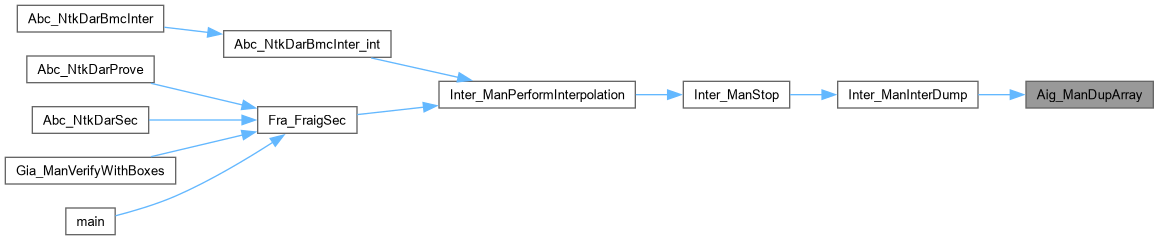
Here is the caller graph for this function:

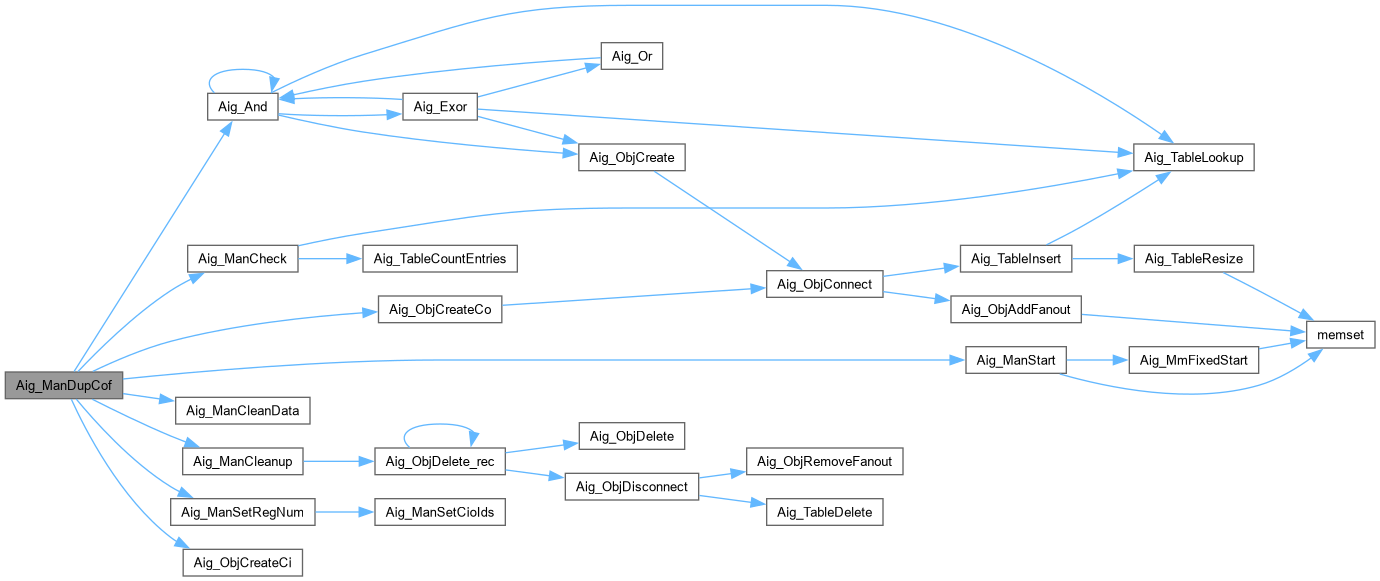
◆ Aig_ManDupCof()

Aig_Man_t * Aig_ManDupCof ( Aig_Man_t * p,
int iInput,
int Value )

Function*************************************************************

Synopsis [Duplicates the AIG manager.]

Description [Orders nodes as follows: PIs, ANDs, POs.]

SideEffects []

SeeAlso []

Definition at line 345 of file aigDup.c.
346{
347 Aig_Man_t * pNew;
348 Aig_Obj_t * pObj, * pObjNew = NULL;
349 int i;
350 assert( p->pManTime == NULL );
351 // create the new manager
352 pNew = Aig_ManStart( Aig_ManObjNumMax(p) );
353 pNew->pName = Abc_UtilStrsav( p->pName );
354 pNew->pSpec = Abc_UtilStrsav( p->pSpec );
355 pNew->nAsserts = p->nAsserts;
356 pNew->nConstrs = p->nConstrs;
357 pNew->nBarBufs = p->nBarBufs;
358 if ( p->vFlopNums )
359 pNew->vFlopNums = Vec_IntDup( p->vFlopNums );
360 // create the PIs
362 Aig_ManConst1(p)->pData = Aig_ManConst1(pNew);
363 Aig_ManForEachCi( p, pObj, i )
364 {
365 if ( i == iInput )
366 pObjNew = Value ? Aig_ManConst1(pNew) : Aig_ManConst0(pNew);
367 else
368 {
369 pObjNew = Aig_ObjCreateCi( pNew );
370 pObjNew->Level = pObj->Level;
371 }
372 pObj->pData = pObjNew;
373 }
374 // duplicate internal nodes
375 Aig_ManForEachObj( p, pObj, i )
376 if ( Aig_ObjIsBuf(pObj) )
377 {
378 pObjNew = Aig_ObjChild0Copy(pObj);
379 pObj->pData = pObjNew;
380 }
381 else if ( Aig_ObjIsNode(pObj) )
382 {
383 pObjNew = Aig_And( pNew, Aig_ObjChild0Copy(pObj), Aig_ObjChild1Copy(pObj) );
384 pObj->pData = pObjNew;
385 }
386 // add the POs
387 Aig_ManForEachCo( p, pObj, i )
388 {
389 pObjNew = Aig_ObjCreateCo( pNew, Aig_ObjChild0Copy(pObj) );
390 pObj->pData = pObjNew;
391 }
392// assert( Aig_ManBufNum(p) != 0 || Aig_ManNodeNum(p) == Aig_ManNodeNum(pNew) );
393 Aig_ManCleanup( pNew );
394 Aig_ManSetRegNum( pNew, Aig_ManRegNum(p) );
395 // check the resulting network
396 if ( !Aig_ManCheck(pNew) )
397 printf( "Aig_ManDupSimple(): The check has failed.\n" );
398 return pNew;
399}
#define Aig_ManForEachObj(p, pObj, i)
Definition aig.h:403
void Aig_ManCleanData(Aig_Man_t *p)
Definition aigUtil.c:205
unsigned Level
Definition aig.h:82
Here is the call graph for this function:
Here is the caller graph for this function:

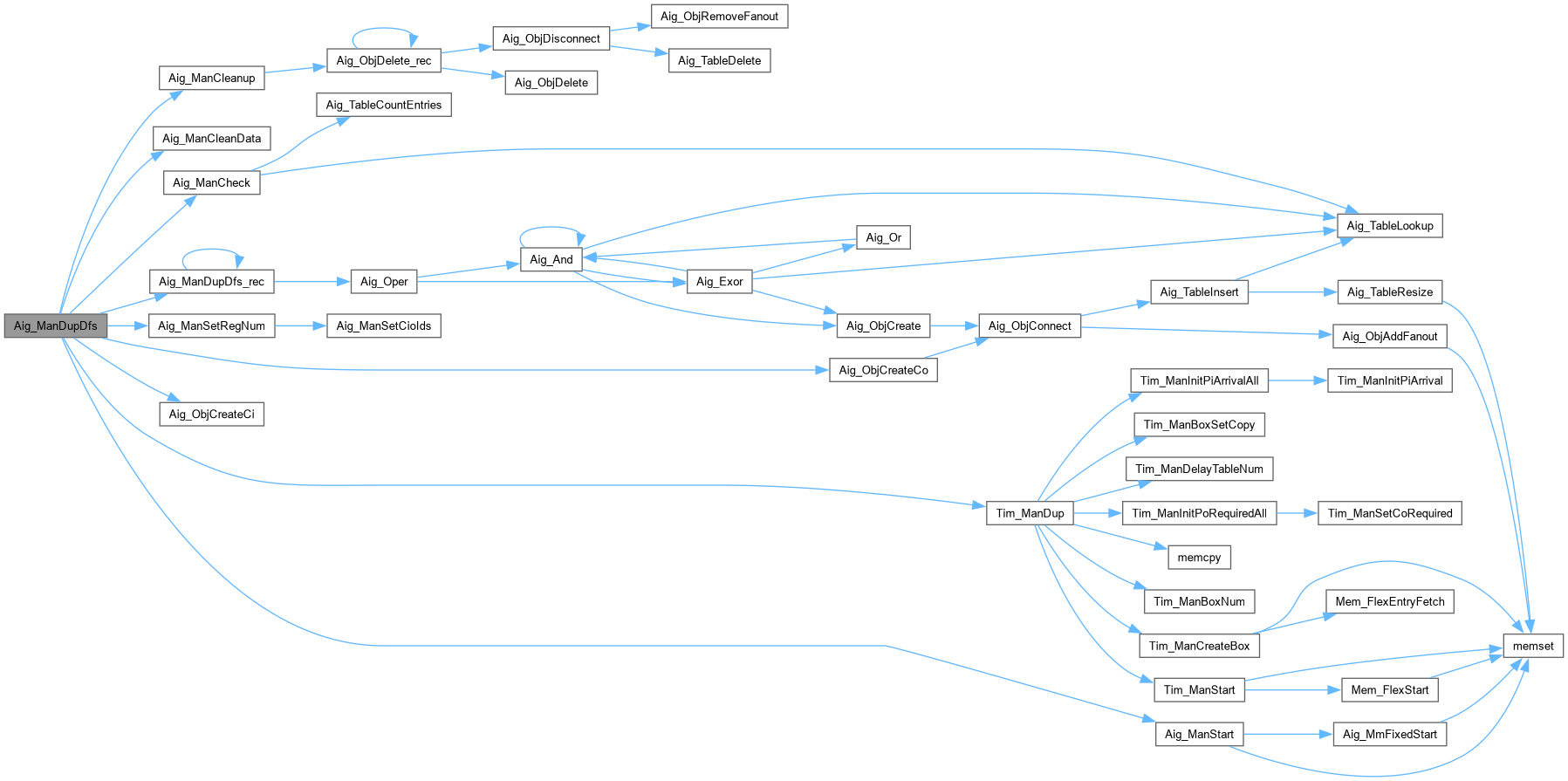
◆ Aig_ManDupDfs()

Aig_Man_t * Aig_ManDupDfs ( Aig_Man_t * p)

Function*************************************************************

Synopsis [Duplicates the AIG manager.]

Description [This duplicator works for AIGs with choices.]

SideEffects []

SeeAlso []

Definition at line 563 of file aigDup.c.
564{
565 Aig_Man_t * pNew;
566 Aig_Obj_t * pObj, * pObjNew = NULL;
567 int i, nNodes;
568 // create the new manager
569 pNew = Aig_ManStart( Aig_ManObjNumMax(p) );
570 pNew->pName = Abc_UtilStrsav( p->pName );
571 pNew->pSpec = Abc_UtilStrsav( p->pSpec );
572 pNew->nAsserts = p->nAsserts;
573 pNew->nConstrs = p->nConstrs;
574 pNew->nBarBufs = p->nBarBufs;
575 if ( p->vFlopNums )
576 pNew->vFlopNums = Vec_IntDup( p->vFlopNums );
577 // duplicate representation of choice nodes
578 if ( p->pEquivs )
579 pNew->pEquivs = ABC_CALLOC( Aig_Obj_t *, Aig_ManObjNumMax(p) );
580 if ( p->pReprs )
581 pNew->pReprs = ABC_CALLOC( Aig_Obj_t *, Aig_ManObjNumMax(p) );
582 // create the PIs
584 // duplicate internal nodes
585 Aig_ManConst1(p)->pData = Aig_ManConst1(pNew);
586 Aig_ManForEachObj( p, pObj, i )
587 {
588 if ( Aig_ObjIsCi(pObj) )
589 {
590 pObjNew = Aig_ObjCreateCi( pNew );
591 pObjNew->Level = pObj->Level;
592 pObj->pData = pObjNew;
593 }
594 else if ( Aig_ObjIsCo(pObj) )
595 {
596 Aig_ManDupDfs_rec( pNew, p, Aig_ObjFanin0(pObj) );
597// assert( pObj->Level == ((Aig_Obj_t*)pObj->pData)->Level );
598 pObjNew = Aig_ObjCreateCo( pNew, Aig_ObjChild0Copy(pObj) );
599 pObj->pData = pObjNew;
600 }
601 }
602 assert( p->pEquivs != NULL || Aig_ManBufNum(p) != 0 || Aig_ManNodeNum(p) == Aig_ManNodeNum(pNew) );
603 if ( p->pEquivs == NULL && p->pReprs == NULL && (nNodes = Aig_ManCleanup( pNew )) )
604 printf( "Aig_ManDupDfs(): Cleanup after AIG duplication removed %d nodes.\n", nNodes );
605 Aig_ManSetRegNum( pNew, Aig_ManRegNum(p) );
606 // duplicate the timing manager
607 if ( p->pManTime )
608 pNew->pManTime = Tim_ManDup( (Tim_Man_t *)p->pManTime, 0 );
609 // check the resulting network
610 if ( !Aig_ManCheck(pNew) )
611 printf( "Aig_ManDupDfs(): The check has failed.\n" );
612 return pNew;
613}
#define ABC_CALLOC(type, num)
Definition abc_global.h:265
Aig_Obj_t * Aig_ManDupDfs_rec(Aig_Man_t *pNew, Aig_Man_t *p, Aig_Obj_t *pObj)
Definition aigDup.c:529
typedefABC_NAMESPACE_HEADER_START struct Tim_Man_t_ Tim_Man_t
INCLUDES ///.
Definition tim.h:92
Tim_Man_t * Tim_ManDup(Tim_Man_t *p, int fUnitDelay)
Definition timMan.c:86
Here is the call graph for this function:
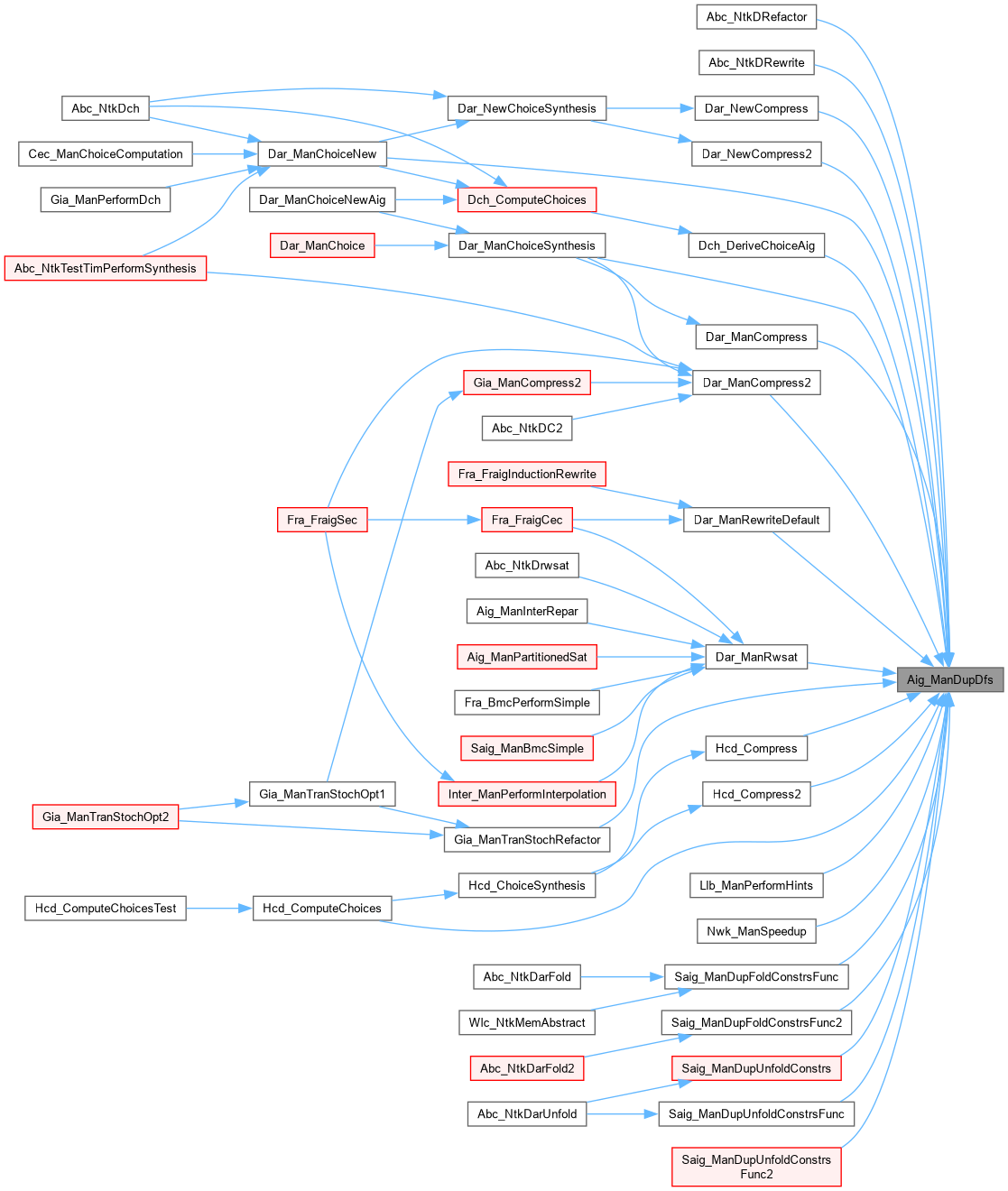
Here is the caller graph for this function:

◆ Aig_ManDupDfs_rec()

Aig_Obj_t * Aig_ManDupDfs_rec ( Aig_Man_t * pNew,
Aig_Man_t * p,
Aig_Obj_t * pObj )

Function*************************************************************

Synopsis [Duplicates the AIG manager recursively.]

Description []

SideEffects []

SeeAlso []

Definition at line 529 of file aigDup.c.

530{
531 Aig_Obj_t * pObjNew, * pEquivNew = NULL;
532 if ( pObj->pData )
533 return (Aig_Obj_t *)pObj->pData;
534 if ( p->pEquivs && Aig_ObjEquiv(p, pObj) )
535 pEquivNew = Aig_ManDupDfs_rec( pNew, p, Aig_ObjEquiv(p, pObj) );
536 Aig_ManDupDfs_rec( pNew, p, Aig_ObjFanin0(pObj) );
537 if ( Aig_ObjIsBuf(pObj) )
538 return (Aig_Obj_t *)(pObj->pData = Aig_ObjChild0Copy(pObj));
539 Aig_ManDupDfs_rec( pNew, p, Aig_ObjFanin1(pObj) );
540 pObjNew = Aig_Oper( pNew, Aig_ObjChild0Copy(pObj), Aig_ObjChild1Copy(pObj), Aig_ObjType(pObj) );
541 if ( pEquivNew )
542 {
543 assert( Aig_Regular(pEquivNew)->Id < Aig_Regular(pObjNew)->Id );
544 if ( pNew->pEquivs )
545 pNew->pEquivs[Aig_Regular(pObjNew)->Id] = Aig_Regular(pEquivNew);
546 if ( pNew->pReprs )
547 pNew->pReprs[Aig_Regular(pEquivNew)->Id] = Aig_Regular(pObjNew);
548 }
549 return (Aig_Obj_t *)(pObj->pData = pObjNew);
550}
Aig_Obj_t * Aig_Oper(Aig_Man_t *p, Aig_Obj_t *p0, Aig_Obj_t *p1, Aig_Type_t Type)
Definition aigOper.c:83
Here is the call graph for this function:
Here is the caller graph for this function:

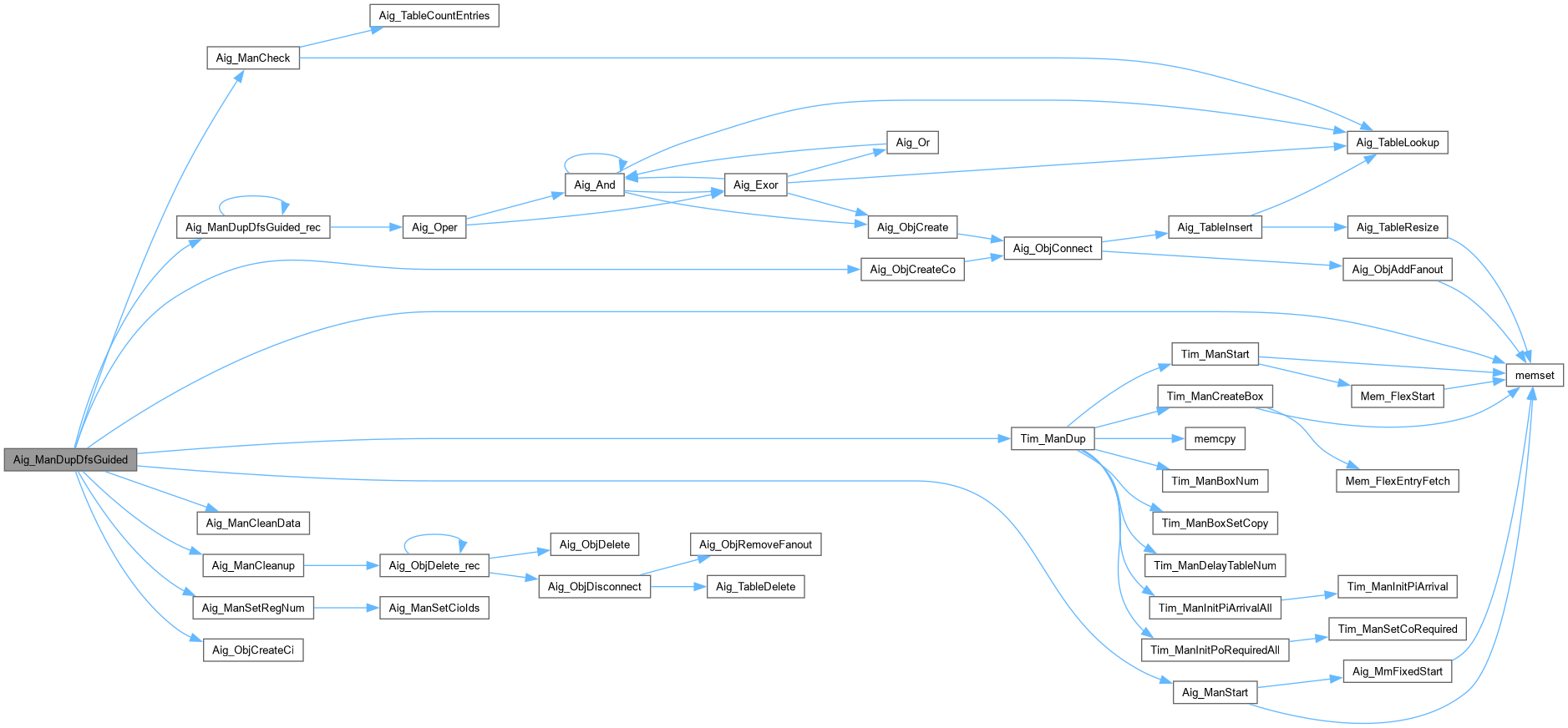
◆ Aig_ManDupDfsGuided()

Aig_Man_t * Aig_ManDupDfsGuided ( Aig_Man_t * p,
Vec_Ptr_t * vPios )

Function*************************************************************

Synopsis [Duplicates the AIG manager.]

Description [This duplicator works for AIGs with choices.]

SideEffects []

SeeAlso []

Definition at line 694 of file aigDup.c.
695{
696 Aig_Man_t * pNew;
697 Aig_Obj_t * pObj, * pObjNew = NULL;
698 int i, nNodes;
699 // create the new manager
700 pNew = Aig_ManStart( Aig_ManObjNumMax(p) );
701 pNew->pName = Abc_UtilStrsav( p->pName );
702 pNew->pSpec = Abc_UtilStrsav( p->pSpec );
703 pNew->nAsserts = p->nAsserts;
704 pNew->nConstrs = p->nConstrs;
705 pNew->nBarBufs = p->nBarBufs;
706 if ( p->vFlopNums )
707 pNew->vFlopNums = Vec_IntDup( p->vFlopNums );
708 // duplicate representation of choice nodes
709 if ( p->pEquivs )
710 {
711 pNew->pEquivs = ABC_ALLOC( Aig_Obj_t *, Aig_ManObjNumMax(p) );
712 memset( pNew->pEquivs, 0, sizeof(Aig_Obj_t *) * Aig_ManObjNumMax(p) );
713 }
714 if ( p->pReprs )
715 {
716 pNew->pReprs = ABC_ALLOC( Aig_Obj_t *, Aig_ManObjNumMax(p) );
717 memset( pNew->pReprs, 0, sizeof(Aig_Obj_t *) * Aig_ManObjNumMax(p) );
718 }
719 // create the PIs
721 // duplicate internal nodes
722 Aig_ManConst1(p)->pData = Aig_ManConst1(pNew);
723 Vec_PtrForEachEntry( Aig_Obj_t *, vPios, pObj, i )
724 {
725 if ( Aig_ObjIsCi(pObj) )
726 {
727 pObjNew = Aig_ObjCreateCi( pNew );
728 pObjNew->Level = pObj->Level;
729 pObj->pData = pObjNew;
730 }
731 else if ( Aig_ObjIsCo(pObj) )
732 {
733 Aig_ManDupDfsGuided_rec( pNew, p, Aig_ObjFanin0(pObj) );
734// assert( pObj->Level == ((Aig_Obj_t*)pObj->pData)->Level );
735 pObjNew = Aig_ObjCreateCo( pNew, Aig_ObjChild0Copy(pObj) );
736 pObj->pData = pObjNew;
737 }
738 }
739// assert( Aig_ManBufNum(p) != 0 || Aig_ManNodeNum(p) == Aig_ManNodeNum(pNew) );
740 if ( p->pEquivs == NULL && p->pReprs == NULL && (nNodes = Aig_ManCleanup( pNew )) )
741 printf( "Aig_ManDupDfs(): Cleanup after AIG duplication removed %d nodes.\n", nNodes );
742 Aig_ManSetRegNum( pNew, Aig_ManRegNum(p) );
743 // duplicate the timing manager
744 if ( p->pManTime )
745 pNew->pManTime = Tim_ManDup( (Tim_Man_t *)p->pManTime, 0 );
746 // check the resulting network
747 if ( !Aig_ManCheck(pNew) )
748 printf( "Aig_ManDupDfs(): The check has failed.\n" );
749 return pNew;
750}
#define ABC_ALLOC(type, num)
Definition abc_global.h:264
Aig_Obj_t * Aig_ManDupDfsGuided_rec(Aig_Man_t *pNew, Aig_Man_t *p, Aig_Obj_t *pObj)
Definition aigDup.c:657
char * memset()
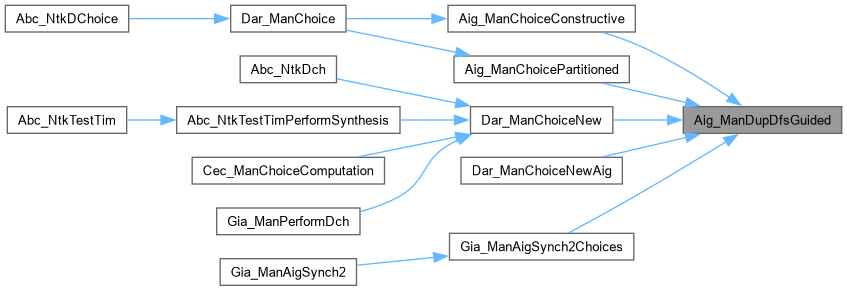
Here is the call graph for this function:
Here is the caller graph for this function:

◆ Aig_ManDupDfsGuided_rec()

Aig_Obj_t * Aig_ManDupDfsGuided_rec ( Aig_Man_t * pNew,
Aig_Man_t * p,
Aig_Obj_t * pObj )

Function*************************************************************

Synopsis [Duplicates the AIG manager recursively.]

Description []

SideEffects []

SeeAlso []

Definition at line 657 of file aigDup.c.

658{
659 Aig_Obj_t * pObjNew, * pEquivNew = NULL;
660 if ( pObj->pData )
661 return (Aig_Obj_t *)pObj->pData;
662 if ( Aig_ObjIsCi(pObj) )
663 return NULL;
664 if ( p->pEquivs && Aig_ObjEquiv(p, pObj) )
665 pEquivNew = Aig_ManDupDfsGuided_rec( pNew, p, Aig_ObjEquiv(p, pObj) );
666 if ( !Aig_ManDupDfsGuided_rec( pNew, p, Aig_ObjFanin0(pObj) ) )
667 return NULL;
668 if ( Aig_ObjIsBuf(pObj) )
669 return (Aig_Obj_t *)(pObj->pData = Aig_ObjChild0Copy(pObj));
670 if ( !Aig_ManDupDfsGuided_rec( pNew, p, Aig_ObjFanin1(pObj) ) )
671 return NULL;
672 pObjNew = Aig_Oper( pNew, Aig_ObjChild0Copy(pObj), Aig_ObjChild1Copy(pObj), Aig_ObjType(pObj) );
673 if ( pEquivNew )
674 {
675 if ( pNew->pEquivs )
676 pNew->pEquivs[Aig_Regular(pObjNew)->Id] = Aig_Regular(pEquivNew);
677 if ( pNew->pReprs )
678 pNew->pReprs[Aig_Regular(pEquivNew)->Id] = Aig_Regular(pObjNew);
679 }
680 return (Aig_Obj_t *)(pObj->pData = pObjNew);
681}
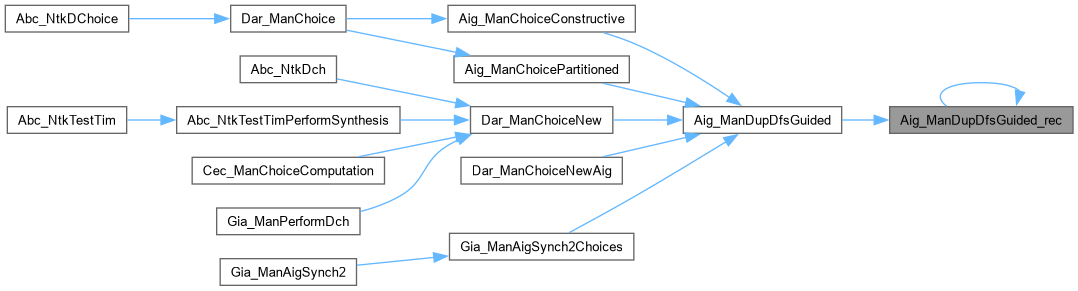
Here is the call graph for this function:
Here is the caller graph for this function:

◆ Aig_ManDupExor()

Aig_Man_t * Aig_ManDupExor ( Aig_Man_t * p)

Function*************************************************************

Synopsis [Duplicates the AIG manager to have EXOR gates.]

Description [Assumes topological ordering of the nodes.]

SideEffects []

SeeAlso []

Definition at line 462 of file aigDup.c.
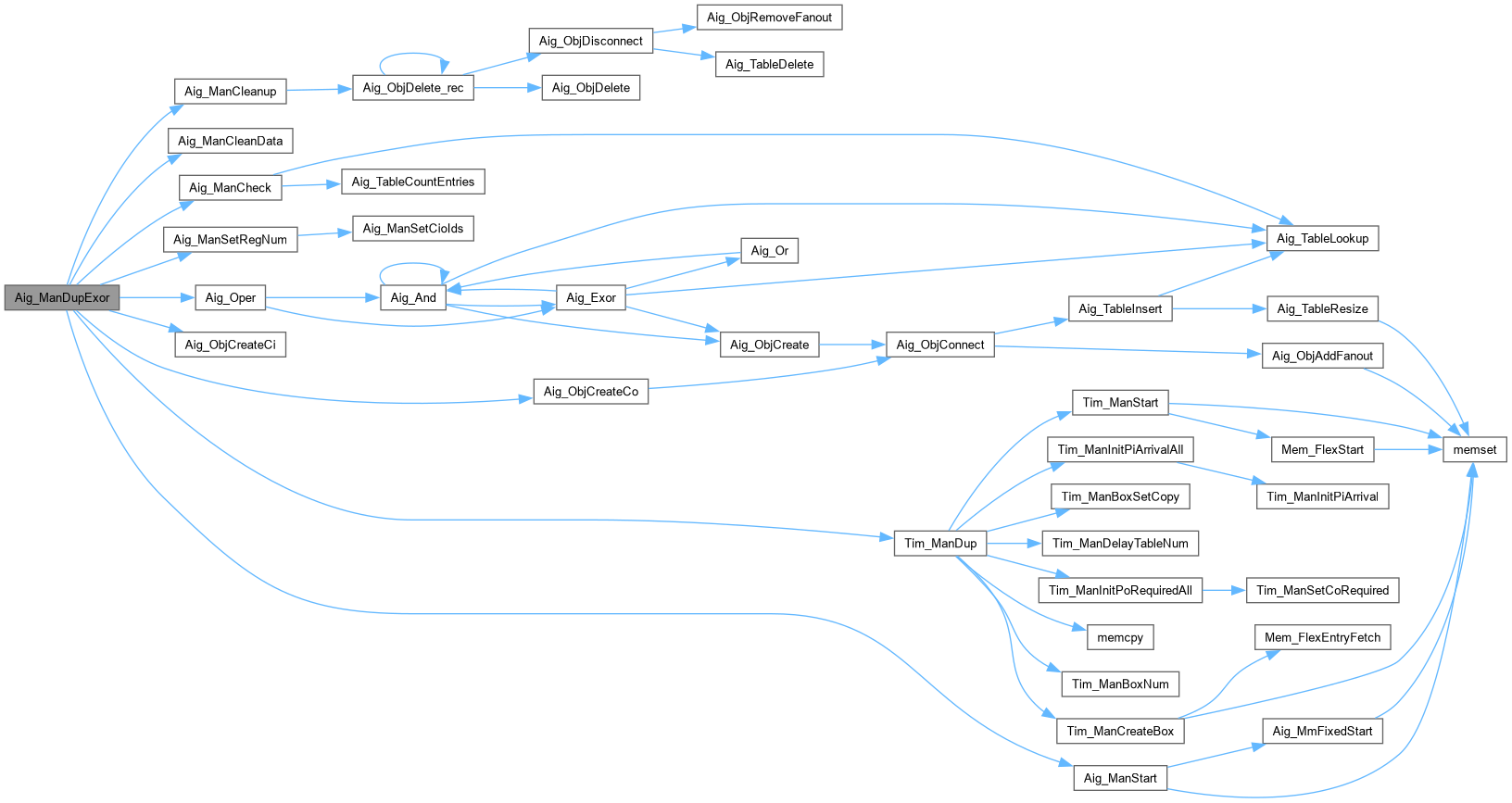
463{
464 Aig_Man_t * pNew;
465 Aig_Obj_t * pObj, * pObjNew = NULL;
466 int i;
467 // create the new manager
468 pNew = Aig_ManStart( Aig_ManObjNumMax(p) );
469 pNew->fCatchExor = 1;
470 pNew->pName = Abc_UtilStrsav( p->pName );
471 pNew->pSpec = Abc_UtilStrsav( p->pSpec );
472 pNew->nAsserts = p->nAsserts;
473 pNew->nConstrs = p->nConstrs;
474 pNew->nBarBufs = p->nBarBufs;
475 if ( p->vFlopNums )
476 pNew->vFlopNums = Vec_IntDup( p->vFlopNums );
477 // create the PIs
479 // duplicate internal nodes
480 Aig_ManForEachObj( p, pObj, i )
481 {
482 if ( Aig_ObjIsBuf(pObj) )
483 {
484 pObjNew = Aig_ObjChild0Copy(pObj);
485 }
486 else if ( Aig_ObjIsNode(pObj) )
487 {
488 pObjNew = Aig_Oper( pNew, Aig_ObjChild0Copy(pObj), Aig_ObjChild1Copy(pObj), Aig_ObjType(pObj) );
489 }
490 else if ( Aig_ObjIsCi(pObj) )
491 {
492 pObjNew = Aig_ObjCreateCi( pNew );
493 pObjNew->Level = pObj->Level;
494 }
495 else if ( Aig_ObjIsCo(pObj) )
496 {
497 pObjNew = Aig_ObjCreateCo( pNew, Aig_ObjChild0Copy(pObj) );
498 }
499 else if ( Aig_ObjIsConst1(pObj) )
500 {
501 pObjNew = Aig_ManConst1(pNew);
502 }
503 else
504 assert( 0 );
505 pObj->pData = pObjNew;
506 }
507 Aig_ManCleanup( pNew );
508 Aig_ManSetRegNum( pNew, Aig_ManRegNum(p) );
509 // duplicate the timing manager
510 if ( p->pManTime )
511 pNew->pManTime = Tim_ManDup( (Tim_Man_t *)p->pManTime, 0 );
512 // check the resulting network
513 if ( !Aig_ManCheck(pNew) )
514 printf( "Aig_ManDupExor(): The check has failed.\n" );
515 return pNew;
516}
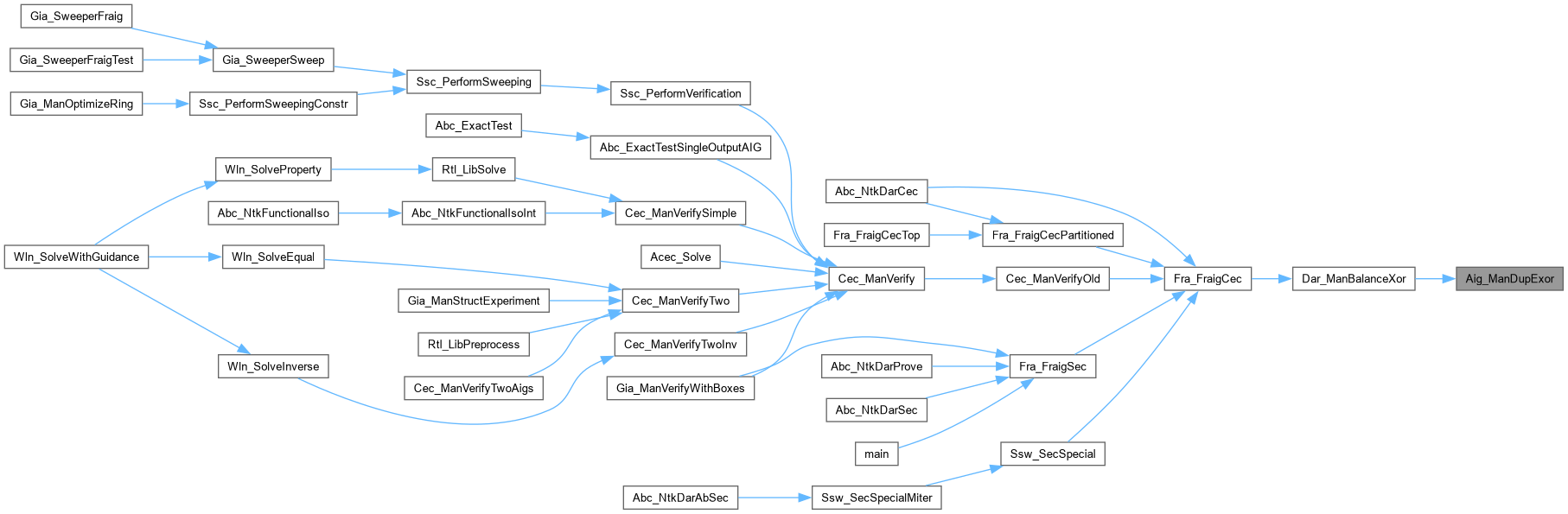
Here is the call graph for this function:
Here is the caller graph for this function:

◆ Aig_ManDupFlopsOnly()

Aig_Man_t * Aig_ManDupFlopsOnly ( Aig_Man_t * p)

Function*************************************************************

Synopsis [Duplicates the AIG manager.]

Description [Assumes topological ordering of nodes.]

SideEffects []

SeeAlso []

Definition at line 871 of file aigDup.c.
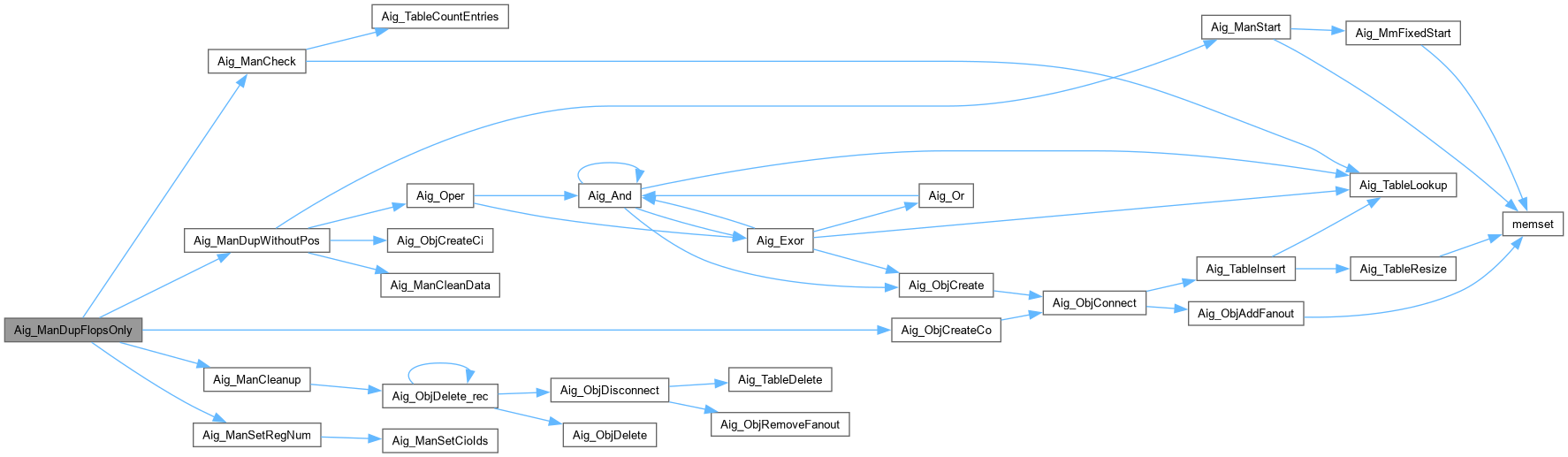
872{
873 Aig_Man_t * pNew;
874 Aig_Obj_t * pObj = NULL;
875 int i;
876 pNew = Aig_ManDupWithoutPos( p );
877 Saig_ManForEachLi( p, pObj, i )
878 pObj->pData = Aig_ObjCreateCo( pNew, Aig_ObjChild0Copy(pObj) );
879 Aig_ManCleanup( pNew );
880 Aig_ManSetRegNum( pNew, Aig_ManRegNum(p) );
881 if ( !Aig_ManCheck(pNew) )
882 printf( "Aig_ManDupFlopsOnly(): The check has failed.\n" );
883 return pNew;
884
885}
Aig_Man_t * Aig_ManDupWithoutPos(Aig_Man_t *p)
Definition aigDup.c:835
#define Saig_ManForEachLi(p, pObj, i)
Definition saig.h:98
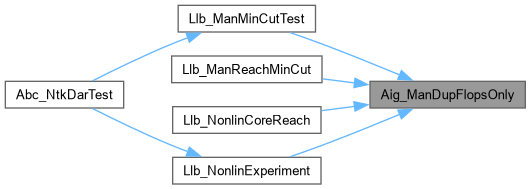
Here is the call graph for this function:
Here is the caller graph for this function:

◆ Aig_ManDupLevelized()

Aig_Man_t * Aig_ManDupLevelized ( Aig_Man_t * p)

Function*************************************************************

Synopsis [Duplicates the AIG manager.]

Description [This duplicator works for AIGs with choices.]

SideEffects []

SeeAlso []

Definition at line 763 of file aigDup.c.
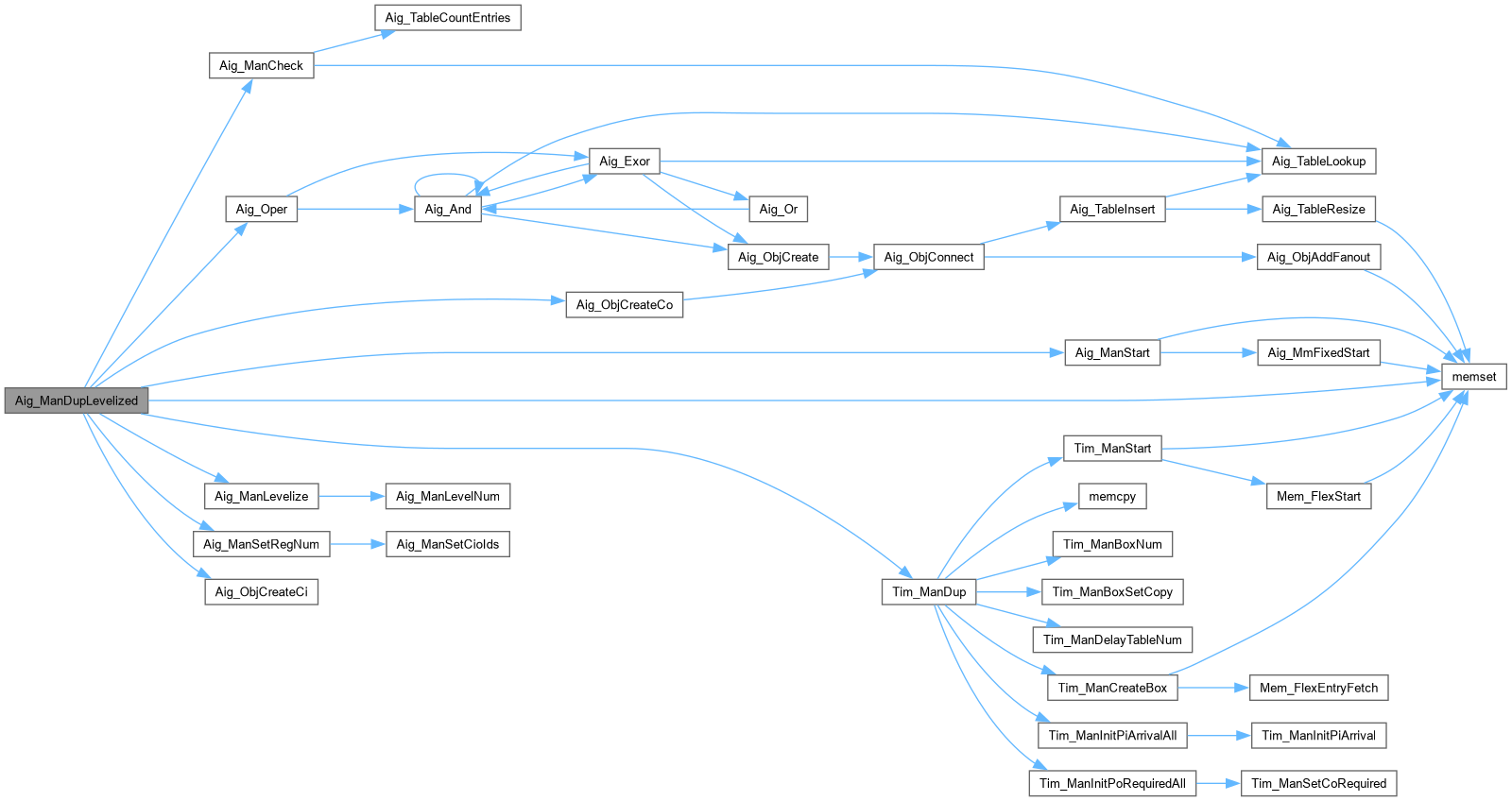
764{
765 Vec_Vec_t * vLevels;
766 Aig_Man_t * pNew;
767 Aig_Obj_t * pObj, * pObjNew = NULL;
768 int i, k;
769 // create the new manager
770 pNew = Aig_ManStart( Aig_ManObjNumMax(p) );
771 pNew->pName = Abc_UtilStrsav( p->pName );
772 pNew->pSpec = Abc_UtilStrsav( p->pSpec );
773 pNew->nAsserts = p->nAsserts;
774 pNew->nConstrs = p->nConstrs;
775 pNew->nBarBufs = p->nBarBufs;
776 if ( p->vFlopNums )
777 pNew->vFlopNums = Vec_IntDup( p->vFlopNums );
778 // duplicate representation of choice nodes
779 if ( p->pEquivs )
780 {
781 pNew->pEquivs = ABC_ALLOC( Aig_Obj_t *, Aig_ManObjNumMax(p) );
782 memset( pNew->pEquivs, 0, sizeof(Aig_Obj_t *) * Aig_ManObjNumMax(p) );
783 }
784 if ( p->pReprs )
785 {
786 pNew->pReprs = ABC_ALLOC( Aig_Obj_t *, Aig_ManObjNumMax(p) );
787 memset( pNew->pReprs, 0, sizeof(Aig_Obj_t *) * Aig_ManObjNumMax(p) );
788 }
789 // create the PIs
790 Aig_ManConst1(p)->pData = Aig_ManConst1(pNew);
791 Aig_ManForEachCi( p, pObj, i )
792 {
793 pObjNew = Aig_ObjCreateCi( pNew );
794 pObjNew->Level = pObj->Level;
795 pObj->pData = pObjNew;
796 }
797 // duplicate internal nodes
798 vLevels = Aig_ManLevelize( p );
799 Vec_VecForEachEntry( Aig_Obj_t *, vLevels, pObj, i, k )
800 {
801 pObjNew = Aig_Oper( pNew, Aig_ObjChild0Copy(pObj), Aig_ObjChild1Copy(pObj), Aig_ObjType(pObj) );
802 pObj->pData = pObjNew;
803 }
804 Vec_VecFree( vLevels );
805 // duplicate POs
806 Aig_ManForEachCo( p, pObj, i )
807 {
808 pObjNew = Aig_ObjCreateCo( pNew, Aig_ObjChild0Copy(pObj) );
809 pObj->pData = pObjNew;
810 }
811 assert( Aig_ManBufNum(p) != 0 || Aig_ManNodeNum(p) == Aig_ManNodeNum(pNew) );
812// if ( (nNodes = Aig_ManCleanup( pNew )) )
813// printf( "Aig_ManDupLevelized(): Cleanup after AIG duplication removed %d nodes.\n", nNodes );
814 Aig_ManSetRegNum( pNew, Aig_ManRegNum(p) );
815 // duplicate the timing manager
816 if ( p->pManTime )
817 pNew->pManTime = Tim_ManDup( (Tim_Man_t *)p->pManTime, 0 );
818 // check the resulting network
819 if ( !Aig_ManCheck(pNew) )
820 printf( "Aig_ManDupLevelized(): The check has failed.\n" );
821 return pNew;
822}
Vec_Vec_t * Aig_ManLevelize(Aig_Man_t *p)
Definition aigDfs.c:321
#define Vec_VecForEachEntry(Type, vGlob, pEntry, i, k)
Definition vecVec.h:87
typedefABC_NAMESPACE_HEADER_START struct Vec_Vec_t_ Vec_Vec_t
INCLUDES ///.
Definition vecVec.h:42
Here is the call graph for this function:

◆ Aig_ManDupNodes()

Aig_Man_t * Aig_ManDupNodes ( Aig_Man_t * pMan,
Vec_Ptr_t * vArray )

Function*************************************************************

Synopsis [Duplicates AIG with only one primary output.]

Description []

SideEffects []

SeeAlso []

Definition at line 1302 of file aigDup.c.
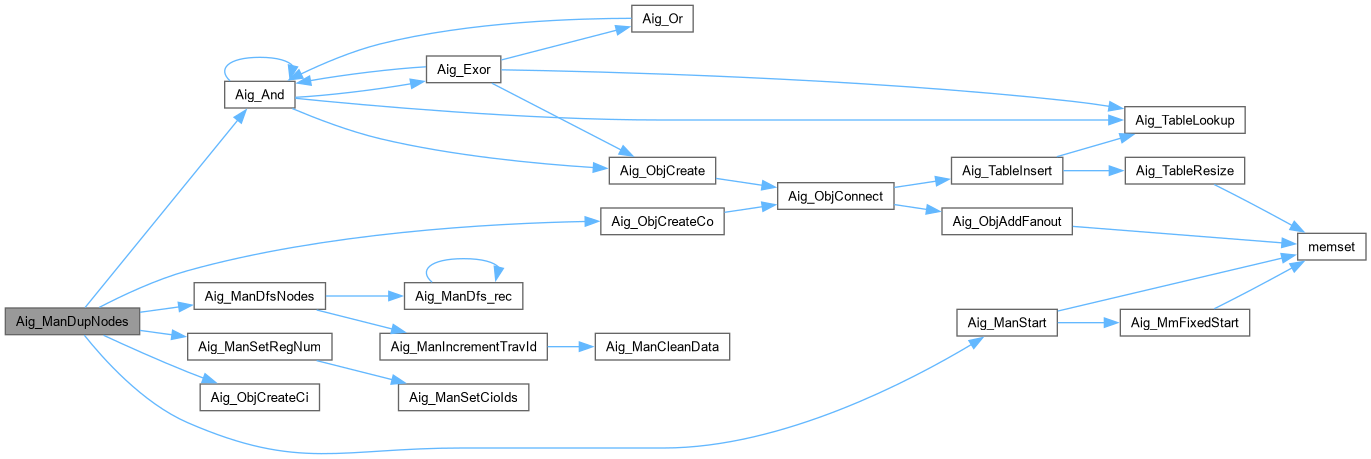
1303{
1304 Aig_Man_t * pNew;
1305 Vec_Ptr_t * vObjs;
1306 Aig_Obj_t * pObj = NULL;
1307 int i;
1308 if ( Vec_PtrSize(vArray) == 0 )
1309 return NULL;
1310 vObjs = Aig_ManDfsNodes( pMan, (Aig_Obj_t **)Vec_PtrArray(vArray), Vec_PtrSize(vArray) );
1311 // create the new manager
1312 pNew = Aig_ManStart( 10000 );
1313 pNew->pName = Abc_UtilStrsav( pMan->pName );
1314 Aig_ManConst1(pMan)->pData = Aig_ManConst1(pNew);
1315 Vec_PtrForEachEntry( Aig_Obj_t *, vObjs, pObj, i )
1316 if ( Aig_ObjIsCi(pObj) )
1317 pObj->pData = Aig_ObjCreateCi(pNew);
1318 Vec_PtrForEachEntry( Aig_Obj_t *, vObjs, pObj, i )
1319 if ( Aig_ObjIsNode(pObj) )
1320 pObj->pData = Aig_And( pNew, Aig_ObjChild0Copy(pObj), Aig_ObjChild1Copy(pObj) );
1321 Vec_PtrForEachEntry( Aig_Obj_t *, vArray, pObj, i )
1322 Aig_ObjCreateCo( pNew, (Aig_Obj_t *)pObj->pData );
1323 Aig_ManSetRegNum( pNew, 0 );
1324 Vec_PtrFree( vObjs );
1325 return pNew;
1326}
Vec_Ptr_t * Aig_ManDfsNodes(Aig_Man_t *p, Aig_Obj_t **ppNodes, int nNodes)
Definition aigDfs.c:347
typedefABC_NAMESPACE_HEADER_START struct Vec_Ptr_t_ Vec_Ptr_t
INCLUDES ///.
Definition vecPtr.h:42
Here is the call graph for this function:
Here is the caller graph for this function:

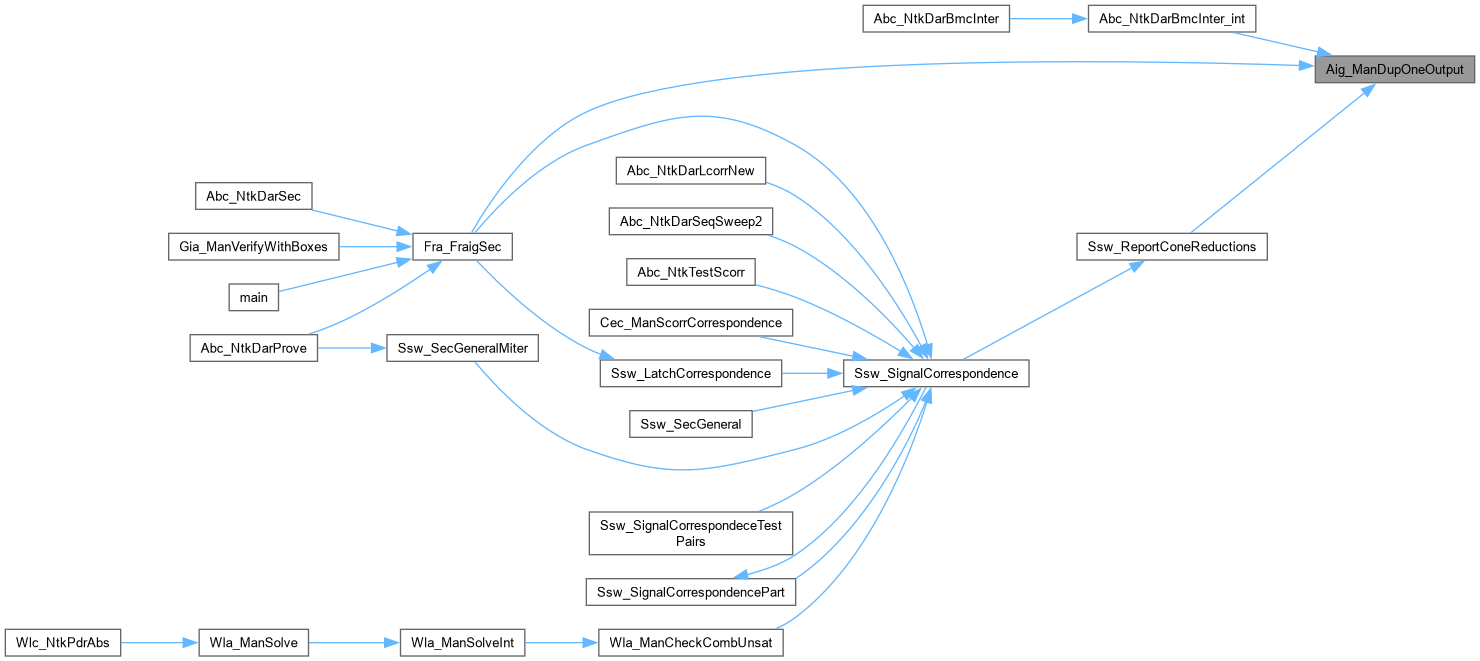
◆ Aig_ManDupOneOutput()

Aig_Man_t * Aig_ManDupOneOutput ( Aig_Man_t * p,
int iPoNum,
int fAddRegs )

Function*************************************************************

Synopsis [Duplicates AIG with only one primary output.]

Description []

SideEffects []

SeeAlso []

Definition at line 1152 of file aigDup.c.
1153{
1154 Aig_Man_t * pNew;
1155 Aig_Obj_t * pObj = NULL;
1156 int i;
1157 //assert( Aig_ManRegNum(p) > 0 );
1158 assert( iPoNum < Aig_ManCoNum(p)-Aig_ManRegNum(p) );
1159 // create the new manager
1160 pNew = Aig_ManStart( Aig_ManObjNumMax(p) );
1161 pNew->pName = Abc_UtilStrsav( p->pName );
1162 pNew->pSpec = Abc_UtilStrsav( p->pSpec );
1163 // create the PIs
1165 Aig_ManConst1(p)->pData = Aig_ManConst1(pNew);
1166 Aig_ManForEachCi( p, pObj, i )
1167 pObj->pData = Aig_ObjCreateCi( pNew );
1168 // set registers
1169 pNew->nRegs = fAddRegs? p->nRegs : 0;
1170 pNew->nTruePis = fAddRegs? p->nTruePis : p->nTruePis + p->nRegs;
1171 pNew->nTruePos = 1;
1172 // duplicate internal nodes
1173 Aig_ManForEachNode( p, pObj, i )
1174 pObj->pData = Aig_And( pNew, Aig_ObjChild0Copy(pObj), Aig_ObjChild1Copy(pObj) );
1175 // create the PO
1176 pObj = Aig_ManCo( p, iPoNum );
1177 Aig_ObjCreateCo( pNew, Aig_ObjChild0Copy(pObj) );
1178 // create register inputs with MUXes
1179 if ( fAddRegs )
1180 {
1181 Aig_ManForEachLiSeq( p, pObj, i )
1182 Aig_ObjCreateCo( pNew, Aig_ObjChild0Copy(pObj) );
1183 }
1184 Aig_ManCleanup( pNew );
1185 return pNew;
1186}
#define Aig_ManForEachLiSeq(p, pObj, i)
Definition aig.h:447
Here is the call graph for this function:
Here is the caller graph for this function:

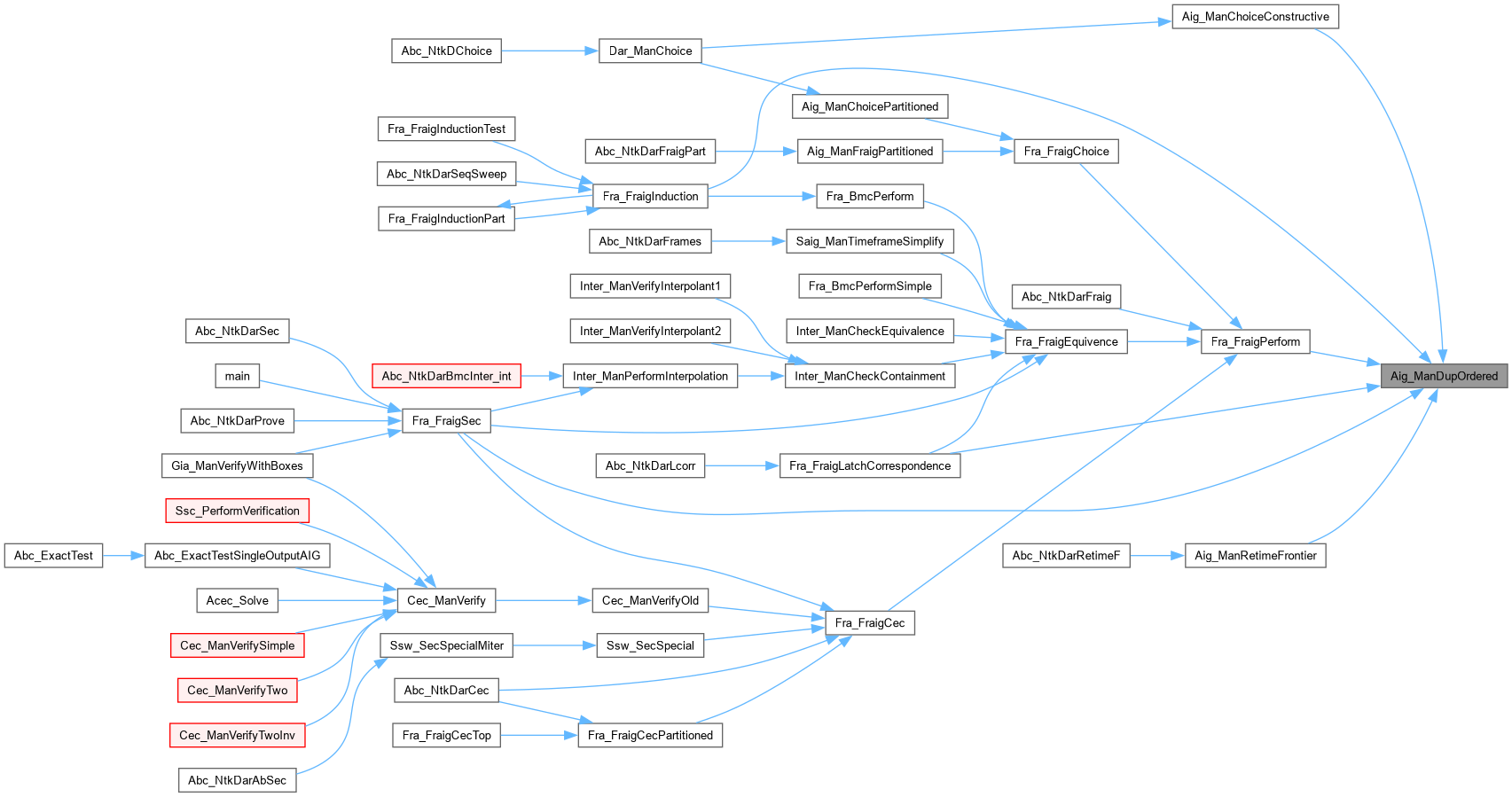
◆ Aig_ManDupOrdered()

Aig_Man_t * Aig_ManDupOrdered ( Aig_Man_t * p)

Function*************************************************************

Synopsis [Duplicates the AIG manager.]

Description [Assumes topological ordering of the nodes.]

SideEffects []

SeeAlso []

Definition at line 277 of file aigDup.c.

278{
279 Aig_Man_t * pNew;
280 Aig_Obj_t * pObj, * pObjNew = NULL;
281 int i, nNodes;
282 // create the new manager
283 pNew = Aig_ManStart( Aig_ManObjNumMax(p) );
284 pNew->pName = Abc_UtilStrsav( p->pName );
285 pNew->pSpec = Abc_UtilStrsav( p->pSpec );
286 pNew->nAsserts = p->nAsserts;
287 pNew->nConstrs = p->nConstrs;
288 pNew->nBarBufs = p->nBarBufs;
289 if ( p->vFlopNums )
290 pNew->vFlopNums = Vec_IntDup( p->vFlopNums );
291 // create the PIs
293 // duplicate internal nodes
294 Aig_ManForEachObj( p, pObj, i )
295 {
296 if ( Aig_ObjIsBuf(pObj) )
297 {
298 pObjNew = Aig_ObjChild0Copy(pObj);
299 }
300 else if ( Aig_ObjIsNode(pObj) )
301 {
302 pObjNew = Aig_Oper( pNew, Aig_ObjChild0Copy(pObj), Aig_ObjChild1Copy(pObj), Aig_ObjType(pObj) );
303 }
304 else if ( Aig_ObjIsCi(pObj) )
305 {
306 pObjNew = Aig_ObjCreateCi( pNew );
307 pObjNew->Level = pObj->Level;
308 }
309 else if ( Aig_ObjIsCo(pObj) )
310 {
311 pObjNew = Aig_ObjCreateCo( pNew, Aig_ObjChild0Copy(pObj) );
312 }
313 else if ( Aig_ObjIsConst1(pObj) )
314 {
315 pObjNew = Aig_ManConst1(pNew);
316 }
317 else
318 assert( 0 );
319 pObj->pData = pObjNew;
320 }
321 assert( Aig_ManBufNum(p) != 0 || Aig_ManNodeNum(p) == Aig_ManNodeNum(pNew) );
322 if ( (nNodes = Aig_ManCleanup( pNew )) )
323 printf( "Aig_ManDupOrdered(): Cleanup after AIG duplication removed %d nodes.\n", nNodes );
324 Aig_ManSetRegNum( pNew, Aig_ManRegNum(p) );
325 // duplicate the timing manager
326 if ( p->pManTime )
327 pNew->pManTime = Tim_ManDup( (Tim_Man_t *)p->pManTime, 0 );
328 // check the resulting network
329 if ( !Aig_ManCheck(pNew) )
330 printf( "Aig_ManDupOrdered(): The check has failed.\n" );
331 return pNew;
332}
Here is the call graph for this function:
Here is the caller graph for this function:

◆ Aig_ManDupOrpos()

Aig_Man_t * Aig_ManDupOrpos ( Aig_Man_t * p,
int fAddRegs )

Function*************************************************************

Synopsis [Duplicates AIG with only one primary output.]

Description []

SideEffects []

SeeAlso []

Definition at line 1099 of file aigDup.c.

1100{
1101 Aig_Man_t * pNew;
1102 Aig_Obj_t * pObj, * pMiter;
1103 int i;
1104 assert( Aig_ManRegNum(p) > 0 );
1105 if ( p->nConstrs > 0 )
1106 {
1107 printf( "The AIG manager should have no constraints.\n" );
1108 return NULL;
1109 }
1110 // create the new manager
1111 pNew = Aig_ManStart( Aig_ManObjNumMax(p) );
1112 pNew->pName = Abc_UtilStrsav( p->pName );
1113 pNew->pSpec = Abc_UtilStrsav( p->pSpec );
1114 // create the PIs
1116 Aig_ManConst1(p)->pData = Aig_ManConst1(pNew);
1117 Aig_ManForEachCi( p, pObj, i )
1118 pObj->pData = Aig_ObjCreateCi( pNew );
1119 // set registers
1120 pNew->nRegs = fAddRegs? p->nRegs : 0;
1121 pNew->nTruePis = fAddRegs? p->nTruePis : p->nTruePis + p->nRegs;
1122 pNew->nTruePos = 1;
1123 // duplicate internal nodes
1124 Aig_ManForEachNode( p, pObj, i )
1125 pObj->pData = Aig_And( pNew, Aig_ObjChild0Copy(pObj), Aig_ObjChild1Copy(pObj) );
1126 // create the PO
1127 pMiter = Aig_ManConst0(pNew);
1128 Aig_ManForEachPoSeq( p, pObj, i )
1129 pMiter = Aig_Or( pNew, pMiter, Aig_ObjChild0Copy(pObj) );
1130 Aig_ObjCreateCo( pNew, pMiter );
1131 // create register inputs with MUXes
1132 if ( fAddRegs )
1133 {
1134 Aig_ManForEachLiSeq( p, pObj, i )
1135 Aig_ObjCreateCo( pNew, Aig_ObjChild0Copy(pObj) );
1136 }
1137 Aig_ManCleanup( pNew );
1138 return pNew;
1139}
#define Aig_ManForEachPoSeq(p, pObj, i)
Definition aig.h:444
Here is the call graph for this function:

◆ Aig_ManDupRepres()

Aig_Man_t * Aig_ManDupRepres ( Aig_Man_t * p)

Function*************************************************************

Synopsis [Duplicates AIG while substituting representatives.]

Description []

SideEffects []

SeeAlso []

Definition at line 920 of file aigDup.c.
921{
922 Aig_Man_t * pNew;
923 Aig_Obj_t * pObj = NULL;
924 int i;
925 // start the HOP package
926 pNew = Aig_ManStart( Aig_ManObjNumMax(p) );
927 pNew->pName = Abc_UtilStrsav( p->pName );
928 pNew->pSpec = Abc_UtilStrsav( p->pSpec );
929 pNew->nConstrs = p->nConstrs;
930 pNew->nBarBufs = p->nBarBufs;
931 if ( p->vFlopNums )
932 pNew->vFlopNums = Vec_IntDup( p->vFlopNums );
933 // map the const and primary inputs
935 Aig_ManForEachObj( p, pObj, i )
936 {
937 if ( Aig_ObjIsNode(pObj) )
938 pObj->pData = Aig_And( pNew, Aig_ObjChild0Repres(p, pObj), Aig_ObjChild1Repres(p, pObj) );
939 else if ( Aig_ObjIsCi(pObj) )
940 {
941 pObj->pData = Aig_ObjCreateCi(pNew);
942 pObj->pData = Aig_ObjGetRepres( p, pObj );
943 }
944 else if ( Aig_ObjIsCo(pObj) )
945 pObj->pData = Aig_ObjCreateCo( pNew, Aig_ObjChild0Repres(p, pObj) );
946 else if ( Aig_ObjIsConst1(pObj) )
947 pObj->pData = Aig_ManConst1(pNew);
948 else
949 assert( 0 );
950 }
951 Aig_ManSetRegNum( pNew, Aig_ManRegNum(p) );
952 // check the new manager
953 if ( !Aig_ManCheck(pNew) )
954 printf( "Aig_ManDupRepres: Check has failed.\n" );
955 return pNew;
956}
Here is the call graph for this function:

◆ Aig_ManDupRepres_rec()

Aig_Obj_t * Aig_ManDupRepres_rec ( Aig_Man_t * pNew,
Aig_Man_t * p,
Aig_Obj_t * pObj )

Function*************************************************************

Synopsis [Duplicates the AIG manager recursively.]

Description []

SideEffects []

SeeAlso []

Definition at line 969 of file aigDup.c.

970{
971 Aig_Obj_t * pRepr;
972 if ( pObj->pData )
973 return (Aig_Obj_t *)pObj->pData;
974 if ( (pRepr = Aig_ObjRepr(p, pObj)) )
975 {
976 Aig_ManDupRepres_rec( pNew, p, pRepr );
977 return (Aig_Obj_t *)(pObj->pData = Aig_NotCond( (Aig_Obj_t *)pRepr->pData, pRepr->fPhase ^ pObj->fPhase ));
978 }
979 Aig_ManDupRepres_rec( pNew, p, Aig_ObjFanin0(pObj) );
980 Aig_ManDupRepres_rec( pNew, p, Aig_ObjFanin1(pObj) );
981 return (Aig_Obj_t *)(pObj->pData = Aig_And( pNew, Aig_ObjChild0Repres(p, pObj), Aig_ObjChild1Repres(p, pObj) ));
982}
Aig_Obj_t * Aig_ManDupRepres_rec(Aig_Man_t *pNew, Aig_Man_t *p, Aig_Obj_t *pObj)
Definition aigDup.c:969
unsigned int fPhase
Definition aig.h:78
Here is the call graph for this function:
Here is the caller graph for this function:

◆ Aig_ManDupRepresDfs()

Aig_Man_t * Aig_ManDupRepresDfs ( Aig_Man_t * p)

Function*************************************************************

Synopsis [Duplicates AIG while substituting representatives.]

Description []

SideEffects []

SeeAlso []

Definition at line 995 of file aigDup.c.
996{
997 Aig_Man_t * pNew;
998 Aig_Obj_t * pObj = NULL;
999 int i;
1000 // start the HOP package
1001 pNew = Aig_ManStart( Aig_ManObjNumMax(p) );
1002 pNew->pName = Abc_UtilStrsav( p->pName );
1003 pNew->pSpec = Abc_UtilStrsav( p->pSpec );
1004 pNew->nConstrs = p->nConstrs;
1005 pNew->nBarBufs = p->nBarBufs;
1006 if ( p->vFlopNums )
1007 pNew->vFlopNums = Vec_IntDup( p->vFlopNums );
1008 // map the const and primary inputs
1010 Aig_ManForEachObj( p, pObj, i )
1011 {
1012 if ( Aig_ObjIsNode(pObj) )
1013 continue;
1014 if ( Aig_ObjIsCi(pObj) )
1015 pObj->pData = Aig_ObjCreateCi(pNew);
1016 else if ( Aig_ObjIsCo(pObj) )
1017 {
1018 Aig_ManDupRepres_rec( pNew, p, Aig_ObjFanin0(pObj) );
1019 pObj->pData = Aig_ObjCreateCo( pNew, Aig_ObjChild0Repres(p, pObj) );
1020 }
1021 else if ( Aig_ObjIsConst1(pObj) )
1022 pObj->pData = Aig_ManConst1(pNew);
1023 else
1024 assert( 0 );
1025 }
1026 Aig_ManSetRegNum( pNew, Aig_ManRegNum(p) );
1027 // check the new manager
1028 if ( !Aig_ManCheck(pNew) )
1029 printf( "Aig_ManDupRepresDfs: Check has failed.\n" );
1030 return pNew;
1031}
Here is the call graph for this function:

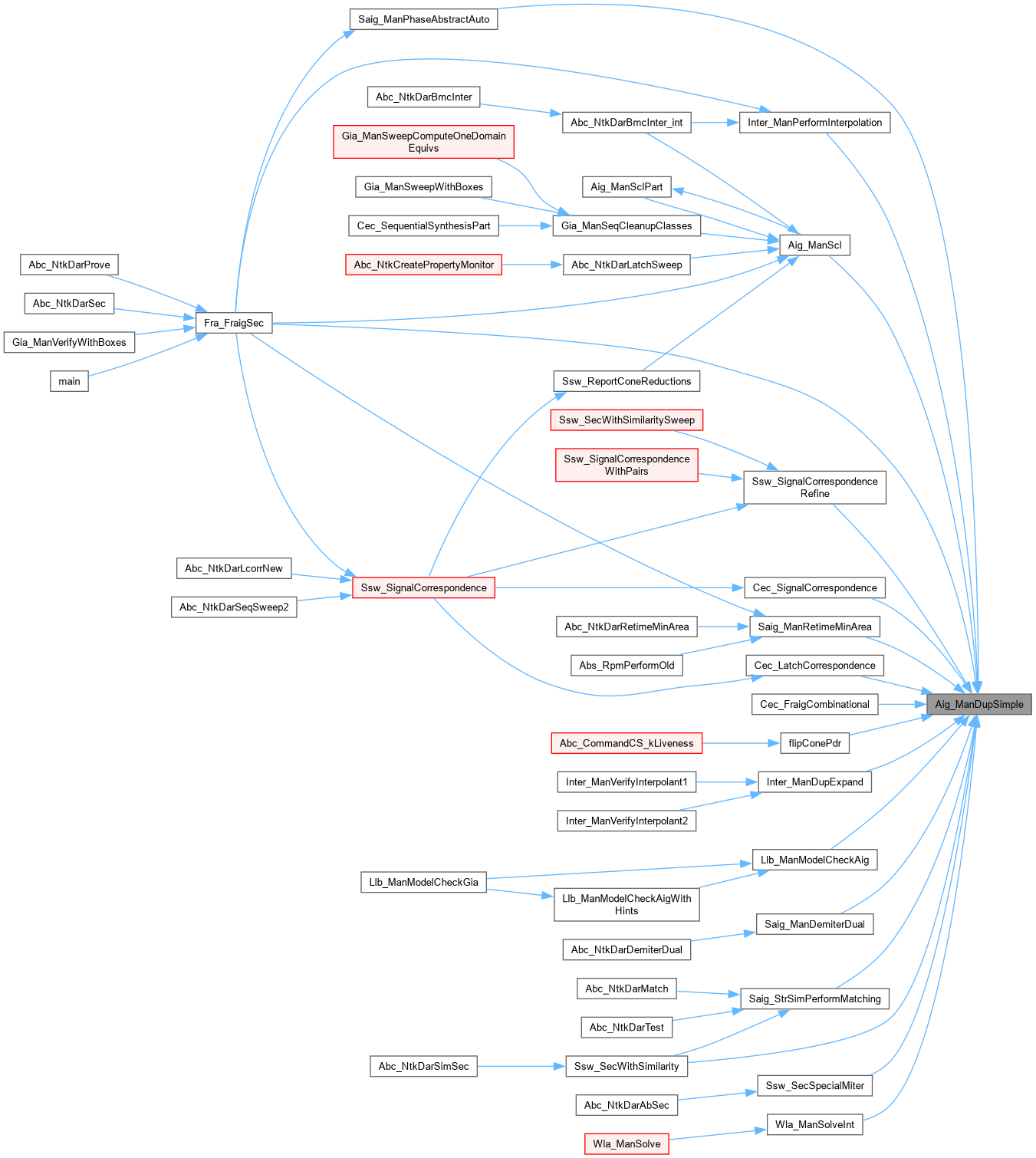
◆ Aig_ManDupSimple()

ABC_NAMESPACE_IMPL_START Aig_Man_t * Aig_ManDupSimple ( Aig_Man_t * p)

DECLARATIONS ///.

CFile****************************************************************

FileName [aigDup.c]

SystemName [ABC: Logic synthesis and verification system.]

PackageName [AIG package.]

Synopsis [AIG duplication (re-strashing).]

Author [Alan Mishchenko]

Affiliation [UC Berkeley]

Date [Ver. 1.0. Started - April 28, 2007.]

Revision [

Id
aigDup.c,v 1.00 2007/04/28 00:00:00 alanmi Exp

] FUNCTION DEFINITIONS /// Function*************************************************************

Synopsis [Duplicates the AIG manager.]

Description [Orders nodes as follows: PIs, ANDs, POs.]

SideEffects []

SeeAlso []

Definition at line 46 of file aigDup.c.
47{
48 Aig_Man_t * pNew;
49 Aig_Obj_t * pObj, * pObjNew = NULL;
50 int i;
51 assert( p->pManTime == NULL );
52 // create the new manager
53 pNew = Aig_ManStart( Aig_ManObjNumMax(p) );
54 pNew->pName = Abc_UtilStrsav( p->pName );
55 pNew->pSpec = Abc_UtilStrsav( p->pSpec );
56 pNew->nAsserts = p->nAsserts;
57 pNew->nConstrs = p->nConstrs;
58 pNew->nBarBufs = p->nBarBufs;
59 if ( p->vFlopNums )
60 pNew->vFlopNums = Vec_IntDup( p->vFlopNums );
61 // create the PIs
63 Aig_ManConst1(p)->pData = Aig_ManConst1(pNew);
64 Aig_ManForEachCi( p, pObj, i )
65 {
66 pObjNew = Aig_ObjCreateCi( pNew );
67 pObjNew->Level = pObj->Level;
68 pObj->pData = pObjNew;
69 }
70 // duplicate internal nodes
71 Aig_ManForEachObj( p, pObj, i )
72 if ( Aig_ObjIsBuf(pObj) )
73 {
74 pObjNew = Aig_ObjChild0Copy(pObj);
75 pObj->pData = pObjNew;
76 }
77 else if ( Aig_ObjIsNode(pObj) )
78 {
79 pObjNew = Aig_And( pNew, Aig_ObjChild0Copy(pObj), Aig_ObjChild1Copy(pObj) );
80 pObj->pData = pObjNew;
81 }
82 // add the POs
83 Aig_ManForEachCo( p, pObj, i )
84 {
85 pObjNew = Aig_ObjCreateCo( pNew, Aig_ObjChild0Copy(pObj) );
86 pObj->pData = pObjNew;
87 }
88 assert( Aig_ManBufNum(p) != 0 || Aig_ManNodeNum(p) == Aig_ManNodeNum(pNew) );
89 Aig_ManSetRegNum( pNew, Aig_ManRegNum(p) );
90 // check the resulting network
91 if ( !Aig_ManCheck(pNew) )
92 printf( "Aig_ManDupSimple(): The check has failed.\n" );
93 return pNew;
94}
Here is the call graph for this function:
Here is the caller graph for this function:

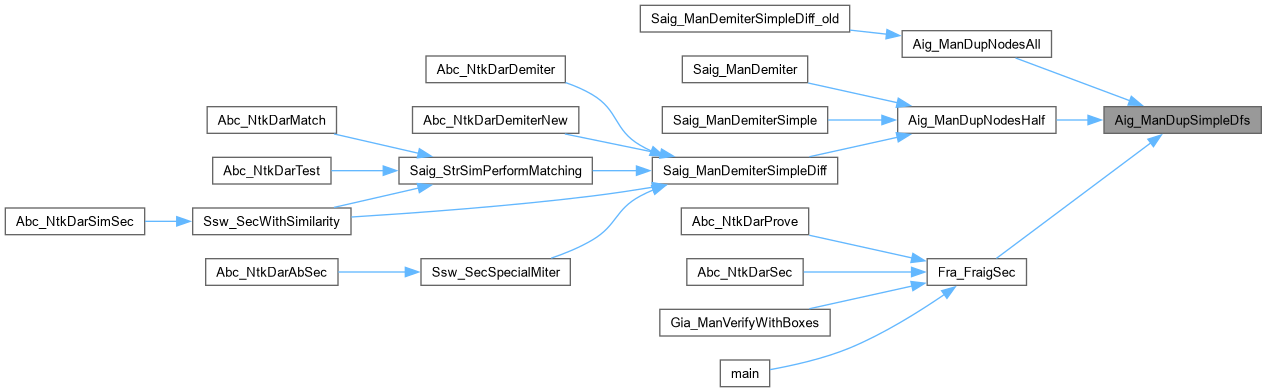
◆ Aig_ManDupSimpleDfs()

Aig_Man_t * Aig_ManDupSimpleDfs ( Aig_Man_t * p)

Function*************************************************************

Synopsis [Duplicates the AIG manager.]

Description [Orders nodes as follows: PIs, ANDs, POs.]

SideEffects [This procedure assumes that buffers are not used during HAIG recording. This way, each HAIG node is in one-to-one correspondence with old HAIG node. There is no need to create new nodes, just reassign the pointers. If it were not the case, we would need to create HAIG nodes for each new node duplicated. ]

SeeAlso []

Definition at line 184 of file aigDup.c.
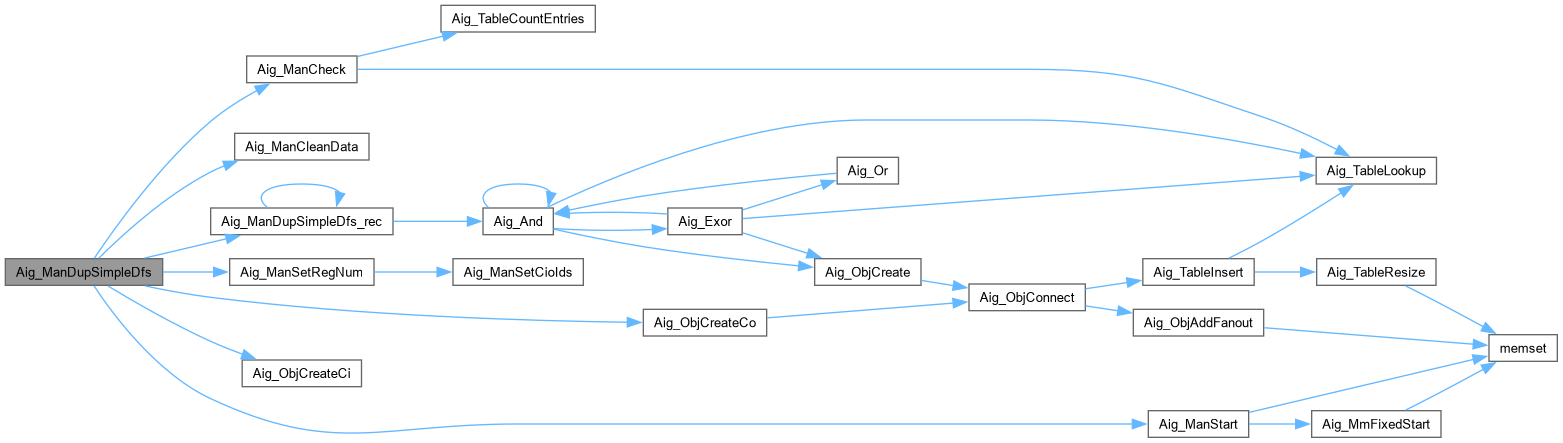
185{
186 Aig_Man_t * pNew;
187 Aig_Obj_t * pObj, * pObjNew = NULL;
188 int i;
189 assert( p->pManTime == NULL );
190 // create the new manager
191 pNew = Aig_ManStart( Aig_ManObjNumMax(p) );
192 pNew->pName = Abc_UtilStrsav( p->pName );
193 pNew->pSpec = Abc_UtilStrsav( p->pSpec );
194 pNew->nAsserts = p->nAsserts;
195 pNew->nConstrs = p->nConstrs;
196 pNew->nBarBufs = p->nBarBufs;
197 if ( p->vFlopNums )
198 pNew->vFlopNums = Vec_IntDup( p->vFlopNums );
199 // create the PIs
201 Aig_ManConst1(p)->pData = Aig_ManConst1(pNew);
202 Aig_ManForEachCi( p, pObj, i )
203 {
204 pObjNew = Aig_ObjCreateCi( pNew );
205 pObjNew->Level = pObj->Level;
206 pObj->pData = pObjNew;
207 }
208 // duplicate internal nodes
209 Aig_ManForEachObj( p, pObj, i )
210 if ( !Aig_ObjIsCo(pObj) )
211 {
212 Aig_ManDupSimpleDfs_rec( pNew, p, pObj );
213 assert( pObj->Level == ((Aig_Obj_t*)pObj->pData)->Level );
214 }
215 // add the POs
216 Aig_ManForEachCo( p, pObj, i )
217 {
218 pObjNew = Aig_ObjCreateCo( pNew, Aig_ObjChild0Copy(pObj) );
219 pObj->pData = pObjNew;
220 }
221 assert( Aig_ManBufNum(p) != 0 || Aig_ManNodeNum(p) == Aig_ManNodeNum(pNew) );
222 Aig_ManSetRegNum( pNew, Aig_ManRegNum(p) );
223 // check the resulting network
224 if ( !Aig_ManCheck(pNew) )
225 printf( "Aig_ManDupSimple(): The check has failed.\n" );
226 return pNew;
227}
Aig_Obj_t * Aig_ManDupSimpleDfs_rec(Aig_Man_t *pNew, Aig_Man_t *p, Aig_Obj_t *pObj)
Definition aigDup.c:157
Here is the call graph for this function:
Here is the caller graph for this function:

◆ Aig_ManDupSimpleDfs_rec()

Aig_Obj_t * Aig_ManDupSimpleDfs_rec ( Aig_Man_t * pNew,
Aig_Man_t * p,
Aig_Obj_t * pObj )

Function*************************************************************

Synopsis [Duplicates the AIG manager recursively.]

Description []

SideEffects []

SeeAlso []

Definition at line 157 of file aigDup.c.

158{
159 if ( pObj->pData )
160 return (Aig_Obj_t *)pObj->pData;
161 Aig_ManDupSimpleDfs_rec( pNew, p, Aig_ObjFanin0(pObj) );
162 if ( Aig_ObjIsBuf(pObj) )
163 return (Aig_Obj_t *)(pObj->pData = Aig_ObjChild0Copy(pObj));
164 Aig_ManDupSimpleDfs_rec( pNew, p, Aig_ObjFanin1(pObj) );
165 pObj->pData = Aig_And( pNew, Aig_ObjChild0Copy(pObj), Aig_ObjChild1Copy(pObj) );
166 return (Aig_Obj_t *)pObj->pData;
167}
Here is the call graph for this function:
Here is the caller graph for this function:

◆ Aig_ManDupSimpleDfsPart()

Aig_Man_t * Aig_ManDupSimpleDfsPart ( Aig_Man_t * p,
Vec_Ptr_t * vPis,
Vec_Ptr_t * vPos )

Function*************************************************************

Synopsis [Duplicates part of the AIG manager.]

Description [Orders nodes as follows: PIs, ANDs, POs.]

SideEffects []

SeeAlso []

Definition at line 240 of file aigDup.c.
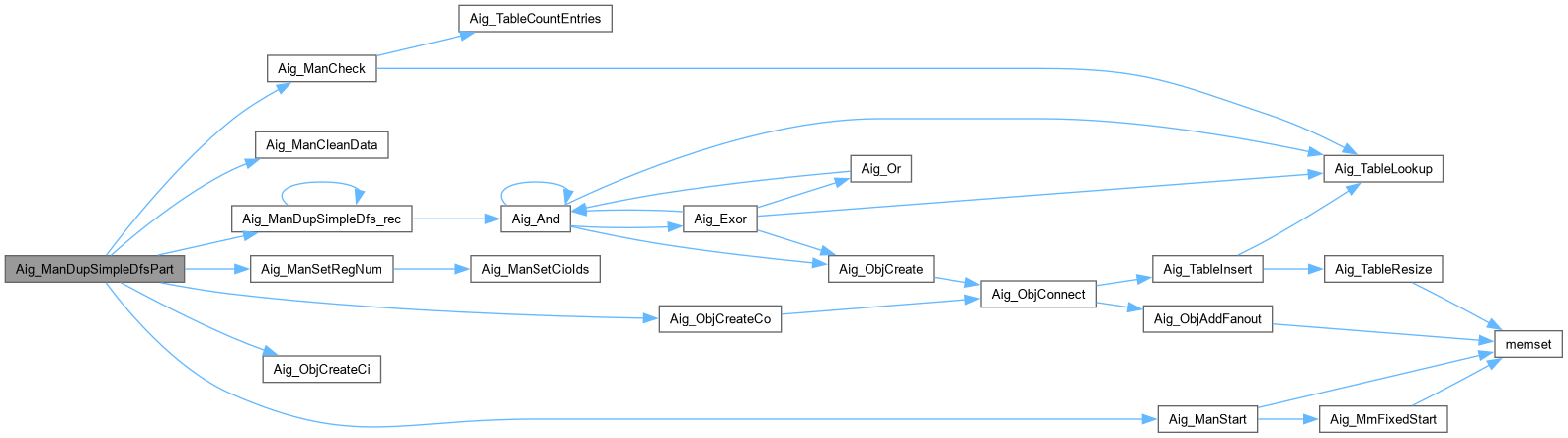
241{
242 Aig_Man_t * pNew;
243 Aig_Obj_t * pObj, * pObjNew = NULL;
244 int i;
245 // create the new manager
246 pNew = Aig_ManStart( Aig_ManObjNumMax(p) );
247 // create the PIs
249 Aig_ManConst1(p)->pData = Aig_ManConst1( pNew );
250 Vec_PtrForEachEntry( Aig_Obj_t *, vPis, pObj, i )
251 pObj->pData = Aig_ObjCreateCi( pNew );
252 // duplicate internal nodes
253 Vec_PtrForEachEntry( Aig_Obj_t *, vPos, pObj, i )
254 {
255 pObjNew = Aig_ManDupSimpleDfs_rec( pNew, p, Aig_ObjFanin0(pObj) );
256 pObjNew = Aig_NotCond( pObjNew, Aig_ObjFaninC0(pObj) );
257 Aig_ObjCreateCo( pNew, pObjNew );
258 }
259 Aig_ManSetRegNum( pNew, 0 );
260 // check the resulting network
261 if ( !Aig_ManCheck(pNew) )
262 printf( "Aig_ManDupSimple(): The check has failed.\n" );
263 return pNew;
264}
Here is the call graph for this function:
Here is the caller graph for this function:

◆ Aig_ManDupSimpleWithHints()

Aig_Man_t * Aig_ManDupSimpleWithHints ( Aig_Man_t * p,
Vec_Int_t * vHints )

Function*************************************************************

Synopsis [Derives AIG with hints.]

Description []

SideEffects []

SeeAlso []

Definition at line 107 of file aigDup.c.

108{
109 Aig_Man_t * pNew;
110 Aig_Obj_t * pObj = NULL;
111 int i, Entry;
112 assert( p->nAsserts == 0 || p->nConstrs == 0 );
113 // create the new manager
114 pNew = Aig_ManStart( Aig_ManObjNumMax(p) );
115 pNew->pName = Abc_UtilStrsav( p->pName );
116 // create the PIs
118 Aig_ManConst1(p)->pData = Aig_ManConst1(pNew);
119 Aig_ManForEachCi( p, pObj, i )
120 {
121 pObj->pData = Aig_ObjCreateCi( pNew );
122 Entry = Vec_IntEntry( vHints, Aig_ObjId(pObj) );
123 if ( Entry == 0 || Entry == 1 )
124 pObj->pData = Aig_NotCond( Aig_ManConst1(pNew), Entry ); // restrict to the complement of constraint!!!
125 }
126 // duplicate internal nodes
127 Aig_ManForEachNode( p, pObj, i )
128 {
129 pObj->pData = Aig_And( pNew, Aig_ObjChild0Copy(pObj), Aig_ObjChild1Copy(pObj) );
130 Entry = Vec_IntEntry( vHints, Aig_ObjId(pObj) );
131 if ( Entry == 0 || Entry == 1 )
132 pObj->pData = Aig_NotCond( Aig_ManConst1(pNew), Entry ); // restrict to the complement of constraint!!!
133 }
134 // add the POs
135 Aig_ManForEachCo( p, pObj, i )
136 pObj->pData = Aig_ObjCreateCo( pNew, Aig_ObjChild0Copy(pObj) );
137 Aig_ManCleanup( pNew );
138 Aig_ManSetRegNum( pNew, Aig_ManRegNum(p) );
139 // check the resulting network
140 if ( !Aig_ManCheck(pNew) )
141 printf( "Llb_ManDeriveAigWithHints(): The check has failed.\n" );
142 return pNew;
143}
Here is the call graph for this function:
Here is the caller graph for this function:

◆ Aig_ManDupTrim()

Aig_Man_t * Aig_ManDupTrim ( Aig_Man_t * p)

Function*************************************************************

Synopsis [Duplicates the AIG manager.]

Description [Assumes topological ordering of the nodes.]

SideEffects []

SeeAlso []

Definition at line 413 of file aigDup.c.
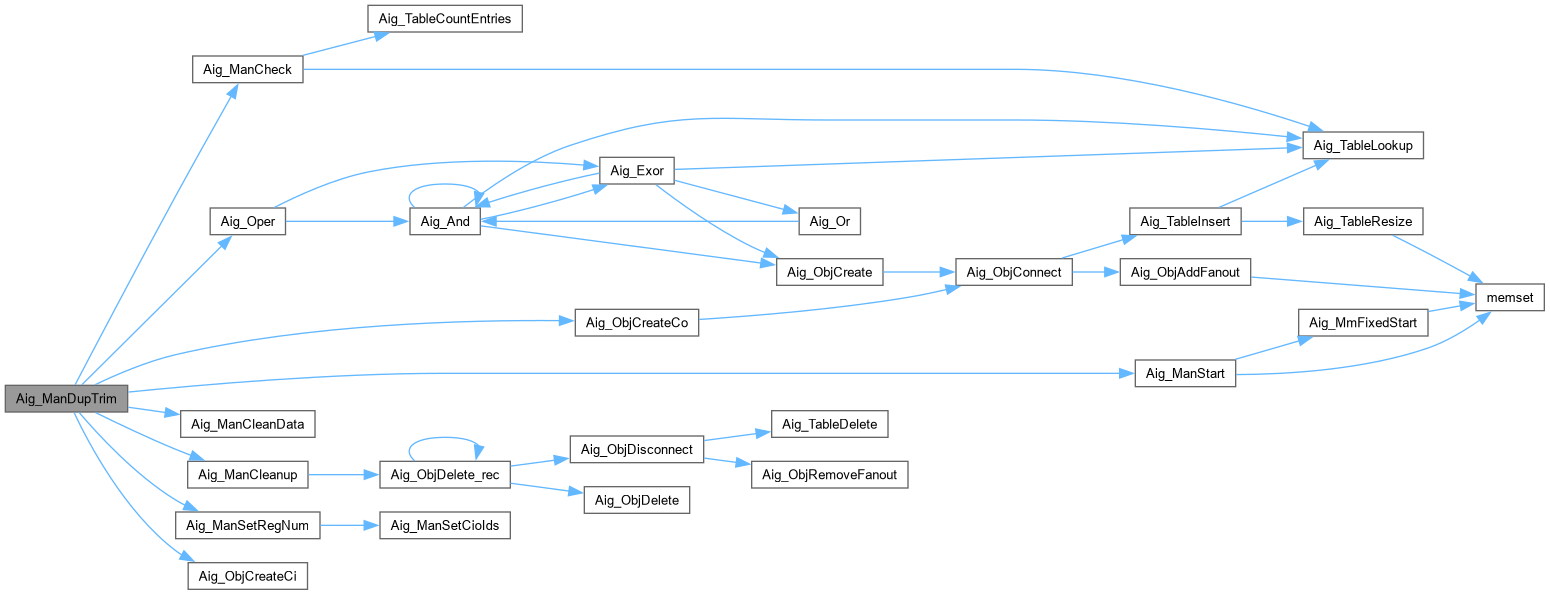
414{
415 Aig_Man_t * pNew;
416 Aig_Obj_t * pObj, * pObjNew = NULL;
417 int i, nNodes;
418 // create the new manager
419 pNew = Aig_ManStart( Aig_ManObjNumMax(p) );
420 pNew->pName = Abc_UtilStrsav( p->pName );
421 pNew->pSpec = Abc_UtilStrsav( p->pSpec );
422 pNew->nConstrs = p->nConstrs;
423 pNew->nBarBufs = p->nBarBufs;
424 // create the PIs
426 // duplicate internal nodes
427 Aig_ManForEachObj( p, pObj, i )
428 {
429 if ( Aig_ObjIsNode(pObj) )
430 pObjNew = Aig_Oper( pNew, Aig_ObjChild0Copy(pObj), Aig_ObjChild1Copy(pObj), Aig_ObjType(pObj) );
431 else if ( Aig_ObjIsCi(pObj) )
432 pObjNew = (Aig_ObjRefs(pObj) > 0 || Saig_ObjIsLo(p, pObj)) ? Aig_ObjCreateCi(pNew) : NULL;
433 else if ( Aig_ObjIsCo(pObj) )
434 pObjNew = Aig_ObjCreateCo( pNew, Aig_ObjChild0Copy(pObj) );
435 else if ( Aig_ObjIsConst1(pObj) )
436 pObjNew = Aig_ManConst1(pNew);
437 else
438 assert( 0 );
439 pObj->pData = pObjNew;
440 }
441 assert( Aig_ManNodeNum(p) == Aig_ManNodeNum(pNew) );
442 if ( (nNodes = Aig_ManCleanup( pNew )) )
443 printf( "Aig_ManDupTrim(): Cleanup after AIG duplication removed %d nodes.\n", nNodes );
444 Aig_ManSetRegNum( pNew, Aig_ManRegNum(p) );
445 // check the resulting network
446 if ( !Aig_ManCheck(pNew) )
447 printf( "Aig_ManDupTrim(): The check has failed.\n" );
448 return pNew;
449}
Here is the call graph for this function:
Here is the caller graph for this function:

◆ Aig_ManDupUnsolvedOutputs()

Aig_Man_t * Aig_ManDupUnsolvedOutputs ( Aig_Man_t * p,
int fAddRegs )

Function*************************************************************

Synopsis [Duplicates AIG with only one primary output.]

Description []

SideEffects []

SeeAlso []

Definition at line 1199 of file aigDup.c.
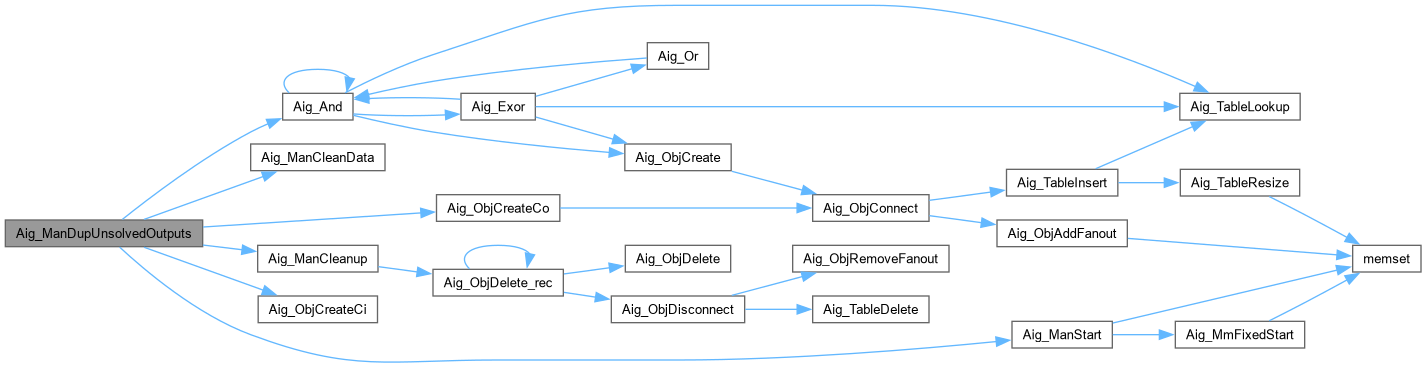
1200{
1201 Aig_Man_t * pNew;
1202 Aig_Obj_t * pObj = NULL;
1203 int i, nOuts = 0;
1204 assert( Aig_ManRegNum(p) > 0 );
1205 if ( p->nConstrs > 0 )
1206 {
1207 printf( "The AIG manager should have no constraints.\n" );
1208 return NULL;
1209 }
1210 // create the new manager
1211 pNew = Aig_ManStart( Aig_ManObjNumMax(p) );
1212 pNew->pName = Abc_UtilStrsav( p->pName );
1213 pNew->pSpec = Abc_UtilStrsav( p->pSpec );
1214 // create the PIs
1216 Aig_ManConst1(p)->pData = Aig_ManConst1(pNew);
1217 Aig_ManForEachCi( p, pObj, i )
1218 pObj->pData = Aig_ObjCreateCi( pNew );
1219 // create the POs
1220 nOuts = 0;
1221 Aig_ManForEachPoSeq( p, pObj, i )
1222 nOuts += ( Aig_ObjFanin0(pObj) != Aig_ManConst1(p) );
1223 // set registers
1224 pNew->nRegs = fAddRegs? p->nRegs : 0;
1225 pNew->nTruePis = fAddRegs? p->nTruePis : p->nTruePis + p->nRegs;
1226 pNew->nTruePos = nOuts;
1227 // duplicate internal nodes
1228 Aig_ManForEachNode( p, pObj, i )
1229 pObj->pData = Aig_And( pNew, Aig_ObjChild0Copy(pObj), Aig_ObjChild1Copy(pObj) );
1230 // create the PO
1231 Aig_ManForEachPoSeq( p, pObj, i )
1232 if ( Aig_ObjFanin0(pObj) != Aig_ManConst1(p) )
1233 Aig_ObjCreateCo( pNew, Aig_ObjChild0Copy(pObj) );
1234 // create register inputs with MUXes
1235 if ( fAddRegs )
1236 {
1237 Aig_ManForEachLiSeq( p, pObj, i )
1238 Aig_ObjCreateCo( pNew, Aig_ObjChild0Copy(pObj) );
1239 }
1240 Aig_ManCleanup( pNew );
1241 return pNew;
1242}
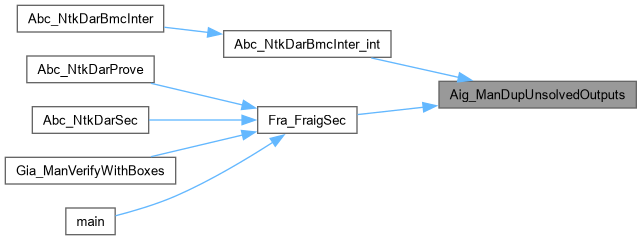
Here is the call graph for this function:
Here is the caller graph for this function:

◆ Aig_ManDupWithoutPos()

Aig_Man_t * Aig_ManDupWithoutPos ( Aig_Man_t * p)

Function*************************************************************

Synopsis [Duplicates the AIG manager.]

Description [Assumes topological ordering of nodes.]

SideEffects []

SeeAlso []

Definition at line 835 of file aigDup.c.
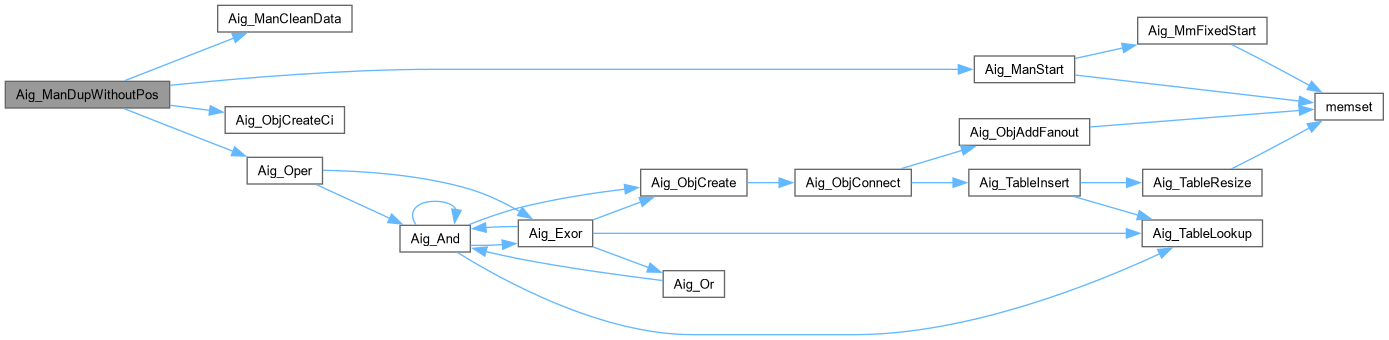
836{
837 Aig_Man_t * pNew;
838 Aig_Obj_t * pObj = NULL;
839 int i;
840 // create the new manager
841 pNew = Aig_ManStart( Aig_ManObjNumMax(p) );
842 pNew->pName = Abc_UtilStrsav( p->pName );
843 pNew->pSpec = Abc_UtilStrsav( p->pSpec );
844 // create the PIs
846 Aig_ManConst1(p)->pData = Aig_ManConst1(pNew);
847 Aig_ManForEachCi( p, pObj, i )
848 pObj->pData = Aig_ObjCreateCi( pNew );
849 // duplicate internal nodes
850 Aig_ManForEachObj( p, pObj, i )
851 {
852 assert( !Aig_ObjIsBuf(pObj) );
853 if ( Aig_ObjIsNode(pObj) )
854 pObj->pData = Aig_Oper( pNew, Aig_ObjChild0Copy(pObj), Aig_ObjChild1Copy(pObj), Aig_ObjType(pObj) );
855 }
856 assert( Aig_ManBufNum(p) != 0 || Aig_ManNodeNum(p) == Aig_ManNodeNum(pNew) );
857 return pNew;
858}
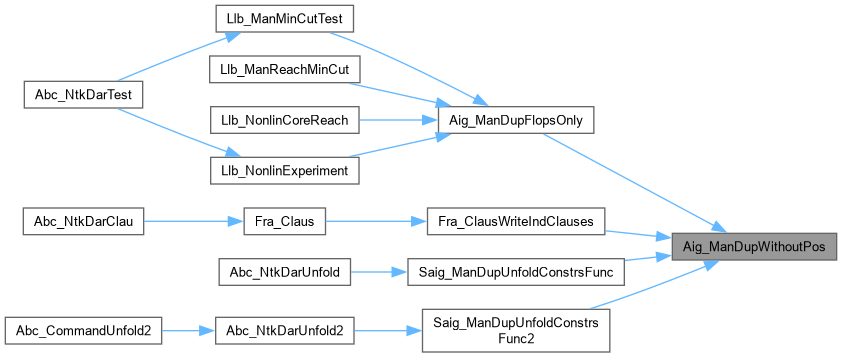
Here is the call graph for this function:
Here is the caller graph for this function:

◆ Aig_ManOrderPios()

Vec_Ptr_t * Aig_ManOrderPios ( Aig_Man_t * p,
Aig_Man_t * pOrder )

Function*************************************************************

Synopsis [Duplicates the AIG manager.]

Description [This duplicator works for AIGs with choices.]

SideEffects []

SeeAlso []

Definition at line 626 of file aigDup.c.
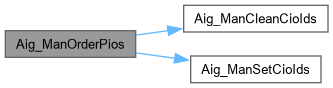
627{
628 Vec_Ptr_t * vPios;
629 Aig_Obj_t * pObj = NULL;
630 int i;
631 assert( Aig_ManCiNum(p) == Aig_ManCiNum(pOrder) );
632 assert( Aig_ManCoNum(p) == Aig_ManCoNum(pOrder) );
633 Aig_ManSetCioIds( pOrder );
634 vPios = Vec_PtrAlloc( Aig_ManCiNum(p) + Aig_ManCoNum(p) );
635 Aig_ManForEachObj( pOrder, pObj, i )
636 {
637 if ( Aig_ObjIsCi(pObj) )
638 Vec_PtrPush( vPios, Aig_ManCi(p, Aig_ObjCioId(pObj)) );
639 else if ( Aig_ObjIsCo(pObj) )
640 Vec_PtrPush( vPios, Aig_ManCo(p, Aig_ObjCioId(pObj)) );
641 }
642 Aig_ManCleanCioIds( pOrder );
643 return vPios;
644}
void Aig_ManSetCioIds(Aig_Man_t *p)
Definition aigUtil.c:978
void Aig_ManCleanCioIds(Aig_Man_t *p)
Definition aigUtil.c:999
Here is the call graph for this function:
Here is the caller graph for this function: