ABC: A System for Sequential Synthesis and Verification
 
Loading...
Searching...
No Matches
aigTiming.c File Reference
#include "aig.h"
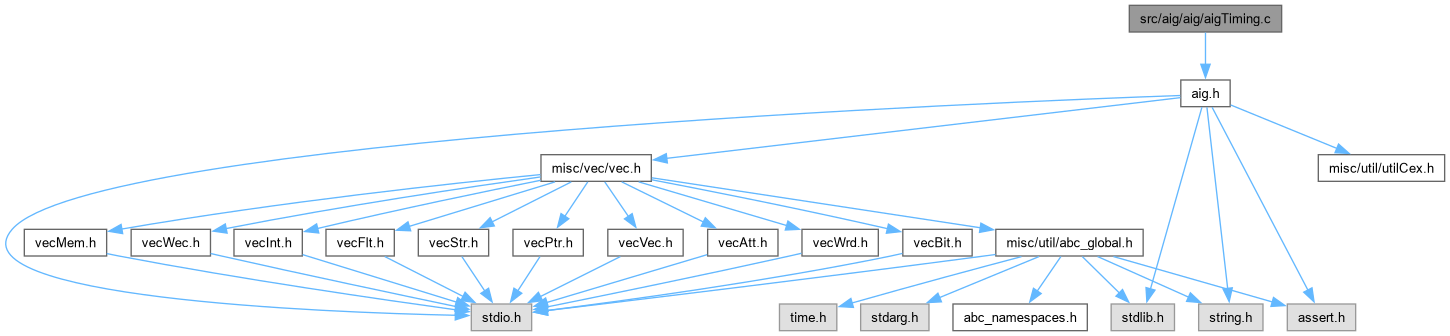
Include dependency graph for aigTiming.c:

Go to the source code of this file.

Functions

void Aig_ObjClearReverseLevel (Aig_Man_t *p, Aig_Obj_t *pObj)
 
int Aig_ObjRequiredLevel (Aig_Man_t *p, Aig_Obj_t *pObj)
 
int Aig_ObjReverseLevelNew (Aig_Man_t *p, Aig_Obj_t *pObj)
 
void Aig_ManStartReverseLevels (Aig_Man_t *p, int nMaxLevelIncrease)
 
void Aig_ManStopReverseLevels (Aig_Man_t *p)
 
void Aig_ManUpdateLevel (Aig_Man_t *p, Aig_Obj_t *pObjNew)
 
void Aig_ManUpdateReverseLevel (Aig_Man_t *p, Aig_Obj_t *pObjNew)
 
void Aig_ManVerifyLevel (Aig_Man_t *p)
 
void Aig_ManVerifyReverseLevel (Aig_Man_t *p)
 

Function Documentation

◆ Aig_ManStartReverseLevels()

void Aig_ManStartReverseLevels ( Aig_Man_t * p,
int nMaxLevelIncrease )

Function*************************************************************

Synopsis [Prepares for the computation of required levels.]

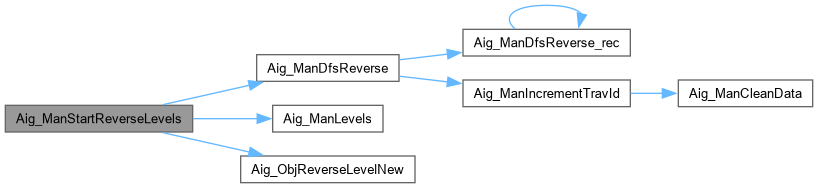
Description [This procedure should be called before the required times are used. It starts internal data structures, which records the level from the COs of the network nodes in reverse topologogical order.]

SideEffects []

SeeAlso []

Definition at line 142 of file aigTiming.c.
143{
144 Vec_Ptr_t * vNodes;
145 Aig_Obj_t * pObj;
146 int i;
147 assert( p->pFanData != NULL );
148 assert( p->vLevelR == NULL );
149 // remember the maximum number of direct levels
150 p->nLevelMax = Aig_ManLevels(p) + nMaxLevelIncrease;
151 // start the reverse levels
152 p->vLevelR = Vec_IntAlloc( 0 );
153 Vec_IntFill( p->vLevelR, Aig_ManObjNumMax(p), 0 );
154 // compute levels in reverse topological order
155 vNodes = Aig_ManDfsReverse( p );
156 Vec_PtrForEachEntry( Aig_Obj_t *, vNodes, pObj, i )
157 {
158 assert( pObj->fMarkA == 0 );
159 Aig_ObjSetReverseLevel( p, pObj, Aig_ObjReverseLevelNew(p, pObj) );
160 }
161 Vec_PtrFree( vNodes );
162}
int Aig_ObjReverseLevelNew(Aig_Man_t *p, Aig_Obj_t *pObj)
Definition aigTiming.c:117
Vec_Ptr_t * Aig_ManDfsReverse(Aig_Man_t *p)
Definition aigDfs.c:472
struct Aig_Obj_t_ Aig_Obj_t
Definition aig.h:51
int Aig_ManLevels(Aig_Man_t *p)
Definition aigUtil.c:102
Cube * p
Definition exorList.c:222
unsigned int fMarkA
Definition aig.h:79
#define assert(ex)
Definition util_old.h:213
typedefABC_NAMESPACE_HEADER_START struct Vec_Ptr_t_ Vec_Ptr_t
INCLUDES ///.
Definition vecPtr.h:42
#define Vec_PtrForEachEntry(Type, vVec, pEntry, i)
MACRO DEFINITIONS ///.
Definition vecPtr.h:55
Here is the call graph for this function:
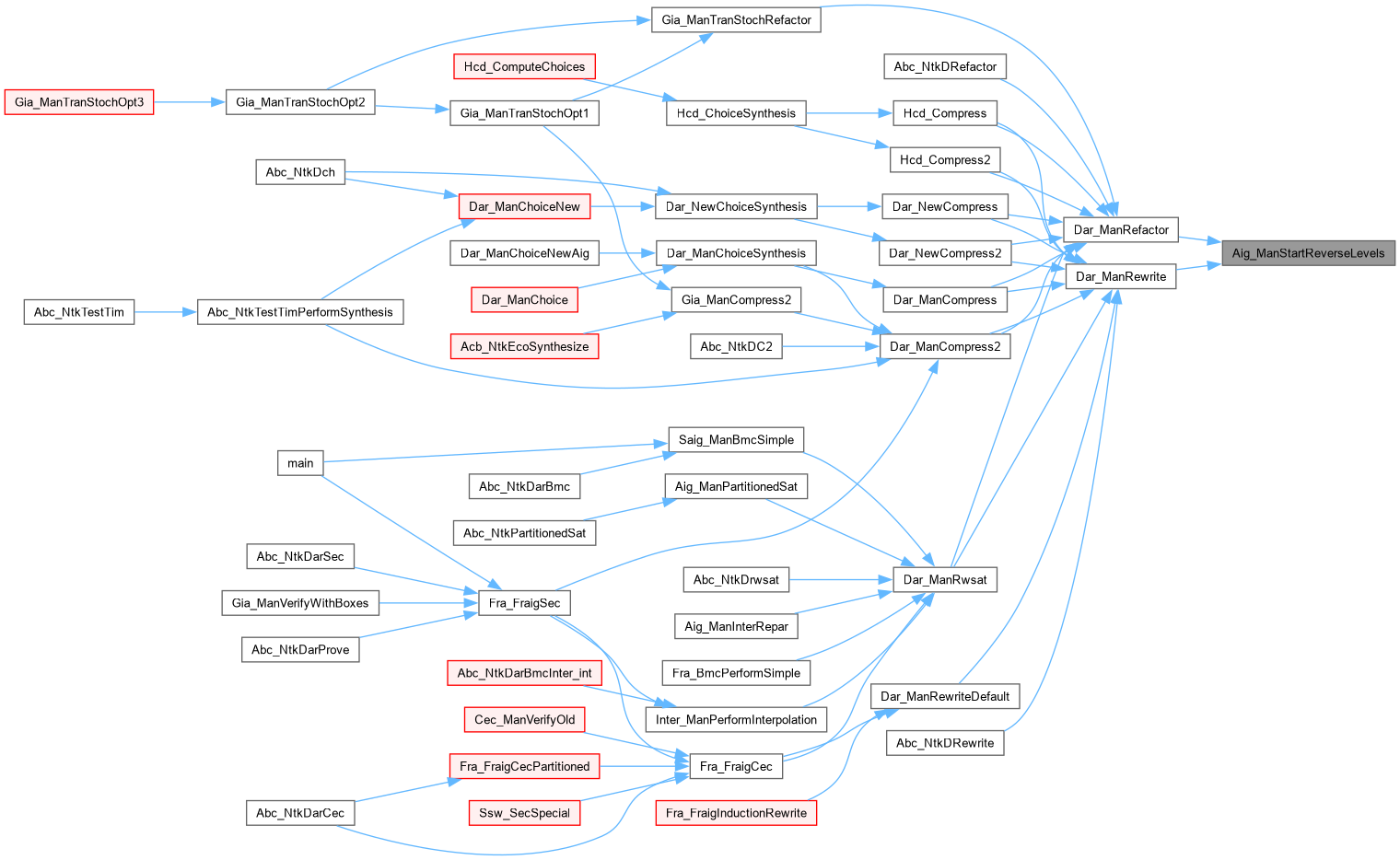
Here is the caller graph for this function:

◆ Aig_ManStopReverseLevels()

void Aig_ManStopReverseLevels ( Aig_Man_t * p)

Function*************************************************************

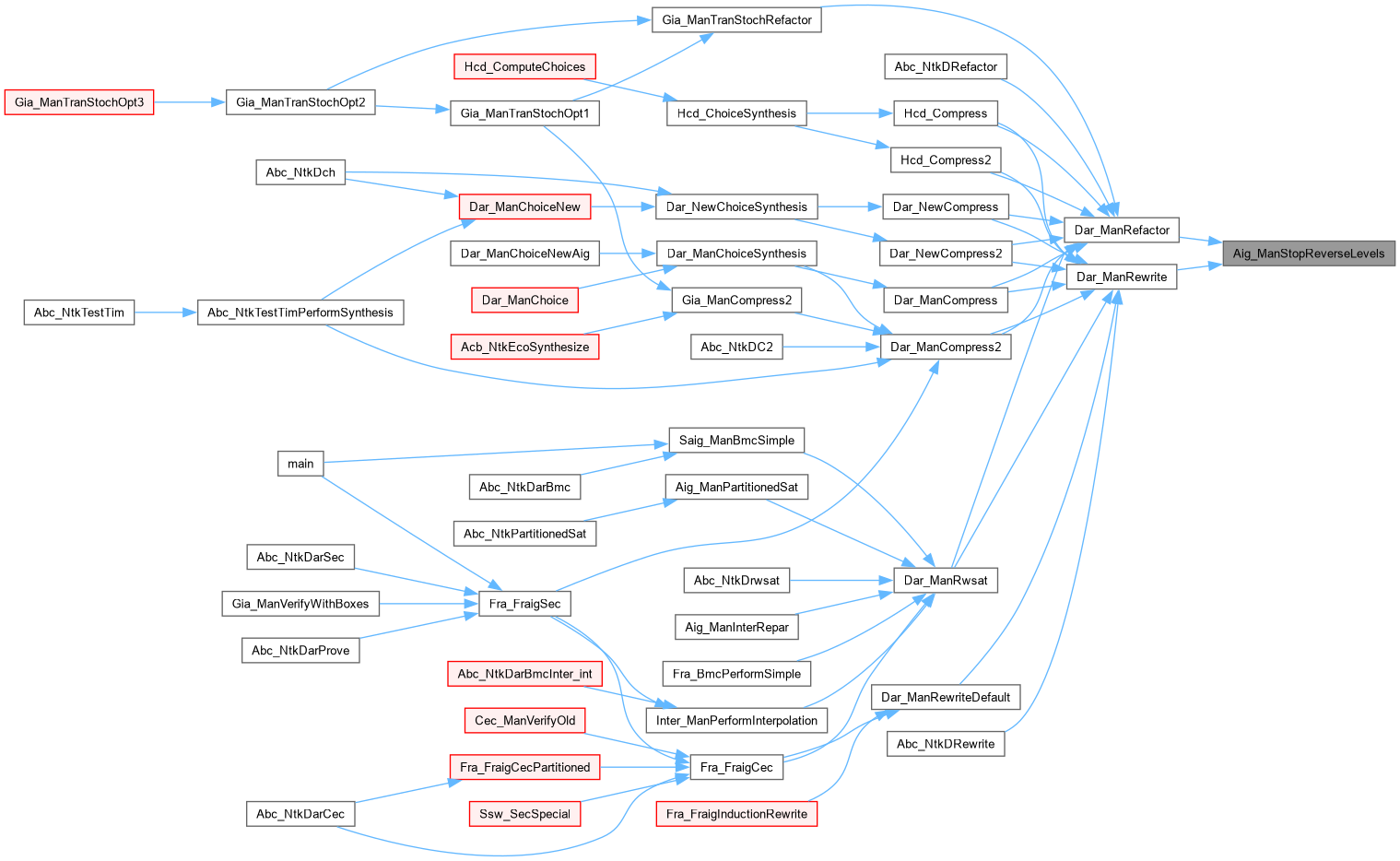
Synopsis [Cleans the data structures used to compute required levels.]

Description []

SideEffects []

SeeAlso []

Definition at line 175 of file aigTiming.c.
176{
177 assert( p->vLevelR != NULL );
178 Vec_IntFree( p->vLevelR );
179 p->vLevelR = NULL;
180 p->nLevelMax = 0;
181
182}
Here is the caller graph for this function:

◆ Aig_ManUpdateLevel()

void Aig_ManUpdateLevel ( Aig_Man_t * p,
Aig_Obj_t * pObjNew )

Function*************************************************************

Synopsis [Incrementally updates level of the nodes.]

Description []

SideEffects []

SeeAlso []

Definition at line 195 of file aigTiming.c.

196{
197 Aig_Obj_t * pFanout, * pTemp;
198 int iFanout = -1, LevelOld, Lev, k, m;
199 assert( p->pFanData != NULL );
200 assert( Aig_ObjIsNode(pObjNew) );
201 // allocate level if needed
202 if ( p->vLevels == NULL )
203 p->vLevels = Vec_VecAlloc( Aig_ManLevels(p) + 8 );
204 // check if level has changed
205 LevelOld = Aig_ObjLevel(pObjNew);
206 if ( LevelOld == Aig_ObjLevelNew(pObjNew) )
207 return;
208 // start the data structure for level update
209 // we cannot fail to visit a node when using this structure because the
210 // nodes are stored by their _old_ levels, which are assumed to be correct
211 Vec_VecClear( p->vLevels );
212 Vec_VecPush( p->vLevels, LevelOld, pObjNew );
213 pObjNew->fMarkA = 1;
214 // recursively update level
215 Vec_VecForEachEntryStart( Aig_Obj_t *, p->vLevels, pTemp, Lev, k, LevelOld )
216 {
217 pTemp->fMarkA = 0;
218 assert( Aig_ObjLevel(pTemp) == Lev );
219 pTemp->Level = Aig_ObjLevelNew(pTemp);
220 // if the level did not change, no need to check the fanout levels
221 if ( Aig_ObjLevel(pTemp) == Lev )
222 continue;
223 // schedule fanout for level update
224 Aig_ObjForEachFanout( p, pTemp, pFanout, iFanout, m )
225 {
226 if ( Aig_ObjIsNode(pFanout) && !pFanout->fMarkA )
227 {
228 assert( Aig_ObjLevel(pFanout) >= Lev );
229 Vec_VecPush( p->vLevels, Aig_ObjLevel(pFanout), pFanout );
230 pFanout->fMarkA = 1;
231 }
232 }
233 }
234}
#define Aig_ObjForEachFanout(p, pObj, pFanout, iFan, i)
Definition aig.h:427
unsigned Level
Definition aig.h:82
#define Vec_VecForEachEntryStart(Type, vGlob, pEntry, i, k, LevelStart)
Definition vecVec.h:92
Here is the call graph for this function:
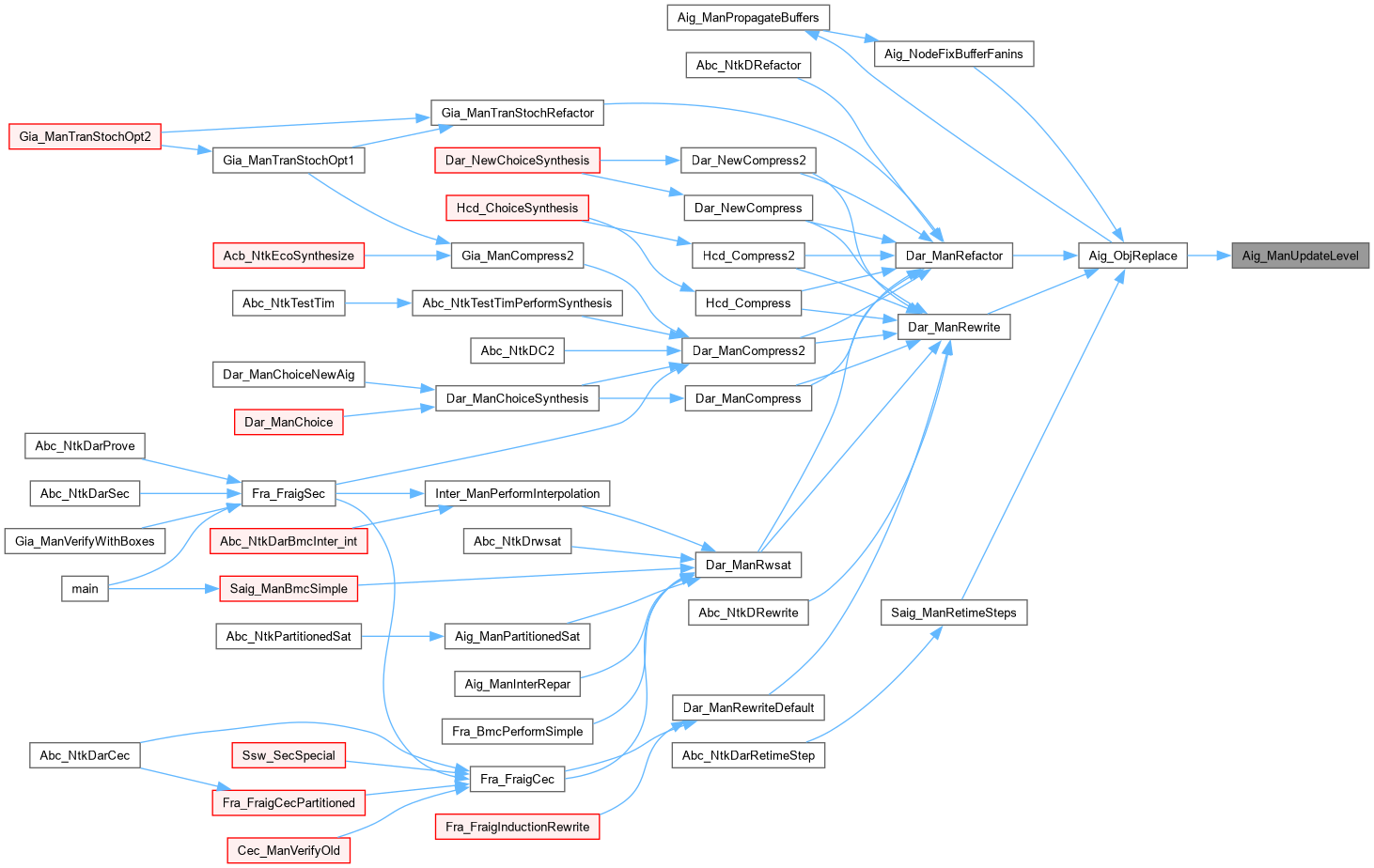
Here is the caller graph for this function:

◆ Aig_ManUpdateReverseLevel()

void Aig_ManUpdateReverseLevel ( Aig_Man_t * p,
Aig_Obj_t * pObjNew )

Function*************************************************************

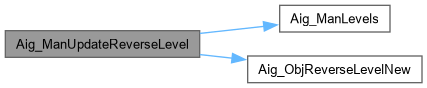
Synopsis [Incrementally updates level of the nodes.]

Description []

SideEffects []

SeeAlso []

Definition at line 247 of file aigTiming.c.
248{
249 Aig_Obj_t * pFanin, * pTemp;
250 int LevelOld, LevFanin, Lev, k;
251 assert( p->vLevelR != NULL );
252 assert( Aig_ObjIsNode(pObjNew) );
253 // allocate level if needed
254 if ( p->vLevels == NULL )
255 p->vLevels = Vec_VecAlloc( Aig_ManLevels(p) + 8 );
256 // check if level has changed
257 LevelOld = Aig_ObjReverseLevel(p, pObjNew);
258 if ( LevelOld == Aig_ObjReverseLevelNew(p, pObjNew) )
259 return;
260 // start the data structure for level update
261 // we cannot fail to visit a node when using this structure because the
262 // nodes are stored by their _old_ levels, which are assumed to be correct
263 Vec_VecClear( p->vLevels );
264 Vec_VecPush( p->vLevels, LevelOld, pObjNew );
265 pObjNew->fMarkA = 1;
266 // recursively update level
267 Vec_VecForEachEntryStart( Aig_Obj_t *, p->vLevels, pTemp, Lev, k, LevelOld )
268 {
269 pTemp->fMarkA = 0;
270 LevelOld = Aig_ObjReverseLevel(p, pTemp);
271 assert( LevelOld == Lev );
272 Aig_ObjSetReverseLevel( p, pTemp, Aig_ObjReverseLevelNew(p, pTemp) );
273 // if the level did not change, to need to check the fanout levels
274 if ( Aig_ObjReverseLevel(p, pTemp) == Lev )
275 continue;
276 // schedule fanins for level update
277 pFanin = Aig_ObjFanin0(pTemp);
278 if ( Aig_ObjIsNode(pFanin) && !pFanin->fMarkA )
279 {
280 LevFanin = Aig_ObjReverseLevel( p, pFanin );
281 assert( LevFanin >= Lev );
282 Vec_VecPush( p->vLevels, LevFanin, pFanin );
283 pFanin->fMarkA = 1;
284 }
285 pFanin = Aig_ObjFanin1(pTemp);
286 if ( Aig_ObjIsNode(pFanin) && !pFanin->fMarkA )
287 {
288 LevFanin = Aig_ObjReverseLevel( p, pFanin );
289 assert( LevFanin >= Lev );
290 Vec_VecPush( p->vLevels, LevFanin, pFanin );
291 pFanin->fMarkA = 1;
292 }
293 }
294}
Here is the call graph for this function:
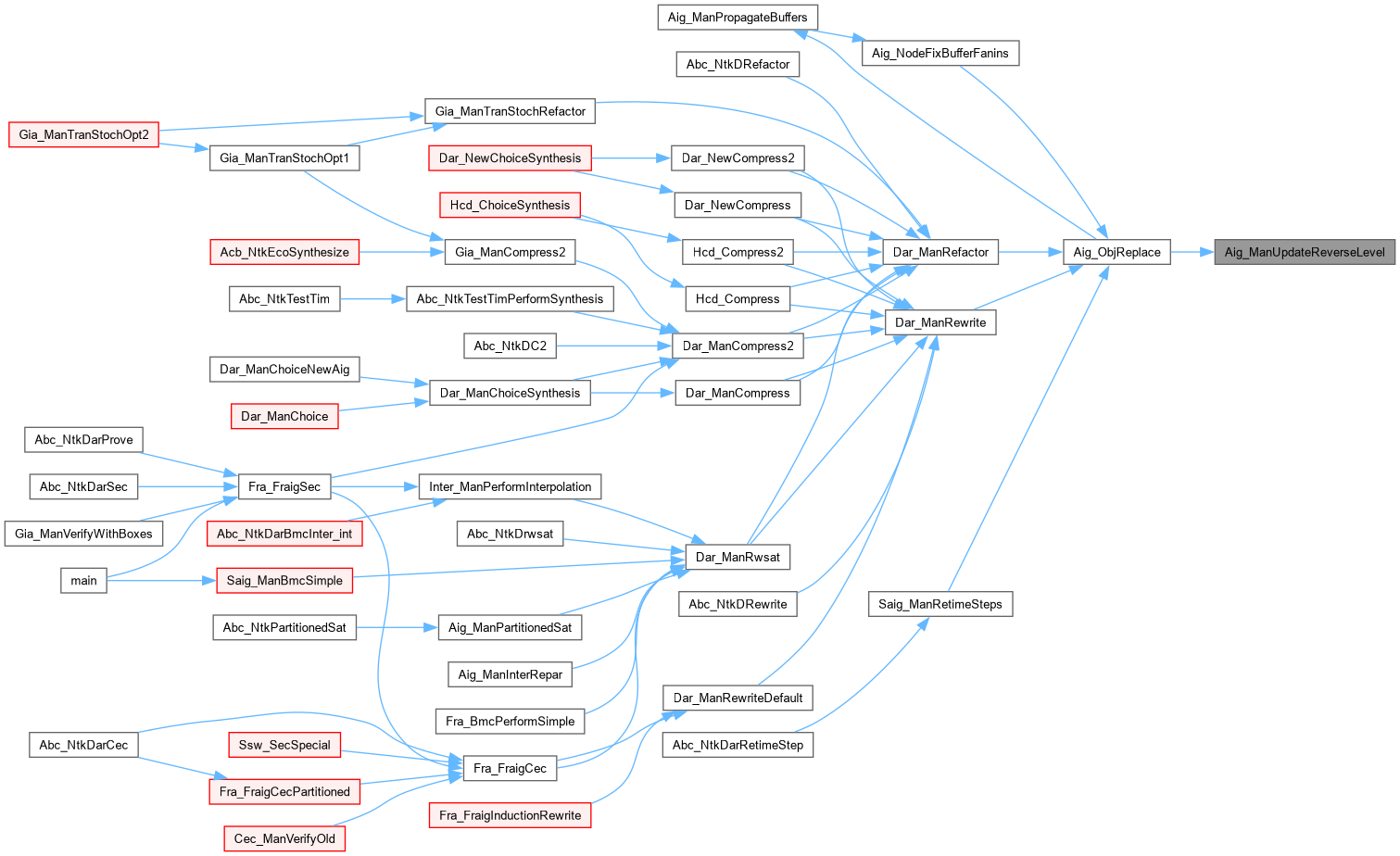
Here is the caller graph for this function:

◆ Aig_ManVerifyLevel()

void Aig_ManVerifyLevel ( Aig_Man_t * p)

Function*************************************************************

Synopsis [Verifies direct level of the nodes.]

Description []

SideEffects []

SeeAlso []

Definition at line 307 of file aigTiming.c.

308{
309 Aig_Obj_t * pObj;
310 int i, Counter = 0;
311 assert( p->pFanData );
312 Aig_ManForEachNode( p, pObj, i )
313 if ( Aig_ObjLevel(pObj) != Aig_ObjLevelNew(pObj) )
314 {
315 printf( "Level of node %6d should be %4d instead of %4d.\n",
316 pObj->Id, Aig_ObjLevelNew(pObj), Aig_ObjLevel(pObj) );
317 Counter++;
318 }
319 if ( Counter )
320 printf( "Levels of %d nodes are incorrect.\n", Counter );
321}
#define Aig_ManForEachNode(p, pObj, i)
Definition aig.h:413
int Id
Definition aig.h:85

◆ Aig_ManVerifyReverseLevel()

void Aig_ManVerifyReverseLevel ( Aig_Man_t * p)

Function*************************************************************

Synopsis [Verifies reverse level of the nodes.]

Description []

SideEffects []

SeeAlso []

Definition at line 334 of file aigTiming.c.

335{
336 Aig_Obj_t * pObj;
337 int i, Counter = 0;
338 assert( p->vLevelR );
339 Aig_ManForEachNode( p, pObj, i )
340 if ( Aig_ObjLevel(pObj) != Aig_ObjLevelNew(pObj) )
341 {
342 printf( "Reverse level of node %6d should be %4d instead of %4d.\n",
343 pObj->Id, Aig_ObjReverseLevelNew(p, pObj), Aig_ObjReverseLevel(p, pObj) );
344 Counter++;
345 }
346 if ( Counter )
347 printf( "Reverse levels of %d nodes are incorrect.\n", Counter );
348}
Here is the call graph for this function:

◆ Aig_ObjClearReverseLevel()

void Aig_ObjClearReverseLevel ( Aig_Man_t * p,
Aig_Obj_t * pObj )

Function*************************************************************

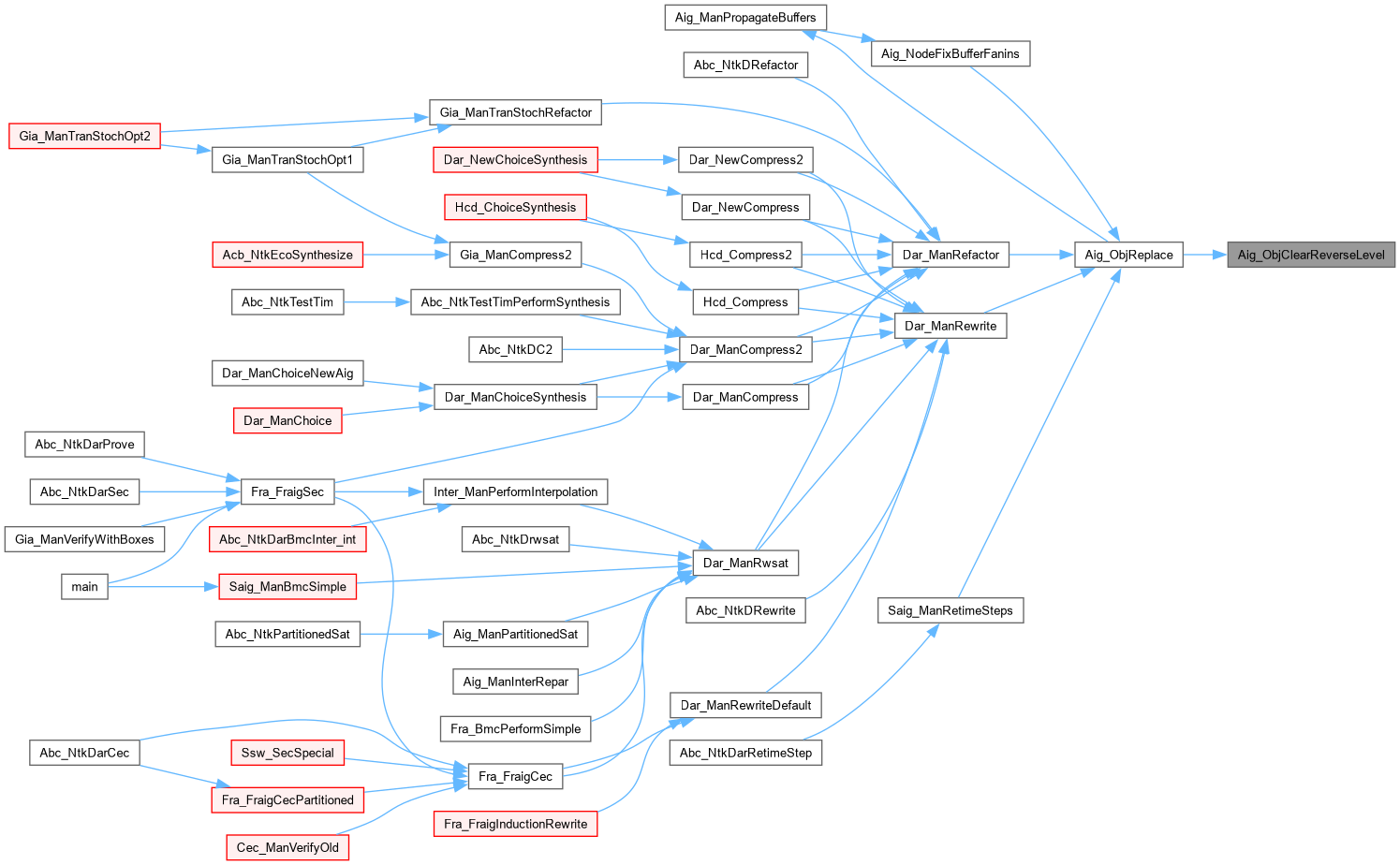
Synopsis [Resets reverse level of the node.]

Description []

SideEffects []

SeeAlso []

Definition at line 83 of file aigTiming.c.
84{
85 Aig_ObjSetReverseLevel( p, pObj, 0 );
86}
Here is the caller graph for this function:

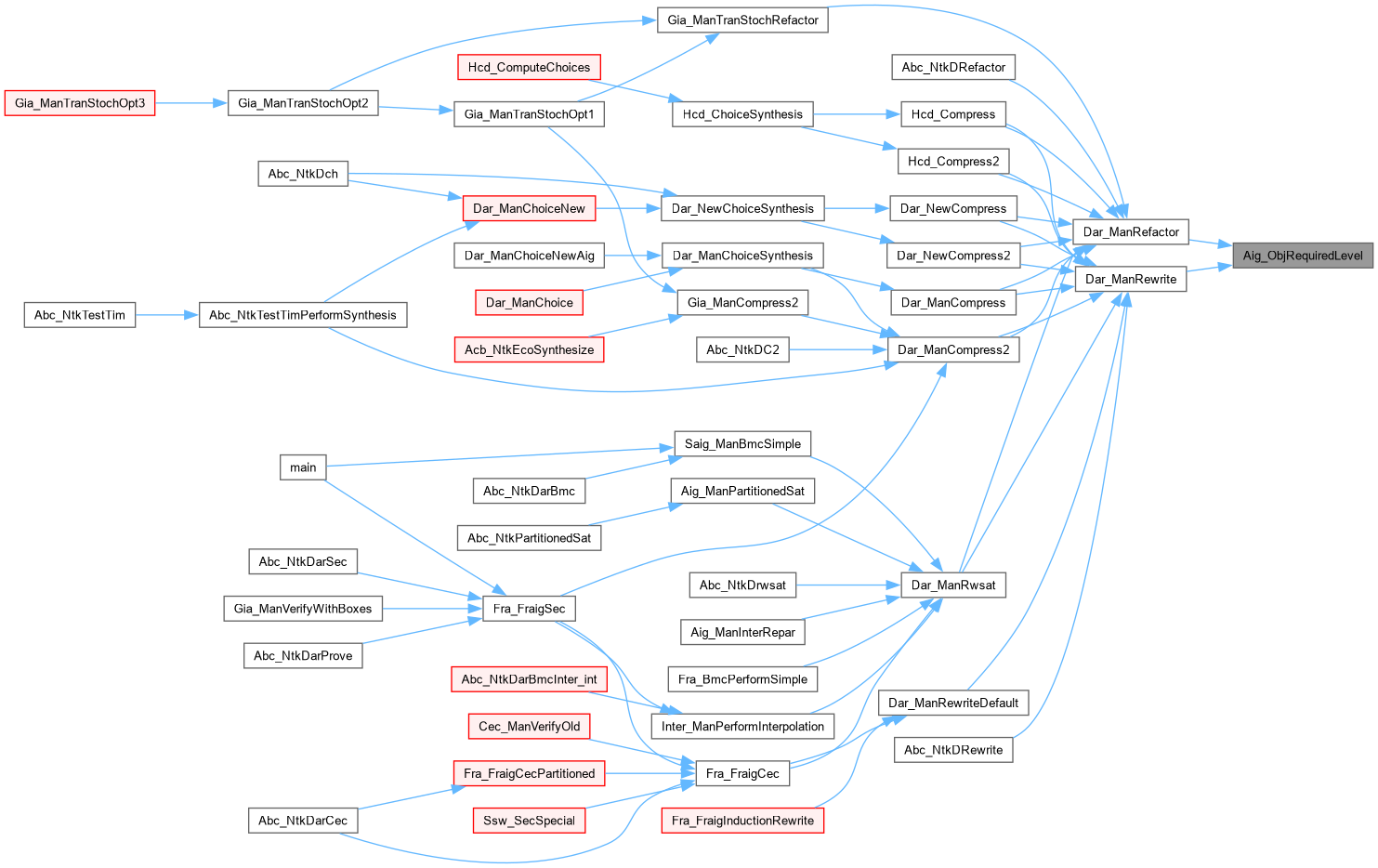
◆ Aig_ObjRequiredLevel()

int Aig_ObjRequiredLevel ( Aig_Man_t * p,
Aig_Obj_t * pObj )

Function*************************************************************

Synopsis [Returns required level of the node.]

Description [Converts the reverse levels of the node into its required level as follows: ReqLevel(Node) = MaxLevels(Ntk) + 1 - LevelR(Node).]

SideEffects []

SeeAlso []

Definition at line 100 of file aigTiming.c.
101{
102 assert( p->vLevelR );
103 return p->nLevelMax + 1 - Aig_ObjReverseLevel(p, pObj);
104}
Here is the caller graph for this function:

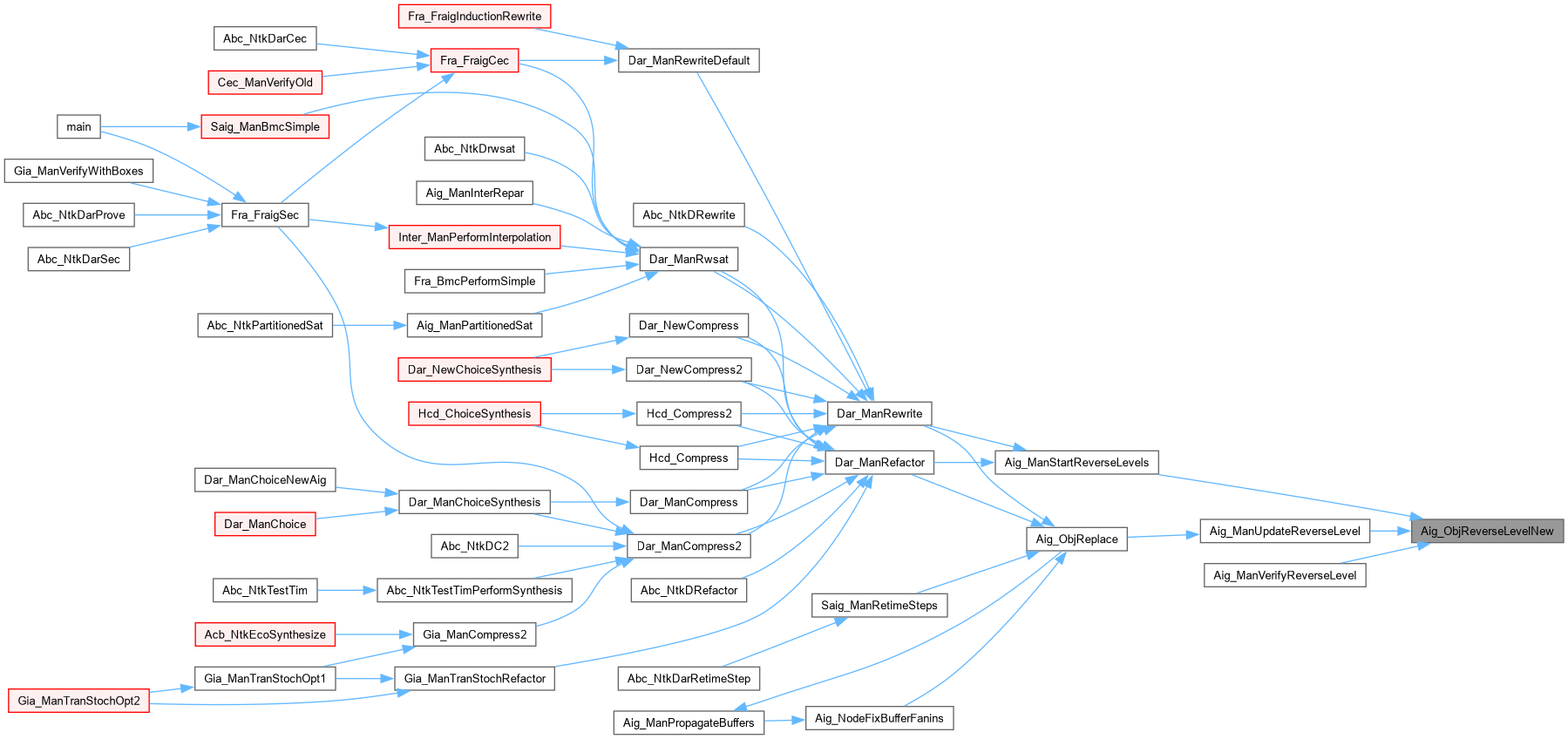
◆ Aig_ObjReverseLevelNew()

int Aig_ObjReverseLevelNew ( Aig_Man_t * p,
Aig_Obj_t * pObj )

Function*************************************************************

Synopsis [Computes the reverse level of the node using its fanout levels.]

Description []

SideEffects []

SeeAlso []

Definition at line 117 of file aigTiming.c.
118{
119 Aig_Obj_t * pFanout;
120 int i, iFanout = -1, LevelCur, Level = 0;
121 Aig_ObjForEachFanout( p, pObj, pFanout, iFanout, i )
122 {
123 LevelCur = Aig_ObjReverseLevel( p, pFanout );
124 Level = Abc_MaxInt( Level, LevelCur );
125 }
126 return Level + 1;
127}
Here is the caller graph for this function: