ABC: A System for Sequential Synthesis and Verification
 
Loading...
Searching...
No Matches
extraUtilMemory.c File Reference
#include "extra.h"
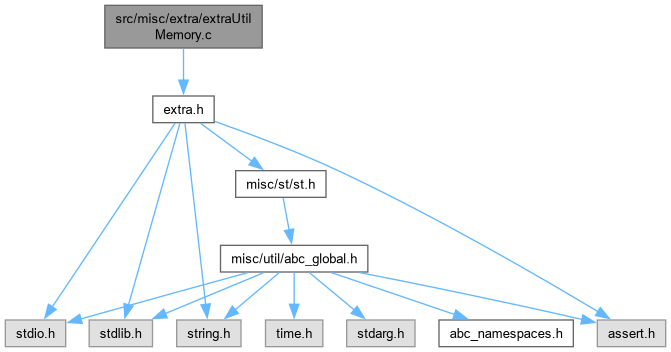
Include dependency graph for extraUtilMemory.c:

Go to the source code of this file.

Classes

struct  Extra_MmFixed_t_
 
struct  Extra_MmFlex_t_
 
struct  Extra_MmStep_t_
 

Functions

Extra_MmFixed_tExtra_MmFixedStart (int nEntrySize)
 
void Extra_MmFixedPrint (Extra_MmFixed_t *p)
 
void Extra_MmFixedStop (Extra_MmFixed_t *p)
 
char * Extra_MmFixedEntryFetch (Extra_MmFixed_t *p)
 
void Extra_MmFixedEntryRecycle (Extra_MmFixed_t *p, char *pEntry)
 
void Extra_MmFixedRestart (Extra_MmFixed_t *p)
 
int Extra_MmFixedReadMemUsage (Extra_MmFixed_t *p)
 
int Extra_MmFixedReadMaxEntriesUsed (Extra_MmFixed_t *p)
 
Extra_MmFlex_tExtra_MmFlexStart ()
 
void Extra_MmFlexPrint (Extra_MmFlex_t *p)
 
void Extra_MmFlexStop (Extra_MmFlex_t *p)
 
char * Extra_MmFlexEntryFetch (Extra_MmFlex_t *p, int nBytes)
 
int Extra_MmFlexReadMemUsage (Extra_MmFlex_t *p)
 
Extra_MmStep_tExtra_MmStepStart (int nSteps)
 
void Extra_MmStepStop (Extra_MmStep_t *p)
 
char * Extra_MmStepEntryFetch (Extra_MmStep_t *p, int nBytes)
 
void Extra_MmStepEntryRecycle (Extra_MmStep_t *p, char *pEntry, int nBytes)
 
int Extra_MmStepReadMemUsage (Extra_MmStep_t *p)
 

Function Documentation

◆ Extra_MmFixedEntryFetch()

char * Extra_MmFixedEntryFetch ( Extra_MmFixed_t * p)

Function*************************************************************

Synopsis []

Description []

SideEffects []

SeeAlso []

Definition at line 202 of file extraUtilMemory.c.
203{
204 char * pTemp;
205 int i;
206
207 // check if there are still free entries
208 if ( p->nEntriesUsed == p->nEntriesAlloc )
209 { // need to allocate more entries
210 assert( p->pEntriesFree == NULL );
211 if ( p->nChunks == p->nChunksAlloc )
212 {
213 p->nChunksAlloc *= 2;
214 p->pChunks = ABC_REALLOC( char *, p->pChunks, p->nChunksAlloc );
215 }
216 p->pEntriesFree = ABC_ALLOC( char, p->nEntrySize * p->nChunkSize );
217 p->nMemoryAlloc += p->nEntrySize * p->nChunkSize;
218 // transform these entries into a linked list
219 pTemp = p->pEntriesFree;
220 for ( i = 1; i < p->nChunkSize; i++ )
221 {
222 *((char **)pTemp) = pTemp + p->nEntrySize;
223 pTemp += p->nEntrySize;
224 }
225 // set the last link
226 *((char **)pTemp) = NULL;
227 // add the chunk to the chunk storage
228 p->pChunks[ p->nChunks++ ] = p->pEntriesFree;
229 // add to the number of entries allocated
230 p->nEntriesAlloc += p->nChunkSize;
231 }
232 // incrememt the counter of used entries
233 p->nEntriesUsed++;
234 if ( p->nEntriesMax < p->nEntriesUsed )
235 p->nEntriesMax = p->nEntriesUsed;
236 // return the first entry in the free entry list
237 pTemp = p->pEntriesFree;
238 p->pEntriesFree = *((char **)pTemp);
239 return pTemp;
240}
#define ABC_ALLOC(type, num)
Definition abc_global.h:264
#define ABC_REALLOC(type, obj, num)
Definition abc_global.h:268
Cube * p
Definition exorList.c:222
#define assert(ex)
Definition util_old.h:213
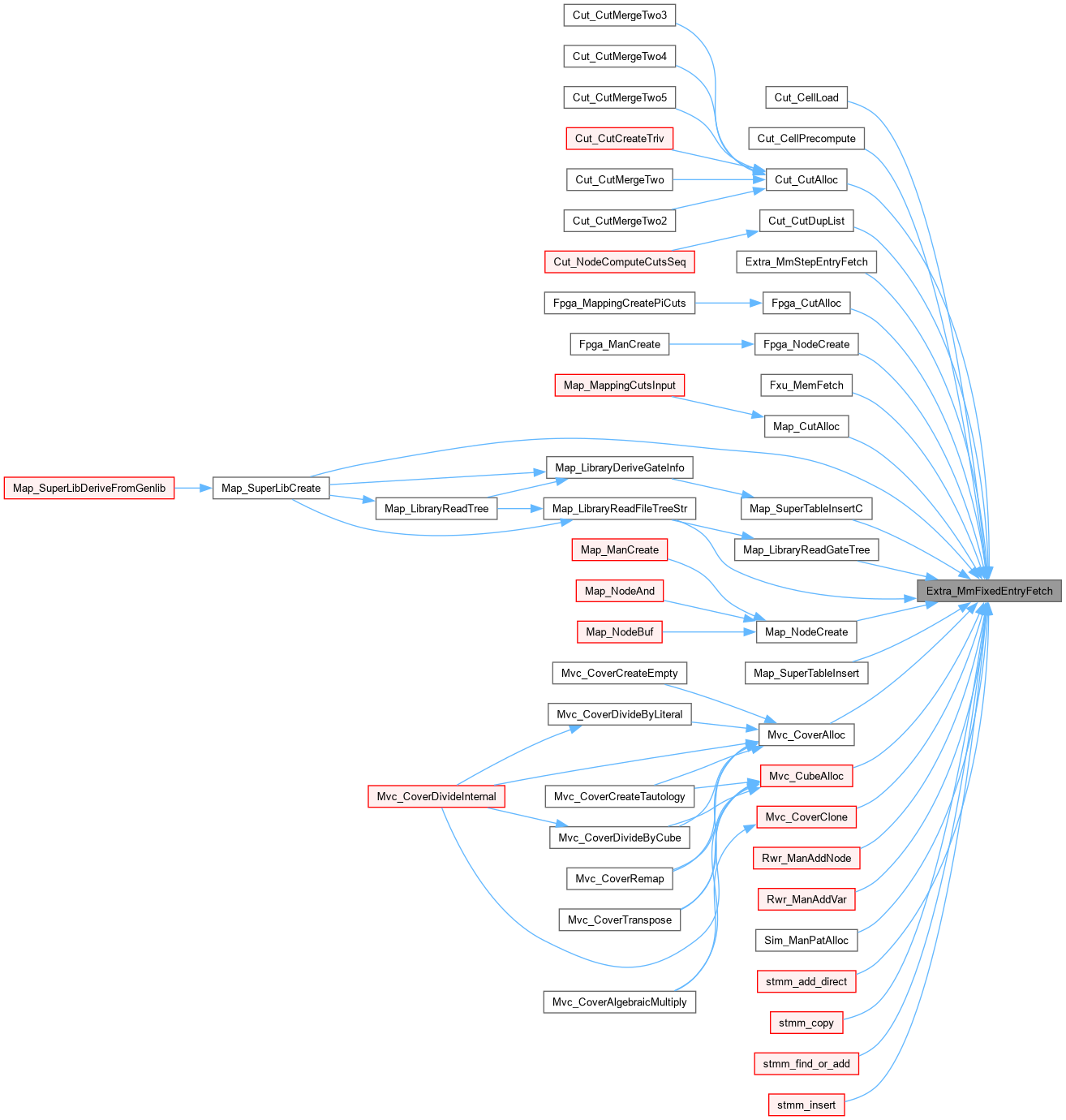
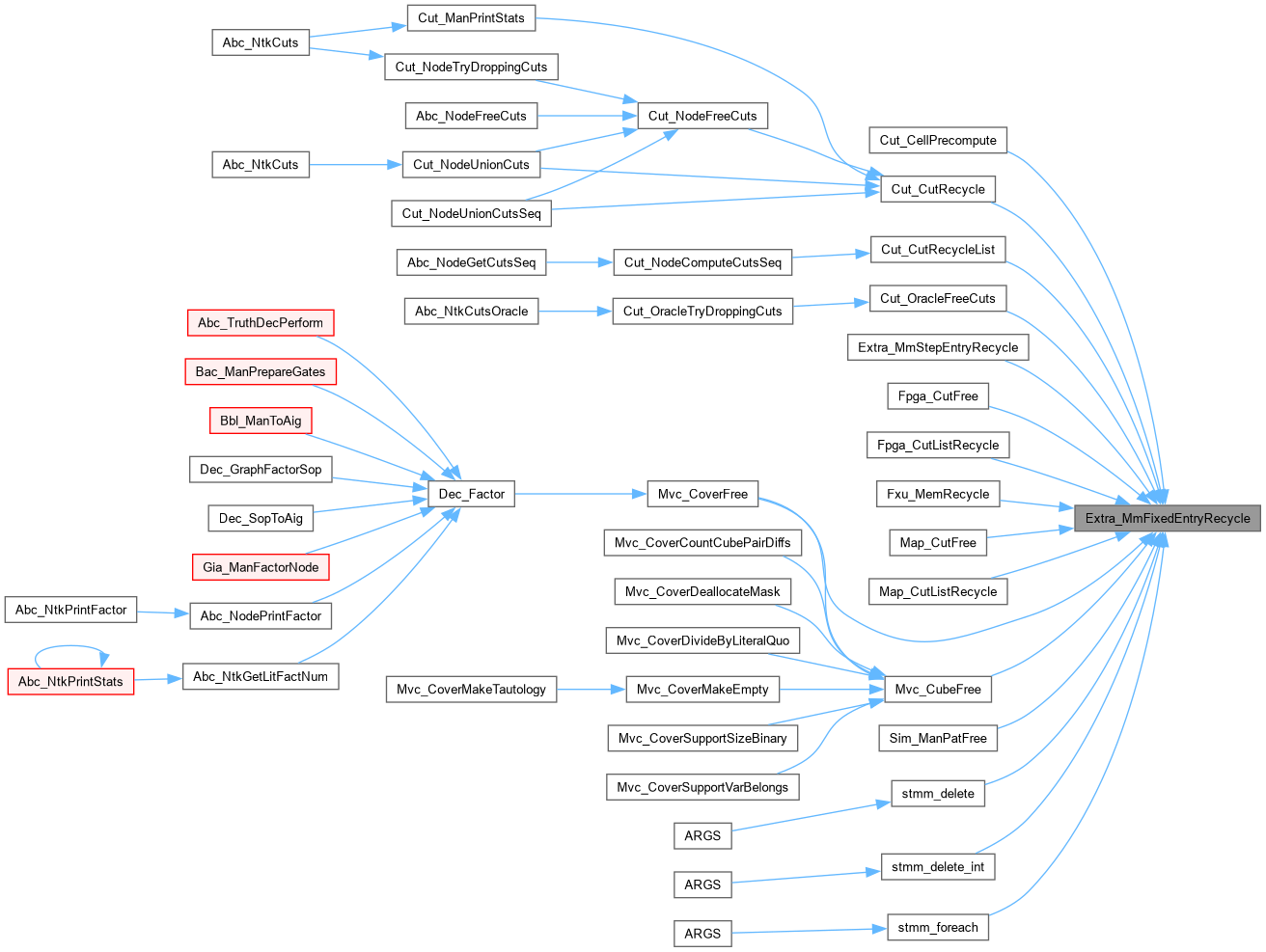
Here is the caller graph for this function:

◆ Extra_MmFixedEntryRecycle()

void Extra_MmFixedEntryRecycle ( Extra_MmFixed_t * p,
char * pEntry )

Function*************************************************************

Synopsis []

Description []

SideEffects []

SeeAlso []

Definition at line 253 of file extraUtilMemory.c.
254{
255 // decrement the counter of used entries
256 p->nEntriesUsed--;
257 // add the entry to the linked list of free entries
258 *((char **)pEntry) = p->pEntriesFree;
259 p->pEntriesFree = pEntry;
260}
Here is the caller graph for this function:

◆ Extra_MmFixedPrint()

void Extra_MmFixedPrint ( Extra_MmFixed_t * p)

Function*************************************************************

Synopsis []

Description []

SideEffects []

SeeAlso []

Definition at line 161 of file extraUtilMemory.c.

162{
163 printf( "Fixed memory manager: Entry = %5d. Chunk = %5d. Chunks used = %5d.\n",
164 p->nEntrySize, p->nChunkSize, p->nChunks );
165 printf( " Entries used = %8d. Entries peak = %8d. Memory used = %8d. Memory alloc = %8d.\n",
166 p->nEntriesUsed, p->nEntriesMax, p->nEntrySize * p->nEntriesUsed, p->nMemoryAlloc );
167}

◆ Extra_MmFixedReadMaxEntriesUsed()

int Extra_MmFixedReadMaxEntriesUsed ( Extra_MmFixed_t * p)

Function*************************************************************

Synopsis []

Description []

SideEffects []

SeeAlso []

Definition at line 327 of file extraUtilMemory.c.

328{
329 return p->nEntriesMax;
330}

◆ Extra_MmFixedReadMemUsage()

int Extra_MmFixedReadMemUsage ( Extra_MmFixed_t * p)

Function*************************************************************

Synopsis []

Description []

SideEffects []

SeeAlso []

Definition at line 311 of file extraUtilMemory.c.

312{
313 return p->nMemoryAlloc;
314}

◆ Extra_MmFixedRestart()

void Extra_MmFixedRestart ( Extra_MmFixed_t * p)

Function*************************************************************

Synopsis []

Description [Relocates all the memory except the first chunk.]

SideEffects []

SeeAlso []

Definition at line 273 of file extraUtilMemory.c.

274{
275 int i;
276 char * pTemp;
277
278 // deallocate all chunks except the first one
279 for ( i = 1; i < p->nChunks; i++ )
280 ABC_FREE( p->pChunks[i] );
281 p->nChunks = 1;
282 // transform these entries into a linked list
283 pTemp = p->pChunks[0];
284 for ( i = 1; i < p->nChunkSize; i++ )
285 {
286 *((char **)pTemp) = pTemp + p->nEntrySize;
287 pTemp += p->nEntrySize;
288 }
289 // set the last link
290 *((char **)pTemp) = NULL;
291 // set the free entry list
292 p->pEntriesFree = p->pChunks[0];
293 // set the correct statistics
294 p->nMemoryAlloc = p->nEntrySize * p->nChunkSize;
295 p->nMemoryUsed = 0;
296 p->nEntriesAlloc = p->nChunkSize;
297 p->nEntriesUsed = 0;
298}
#define ABC_FREE(obj)
Definition abc_global.h:267
Here is the caller graph for this function:

◆ Extra_MmFixedStart()

Extra_MmFixed_t * Extra_MmFixedStart ( int nEntrySize)

AutomaticStart AutomaticEnd Function*************************************************************

Synopsis [Allocates memory pieces of fixed size.]

Description [The size of the chunk is computed as the minimum of 1024 entries and 64K. Can only work with entry size at least 4 byte long.]

SideEffects []

SeeAlso []

Definition at line 122 of file extraUtilMemory.c.

123{
125
127 memset( p, 0, sizeof(Extra_MmFixed_t) );
128
129 p->nEntrySize = nEntrySize;
130 p->nEntriesAlloc = 0;
131 p->nEntriesUsed = 0;
132 p->pEntriesFree = NULL;
133
134 if ( nEntrySize * (1 << 10) < (1<<16) )
135 p->nChunkSize = (1 << 10);
136 else
137 p->nChunkSize = (1<<16) / nEntrySize;
138 if ( p->nChunkSize < 8 )
139 p->nChunkSize = 8;
140
141 p->nChunksAlloc = 64;
142 p->nChunks = 0;
143 p->pChunks = ABC_ALLOC( char *, p->nChunksAlloc );
144
145 p->nMemoryUsed = 0;
146 p->nMemoryAlloc = 0;
147 return p;
148}
struct Extra_MmFixed_t_ Extra_MmFixed_t
Definition extra.h:147
char * memset()
Here is the call graph for this function:
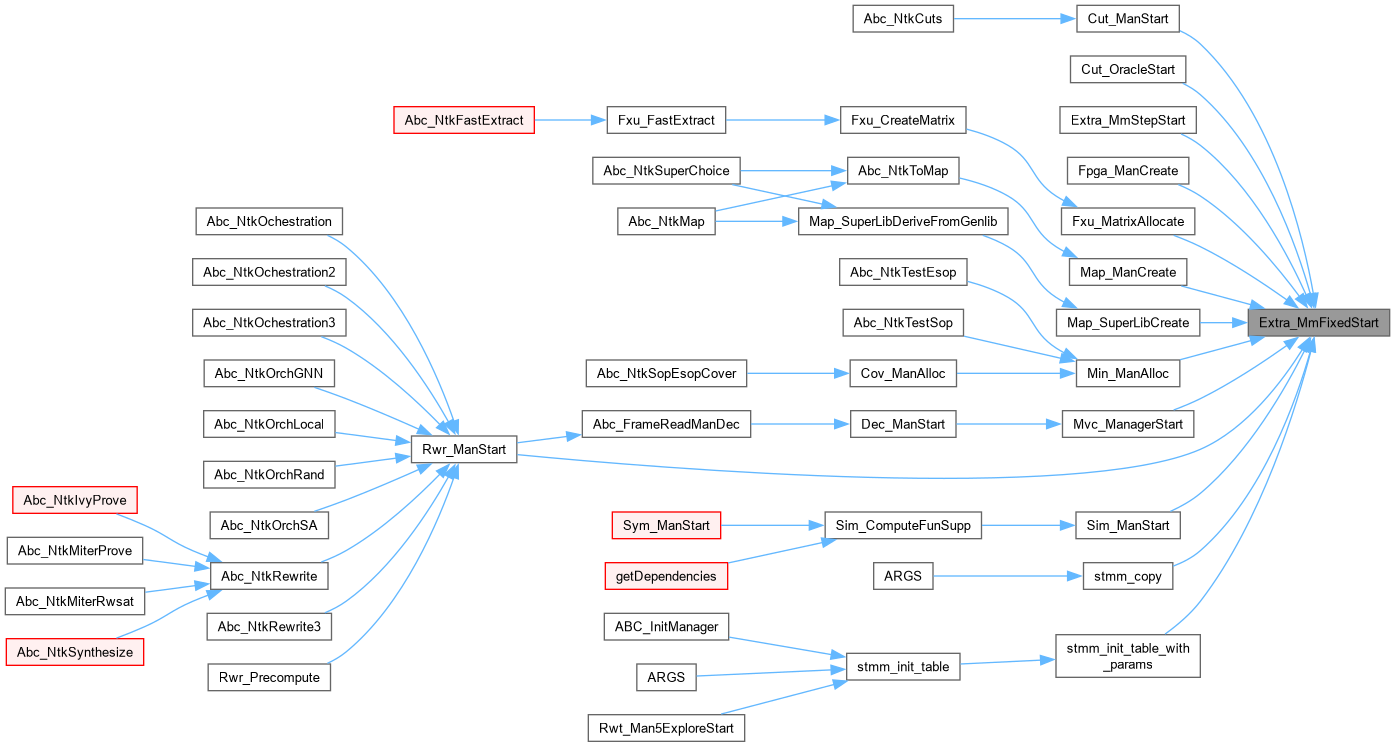
Here is the caller graph for this function:

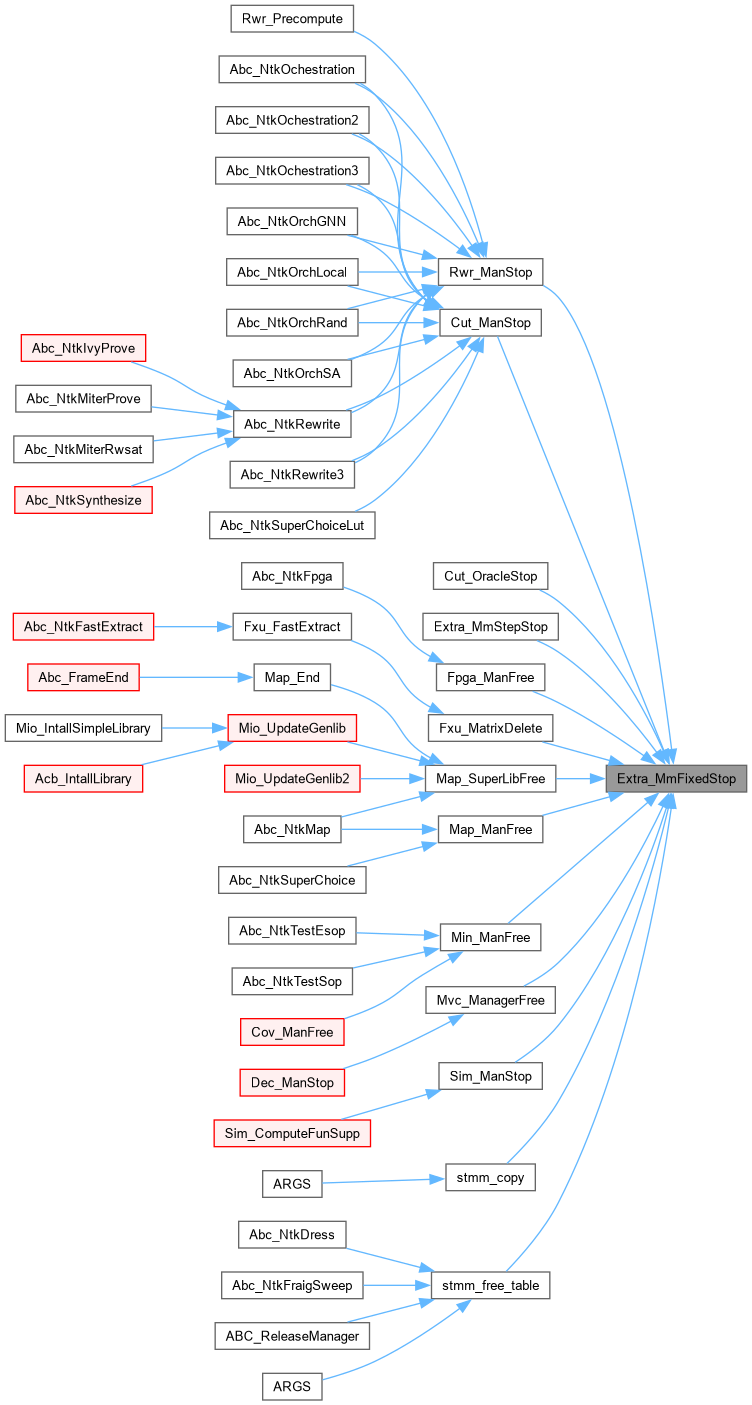
◆ Extra_MmFixedStop()

void Extra_MmFixedStop ( Extra_MmFixed_t * p)

Function*************************************************************

Synopsis []

Description []

SideEffects []

SeeAlso []

Definition at line 180 of file extraUtilMemory.c.
181{
182 int i;
183 if ( p == NULL )
184 return;
185 for ( i = 0; i < p->nChunks; i++ )
186 ABC_FREE( p->pChunks[i] );
187 ABC_FREE( p->pChunks );
188 ABC_FREE( p );
189}
Here is the caller graph for this function:

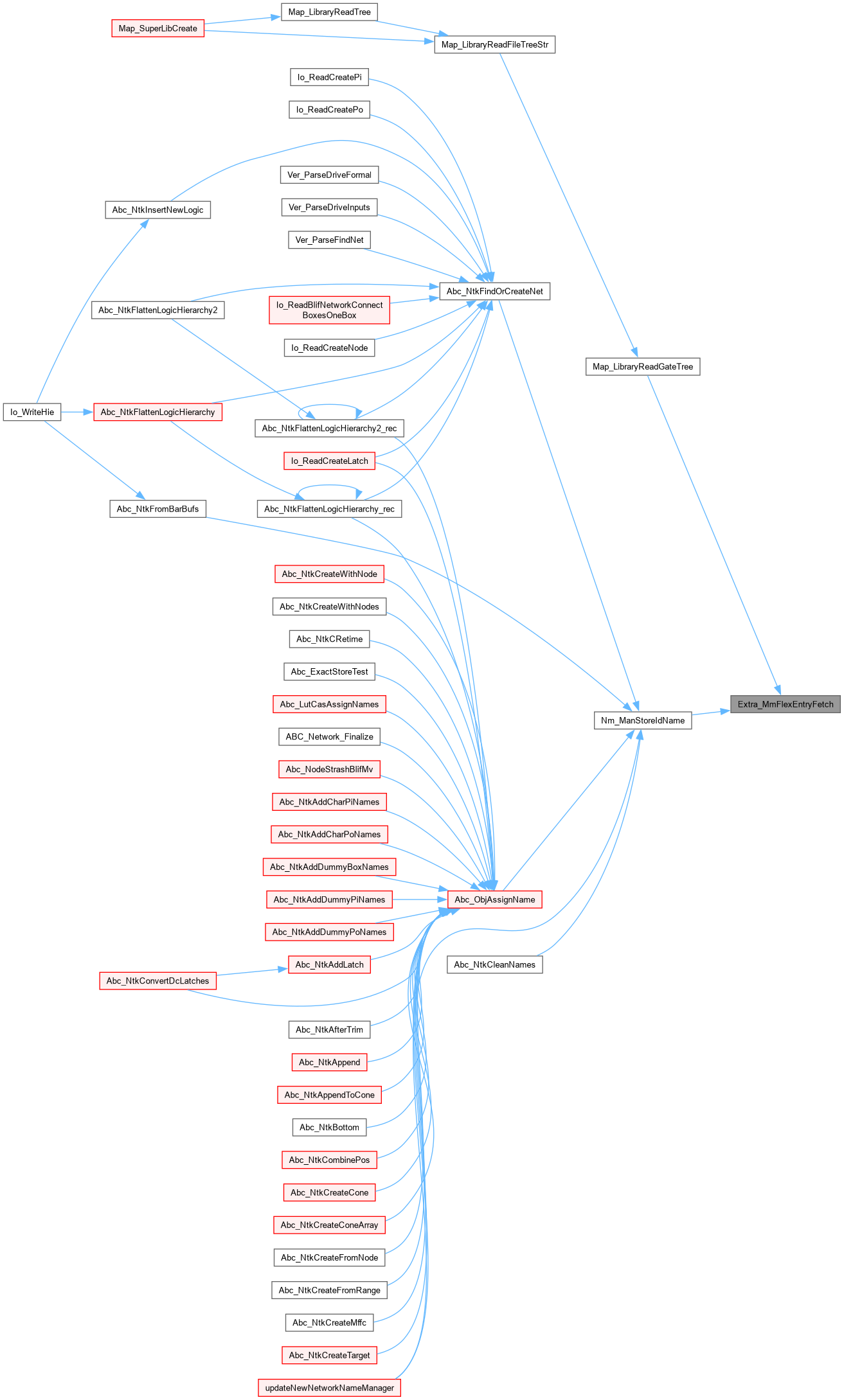
◆ Extra_MmFlexEntryFetch()

char * Extra_MmFlexEntryFetch ( Extra_MmFlex_t * p,
int nBytes )

Function*************************************************************

Synopsis []

Description []

SideEffects []

SeeAlso []

Definition at line 418 of file extraUtilMemory.c.
419{
420 char * pTemp;
421 // check if there are still free entries
422 if ( p->pCurrent == NULL || p->pCurrent + nBytes > p->pEnd )
423 { // need to allocate more entries
424 if ( p->nChunks == p->nChunksAlloc )
425 {
426 p->nChunksAlloc *= 2;
427 p->pChunks = ABC_REALLOC( char *, p->pChunks, p->nChunksAlloc );
428 }
429 if ( nBytes > p->nChunkSize )
430 {
431 // resize the chunk size if more memory is requested than it can give
432 // (ideally, this should never happen)
433 p->nChunkSize = 2 * nBytes;
434 }
435 p->pCurrent = ABC_ALLOC( char, p->nChunkSize );
436 p->pEnd = p->pCurrent + p->nChunkSize;
437 p->nMemoryAlloc += p->nChunkSize;
438 // add the chunk to the chunk storage
439 p->pChunks[ p->nChunks++ ] = p->pCurrent;
440 }
441 assert( p->pCurrent + nBytes <= p->pEnd );
442 // increment the counter of used entries
443 p->nEntriesUsed++;
444 // keep track of the memory used
445 p->nMemoryUsed += nBytes;
446 // return the next entry
447 pTemp = p->pCurrent;
448 p->pCurrent += nBytes;
449 return pTemp;
450}
Here is the caller graph for this function:

◆ Extra_MmFlexPrint()

void Extra_MmFlexPrint ( Extra_MmFlex_t * p)

Function*************************************************************

Synopsis []

Description []

SideEffects []

SeeAlso []

Definition at line 376 of file extraUtilMemory.c.

377{
378 printf( "Flexible memory manager: Chunk size = %d. Chunks used = %d.\n",
379 p->nChunkSize, p->nChunks );
380 printf( " Entries used = %d. Memory used = %d. Memory alloc = %d.\n",
381 p->nEntriesUsed, p->nMemoryUsed, p->nMemoryAlloc );
382}

◆ Extra_MmFlexReadMemUsage()

int Extra_MmFlexReadMemUsage ( Extra_MmFlex_t * p)

Function*************************************************************

Synopsis []

Description []

SideEffects []

SeeAlso []

Definition at line 463 of file extraUtilMemory.c.

464{
465 return p->nMemoryAlloc;
466}

◆ Extra_MmFlexStart()

Extra_MmFlex_t * Extra_MmFlexStart ( )

Function*************************************************************

Synopsis [Allocates entries of flexible size.]

Description [Can only work with entry size at least 4 byte long.]

SideEffects []

SeeAlso []

Definition at line 344 of file extraUtilMemory.c.

345{
347//printf( "allocing flex\n" );
348 p = ABC_ALLOC( Extra_MmFlex_t, 1 );
349 memset( p, 0, sizeof(Extra_MmFlex_t) );
350
351 p->nEntriesUsed = 0;
352 p->pCurrent = NULL;
353 p->pEnd = NULL;
354
355 p->nChunkSize = (1 << 12);
356 p->nChunksAlloc = 64;
357 p->nChunks = 0;
358 p->pChunks = ABC_ALLOC( char *, p->nChunksAlloc );
359
360 p->nMemoryUsed = 0;
361 p->nMemoryAlloc = 0;
362 return p;
363}
struct Extra_MmFlex_t_ Extra_MmFlex_t
Definition extra.h:148
Here is the call graph for this function:
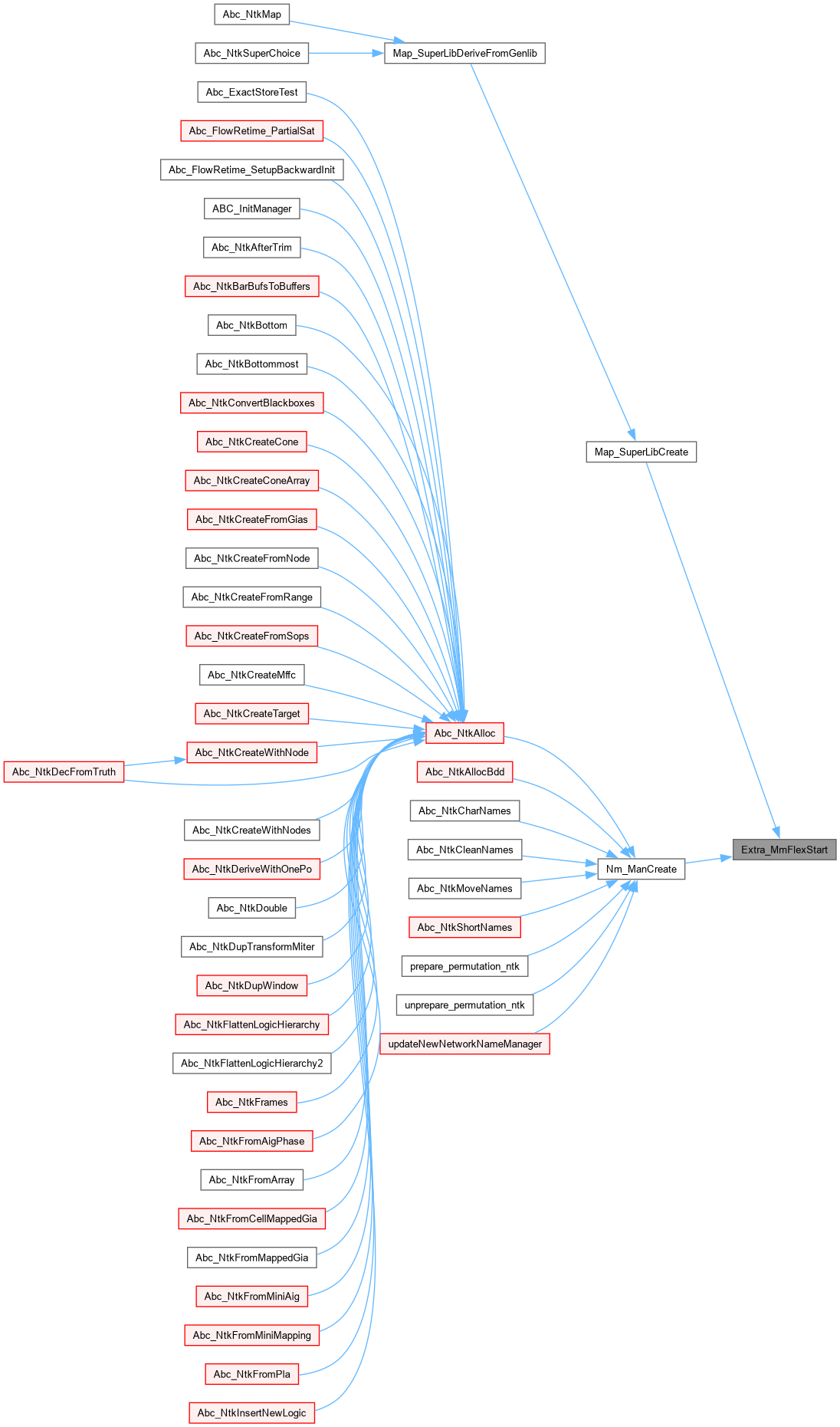
Here is the caller graph for this function:

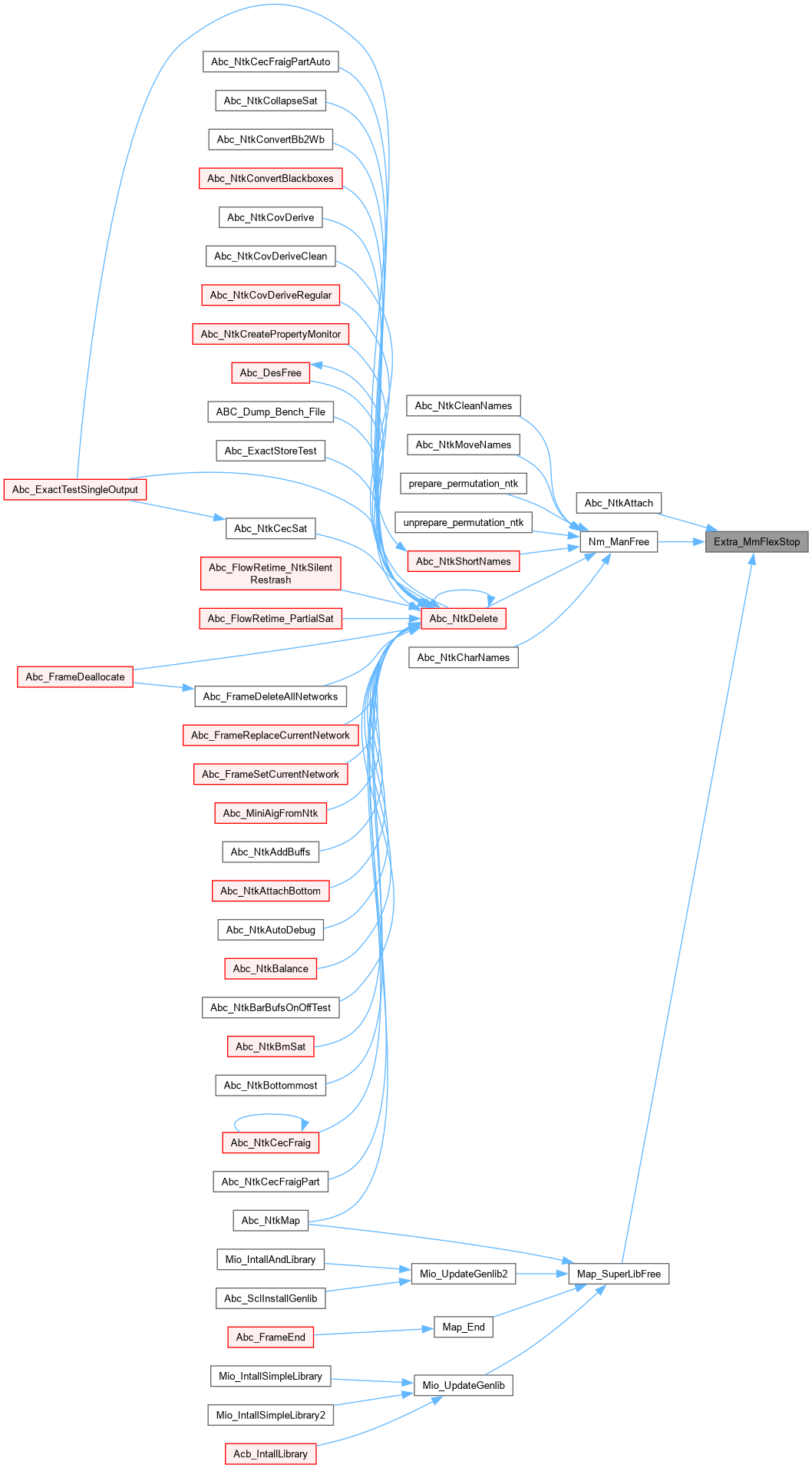
◆ Extra_MmFlexStop()

void Extra_MmFlexStop ( Extra_MmFlex_t * p)

Function*************************************************************

Synopsis []

Description []

SideEffects []

SeeAlso []

Definition at line 395 of file extraUtilMemory.c.
396{
397 int i;
398 if ( p == NULL )
399 return;
400//printf( "deleting flex\n" );
401 for ( i = 0; i < p->nChunks; i++ )
402 ABC_FREE( p->pChunks[i] );
403 ABC_FREE( p->pChunks );
404 ABC_FREE( p );
405}
Here is the caller graph for this function:

◆ Extra_MmStepEntryFetch()

char * Extra_MmStepEntryFetch ( Extra_MmStep_t * p,
int nBytes )

Function*************************************************************

Synopsis [Creates the entry.]

Description []

SideEffects []

SeeAlso []

Definition at line 555 of file extraUtilMemory.c.

556{
557 if ( nBytes == 0 )
558 return NULL;
559 if ( nBytes > p->nMapSize )
560 {
561// printf( "Allocating %d bytes.\n", nBytes );
562// return ABC_ALLOC( char, nBytes );
563 if ( p->nLargeChunks == p->nLargeChunksAlloc )
564 {
565 if ( p->nLargeChunksAlloc == 0 )
566 p->nLargeChunksAlloc = 32;
567 p->nLargeChunksAlloc *= 2;
568 p->pLargeChunks = ABC_REALLOC( void *, p->pLargeChunks, p->nLargeChunksAlloc );
569 }
570 p->pLargeChunks[ p->nLargeChunks++ ] = ABC_ALLOC( char, nBytes );
571 return (char *)p->pLargeChunks[ p->nLargeChunks - 1 ];
572 }
573 return Extra_MmFixedEntryFetch( p->pMap[nBytes] );
574}
char * Extra_MmFixedEntryFetch(Extra_MmFixed_t *p)
Here is the call graph for this function:

◆ Extra_MmStepEntryRecycle()

void Extra_MmStepEntryRecycle ( Extra_MmStep_t * p,
char * pEntry,
int nBytes )

Function*************************************************************

Synopsis [Recycles the entry.]

Description []

SideEffects []

SeeAlso []

Definition at line 588 of file extraUtilMemory.c.

589{
590 if ( nBytes == 0 )
591 return;
592 if ( nBytes > p->nMapSize )
593 {
594// ABC_FREE( pEntry );
595 return;
596 }
597 Extra_MmFixedEntryRecycle( p->pMap[nBytes], pEntry );
598}
void Extra_MmFixedEntryRecycle(Extra_MmFixed_t *p, char *pEntry)
Here is the call graph for this function:

◆ Extra_MmStepReadMemUsage()

int Extra_MmStepReadMemUsage ( Extra_MmStep_t * p)

Function*************************************************************

Synopsis []

Description []

SideEffects []

SeeAlso []

Definition at line 611 of file extraUtilMemory.c.

612{
613 int i, nMemTotal = 0;
614 for ( i = 0; i < p->nMems; i++ )
615 nMemTotal += p->pMems[i]->nMemoryAlloc;
616 return nMemTotal;
617}

◆ Extra_MmStepStart()

Extra_MmStep_t * Extra_MmStepStart ( int nSteps)

Function*************************************************************

Synopsis [Starts the hierarchical memory manager.]

Description [This manager can allocate entries of any size. Iternally they are mapped into the entries with the number of bytes equal to the power of 2. The smallest entry size is 8 bytes. The next one is 16 bytes etc. So, if the user requests 6 bytes, he gets 8 byte entry. If we asks for 25 bytes, he gets 32 byte entry etc. The input parameters "nSteps" says how many fixed memory managers are employed internally. Calling this procedure with nSteps equal to 10 results in 10 hierarchically arranged internal memory managers, which can allocate up to 4096 (1Kb) entries. Requests for larger entries are handed over to malloc() and then ABC_FREE()ed.]

SideEffects []

SeeAlso []

Definition at line 492 of file extraUtilMemory.c.

493{
495 int i, k;
496 p = ABC_ALLOC( Extra_MmStep_t, 1 );
497 memset( p, 0, sizeof(Extra_MmStep_t) );
498 p->nMems = nSteps;
499 // start the fixed memory managers
500 p->pMems = ABC_ALLOC( Extra_MmFixed_t *, p->nMems );
501 for ( i = 0; i < p->nMems; i++ )
502 p->pMems[i] = Extra_MmFixedStart( (8<<i) );
503 // set up the mapping of the required memory size into the corresponding manager
504 p->nMapSize = (4<<p->nMems);
505 p->pMap = ABC_ALLOC( Extra_MmFixed_t *, p->nMapSize+1 );
506 p->pMap[0] = NULL;
507 for ( k = 1; k <= 4; k++ )
508 p->pMap[k] = p->pMems[0];
509 for ( i = 0; i < p->nMems; i++ )
510 for ( k = (4<<i)+1; k <= (8<<i); k++ )
511 p->pMap[k] = p->pMems[i];
512//for ( i = 1; i < 100; i ++ )
513//printf( "%10d: size = %10d\n", i, p->pMap[i]->nEntrySize );
514 return p;
515}
struct Extra_MmStep_t_ Extra_MmStep_t
Definition extra.h:149
Extra_MmFixed_t * Extra_MmFixedStart(int nEntrySize)
Here is the call graph for this function:

◆ Extra_MmStepStop()

void Extra_MmStepStop ( Extra_MmStep_t * p)

Function*************************************************************

Synopsis [Stops the memory manager.]

Description []

SideEffects []

SeeAlso []

Definition at line 528 of file extraUtilMemory.c.

529{
530 int i;
531 for ( i = 0; i < p->nMems; i++ )
532 Extra_MmFixedStop( p->pMems[i] );
533 if ( p->pLargeChunks )
534 {
535 for ( i = 0; i < p->nLargeChunks; i++ )
536 ABC_FREE( p->pLargeChunks[i] );
537 ABC_FREE( p->pLargeChunks );
538 }
539 ABC_FREE( p->pMems );
540 ABC_FREE( p->pMap );
541 ABC_FREE( p );
542}
void Extra_MmFixedStop(Extra_MmFixed_t *p)
Here is the call graph for this function: