ABC: A System for Sequential Synthesis and Verification
 
Loading...
Searching...
No Matches
fraigTable.c File Reference
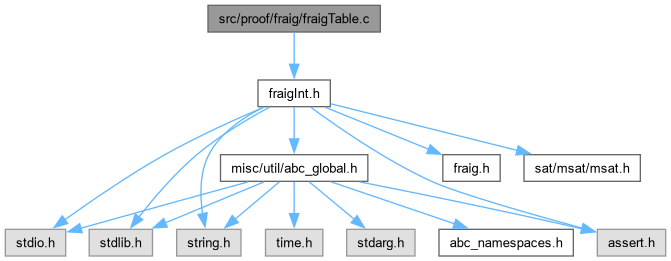
#include "fraigInt.h"
Include dependency graph for fraigTable.c:

Go to the source code of this file.

Functions

Fraig_HashTable_tFraig_HashTableCreate (int nSize)
 FUNCTION DEFINITIONS ///.
 
void Fraig_HashTableFree (Fraig_HashTable_t *p)
 
int Fraig_HashTableLookupS (Fraig_Man_t *pMan, Fraig_Node_t *p1, Fraig_Node_t *p2, Fraig_Node_t **ppNodeRes)
 
Fraig_Node_tFraig_HashTableLookupF (Fraig_Man_t *pMan, Fraig_Node_t *pNode)
 
Fraig_Node_tFraig_HashTableLookupF0 (Fraig_Man_t *pMan, Fraig_Node_t *pNode)
 
void Fraig_HashTableInsertF0 (Fraig_Man_t *pMan, Fraig_Node_t *pNode)
 
int Fraig_CompareSimInfo (Fraig_Node_t *pNode1, Fraig_Node_t *pNode2, int iWordLast, int fUseRand)
 
int Fraig_FindFirstDiff (Fraig_Node_t *pNode1, Fraig_Node_t *pNode2, int fCompl, int iWordLast, int fUseRand)
 
int Fraig_CompareSimInfoUnderMask (Fraig_Node_t *pNode1, Fraig_Node_t *pNode2, int iWordLast, int fUseRand, unsigned *puMask)
 
void Fraig_CollectXors (Fraig_Node_t *pNode1, Fraig_Node_t *pNode2, int iWordLast, int fUseRand, unsigned *puMask)
 
void Fraig_TablePrintStatsS (Fraig_Man_t *pMan)
 
void Fraig_TablePrintStatsF (Fraig_Man_t *pMan)
 
void Fraig_TablePrintStatsF0 (Fraig_Man_t *pMan)
 
int Fraig_TableRehashF0 (Fraig_Man_t *pMan, int fLinkEquiv)
 

Function Documentation

◆ Fraig_CollectXors()

void Fraig_CollectXors ( Fraig_Node_t * pNode1,
Fraig_Node_t * pNode2,
int iWordLast,
int fUseRand,
unsigned * puMask )

Function*************************************************************

Synopsis [Compares two pieces of simulation info.]

Description [Returns 1 if they are equal.]

SideEffects []

SeeAlso []

Definition at line 478 of file fraigTable.c.

479{
480 unsigned * pSims1, * pSims2;
481 int i;
482 assert( !Fraig_IsComplement(pNode1) );
483 assert( !Fraig_IsComplement(pNode2) );
484 // get hold of simulation info
485 pSims1 = fUseRand? pNode1->puSimR : pNode1->puSimD;
486 pSims2 = fUseRand? pNode2->puSimR : pNode2->puSimD;
487 // check the simulation info
488 for ( i = 0; i < iWordLast; i++ )
489 puMask[i] = ( pSims1[i] ^ pSims2[i] );
490}
#define Fraig_IsComplement(p)
GLOBAL VARIABLES ///.
Definition fraig.h:107
unsigned * puSimR
Definition fraigInt.h:247
unsigned * puSimD
Definition fraigInt.h:248
#define assert(ex)
Definition util_old.h:213

◆ Fraig_CompareSimInfo()

int Fraig_CompareSimInfo ( Fraig_Node_t * pNode1,
Fraig_Node_t * pNode2,
int iWordLast,
int fUseRand )

Function*************************************************************

Synopsis [Compares two pieces of simulation info.]

Description [Returns 1 if they are equal.]

SideEffects []

SeeAlso []

Definition at line 351 of file fraigTable.c.

352{
353 int i;
354 assert( !Fraig_IsComplement(pNode1) );
355 assert( !Fraig_IsComplement(pNode2) );
356 if ( fUseRand )
357 {
358 // if their signatures differ, skip
359 if ( pNode1->uHashR != pNode2->uHashR )
360 return 0;
361 // check the simulation info
362 for ( i = 0; i < iWordLast; i++ )
363 if ( pNode1->puSimR[i] != pNode2->puSimR[i] )
364 return 0;
365 }
366 else
367 {
368 // if their signatures differ, skip
369 if ( pNode1->uHashD != pNode2->uHashD )
370 return 0;
371 // check the simulation info
372 for ( i = 0; i < iWordLast; i++ )
373 if ( pNode1->puSimD[i] != pNode2->puSimD[i] )
374 return 0;
375 }
376 return 1;
377}
Here is the caller graph for this function:

◆ Fraig_CompareSimInfoUnderMask()

int Fraig_CompareSimInfoUnderMask ( Fraig_Node_t * pNode1,
Fraig_Node_t * pNode2,
int iWordLast,
int fUseRand,
unsigned * puMask )

Function*************************************************************

Synopsis [Compares two pieces of simulation info.]

Description [Returns 1 if they are equal.]

SideEffects []

SeeAlso []

Definition at line 451 of file fraigTable.c.

452{
453 unsigned * pSims1, * pSims2;
454 int i;
455 assert( !Fraig_IsComplement(pNode1) );
456 assert( !Fraig_IsComplement(pNode2) );
457 // get hold of simulation info
458 pSims1 = fUseRand? pNode1->puSimR : pNode1->puSimD;
459 pSims2 = fUseRand? pNode2->puSimR : pNode2->puSimD;
460 // check the simulation info
461 for ( i = 0; i < iWordLast; i++ )
462 if ( (pSims1[i] & puMask[i]) != (pSims2[i] & puMask[i]) )
463 return 0;
464 return 1;
465}

◆ Fraig_FindFirstDiff()

int Fraig_FindFirstDiff ( Fraig_Node_t * pNode1,
Fraig_Node_t * pNode2,
int fCompl,
int iWordLast,
int fUseRand )

Function*************************************************************

Synopsis [Find the number of the different pattern.]

Description [Returns -1 if there is no such pattern]

SideEffects []

SeeAlso []

Definition at line 390 of file fraigTable.c.

391{
392 int i, v;
393 assert( !Fraig_IsComplement(pNode1) );
394 assert( !Fraig_IsComplement(pNode2) );
395 // take into account possible internal complementation
396 fCompl ^= pNode1->fInv;
397 fCompl ^= pNode2->fInv;
398 // find the pattern
399 if ( fCompl )
400 {
401 if ( fUseRand )
402 {
403 for ( i = 0; i < iWordLast; i++ )
404 if ( pNode1->puSimR[i] != ~pNode2->puSimR[i] )
405 for ( v = 0; v < 32; v++ )
406 if ( (pNode1->puSimR[i] ^ ~pNode2->puSimR[i]) & (1 << v) )
407 return i * 32 + v;
408 }
409 else
410 {
411 for ( i = 0; i < iWordLast; i++ )
412 if ( pNode1->puSimD[i] != ~pNode2->puSimD[i] )
413 for ( v = 0; v < 32; v++ )
414 if ( (pNode1->puSimD[i] ^ ~pNode2->puSimD[i]) & (1 << v) )
415 return i * 32 + v;
416 }
417 }
418 else
419 {
420 if ( fUseRand )
421 {
422 for ( i = 0; i < iWordLast; i++ )
423 if ( pNode1->puSimR[i] != pNode2->puSimR[i] )
424 for ( v = 0; v < 32; v++ )
425 if ( (pNode1->puSimR[i] ^ pNode2->puSimR[i]) & (1 << v) )
426 return i * 32 + v;
427 }
428 else
429 {
430 for ( i = 0; i < iWordLast; i++ )
431 if ( pNode1->puSimD[i] != pNode2->puSimD[i] )
432 for ( v = 0; v < 32; v++ )
433 if ( (pNode1->puSimD[i] ^ pNode2->puSimD[i]) & (1 << v) )
434 return i * 32 + v;
435 }
436 }
437 return -1;
438}
Here is the caller graph for this function:

◆ Fraig_HashTableCreate()

Fraig_HashTable_t * Fraig_HashTableCreate ( int nSize)

FUNCTION DEFINITIONS ///.

Function*************************************************************

Synopsis [Allocates the hash table.]

Description []

SideEffects []

SeeAlso []

Definition at line 46 of file fraigTable.c.

47{
49 // allocate the table
51 memset( p, 0, sizeof(Fraig_HashTable_t) );
52 // allocate and clean the bins
53 p->nBins = Abc_PrimeCudd(nSize);
54 p->pBins = ABC_ALLOC( Fraig_Node_t *, p->nBins );
55 memset( p->pBins, 0, sizeof(Fraig_Node_t *) * p->nBins );
56 return p;
57}
#define ABC_ALLOC(type, num)
Definition abc_global.h:264
Cube * p
Definition exorList.c:222
struct Fraig_NodeStruct_t_ Fraig_Node_t
Definition fraig.h:41
struct Fraig_HashTableStruct_t_ Fraig_HashTable_t
Definition fraig.h:43
char * memset()
Here is the call graph for this function:
Here is the caller graph for this function:

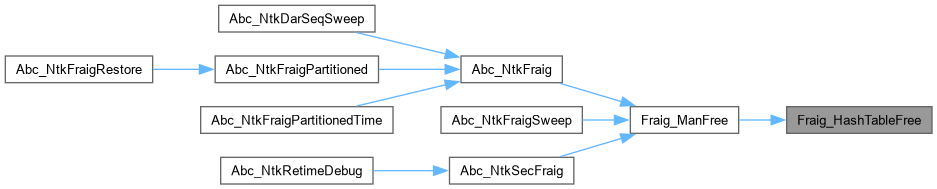
◆ Fraig_HashTableFree()

void Fraig_HashTableFree ( Fraig_HashTable_t * p)

Function*************************************************************

Synopsis [Deallocates the supergate hash table.]

Description []

SideEffects []

SeeAlso []

Definition at line 70 of file fraigTable.c.
71{
72 ABC_FREE( p->pBins );
73 ABC_FREE( p );
74}
#define ABC_FREE(obj)
Definition abc_global.h:267
Here is the caller graph for this function:

◆ Fraig_HashTableInsertF0()

void Fraig_HashTableInsertF0 ( Fraig_Man_t * pMan,
Fraig_Node_t * pNode )

Function*************************************************************

Synopsis [Insert the entry in the functional hash table.]

Description [Unconditionally add the node to the corresponding linked list in the table.]

SideEffects []

SeeAlso []

Definition at line 237 of file fraigTable.c.

238{
239 Fraig_HashTable_t * p = pMan->pTableF0;
240 unsigned Key = pNode->uHashD % p->nBins;
241
242 pNode->pNextF = p->pBins[Key];
243 p->pBins[Key] = pNode;
244 p->nEntries++;
245}
Fraig_Node_t * pNextF
Definition fraigInt.h:239

◆ Fraig_HashTableLookupF()

Fraig_Node_t * Fraig_HashTableLookupF ( Fraig_Man_t * pMan,
Fraig_Node_t * pNode )

Function*************************************************************

Synopsis [Insert the entry in the functional hash table.]

Description [If the entry with the same key exists, return it right away.
If the entry with the same key does not exists, inserts it and returns NULL. ]

SideEffects []

SeeAlso []

Definition at line 136 of file fraigTable.c.

137{
138 Fraig_HashTable_t * p = pMan->pTableF;
139 Fraig_Node_t * pEnt, * pEntD;
140 unsigned Key;
141
142 // go through the hash table entries
143 Key = pNode->uHashR % p->nBins;
144 Fraig_TableBinForEachEntryF( p->pBins[Key], pEnt )
145 {
146 // if their simulation info differs, skip
147 if ( !Fraig_CompareSimInfo( pNode, pEnt, pMan->nWordsRand, 1 ) )
148 continue;
149 // equivalent up to the complement
150 Fraig_TableBinForEachEntryD( pEnt, pEntD )
151 {
152 // if their simulation info differs, skip
153 if ( !Fraig_CompareSimInfo( pNode, pEntD, pMan->iWordStart, 0 ) )
154 continue;
155 // found a simulation-equivalent node
156 return pEntD;
157 }
158 // did not find a simulation equivalent node
159 // add the node to the corresponding linked list
160 pNode->pNextD = pEnt->pNextD;
161 pEnt->pNextD = pNode;
162 // return NULL, because there is no functional equivalence in this case
163 return NULL;
164 }
165
166 // check if it is a good time for table resizing
167 if ( p->nEntries >= 2 * p->nBins )
168 {
169 Fraig_TableResizeF( p, 1 );
170 Key = pNode->uHashR % p->nBins;
171 }
172
173 // add the node to the corresponding linked list in the table
174 pNode->pNextF = p->pBins[Key];
175 p->pBins[Key] = pNode;
176 p->nEntries++;
177 // return NULL, because there is no functional equivalence in this case
178 return NULL;
179}
#define Fraig_TableBinForEachEntryF(pBin, pEnt)
Definition fraigInt.h:312
#define Fraig_TableBinForEachEntryD(pBin, pEnt)
Definition fraigInt.h:323
int Fraig_CompareSimInfo(Fraig_Node_t *pNode1, Fraig_Node_t *pNode2, int iWordLast, int fUseRand)
Definition fraigTable.c:351
Fraig_Node_t * pNextD
Definition fraigInt.h:240
Here is the call graph for this function:
Here is the caller graph for this function:

◆ Fraig_HashTableLookupF0()

Fraig_Node_t * Fraig_HashTableLookupF0 ( Fraig_Man_t * pMan,
Fraig_Node_t * pNode )

Function*************************************************************

Synopsis [Insert the entry in the functional hash table.]

Description [If the entry with the same key exists, return it right away.
If the entry with the same key does not exists, inserts it and returns NULL. ]

SideEffects []

SeeAlso []

Definition at line 193 of file fraigTable.c.

194{
195 Fraig_HashTable_t * p = pMan->pTableF0;
196 Fraig_Node_t * pEnt;
197 unsigned Key;
198
199 // go through the hash table entries
200 Key = pNode->uHashD % p->nBins;
201 Fraig_TableBinForEachEntryF( p->pBins[Key], pEnt )
202 {
203 // if their simulation info differs, skip
204 if ( !Fraig_CompareSimInfo( pNode, pEnt, pMan->iWordStart, 0 ) )
205 continue;
206 // found a simulation-equivalent node
207 return pEnt;
208 }
209
210 // check if it is a good time for table resizing
211 if ( p->nEntries >= 2 * p->nBins )
212 {
213 Fraig_TableResizeF( p, 0 );
214 Key = pNode->uHashD % p->nBins;
215 }
216
217 // add the node to the corresponding linked list in the table
218 pNode->pNextF = p->pBins[Key];
219 p->pBins[Key] = pNode;
220 p->nEntries++;
221 // return NULL, because there is no functional equivalence in this case
222 return NULL;
223}
Here is the call graph for this function:
Here is the caller graph for this function:

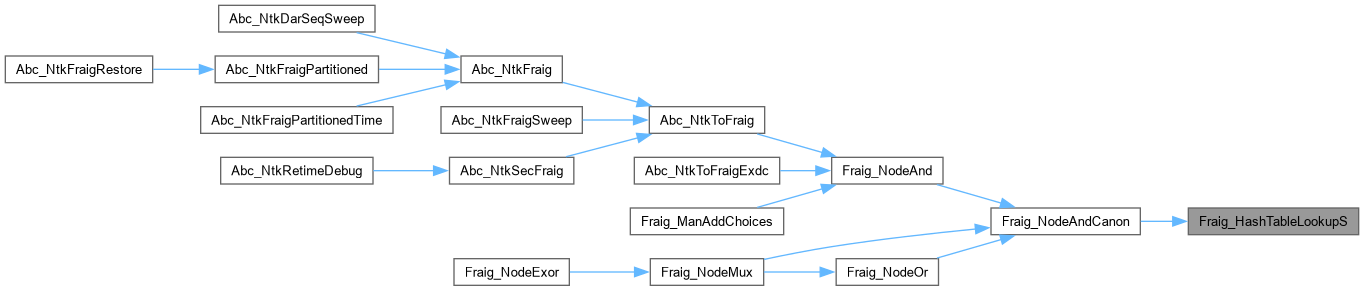
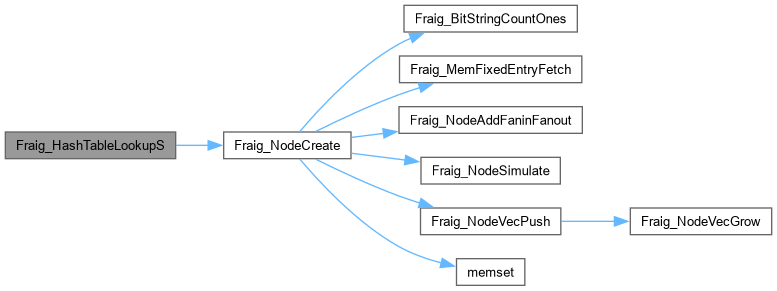
◆ Fraig_HashTableLookupS()

int Fraig_HashTableLookupS ( Fraig_Man_t * pMan,
Fraig_Node_t * p1,
Fraig_Node_t * p2,
Fraig_Node_t ** ppNodeRes )

Function*************************************************************

Synopsis [Looks up an entry in the structural hash table.]

Description [If the entry with the same children does not exists, creates it, inserts it into the table, and returns 0. If the entry with the same children exists, finds it, and return 1. In both cases, the new/old entry is returned in ppNodeRes.]

SideEffects []

SeeAlso []

Definition at line 90 of file fraigTable.c.
91{
92 Fraig_HashTable_t * p = pMan->pTableS;
93 Fraig_Node_t * pEnt;
94 unsigned Key;
95
96 // order the arguments
97 if ( Fraig_Regular(p1)->Num > Fraig_Regular(p2)->Num )
98 pEnt = p1, p1 = p2, p2 = pEnt;
99
100 Key = Fraig_HashKey2( p1, p2, p->nBins );
101 Fraig_TableBinForEachEntryS( p->pBins[Key], pEnt )
102 if ( pEnt->p1 == p1 && pEnt->p2 == p2 )
103 {
104 *ppNodeRes = pEnt;
105 return 1;
106 }
107 // check if it is a good time for table resizing
108 if ( p->nEntries >= 2 * p->nBins )
109 {
110 Fraig_TableResizeS( p );
111 Key = Fraig_HashKey2( p1, p2, p->nBins );
112 }
113 // create the new node
114 pEnt = Fraig_NodeCreate( pMan, p1, p2 );
115 // add the node to the corresponding linked list in the table
116 pEnt->pNextS = p->pBins[Key];
117 p->pBins[Key] = pEnt;
118 *ppNodeRes = pEnt;
119 p->nEntries++;
120 return 0;
121}
#define Fraig_HashKey2(a, b, TSIZE)
Definition fraigInt.h:92
#define Fraig_TableBinForEachEntryS(pBin, pEnt)
Definition fraigInt.h:301
Fraig_Node_t * Fraig_NodeCreate(Fraig_Man_t *p, Fraig_Node_t *p1, Fraig_Node_t *p2)
Definition fraigNode.c:160
#define Fraig_Regular(p)
Definition fraig.h:108
Fraig_Node_t * p2
Definition fraigInt.h:233
Fraig_Node_t * pNextS
Definition fraigInt.h:238
Fraig_Node_t * p1
Definition fraigInt.h:232
Here is the call graph for this function:
Here is the caller graph for this function:

◆ Fraig_TablePrintStatsF()

void Fraig_TablePrintStatsF ( Fraig_Man_t * pMan)

Function*************************************************************

Synopsis [Prints stats of the structural table.]

Description []

SideEffects []

SeeAlso []

Definition at line 537 of file fraigTable.c.

538{
539 Fraig_HashTable_t * pT = pMan->pTableF;
540 Fraig_Node_t * pNode;
541 int i, Counter;
542
543 printf( "Functional table. Table size = %d. Number of entries = %d.\n", pT->nBins, pT->nEntries );
544 for ( i = 0; i < pT->nBins; i++ )
545 {
546 Counter = 0;
547 Fraig_TableBinForEachEntryF( pT->pBins[i], pNode )
548 Counter++;
549 if ( Counter > 1 )
550 printf( "{%d} ", Counter );
551 }
552 printf( "\n" );
553}
Fraig_Node_t ** pBins
Definition fraigInt.h:273

◆ Fraig_TablePrintStatsF0()

void Fraig_TablePrintStatsF0 ( Fraig_Man_t * pMan)

Function*************************************************************

Synopsis [Prints stats of the structural table.]

Description []

SideEffects []

SeeAlso []

Definition at line 566 of file fraigTable.c.

567{
568 Fraig_HashTable_t * pT = pMan->pTableF0;
569 Fraig_Node_t * pNode;
570 int i, Counter;
571
572 printf( "Zero-node table. Table size = %d. Number of entries = %d.\n", pT->nBins, pT->nEntries );
573 for ( i = 0; i < pT->nBins; i++ )
574 {
575 Counter = 0;
576 Fraig_TableBinForEachEntryF( pT->pBins[i], pNode )
577 Counter++;
578 if ( Counter == 0 )
579 continue;
580/*
581 printf( "\nBin = %4d : Number of entries = %4d\n", i, Counter );
582 Fraig_TableBinForEachEntryF( pT->pBins[i], pNode )
583 printf( "Node %5d. Hash = %10d.\n", pNode->Num, pNode->uHashD );
584*/
585 }
586 printf( "\n" );
587}

◆ Fraig_TablePrintStatsS()

void Fraig_TablePrintStatsS ( Fraig_Man_t * pMan)

Function*************************************************************

Synopsis [Prints stats of the structural table.]

Description []

SideEffects []

SeeAlso []

Definition at line 504 of file fraigTable.c.

505{
506 Fraig_HashTable_t * pT = pMan->pTableS;
507 Fraig_Node_t * pNode;
508 int i, Counter;
509
510 printf( "Structural table. Table size = %d. Number of entries = %d.\n", pT->nBins, pT->nEntries );
511 for ( i = 0; i < pT->nBins; i++ )
512 {
513 Counter = 0;
514 Fraig_TableBinForEachEntryS( pT->pBins[i], pNode )
515 Counter++;
516 if ( Counter > 1 )
517 {
518 printf( "%d ", Counter );
519 if ( Counter > 50 )
520 printf( "{%d} ", i );
521 }
522 }
523 printf( "\n" );
524}

◆ Fraig_TableRehashF0()

int Fraig_TableRehashF0 ( Fraig_Man_t * pMan,
int fLinkEquiv )

Function*************************************************************

Synopsis [Rehashes the table after the simulation info has changed.]

Description [Assumes that the hash values have been updated after performing additional simulation. Rehashes the table using the new hash values. Uses pNextF to link the entries in the bins. Uses pNextD to link the entries with identical hash values. Returns 1 if the identical entries have been found. Note that identical hash values may mean that the simulation data is different.]

SideEffects []

SeeAlso []

Definition at line 604 of file fraigTable.c.

605{
606 Fraig_HashTable_t * pT = pMan->pTableF0;
607 Fraig_Node_t ** pBinsNew;
608 Fraig_Node_t * pEntF, * pEntF2, * pEnt, * pEntD2, * pEntN;
609 int ReturnValue, Counter, i;
610 unsigned Key;
611
612 // allocate a new array of bins
613 pBinsNew = ABC_ALLOC( Fraig_Node_t *, pT->nBins );
614 memset( pBinsNew, 0, sizeof(Fraig_Node_t *) * pT->nBins );
615
616 // rehash the entries in the table
617 // go through all the nodes in the F-lists (and possible in D-lists, if used)
618 Counter = 0;
619 ReturnValue = 0;
620 for ( i = 0; i < pT->nBins; i++ )
621 Fraig_TableBinForEachEntrySafeF( pT->pBins[i], pEntF, pEntF2 )
622 Fraig_TableBinForEachEntrySafeD( pEntF, pEnt, pEntD2 )
623 {
624 // decide where to put entry pEnt
625 Key = pEnt->uHashD % pT->nBins;
626 if ( fLinkEquiv )
627 {
628 // go through the entries in the new bin
629 Fraig_TableBinForEachEntryF( pBinsNew[Key], pEntN )
630 {
631 // if they have different values skip
632 if ( pEnt->uHashD != pEntN->uHashD )
633 continue;
634 // they have the same hash value, add pEnt to the D-list pEnt3
635 pEnt->pNextD = pEntN->pNextD;
636 pEntN->pNextD = pEnt;
637 ReturnValue = 1;
638 Counter++;
639 break;
640 }
641 if ( pEntN != NULL ) // already linked
642 continue;
643 // we did not find equal entry
644 }
645 // link the new entry
646 pEnt->pNextF = pBinsNew[Key];
647 pBinsNew[Key] = pEnt;
648 pEnt->pNextD = NULL;
649 Counter++;
650 }
651 assert( Counter == pT->nEntries );
652 // replace the table and the parameters
653 ABC_FREE( pT->pBins );
654 pT->pBins = pBinsNew;
655 return ReturnValue;
656}
#define Fraig_TableBinForEachEntrySafeF(pBin, pEnt, pEnt2)
Definition fraigInt.h:316
#define Fraig_TableBinForEachEntrySafeD(pBin, pEnt, pEnt2)
Definition fraigInt.h:327
Here is the call graph for this function:
Here is the caller graph for this function: