ABC: A System for Sequential Synthesis and Verification
 
Loading...
Searching...
No Matches
giaStr.c File Reference
#include "gia.h"
#include "misc/util/utilNam.h"
#include "misc/vec/vecWec.h"
#include "misc/tim/tim.h"
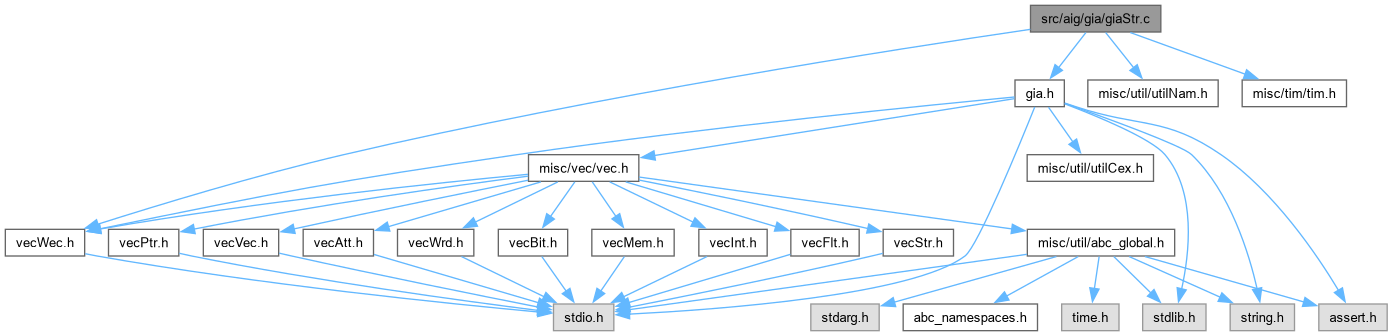
Include dependency graph for giaStr.c:

Go to the source code of this file.

Classes

struct  Str_Obj_t_
 
struct  Str_Ntk_t_
 
struct  Str_Man_t_
 
struct  Str_Edg_t_
 
struct  Str_Mux_t_
 

Macros

#define STR_SUPER   100
 DECLARATIONS ///.
 
#define MAX_TREE   10000
 
#define Str_NtkManForEachObj(p, pObj)
 
#define Str_NtkManForEachObjVec(vVec, p, pObj, i)
 

Typedefs

typedef struct Str_Obj_t_ Str_Obj_t
 
typedef struct Str_Ntk_t_ Str_Ntk_t
 
typedef struct Str_Man_t_ Str_Man_t
 
typedef struct Str_Edg_t_ Str_Edg_t
 
typedef struct Str_Mux_t_ Str_Mux_t
 

Enumerations

enum  {
  STR_NONE = 0 , STR_CONST0 = 1 , STR_PI = 2 , STR_AND = 3 ,
  STR_XOR = 4 , STR_MUX = 5 , STR_BUF = 6 , STR_PO = 7 ,
  STR_UNUSED = 8
}
 

Functions

Gia_Man_tStr_NtkToGia (Gia_Man_t *pGia, Str_Ntk_t *p)
 
Gia_Man_tGia_ManDupMuxesNoHash (Gia_Man_t *p)
 
void Str_MuxInputsCollect_rec (Gia_Man_t *p, Gia_Obj_t *pObj, Vec_Int_t *vNodes)
 
void Str_MuxInputsCollect (Gia_Man_t *p, Gia_Obj_t *pObj, Vec_Int_t *vNodes)
 
void Str_MuxStructCollect_rec (Gia_Man_t *p, Gia_Obj_t *pObj, Vec_Int_t *vNodes)
 
void Str_MuxStructCollect (Gia_Man_t *p, Gia_Obj_t *pObj, Vec_Int_t *vNodes)
 
void Str_MuxStructDump_rec (Gia_Man_t *p, Gia_Obj_t *pObj, Vec_Str_t *vStr)
 
void Str_MuxStructDump (Gia_Man_t *p, Gia_Obj_t *pObj, Vec_Str_t *vStr)
 
int Str_ManMuxCountOne (char *p)
 
Vec_Wec_tStr_ManDeriveTrees (Gia_Man_t *p)
 
Vec_Int_tStr_ManCreateRoots (Vec_Wec_t *vGroups, int nObjs)
 
void Str_MuxTraverse_rec (Gia_Man_t *p, int i)
 
void Str_ManCheckOverlap (Gia_Man_t *p, Vec_Wec_t *vGroups)
 
void Str_ManNormalize_rec (Str_Ntk_t *pNtk, Gia_Man_t *p, Gia_Obj_t *pObj, Vec_Wec_t *vGroups, Vec_Int_t *vRoots)
 
Str_Ntk_tStr_ManNormalizeInt (Gia_Man_t *p, Vec_Wec_t *vGroups, Vec_Int_t *vRoots)
 
Str_Ntk_tStr_ManNormalize (Gia_Man_t *p)
 
int Str_ManVectorAffinity (Gia_Man_t *p, Vec_Int_t *vSuper, Vec_Int_t *vDelay, word *Matrix, int nLimit)
 
void Str_NtkBalanceMulti2 (Gia_Man_t *pNew, Str_Ntk_t *p, Str_Obj_t *pObj, Vec_Int_t *vDelay, int nLutSize)
 
int Str_NtkBalanceTwo (Gia_Man_t *pNew, Str_Ntk_t *p, Str_Obj_t *pObj, int i, int j, Vec_Int_t *vDelay, int *pCost, int *pSuper, word *pMatrix, int nSize, int nLutSize, int CostBest)
 
void Str_NtkBalanceMulti (Gia_Man_t *pNew, Str_Ntk_t *p, Str_Obj_t *pObj, Vec_Int_t *vDelay, int nLutSize)
 
void Str_NtkBalanceMux (Gia_Man_t *pNew, Str_Ntk_t *p, Str_Obj_t *pObj, Vec_Int_t *vDelay, int nLutSize, int nGroups, int nMuxes, int fRecursive, int fOptArea, int fVerbose)
 
Gia_Man_tStr_NtkBalance (Gia_Man_t *pGia, Str_Ntk_t *p, int nLutSize, int fUseMuxes, int fRecursive, int fOptArea, int fVerbose)
 
Gia_Man_tGia_ManLutBalance (Gia_Man_t *p, int nLutSize, int fUseMuxes, int fRecursive, int fOptArea, int fVerbose)
 
void Str_MuxDelayPrint_rec (Str_Mux_t *pMux, int i)
 
int Str_MuxDelayEdge_rec (Str_Mux_t *pMux, int i)
 
void Str_MuxCreate (Str_Mux_t *pTree, Str_Ntk_t *pNtk, int iMux, int nMuxes, Vec_Int_t *vDelay, int nLutSize)
 
int Str_MuxToGia_rec (Gia_Man_t *pNew, Str_Mux_t *pMux, int i, Vec_Int_t *vDelay)
 
void Str_MuxChangeOnce (Str_Mux_t *pTree, int *pPath, int i, int k, Str_Mux_t *pBackup, Gia_Man_t *pNew, Vec_Int_t *vDelay)
 
void Str_MuxChangeUndo (Str_Mux_t *pTree, int *pPath, int i, int k, Str_Mux_t *pBackup)
 
int Str_MuxFindPathEdge_rec (Str_Mux_t *pMux, int i, int *pPath, int *pnLength)
 
int Str_MuxFindPath_rec (Str_Mux_t *pMux, int *pPath, int *pnLength)
 
Str_Mux_tStr_MuxFindBranching (Str_Mux_t *pRoot, int i)
 
int Str_MuxTryOnce (Gia_Man_t *pNew, Str_Ntk_t *pNtk, Str_Mux_t *pTree, Str_Mux_t *pRoot, int Edge, Vec_Int_t *vDelay, int fVerbose)
 
int Str_MuxRestruct_rec (Gia_Man_t *pNew, Str_Ntk_t *pNtk, Str_Mux_t *pTree, Str_Mux_t *pRoot, int Edge, Vec_Int_t *vDelay, int fVerbose)
 
int Str_MuxRestructure2 (Gia_Man_t *pNew, Str_Ntk_t *pNtk, int iMux, int nMuxes, Vec_Int_t *vDelay, int nLutSize, int fVerbose)
 
int Str_MuxRestructure1 (Gia_Man_t *pNew, Str_Ntk_t *pNtk, int iMux, int nMuxes, Vec_Int_t *vDelay, int nLutSize, int fVerbose)
 
int Str_MuxRestructure (Gia_Man_t *pNew, Str_Ntk_t *pNtk, int iMux, int nMuxes, Vec_Int_t *vDelay, int nLutSize, int fRecursive, int fOptArea, int fVerbose)
 
int Str_MuxRestructAreaThree (Gia_Man_t *pNew, Str_Mux_t *pMux, Vec_Int_t *vDelay, int fVerbose)
 
int Str_MuxRestructArea_rec (Gia_Man_t *pNew, Str_Mux_t *pTree, Str_Mux_t *pRoot, int i, Vec_Int_t *vDelay, int fVerbose)
 
int Str_MuxRestructureArea (Gia_Man_t *pNew, Str_Ntk_t *pNtk, int iMux, int nMuxes, Vec_Int_t *vDelay, int nLutSize, int fVerbose)
 

Macro Definition Documentation

◆ MAX_TREE

#define MAX_TREE   10000

Definition at line 33 of file giaStr.c.

◆ Str_NtkManForEachObj

#define Str_NtkManForEachObj ( p,
pObj )
Value:
for ( pObj = p->pObjs; Str_ObjId(p, pObj) < p->nObjs; pObj++ )
Cube * p
Definition exorList.c:222

Definition at line 89 of file giaStr.c.

89#define Str_NtkManForEachObj( p, pObj ) \
90 for ( pObj = p->pObjs; Str_ObjId(p, pObj) < p->nObjs; pObj++ )

◆ Str_NtkManForEachObjVec

#define Str_NtkManForEachObjVec ( vVec,
p,
pObj,
i )
Value:
for ( i = 0; (i < Vec_IntSize(vVec)) && ((pObj) = Str_NtkObj(p, Vec_IntEntry(vVec,i))); i++ )

Definition at line 91 of file giaStr.c.

91#define Str_NtkManForEachObjVec( vVec, p, pObj, i ) \
92 for ( i = 0; (i < Vec_IntSize(vVec)) && ((pObj) = Str_NtkObj(p, Vec_IntEntry(vVec,i))); i++ )

◆ STR_SUPER

#define STR_SUPER   100

DECLARATIONS ///.

CFile****************************************************************

FileName [giaStr.c]

SystemName [ABC: Logic synthesis and verification system.]

PackageName [Scalable AIG package.]

Synopsis [AIG structuring.]

Author [Alan Mishchenko]

Affiliation [UC Berkeley]

Date [Ver. 1.0. Started - June 20, 2005.]

Revision [

Id
giaStr.c,v 1.00 2005/06/20 00:00:00 alanmi Exp

]

Definition at line 32 of file giaStr.c.

Typedef Documentation

◆ Str_Edg_t

typedef struct Str_Edg_t_ Str_Edg_t

Function*************************************************************

Synopsis [Perform MUX restructuring.]

Description []

SideEffects []

SeeAlso []

Definition at line 1440 of file giaStr.c.

◆ Str_Man_t

typedef struct Str_Man_t_ Str_Man_t

Definition at line 68 of file giaStr.c.

◆ Str_Mux_t

typedef struct Str_Mux_t_ Str_Mux_t

Definition at line 1449 of file giaStr.c.

◆ Str_Ntk_t

typedef struct Str_Ntk_t_ Str_Ntk_t

Definition at line 56 of file giaStr.c.

◆ Str_Obj_t

typedef struct Str_Obj_t_ Str_Obj_t

Definition at line 47 of file giaStr.c.

Enumeration Type Documentation

◆ anonymous enum

anonymous enum
Enumerator
STR_NONE 
STR_CONST0 
STR_PI 
STR_AND 
STR_XOR 
STR_MUX 
STR_BUF 
STR_PO 
STR_UNUSED 

Definition at line 35 of file giaStr.c.

35 {
36 STR_NONE = 0,
37 STR_CONST0 = 1,
38 STR_PI = 2,
39 STR_AND = 3,
40 STR_XOR = 4,
41 STR_MUX = 5,
42 STR_BUF = 6,
43 STR_PO = 7,
44 STR_UNUSED = 8
45};
@ STR_BUF
Definition giaStr.c:42
@ STR_NONE
Definition giaStr.c:36
@ STR_MUX
Definition giaStr.c:41
@ STR_PO
Definition giaStr.c:43
@ STR_UNUSED
Definition giaStr.c:44
@ STR_XOR
Definition giaStr.c:40
@ STR_PI
Definition giaStr.c:38
@ STR_AND
Definition giaStr.c:39
@ STR_CONST0
Definition giaStr.c:37

Function Documentation

◆ Gia_ManDupMuxesNoHash()

Gia_Man_t * Gia_ManDupMuxesNoHash ( Gia_Man_t * p)

Function*************************************************************

Synopsis [Constructs a normalized AIG without structural hashing.]

Description []

SideEffects []

SeeAlso []

Definition at line 225 of file giaStr.c.
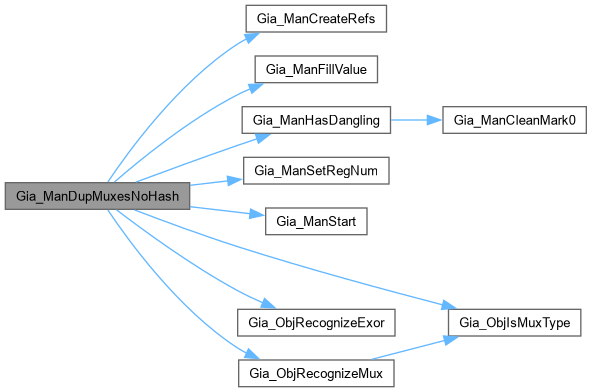
226{
227 Gia_Man_t * pNew;
228 Gia_Obj_t * pObj, * pFan0, * pFan1, * pFanC;
229 int i, iLit0, iLit1, fCompl;
230 assert( p->pMuxes == NULL );
231 ABC_FREE( p->pRefs );
233 // discount nodes with one fanout pointed to by MUX type
234 Gia_ManForEachAnd( p, pObj, i )
235 {
236 if ( !Gia_ObjIsMuxType(pObj) )
237 continue;
238 Gia_ObjRefDec(p, Gia_ObjFanin0(pObj));
239 Gia_ObjRefDec(p, Gia_ObjFanin1(pObj));
240 }
241 // start the new manager
242 pNew = Gia_ManStart( Gia_ManObjNum(p) );
243 pNew->pName = Abc_UtilStrsav( p->pName );
244 pNew->pSpec = Abc_UtilStrsav( p->pSpec );
245 pNew->pMuxes = ABC_CALLOC( unsigned, pNew->nObjsAlloc );
247 Gia_ManConst0(p)->Value = 0;
248 Gia_ManForEachCi( p, pObj, i )
249 pObj->Value = Gia_ManAppendCi( pNew );
250 Gia_ManForEachAnd( p, pObj, i )
251 {
252 if ( !Gia_ObjRefNumId(p, i) )
253 continue;
254 if ( !Gia_ObjIsMuxType(pObj) )
255 pObj->Value = Gia_ManAppendAnd( pNew, Gia_ObjFanin0Copy(pObj), Gia_ObjFanin1Copy(pObj) );
256 else if ( Gia_ObjRecognizeExor(pObj, &pFan0, &pFan1) )
257 {
258 iLit0 = Gia_ObjLitCopy(p, Gia_ObjToLit(p, pFan0));
259 iLit1 = Gia_ObjLitCopy(p, Gia_ObjToLit(p, pFan1));
260 fCompl = Abc_LitIsCompl(iLit0) ^ Abc_LitIsCompl(iLit1);
261 pObj->Value = fCompl ^ Gia_ManAppendXorReal( pNew, Abc_LitRegular(iLit0), Abc_LitRegular(iLit1) );
262 }
263 else
264 {
265 pFanC = Gia_ObjRecognizeMux( pObj, &pFan1, &pFan0 );
266 iLit0 = Gia_ObjLitCopy(p, Gia_ObjToLit(p, pFan0));
267 iLit1 = Gia_ObjLitCopy(p, Gia_ObjToLit(p, pFan1));
268 if ( iLit0 == iLit1 )
269 pObj->Value = iLit0;
270 else if ( Abc_Lit2Var(iLit0) == Abc_Lit2Var(iLit1) )
271 {
272 iLit1 = Gia_ObjLitCopy(p, Gia_ObjToLit(p, pFanC));
273 fCompl = Abc_LitIsCompl(iLit0) ^ Abc_LitIsCompl(iLit1);
274 pObj->Value = fCompl ^ Gia_ManAppendXorReal( pNew, Abc_LitRegular(iLit0), Abc_LitRegular(iLit1) );
275 }
276 else
277 pObj->Value = Gia_ManAppendMuxReal( pNew, Gia_ObjLitCopy(p, Gia_ObjToLit(p, pFanC)), Gia_ObjLitCopy(p, Gia_ObjToLit(p, pFan1)), Gia_ObjLitCopy(p, Gia_ObjToLit(p, pFan0)) );
278 }
279 }
280 Gia_ManForEachCo( p, pObj, i )
281 pObj->Value = Gia_ManAppendCo( pNew, Gia_ObjFanin0Copy(pObj) );
282 Gia_ManSetRegNum( pNew, Gia_ManRegNum(p) );
283 assert( !Gia_ManHasDangling(pNew) );
284 return pNew;
285}
#define ABC_CALLOC(type, num)
Definition abc_global.h:265
#define ABC_FREE(obj)
Definition abc_global.h:267
int Gia_ManHasDangling(Gia_Man_t *p)
Definition giaUtil.c:1353
Gia_Obj_t * Gia_ObjRecognizeMux(Gia_Obj_t *pNode, Gia_Obj_t **ppNodeT, Gia_Obj_t **ppNodeE)
Definition giaUtil.c:1056
#define Gia_ManForEachAnd(p, pObj, i)
Definition gia.h:1214
void Gia_ManSetRegNum(Gia_Man_t *p, int nRegs)
Definition giaMan.c:764
Gia_Man_t * Gia_ManStart(int nObjsMax)
FUNCTION DEFINITIONS ///.
Definition giaMan.c:57
struct Gia_Obj_t_ Gia_Obj_t
Definition gia.h:76
int Gia_ObjIsMuxType(Gia_Obj_t *pNode)
Definition giaUtil.c:982
void Gia_ManFillValue(Gia_Man_t *p)
Definition giaUtil.c:369
struct Gia_Man_t_ Gia_Man_t
Definition gia.h:96
int Gia_ObjRecognizeExor(Gia_Obj_t *pObj, Gia_Obj_t **ppFan0, Gia_Obj_t **ppFan1)
Definition giaUtil.c:1018
void Gia_ManCreateRefs(Gia_Man_t *p)
Definition giaUtil.c:779
#define Gia_ManForEachCo(p, pObj, i)
Definition gia.h:1236
#define Gia_ManForEachCi(p, pObj, i)
Definition gia.h:1228
unsigned * pMuxes
Definition gia.h:106
char * pSpec
Definition gia.h:100
int nObjsAlloc
Definition gia.h:104
char * pName
Definition gia.h:99
unsigned Value
Definition gia.h:89
#define assert(ex)
Definition util_old.h:213
Here is the call graph for this function:

◆ Gia_ManLutBalance()

Gia_Man_t * Gia_ManLutBalance ( Gia_Man_t * p,
int nLutSize,
int fUseMuxes,
int fRecursive,
int fOptArea,
int fVerbose )

Function*************************************************************

Synopsis [Test normalization procedure.]

Description []

SideEffects []

SeeAlso []

Definition at line 1384 of file giaStr.c.
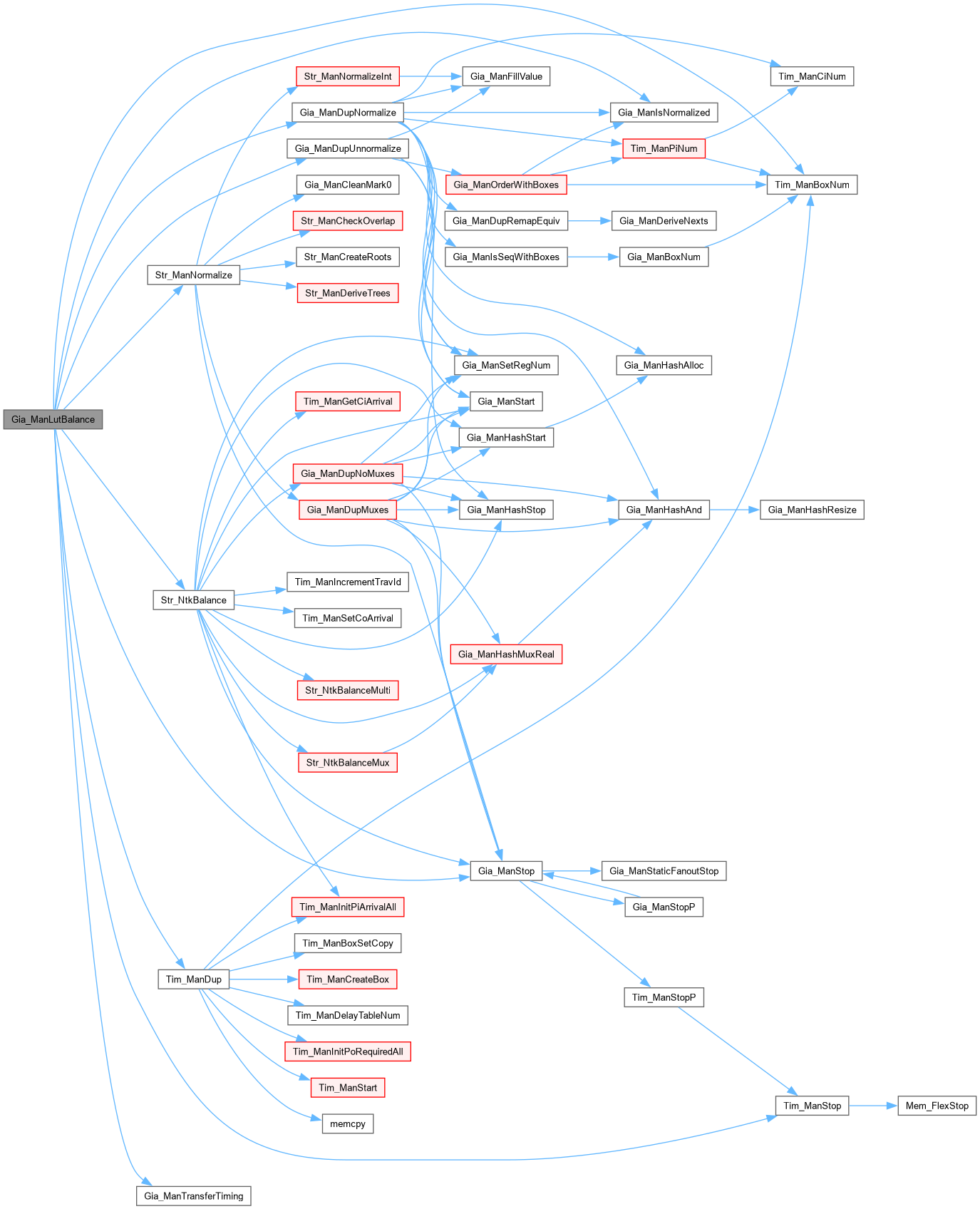
1385{
1386 Str_Ntk_t * pNtk;
1387 Gia_Man_t * pNew;
1388 abctime clk = Abc_Clock();
1389 if ( p->pManTime && Tim_ManBoxNum((Tim_Man_t*)p->pManTime) && Gia_ManIsNormalized(p) )
1390 {
1391 Tim_Man_t * pTimOld = (Tim_Man_t *)p->pManTime;
1392 p->pManTime = Tim_ManDup( pTimOld, 16 );
1393 pNew = Gia_ManDupUnnormalize( p );
1394 if ( pNew == NULL )
1395 return NULL;
1396 Gia_ManTransferTiming( pNew, p );
1397 p = pNew;
1398 // optimize
1399 pNtk = Str_ManNormalize( p );
1400 pNew = Str_NtkBalance( p, pNtk, nLutSize, fUseMuxes, fRecursive, fOptArea, fVerbose );
1401 Gia_ManTransferTiming( pNew, p );
1402 Gia_ManStop( p );
1403 // normalize
1404 pNew = Gia_ManDupNormalize( p = pNew, 0 );
1405 Gia_ManTransferTiming( pNew, p );
1406 Gia_ManStop( p );
1407 // cleanup
1408 Tim_ManStop( (Tim_Man_t *)pNew->pManTime );
1409 pNew->pManTime = pTimOld;
1410 assert( Gia_ManIsNormalized(pNew) );
1411 }
1412 else
1413 {
1414 pNtk = Str_ManNormalize( p );
1415 // Str_NtkPrintGroups( pNtk );
1416 pNew = Str_NtkBalance( p, pNtk, nLutSize, fUseMuxes, fRecursive, fOptArea, fVerbose );
1417 Gia_ManTransferTiming( pNew, p );
1418 }
1419 if ( fVerbose )
1420 Str_NtkPs( pNtk, Abc_Clock() - clk );
1421 Str_NtkDelete( pNtk );
1422 return pNew;
1423}
ABC_INT64_T abctime
Definition abc_global.h:332
Gia_Man_t * Str_NtkBalance(Gia_Man_t *pGia, Str_Ntk_t *p, int nLutSize, int fUseMuxes, int fRecursive, int fOptArea, int fVerbose)
Definition giaStr.c:1293
Str_Ntk_t * Str_ManNormalize(Gia_Man_t *p)
Definition giaStr.c:755
struct Str_Ntk_t_ Str_Ntk_t
Definition giaStr.c:56
void Gia_ManStop(Gia_Man_t *p)
Definition giaMan.c:82
int Gia_ManIsNormalized(Gia_Man_t *p)
Definition giaTim.c:114
void Gia_ManTransferTiming(Gia_Man_t *p, Gia_Man_t *pGia)
Definition giaIf.c:2370
Gia_Man_t * Gia_ManDupNormalize(Gia_Man_t *p, int fHashMapping)
Definition giaTim.c:139
Gia_Man_t * Gia_ManDupUnnormalize(Gia_Man_t *p)
Definition giaTim.c:382
void * pManTime
Definition gia.h:194
int Tim_ManBoxNum(Tim_Man_t *p)
Definition timMan.c:722
typedefABC_NAMESPACE_HEADER_START struct Tim_Man_t_ Tim_Man_t
INCLUDES ///.
Definition tim.h:92
void Tim_ManStop(Tim_Man_t *p)
Definition timMan.c:378
Tim_Man_t * Tim_ManDup(Tim_Man_t *p, int fUnitDelay)
Definition timMan.c:86
Here is the call graph for this function:
Here is the caller graph for this function:

◆ Str_ManCheckOverlap()

void Str_ManCheckOverlap ( Gia_Man_t * p,
Vec_Wec_t * vGroups )

Definition at line 446 of file giaStr.c.
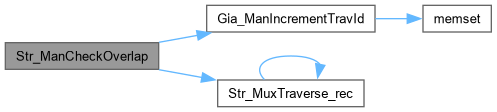
447{ // check that members of each group are not in the TFI of each other
448 Vec_Int_t * vGroup, * vGroup2;
449 int i, k, n, iObj, iObj2;
450
451// vGroup = Vec_WecEntry(vGroups, 7);
452// Vec_IntForEachEntry( vGroup, iObj, n )
453// Gia_ManPrintCone2( p, Gia_ManObj(p, iObj) ), printf( "\n" );
454
455 Vec_WecForEachLevel( vGroups, vGroup, i )
456 Vec_IntForEachEntry( vGroup, iObj, k )
457 {
458 if ( Vec_IntSize(vGroup) == 1 )
459 continue;
460 // high light the cone
462 Str_MuxTraverse_rec( p, iObj );
463 // check that none of the others are highlighted
464 Vec_IntForEachEntry( vGroup, iObj2, n )
465 if ( iObj != iObj2 && Gia_ObjIsTravIdCurrentId(p, iObj2) )
466 break;
467 if ( n == Vec_IntSize(vGroup) )
468 continue;
469 // split the group into individual trees
470 Vec_IntForEachEntryStart( vGroup, iObj2, n, 1 )
471 {
472 vGroup2 = Vec_WecPushLevel( vGroups );
473 vGroup = Vec_WecEntry( vGroups, i );
474 Vec_IntPush( vGroup2, iObj2 );
475 }
476 Vec_IntShrink( vGroup, 1 );
477
478/*
479 // this does not work because there can be a pair of independent trees
480 // with another tree squeezed in between them, so that there is a combo loop
481
482 // divide this group
483 nNew = 0;
484 vGroup2 = Vec_WecPushLevel( vGroups );
485 vGroup = Vec_WecEntry( vGroups, i );
486 Vec_IntForEachEntry( vGroup, iObj2, n )
487 {
488 if ( iObj != iObj2 && Gia_ObjIsTravIdCurrentId(p, iObj2) )
489 Vec_IntPush( vGroup2, iObj2 );
490 else
491 Vec_IntWriteEntry( vGroup, nNew++, iObj2 );
492 }
493 Vec_IntShrink( vGroup, nNew );
494 i--;
495 break;
496*/
497
498/*
499 // check that none of the others are highlighted
500 Vec_IntForEachEntry( vGroup, iObj, n )
501 if ( n != k && Gia_ObjIsTravIdCurrentId(p, iObj) )
502 {
503 printf( "Overlap of TFI cones of trees %d and %d in group %d of size %d!\n", k, n, i, Vec_IntSize(vGroup) );
504 Vec_IntShrink( vGroup, 1 );
505 break;
506 }
507*/
508 }
509}
typedefABC_NAMESPACE_IMPL_START struct Vec_Int_t_ Vec_Int_t
DECLARATIONS ///.
Definition bblif.c:37
void Str_MuxTraverse_rec(Gia_Man_t *p, int i)
Definition giaStr.c:432
void Gia_ManIncrementTravId(Gia_Man_t *p)
Definition giaUtil.c:190
#define Vec_IntForEachEntry(vVec, Entry, i)
MACRO DEFINITIONS ///.
Definition vecInt.h:54
#define Vec_IntForEachEntryStart(vVec, Entry, i, Start)
Definition vecInt.h:56
#define Vec_WecForEachLevel(vGlob, vVec, i)
MACRO DEFINITIONS ///.
Definition vecWec.h:55
Here is the call graph for this function:
Here is the caller graph for this function:

◆ Str_ManCreateRoots()

Vec_Int_t * Str_ManCreateRoots ( Vec_Wec_t * vGroups,
int nObjs )

Definition at line 420 of file giaStr.c.

421{ // map tree MUXes into their classes
422 Vec_Int_t * vRoots;
423 Vec_Int_t * vGroup;
424 int i, k, Entry;
425 vRoots = Vec_IntStartFull( nObjs );
426 Vec_WecForEachLevel( vGroups, vGroup, i )
427 Vec_IntForEachEntry( vGroup, Entry, k )
428 Vec_IntWriteEntry( vRoots, Entry, i );
429 return vRoots;
430}
Here is the caller graph for this function:

◆ Str_ManDeriveTrees()

Vec_Wec_t * Str_ManDeriveTrees ( Gia_Man_t * p)

Definition at line 362 of file giaStr.c.
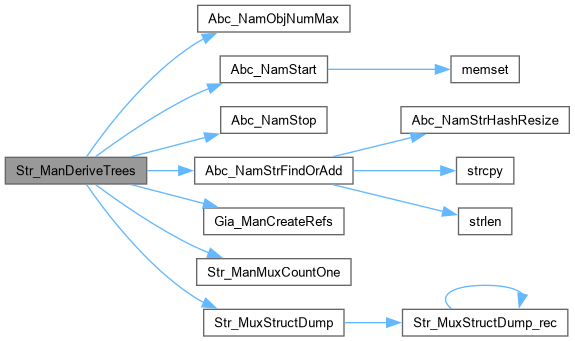
363{
364 int fPrintStructs = 0;
365 Abc_Nam_t * pNames;
366 Vec_Wec_t * vGroups;
367 Vec_Str_t * vStr;
368 Gia_Obj_t * pObj, * pFanin;
369 int i, iStructId, fFound;
370 assert( p->pMuxes != NULL );
371 // mark MUXes whose only fanout is a MUX
372 ABC_FREE( p->pRefs );
375 {
376 pObj = Gia_ManObj(p, i);
377 pFanin = Gia_ObjFanin0(pObj);
378 if ( Gia_ObjIsMux(p, pFanin) && Gia_ObjRefNum(p, pFanin) == 1 )
379 pFanin->fMark0 = 1;
380 pFanin = Gia_ObjFanin1(pObj);
381 if ( Gia_ObjIsMux(p, pFanin) && Gia_ObjRefNum(p, pFanin) == 1 )
382 pFanin->fMark0 = 1;
383 }
384 // traverse for top level MUXes
385 vStr = Vec_StrAlloc( 1000 );
386 pNames = Abc_NamStart( 10000, 50 );
387 vGroups = Vec_WecAlloc( 1000 );
388 Vec_WecPushLevel( vGroups );
390 {
391 // skip internal
392 pObj = Gia_ManObj(p, i);
393 if ( pObj->fMark0 )
394 continue;
395 // skip trees of size one
396 if ( !Gia_ObjFanin0(pObj)->fMark0 && !Gia_ObjFanin1(pObj)->fMark0 )
397 continue;
398 // hash the tree
399 Str_MuxStructDump( p, pObj, vStr );
400 iStructId = Abc_NamStrFindOrAdd( pNames, Vec_StrArray(vStr), &fFound );
401 if ( !fFound ) Vec_WecPushLevel( vGroups );
402 assert( Abc_NamObjNumMax(pNames) == Vec_WecSize(vGroups) );
403 Vec_IntPush( Vec_WecEntry(vGroups, iStructId), i );
404 }
405 if ( fPrintStructs )
406 {
407 char * pTemp;
408 Abc_NamManForEachObj( pNames, pTemp, i )
409 {
410 printf( "%5d : ", i );
411 printf( "Occur = %4d ", Vec_IntSize(Vec_WecEntry(vGroups,i)) );
412 printf( "Size = %4d ", Str_ManMuxCountOne(pTemp) );
413 printf( "%s\n", pTemp );
414 }
415 }
416 Abc_NamStop( pNames );
417 Vec_StrFree( vStr );
418 return vGroups;
419}
struct Vec_Str_t_ Vec_Str_t
Definition bblif.c:46
void Str_MuxStructDump(Gia_Man_t *p, Gia_Obj_t *pObj, Vec_Str_t *vStr)
Definition giaStr.c:346
int Str_ManMuxCountOne(char *p)
Definition giaStr.c:355
#define Gia_ManForEachMuxId(p, i)
Definition gia.h:1218
unsigned fMark0
Definition gia.h:81
void Abc_NamStop(Abc_Nam_t *p)
Definition utilNam.c:112
int Abc_NamStrFindOrAdd(Abc_Nam_t *p, char *pStr, int *pfFound)
Definition utilNam.c:453
int Abc_NamObjNumMax(Abc_Nam_t *p)
Definition utilNam.c:231
Abc_Nam_t * Abc_NamStart(int nObjs, int nAveSize)
FUNCTION DEFINITIONS ///.
Definition utilNam.c:80
#define Abc_NamManForEachObj(p, pStr, i)
MACRO DEFINITIONS ///.
Definition utilNam.h:45
typedefABC_NAMESPACE_HEADER_START struct Abc_Nam_t_ Abc_Nam_t
INCLUDES ///.
Definition utilNam.h:39
typedefABC_NAMESPACE_HEADER_START struct Vec_Wec_t_ Vec_Wec_t
INCLUDES ///.
Definition vecWec.h:42
Here is the call graph for this function:
Here is the caller graph for this function:

◆ Str_ManMuxCountOne()

int Str_ManMuxCountOne ( char * p)

Definition at line 355 of file giaStr.c.

356{
357 int Count = 0;
358 for ( ; *p; p++ )
359 Count += (*p == '[');
360 return Count;
361}
Here is the caller graph for this function:

◆ Str_ManNormalize()

Str_Ntk_t * Str_ManNormalize ( Gia_Man_t * p)

Definition at line 755 of file giaStr.c.
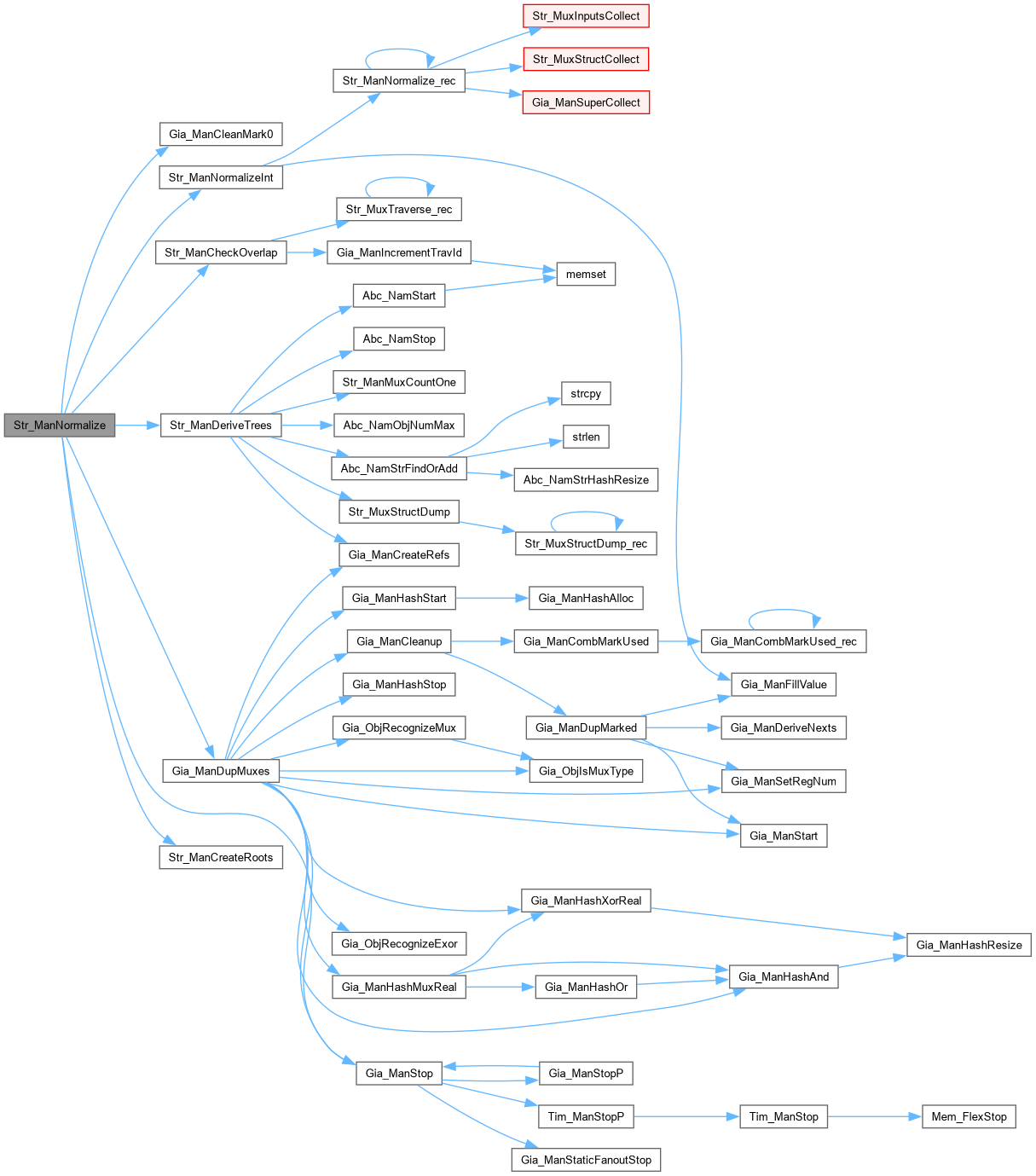
756{
757 Str_Ntk_t * pNtk;
758 Gia_Man_t * pMuxes = Gia_ManDupMuxes( p, 5 );
759 Vec_Wec_t * vGroups = Str_ManDeriveTrees( pMuxes );
760 Vec_Int_t * vRoots;
761 Str_ManCheckOverlap( pMuxes, vGroups );
762 vRoots = Str_ManCreateRoots( vGroups, Gia_ManObjNum(pMuxes) );
763 pNtk = Str_ManNormalizeInt( pMuxes, vGroups, vRoots );
764 Gia_ManCleanMark0( pMuxes );
765 Gia_ManStop( pMuxes );
766 Vec_IntFree( vRoots );
767 Vec_WecFree( vGroups );
768 return pNtk;
769}
Vec_Int_t * Str_ManCreateRoots(Vec_Wec_t *vGroups, int nObjs)
Definition giaStr.c:420
Vec_Wec_t * Str_ManDeriveTrees(Gia_Man_t *p)
Definition giaStr.c:362
Str_Ntk_t * Str_ManNormalizeInt(Gia_Man_t *p, Vec_Wec_t *vGroups, Vec_Int_t *vRoots)
Definition giaStr.c:728
void Str_ManCheckOverlap(Gia_Man_t *p, Vec_Wec_t *vGroups)
Definition giaStr.c:446
Gia_Man_t * Gia_ManDupMuxes(Gia_Man_t *p, int Limit)
Definition giaMuxes.c:98
void Gia_ManCleanMark0(Gia_Man_t *p)
Definition giaUtil.c:256
Here is the call graph for this function:
Here is the caller graph for this function:

◆ Str_ManNormalize_rec()

void Str_ManNormalize_rec ( Str_Ntk_t * pNtk,
Gia_Man_t * p,
Gia_Obj_t * pObj,
Vec_Wec_t * vGroups,
Vec_Int_t * vRoots )

Function*************************************************************

Synopsis [Constructs AIG ordered for balancing.]

Description []

SideEffects []

SeeAlso []

Definition at line 639 of file giaStr.c.
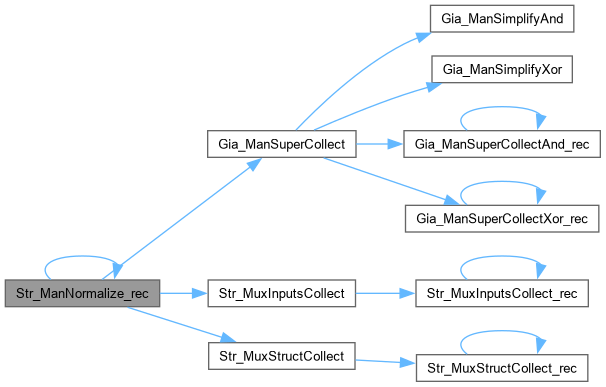
640{
641 int i, k, iVar, iLit, iBeg, iEnd;
642 if ( ~pObj->Value )
643 return;
644 pObj->Value = 0;
645 assert( Gia_ObjIsAnd(pObj) );
646 if ( Gia_ObjIsMux(p, pObj) )
647 {
648 Vec_Int_t * vGroup;
649 Gia_Obj_t * pRoot, * pMux;
650 int pFanins[3];
651 if ( Vec_IntEntry(vRoots, Gia_ObjId(p, pObj)) == -1 )
652 {
653 Str_ManNormalize_rec( pNtk, p, Gia_ObjFanin0(pObj), vGroups, vRoots );
654 Str_ManNormalize_rec( pNtk, p, Gia_ObjFanin1(pObj), vGroups, vRoots );
655 Str_ManNormalize_rec( pNtk, p, Gia_ObjFanin2(p, pObj), vGroups, vRoots );
656 pFanins[0] = Gia_ObjFanin0Copy(pObj);
657 pFanins[1] = Gia_ObjFanin1Copy(pObj);
658 pFanins[2] = Gia_ObjFanin2Copy(p, pObj);
659 if ( Abc_LitIsCompl(pFanins[2]) )
660 {
661 pFanins[2] = Abc_LitNot(pFanins[2]);
662 ABC_SWAP( int, pFanins[0], pFanins[1] );
663 }
664 pObj->Value = Str_ObjCreate( pNtk, STR_MUX, 3, pFanins );
665 return;
666 }
667 vGroup = Vec_WecEntry( vGroups, Vec_IntEntry(vRoots, Gia_ObjId(p, pObj)) );
668 // build data-inputs for each tree
669 Gia_ManForEachObjVec( vGroup, p, pRoot, i )
670 {
671 Str_MuxInputsCollect( p, pRoot, p->vSuper );
672 iBeg = Vec_IntSize( p->vStore );
673 Vec_IntAppend( p->vStore, p->vSuper );
674 iEnd = Vec_IntSize( p->vStore );
675 Vec_IntForEachEntryStartStop( p->vStore, iVar, k, iBeg, iEnd )
676 Str_ManNormalize_rec( pNtk, p, Gia_ManObj(p, iVar), vGroups, vRoots );
677 Vec_IntShrink( p->vStore, iBeg );
678 }
679 // build internal structures
680 Gia_ManForEachObjVec( vGroup, p, pRoot, i )
681 {
682 Str_MuxStructCollect( p, pRoot, p->vSuper );
683 Gia_ManForEachObjVec( p->vSuper, p, pMux, k )
684 {
685 pFanins[0] = Gia_ObjFanin0Copy(pMux);
686 pFanins[1] = Gia_ObjFanin1Copy(pMux);
687 pFanins[2] = Gia_ObjFanin2Copy(p, pMux);
688 if ( Abc_LitIsCompl(pFanins[2]) )
689 {
690 pFanins[2] = Abc_LitNot(pFanins[2]);
691 ABC_SWAP( int, pFanins[0], pFanins[1] );
692 }
693 pMux->Value = Str_ObjCreate( pNtk, STR_MUX, 3, pFanins );
694 }
695 assert( ~pRoot->Value );
696 // set mapping
697 Gia_ManForEachObjVec( p->vSuper, p, pMux, k )
698 Str_NtkObj(pNtk, Abc_Lit2Var(pMux->Value))->iTop = Abc_Lit2Var(pRoot->Value);
699 pNtk->nTrees++;
700 }
701 assert( ~pObj->Value );
702 // set mapping
703 pObj = Gia_ManObj( p, Vec_IntEntryLast(vGroup) );
704 Gia_ManForEachObjVec( vGroup, p, pRoot, i )
705 Str_NtkObj(pNtk, Abc_Lit2Var(pRoot->Value))->iTop = Abc_Lit2Var(pObj->Value);
706 pNtk->nGroups++;
707 //printf( "%d x %d ", Vec_IntSize(vGroup), Vec_IntSize(p->vSuper) );
708 return;
709 }
710 // find supergate
711 Gia_ManSuperCollect( p, pObj );
712 // save entries
713 iBeg = Vec_IntSize( p->vStore );
714 Vec_IntAppend( p->vStore, p->vSuper );
715 iEnd = Vec_IntSize( p->vStore );
716 // call recursively
717 Vec_IntForEachEntryStartStop( p->vStore, iLit, i, iBeg, iEnd )
718 {
719 Gia_Obj_t * pTemp = Gia_ManObj( p, Abc_Lit2Var(iLit) );
720 Str_ManNormalize_rec( pNtk, p, pTemp, vGroups, vRoots );
721 Vec_IntWriteEntry( p->vStore, i, Abc_LitNotCond(pTemp->Value, Abc_LitIsCompl(iLit)) );
722 }
723 assert( Vec_IntSize(p->vStore) == iEnd );
724 // consider general case
725 pObj->Value = Str_ObjCreate( pNtk, Gia_ObjIsXor(pObj) ? STR_XOR : STR_AND, iEnd-iBeg, Vec_IntEntryP(p->vStore, iBeg) );
726 Vec_IntShrink( p->vStore, iBeg );
727}
#define ABC_SWAP(Type, a, b)
Definition abc_global.h:253
void Gia_ManSuperCollect(Gia_Man_t *p, Gia_Obj_t *pObj, int fStrict)
Definition giaBalAig.c:159
void Str_MuxInputsCollect(Gia_Man_t *p, Gia_Obj_t *pObj, Vec_Int_t *vNodes)
Definition giaStr.c:309
void Str_MuxStructCollect(Gia_Man_t *p, Gia_Obj_t *pObj, Vec_Int_t *vNodes)
Definition giaStr.c:325
void Str_ManNormalize_rec(Str_Ntk_t *pNtk, Gia_Man_t *p, Gia_Obj_t *pObj, Vec_Wec_t *vGroups, Vec_Int_t *vRoots)
Definition giaStr.c:639
#define Gia_ManForEachObjVec(vVec, p, pObj, i)
Definition gia.h:1194
int nGroups
Definition giaStr.c:65
int nTrees
Definition giaStr.c:64
#define Vec_IntForEachEntryStartStop(vVec, Entry, i, Start, Stop)
Definition vecInt.h:60
Here is the call graph for this function:
Here is the caller graph for this function:

◆ Str_ManNormalizeInt()

Str_Ntk_t * Str_ManNormalizeInt ( Gia_Man_t * p,
Vec_Wec_t * vGroups,
Vec_Int_t * vRoots )

Definition at line 728 of file giaStr.c.
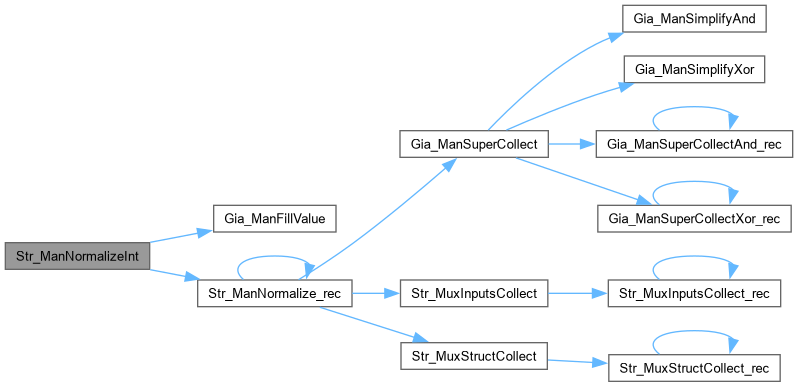
729{
730 Str_Ntk_t * pNtk;
731 Gia_Obj_t * pObj;
732 int i, iFanin;
733 assert( p->pMuxes != NULL );
734 if ( p->vSuper == NULL )
735 p->vSuper = Vec_IntAlloc( STR_SUPER );
736 if ( p->vStore == NULL )
737 p->vStore = Vec_IntAlloc( STR_SUPER );
739 pNtk = Str_NtkCreate( Gia_ManObjNum(p) + 10000, 1 + Gia_ManCoNum(p) + 2 * Gia_ManAndNum(p) + Gia_ManMuxNum(p) + 10000 );
740 Gia_ManConst0(p)->Value = 0;
741 Gia_ManForEachObj1( p, pObj, i )
742 {
743 if ( Gia_ObjIsCi(pObj) )
744 pObj->Value = Str_ObjCreate( pNtk, STR_PI, 0, NULL );
745 else if ( Gia_ObjIsCo(pObj) )
746 {
747 Str_ManNormalize_rec( pNtk, p, Gia_ObjFanin0(pObj), vGroups, vRoots );
748 iFanin = Gia_ObjFanin0Copy(pObj);
749 pObj->Value = Str_ObjCreate( pNtk, STR_PO, 1, &iFanin );
750 }
751 }
752 //assert( pNtk->nObjs <= Gia_ManObjNum(p) );
753 return pNtk;
754}
#define STR_SUPER
DECLARATIONS ///.
Definition giaStr.c:32
#define Gia_ManForEachObj1(p, pObj, i)
Definition gia.h:1192
Here is the call graph for this function:
Here is the caller graph for this function:

◆ Str_ManVectorAffinity()

int Str_ManVectorAffinity ( Gia_Man_t * p,
Vec_Int_t * vSuper,
Vec_Int_t * vDelay,
word * Matrix,
int nLimit )

Definition at line 862 of file giaStr.c.

863{
864 int fVerbose = 0;
865 int * Levels = NULL;
866 int nSize = Vec_IntSize(vSuper);
867 int Prev = nSize, nLevels = 1;
868 int i, k, iLit, iFanin, nSizeNew;
869 word Mask;
870 assert( nSize > 2 );
871 assert( nSize <= nLimit );
872 if ( nSize > 64 )
873 {
874 for ( i = 0; i < 64; i++ )
875 Matrix[i] = 0;
876 return 0;
877 }
878 Levels = ABC_ALLOC( int, nLimit+256 );
879 // mark current nodes
881 Vec_IntForEachEntry( vSuper, iLit, i )
882 {
883 Gia_ObjSetTravIdCurrentId( p, Abc_Lit2Var(iLit) );
884 Str_ManSetNum( p, Abc_Lit2Var(iLit), i );
885 Matrix[i] = ((word)1) << (63-i);
886 Levels[i] = 0;
887 }
888 // collect 64 nodes
889 Vec_IntForEachEntry( vSuper, iLit, i )
890 {
891 Gia_Obj_t * pObj = Gia_ManObj( p, Abc_Lit2Var(iLit) );
892 if ( Gia_ObjIsAnd(pObj) )
893 {
894 for ( k = 0; k < 2; k++ )
895 {
896 iFanin = k ? Gia_ObjFaninId1p(p, pObj) : Gia_ObjFaninId0p(p, pObj);
897 if ( !Gia_ObjIsTravIdCurrentId(p, iFanin) )
898 {
899 if ( Vec_IntSize(vSuper) == nLimit )
900 break;
901 Gia_ObjSetTravIdCurrentId( p, iFanin );
902 Matrix[Vec_IntSize(vSuper)] = 0;
903 Levels[Vec_IntSize(vSuper)] = nLevels;
904 Str_ManSetNum( p, iFanin, Vec_IntSize(vSuper) );
905 Vec_IntPush( vSuper, Abc_Var2Lit(iFanin, 0) );
906 }
907 Matrix[Str_ManNum(p, iFanin)] |= Matrix[i];
908 }
909 }
910 if ( Gia_ObjIsMux(p, pObj) )
911 {
912 iFanin = Gia_ObjFaninId2p(p, pObj);
913 if ( !Gia_ObjIsTravIdCurrentId(p, iFanin) )
914 {
915 if ( Vec_IntSize(vSuper) == nLimit )
916 break;
917 Gia_ObjSetTravIdCurrentId( p, iFanin );
918 Matrix[Vec_IntSize(vSuper)] = 0;
919 Levels[Vec_IntSize(vSuper)] = nLevels;
920 Str_ManSetNum( p, iFanin, Vec_IntSize(vSuper) );
921 Vec_IntPush( vSuper, Abc_Var2Lit(iFanin, 0) );
922 }
923 Matrix[Str_ManNum(p, iFanin)] |= Matrix[i];
924 }
925 if ( Prev == i )
926 Prev = Vec_IntSize(vSuper), nLevels++;
927 if ( nLevels == 8 )
928 break;
929 }
930
931 // remove those that have all 1s or only one 1
932 Mask = (~(word)0) << (64 - nSize);
933 for ( k = i = 0; i < Vec_IntSize(vSuper); i++ )
934 {
935 assert( Matrix[i] );
936 if ( (Matrix[i] & (Matrix[i] - 1)) == 0 )
937 continue;
938 if ( Matrix[i] == Mask )
939 continue;
940 Matrix[k] = Matrix[i];
941 Levels[k] = Levels[i];
942 k++;
943 if ( k == 64 )
944 break;
945 }
946 // clean the remaining ones
947 for ( i = k; i < 64; i++ )
948 Matrix[i] = 0;
949 nSizeNew = k;
950 if ( nSizeNew == 0 )
951 {
952 Vec_IntShrink( vSuper, nSize );
953 ABC_FREE( Levels );
954 return 0;
955 }
956/*
957 // report
958 if ( fVerbose && nSize > 20 )
959 {
960 for ( i = 0; i < nSizeNew; i++ )
961 Extra_PrintBinary( stdout, Matrix+i, 64 ), printf( "\n" );
962 printf( "\n" );
963 }
964*/
965 transpose64( Matrix );
966
967 // report
968 if ( fVerbose && nSize > 10 )
969 {
970 printf( "Gate inputs = %d. Collected fanins = %d. All = %d. Good = %d. Levels = %d\n",
971 nSize, Vec_IntSize(vSuper) - nSize, Vec_IntSize(vSuper), nSizeNew, nLevels );
972 printf( " " );
973 for ( i = 0; i < nSizeNew; i++ )
974 printf( "%d", Levels[i] );
975 printf( "\n" );
976 for ( i = 0; i < nSize; i++ )
977 {
978 printf( "%6d : ", Abc_Lit2Var(Vec_IntEntry(vSuper, i)) );
979 printf( "%3d ", Vec_IntEntry(vDelay, i) >> 4 );
980 printf( "%3d ", Vec_IntEntry(vDelay, i) & 15 );
981// Extra_PrintBinary( stdout, Matrix+i, 64 ), printf( "\n" );
982 }
983 i = 0;
984 }
985 ABC_FREE( Levels );
986 Vec_IntShrink( vSuper, nSize );
987 return nSizeNew;
988}
#define ABC_ALLOC(type, num)
Definition abc_global.h:264
unsigned __int64 word
DECLARATIONS ///.
Definition kitPerm.c:36
Here is the call graph for this function:
Here is the caller graph for this function:

◆ Str_MuxChangeOnce()

void Str_MuxChangeOnce ( Str_Mux_t * pTree,
int * pPath,
int i,
int k,
Str_Mux_t * pBackup,
Gia_Man_t * pNew,
Vec_Int_t * vDelay )

Definition at line 1546 of file giaStr.c.

1547{
1548 Str_Mux_t * pSpots[3];
1549 int pInds[3], MidFan, MidCom, MidDel, MidCop, c;
1550 int iRes, iCond, fCompl;
1551 // save backup
1552 assert( i + 1 < k );
1553 if ( pBackup )
1554 {
1555 pBackup[0] = pTree[ Abc_Lit2Var(pPath[k]) ];
1556 pBackup[1] = pTree[ Abc_Lit2Var(pPath[i+1])];
1557 pBackup[2] = pTree[ Abc_Lit2Var(pPath[i]) ];
1558 }
1559 // perform changes
1560 pSpots[0] = pTree + Abc_Lit2Var(pPath[k]);
1561 pSpots[1] = pTree + Abc_Lit2Var(pPath[i+1]);
1562 pSpots[2] = pTree + Abc_Lit2Var(pPath[i]);
1563 pInds[0] = Abc_LitIsCompl(pPath[k]);
1564 pInds[1] = Abc_LitIsCompl(pPath[i+1]);
1565 pInds[2] = Abc_LitIsCompl(pPath[i]);
1566 // check
1567 assert( pSpots[0]->Edge[pInds[0]].Fan > 0 );
1568 assert( pSpots[1]->Edge[pInds[1]].Fan > 0 );
1569 // collect complement
1570 fCompl = 0;
1571 for ( c = i+1; c < k; c++ )
1572 fCompl ^= pTree[Abc_Lit2Var(pPath[c])].Edge[Abc_LitIsCompl(pPath[c])].fCompl;
1573 // remember bottom side
1574 MidFan = pSpots[2]->Edge[!pInds[2]].Fan;
1575 MidCom = pSpots[2]->Edge[!pInds[2]].fCompl;
1576 MidDel = pSpots[2]->Edge[!pInds[2]].FanDel;
1577 MidCop = pSpots[2]->Edge[!pInds[2]].Copy;
1578 // update bottom
1579 pSpots[2]->Edge[!pInds[2]].Fan = pSpots[0]->Edge[pInds[0]].Fan;
1580 pSpots[2]->Edge[!pInds[2]].fCompl = 0;
1581 // update top
1582 pSpots[0]->Edge[pInds[0]].Fan = pSpots[2]->Id;
1583 // update middle
1584 pSpots[1]->Edge[pInds[1]].Fan = MidFan;
1585 pSpots[1]->Edge[pInds[1]].fCompl ^= MidCom;
1586 pSpots[1]->Edge[pInds[1]].FanDel = MidDel;
1587 pSpots[1]->Edge[pInds[1]].Copy = MidCop;
1588 // update delay of the control
1589 for ( c = i + 1; c < k; c++ )
1590 pSpots[2]->Edge[2].FanDel = Str_Delay2( pSpots[2]->Edge[2].FanDel, pTree[Abc_Lit2Var(pPath[c])].Edge[2].FanDel, pTree->nLutSize );
1591 if ( pNew == NULL )
1592 return;
1593 // create AND gates
1594 iRes = 1;
1595 for ( c = i; c < k; c++ )
1596 {
1597 assert( pTree[Abc_Lit2Var(pPath[c])].Edge[2].fCompl == 0 );
1598 iCond = pTree[Abc_Lit2Var(pPath[c])].Edge[2].Copy;
1599 iCond = Abc_LitNotCond( iCond, !Abc_LitIsCompl(pPath[c]) );
1600 iRes = Gia_ManHashAnd( pNew, iRes, iCond );
1601 Str_ObjDelay( pNew, Abc_Lit2Var(iRes), pTree->nLutSize, vDelay );
1602 }
1603 // complement the condition
1604 pSpots[2]->Edge[2].Copy = Abc_LitNotCond( iRes, !Abc_LitIsCompl(pPath[i]) );
1605 // complement the path
1606 pSpots[2]->Edge[pInds[2]].fCompl ^= fCompl;
1607}
struct Str_Mux_t_ Str_Mux_t
Definition giaStr.c:1449
int Gia_ManHashAnd(Gia_Man_t *p, int iLit0, int iLit1)
Definition giaHash.c:576
int FanDel
Definition giaStr.c:1445
int fCompl
Definition giaStr.c:1444
Str_Edg_t Edge[3]
Definition giaStr.c:1456
int nLutSize
Definition giaStr.c:1455
Here is the call graph for this function:
Here is the caller graph for this function:

◆ Str_MuxChangeUndo()

void Str_MuxChangeUndo ( Str_Mux_t * pTree,
int * pPath,
int i,
int k,
Str_Mux_t * pBackup )

Definition at line 1608 of file giaStr.c.

1609{
1610 pTree[ Abc_Lit2Var(pPath[k]) ] = pBackup[0];
1611 pTree[ Abc_Lit2Var(pPath[i+1])] = pBackup[1];
1612 pTree[ Abc_Lit2Var(pPath[i]) ] = pBackup[2];
1613}
Here is the caller graph for this function:

◆ Str_MuxCreate()

void Str_MuxCreate ( Str_Mux_t * pTree,
Str_Ntk_t * pNtk,
int iMux,
int nMuxes,
Vec_Int_t * vDelay,
int nLutSize )

Definition at line 1500 of file giaStr.c.

1501{
1502 Str_Obj_t * pObj;
1503 Str_Mux_t * pMux;
1504 int i, k, nPis = 0;
1505 assert( nMuxes >= 2 );
1506 memset( pTree, 0, sizeof(Str_Mux_t) * (nMuxes + 1) );
1507 pTree->nLutSize = nLutSize;
1508 pTree->Edge[0].Fan = 1;
1509 for ( i = 1; i <= nMuxes; i++ )
1510 {
1511 pMux = pTree + i;
1512 pMux->Id = i;
1513 pMux->nLutSize = nLutSize;
1514 pMux->Delay = pMux->Copy = -1;
1515 // assign fanins
1516 pObj = Str_NtkObj( pNtk, iMux + nMuxes - i );
1517 assert( pObj->Type == STR_MUX );
1518 for ( k = 0; k < 3; k++ )
1519 {
1520 pMux->Edge[k].fCompl = Str_ObjFaninC(pNtk, pObj, k);
1521 if ( Str_ObjFaninId(pNtk, pObj, k) >= iMux )
1522 pMux->Edge[k].Fan = iMux + nMuxes - Str_ObjFaninId(pNtk, pObj, k);
1523 else
1524 {
1525 pMux->Edge[k].Fan = -nPis++; // count external inputs, including controls
1526 pMux->Edge[k].Copy = Str_ObjFanin(pNtk, pObj, k)->iCopy;
1527 pMux->Edge[k].FanDel = Vec_IntEntry( vDelay, Abc_Lit2Var(pMux->Edge[k].Copy) );
1528 }
1529 }
1530 }
1531}
struct Str_Obj_t_ Str_Obj_t
Definition giaStr.c:47
int Delay
Definition giaStr.c:1453
unsigned Type
Definition giaStr.c:50
char * memset()
Here is the call graph for this function:
Here is the caller graph for this function:

◆ Str_MuxDelayEdge_rec()

int Str_MuxDelayEdge_rec ( Str_Mux_t * pMux,
int i )

Definition at line 1489 of file giaStr.c.
1490{
1491 if ( pMux->Edge[i].Fan > 0 )
1492 {
1493 Str_Mux_t * pFanin = Str_MuxFanin( pMux, i );
1494 Str_MuxDelayEdge_rec( pFanin, 0 );
1495 Str_MuxDelayEdge_rec( pFanin, 1 );
1496 pMux->Edge[i].FanDel = Str_Delay3( pFanin->Edge[0].FanDel, pFanin->Edge[1].FanDel, pFanin->Edge[2].FanDel, pFanin->nLutSize );
1497 }
1498 return pMux->Edge[i].FanDel;
1499}
int Str_MuxDelayEdge_rec(Str_Mux_t *pMux, int i)
Definition giaStr.c:1489
Here is the call graph for this function:
Here is the caller graph for this function:

◆ Str_MuxDelayPrint_rec()

void Str_MuxDelayPrint_rec ( Str_Mux_t * pMux,
int i )

Definition at line 1462 of file giaStr.c.
1463{
1464 int fShowDelay = 1;
1465 Str_Mux_t * pFanin;
1466 if ( pMux->Edge[i].Fan <= 0 )
1467 {
1468 printf( "%d", -pMux->Edge[i].Fan );
1469 if ( fShowDelay )
1470 printf( "{%d}", pMux->Edge[i].FanDel );
1471 return;
1472 }
1473 pFanin = Str_MuxFanin( pMux, i );
1474 printf( "[ " );
1475 if ( pFanin->Edge[0].fCompl )
1476 printf( "!" );
1477 Str_MuxDelayPrint_rec( pFanin, 0 );
1478 printf( "|" );
1479 if ( pFanin->Edge[1].fCompl )
1480 printf( "!" );
1481 Str_MuxDelayPrint_rec( pFanin, 1 );
1482 printf( "(" );
1483 if ( pFanin->Edge[2].fCompl )
1484 printf( "!" );
1485 Str_MuxDelayPrint_rec( pFanin, 2 );
1486 printf( ")" );
1487 printf( " ]" );
1488}
void Str_MuxDelayPrint_rec(Str_Mux_t *pMux, int i)
Definition giaStr.c:1462
Here is the call graph for this function:
Here is the caller graph for this function:

◆ Str_MuxFindBranching()

Str_Mux_t * Str_MuxFindBranching ( Str_Mux_t * pRoot,
int i )

Definition at line 1634 of file giaStr.c.

1635{
1636 Str_Mux_t * pMux;
1637 if ( pRoot->Edge[i].Fan <= 0 )
1638 return NULL;
1639 pMux = Str_MuxFanin( pRoot, i );
1640 while ( 1 )
1641 {
1642 if ( pMux->Edge[0].Fan <= 0 && pMux->Edge[1].Fan <= 0 )
1643 return NULL;
1644 if ( pMux->Edge[0].Fan > 0 && pMux->Edge[1].Fan > 0 )
1645 return pMux;
1646 if ( pMux->Edge[0].Fan > 0 )
1647 pMux = Str_MuxFanin( pMux, 0 );
1648 if ( pMux->Edge[1].Fan > 0 )
1649 pMux = Str_MuxFanin( pMux, 1 );
1650 }
1651 assert( 0 );
1652 return NULL;
1653}
Here is the caller graph for this function:

◆ Str_MuxFindPath_rec()

int Str_MuxFindPath_rec ( Str_Mux_t * pMux,
int * pPath,
int * pnLength )

Definition at line 1622 of file giaStr.c.

1623{
1624 int i, DelayMax = Abc_MaxInt( pMux->Edge[0].FanDel, Abc_MaxInt(pMux->Edge[1].FanDel, pMux->Edge[2].FanDel) );
1625 for ( i = 0; i < 2; i++ )
1626 if ( pMux->Edge[i].FanDel == DelayMax )
1627 return Str_MuxFindPathEdge_rec( pMux, i, pPath, pnLength );
1628 if ( pMux->Edge[2].FanDel == DelayMax )
1629 return 0;
1630 assert( 0 );
1631 return -1;
1632}
int Str_MuxFindPathEdge_rec(Str_Mux_t *pMux, int i, int *pPath, int *pnLength)
Definition giaStr.c:1614
Here is the call graph for this function:
Here is the caller graph for this function:

◆ Str_MuxFindPathEdge_rec()

int Str_MuxFindPathEdge_rec ( Str_Mux_t * pMux,
int i,
int * pPath,
int * pnLength )

Definition at line 1614 of file giaStr.c.

1615{
1616 extern int Str_MuxFindPath_rec( Str_Mux_t * pMux, int * pPath, int * pnLength );
1617 if ( pMux->Edge[i].Fan > 0 && !Str_MuxFindPath_rec(Str_MuxFanin(pMux, i), pPath, pnLength) )
1618 return 0;
1619 pPath[ (*pnLength)++ ] = Abc_Var2Lit(pMux->Id, i);
1620 return 1;
1621}
int Str_MuxFindPath_rec(Str_Mux_t *pMux, int *pPath, int *pnLength)
Definition giaStr.c:1622
Here is the call graph for this function:
Here is the caller graph for this function:

◆ Str_MuxInputsCollect()

void Str_MuxInputsCollect ( Gia_Man_t * p,
Gia_Obj_t * pObj,
Vec_Int_t * vNodes )

Definition at line 309 of file giaStr.c.

310{
311 assert( !pObj->fMark0 );
312 pObj->fMark0 = 1;
313 Vec_IntClear( vNodes );
314 Str_MuxInputsCollect_rec( p, pObj, vNodes );
315 pObj->fMark0 = 0;
316}
void Str_MuxInputsCollect_rec(Gia_Man_t *p, Gia_Obj_t *pObj, Vec_Int_t *vNodes)
Definition giaStr.c:298
Here is the call graph for this function:
Here is the caller graph for this function:

◆ Str_MuxInputsCollect_rec()

void Str_MuxInputsCollect_rec ( Gia_Man_t * p,
Gia_Obj_t * pObj,
Vec_Int_t * vNodes )

Function*************************************************************

Synopsis [Constructs AIG ordered for balancing.]

Description []

SideEffects []

SeeAlso []

Definition at line 298 of file giaStr.c.
299{
300 if ( !pObj->fMark0 )
301 {
302 Vec_IntPush( vNodes, Gia_ObjId(p, pObj) );
303 return;
304 }
305 Vec_IntPush( vNodes, Gia_ObjFaninId2p(p, pObj) );
306 Str_MuxInputsCollect_rec( p, Gia_ObjFanin0(pObj), vNodes );
307 Str_MuxInputsCollect_rec( p, Gia_ObjFanin1(pObj), vNodes );
308}
Here is the call graph for this function:
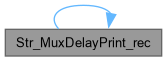
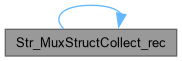
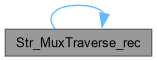
Here is the caller graph for this function:

◆ Str_MuxRestruct_rec()

int Str_MuxRestruct_rec ( Gia_Man_t * pNew,
Str_Ntk_t * pNtk,
Str_Mux_t * pTree,
Str_Mux_t * pRoot,
int Edge,
Vec_Int_t * vDelay,
int fVerbose )

Definition at line 1693 of file giaStr.c.
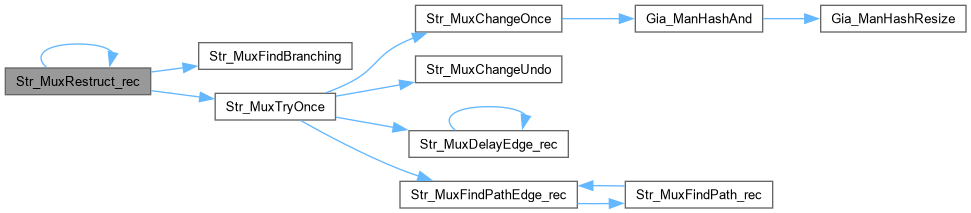
1694{
1695 int fChanges = 0;
1696 Str_Mux_t * pMux = Str_MuxFindBranching( pRoot, Edge );
1697 if ( pMux != NULL )
1698 fChanges |= Str_MuxRestruct_rec( pNew, pNtk, pTree, pMux, 0, vDelay, fVerbose );
1699 if ( pMux != NULL )
1700 fChanges |= Str_MuxRestruct_rec( pNew, pNtk, pTree, pMux, 1, vDelay, fVerbose );
1701 fChanges |= Str_MuxTryOnce( pNew, pNtk, pTree, pRoot, Edge, vDelay, fVerbose );
1702 return fChanges;
1703}
int Str_MuxRestruct_rec(Gia_Man_t *pNew, Str_Ntk_t *pNtk, Str_Mux_t *pTree, Str_Mux_t *pRoot, int Edge, Vec_Int_t *vDelay, int fVerbose)
Definition giaStr.c:1693
Str_Mux_t * Str_MuxFindBranching(Str_Mux_t *pRoot, int i)
Definition giaStr.c:1634
int Str_MuxTryOnce(Gia_Man_t *pNew, Str_Ntk_t *pNtk, Str_Mux_t *pTree, Str_Mux_t *pRoot, int Edge, Vec_Int_t *vDelay, int fVerbose)
Definition giaStr.c:1654
Here is the call graph for this function:
Here is the caller graph for this function:

◆ Str_MuxRestructArea_rec()

int Str_MuxRestructArea_rec ( Gia_Man_t * pNew,
Str_Mux_t * pTree,
Str_Mux_t * pRoot,
int i,
Vec_Int_t * vDelay,
int fVerbose )

Definition at line 1790 of file giaStr.c.

1791{
1792 int Path[4];
1793 int fSkipMoving = 1;
1794 Str_Mux_t * pMux, * pFanin0, * pFanin1;
1795 int nMuxes0, nMuxes1;
1796 if ( pRoot->Edge[i].Fan <= 0 )
1797 return 0;
1798 pMux = Str_MuxFanin( pRoot, i );
1799 nMuxes0 = Str_MuxRestructArea_rec( pNew, pTree, pMux, 0, vDelay, fVerbose );
1800 nMuxes1 = Str_MuxRestructArea_rec( pNew, pTree, pMux, 1, vDelay, fVerbose );
1801 if ( nMuxes0 + nMuxes1 < 2 )
1802 return 1 + nMuxes0 + nMuxes1;
1803 if ( nMuxes0 + nMuxes1 == 2 )
1804 {
1805 if ( nMuxes0 == 2 || nMuxes1 == 2 )
1806 {
1807 pFanin0 = Str_MuxFanin( pMux, (int)(nMuxes1 == 2) );
1808 assert( Str_MuxHasFanin(pFanin0, 0) != Str_MuxHasFanin(pFanin0, 1) );
1809 Path[2] = Abc_Var2Lit(pRoot->Id, i);
1810 Path[1] = Abc_Var2Lit(pMux->Id, (int)(nMuxes1 == 2) );
1811 Path[0] = Abc_Var2Lit(pFanin0->Id, Str_MuxHasFanin(pFanin0, 1));
1812 Str_MuxChangeOnce( pTree, Path, 0, 2, NULL, pNew, vDelay );
1813 }
1814 Str_MuxRestructAreaThree( pNew, Str_MuxFanin(pRoot, i), vDelay, fVerbose );
1815 return 0;
1816 }
1817 assert( nMuxes0 + nMuxes1 == 3 || nMuxes0 + nMuxes1 == 4 );
1818 assert( nMuxes0 == 2 || nMuxes1 == 2 );
1819 if ( fSkipMoving )
1820 {
1821 Str_MuxRestructAreaThree( pNew, pMux, vDelay, fVerbose );
1822 return 0;
1823 }
1824 if ( nMuxes0 == 2 )
1825 {
1826 pFanin0 = Str_MuxFanin( pMux, 0 );
1827 assert( Str_MuxHasFanin(pFanin0, 0) != Str_MuxHasFanin(pFanin0, 1) );
1828 Path[3] = Abc_Var2Lit(pRoot->Id, i);
1829 Path[2] = Abc_Var2Lit(pMux->Id, 0 );
1830 Path[1] = Abc_Var2Lit(pFanin0->Id, Str_MuxHasFanin(pFanin0, 1));
1831 pFanin1 = Str_MuxFanin( pFanin0, Str_MuxHasFanin(pFanin0, 1) );
1832 assert( !Str_MuxHasFanin(pFanin1, 0) && !Str_MuxHasFanin(pFanin1, 1) );
1833 Path[0] = Abc_Var2Lit(pFanin1->Id, 0);
1834 Str_MuxChangeOnce( pTree, Path, 0, 3, NULL, pNew, vDelay );
1835 }
1836 if ( nMuxes1 == 2 )
1837 {
1838 pFanin0 = Str_MuxFanin( pMux, 1 );
1839 assert( Str_MuxHasFanin(pFanin0, 0) != Str_MuxHasFanin(pFanin0, 1) );
1840 Path[3] = Abc_Var2Lit(pRoot->Id, i);
1841 Path[2] = Abc_Var2Lit(pMux->Id, 1 );
1842 Path[1] = Abc_Var2Lit(pFanin0->Id, Str_MuxHasFanin(pFanin0, 1));
1843 pFanin1 = Str_MuxFanin( pFanin0, Str_MuxHasFanin(pFanin0, 1) );
1844 assert( !Str_MuxHasFanin(pFanin1, 0) && !Str_MuxHasFanin(pFanin1, 1) );
1845 Path[0] = Abc_Var2Lit(pFanin1->Id, 0);
1846 Str_MuxChangeOnce( pTree, Path, 0, 3, NULL, pNew, vDelay );
1847 }
1848 Str_MuxRestructAreaThree( pNew, pMux, vDelay, fVerbose );
1849 return nMuxes0 + nMuxes1 - 2;
1850}
void Str_MuxChangeOnce(Str_Mux_t *pTree, int *pPath, int i, int k, Str_Mux_t *pBackup, Gia_Man_t *pNew, Vec_Int_t *vDelay)
Definition giaStr.c:1546
int Str_MuxRestructAreaThree(Gia_Man_t *pNew, Str_Mux_t *pMux, Vec_Int_t *vDelay, int fVerbose)
Definition giaStr.c:1775
int Str_MuxRestructArea_rec(Gia_Man_t *pNew, Str_Mux_t *pTree, Str_Mux_t *pRoot, int i, Vec_Int_t *vDelay, int fVerbose)
Definition giaStr.c:1790
Here is the call graph for this function:
Here is the caller graph for this function:

◆ Str_MuxRestructAreaThree()

int Str_MuxRestructAreaThree ( Gia_Man_t * pNew,
Str_Mux_t * pMux,
Vec_Int_t * vDelay,
int fVerbose )

Function*************************************************************

Synopsis [Perform MUX restructuring for area.]

Description []

SideEffects []

SeeAlso []

Definition at line 1775 of file giaStr.c.

1776{
1777 int iRes;
1778 Str_Mux_t * pFanin0 = Str_MuxFanin( pMux, 0 );
1779 Str_Mux_t * pFanin1 = Str_MuxFanin( pMux, 1 );
1780 assert( pMux->Copy == -1 );
1781 pMux->Copy = -2;
1782 if ( pFanin0->Edge[2].Copy == pFanin1->Edge[2].Copy )
1783 return 0;
1784 iRes = Gia_ManHashMuxReal( pNew, pMux->Edge[2].Copy, pFanin1->Edge[2].Copy, pFanin0->Edge[2].Copy );
1785 Str_ObjDelay( pNew, Abc_Lit2Var(iRes), pMux->nLutSize, vDelay );
1786 pFanin0->Edge[2].Copy = pFanin1->Edge[2].Copy = iRes;
1787// printf( "Created triple\n" );
1788 return 0;
1789}
int Gia_ManHashMuxReal(Gia_Man_t *p, int iLitC, int iLit1, int iLit0)
Definition giaHash.c:521
Here is the call graph for this function:
Here is the caller graph for this function:

◆ Str_MuxRestructure()

int Str_MuxRestructure ( Gia_Man_t * pNew,
Str_Ntk_t * pNtk,
int iMux,
int nMuxes,
Vec_Int_t * vDelay,
int nLutSize,
int fRecursive,
int fOptArea,
int fVerbose )

Definition at line 1750 of file giaStr.c.
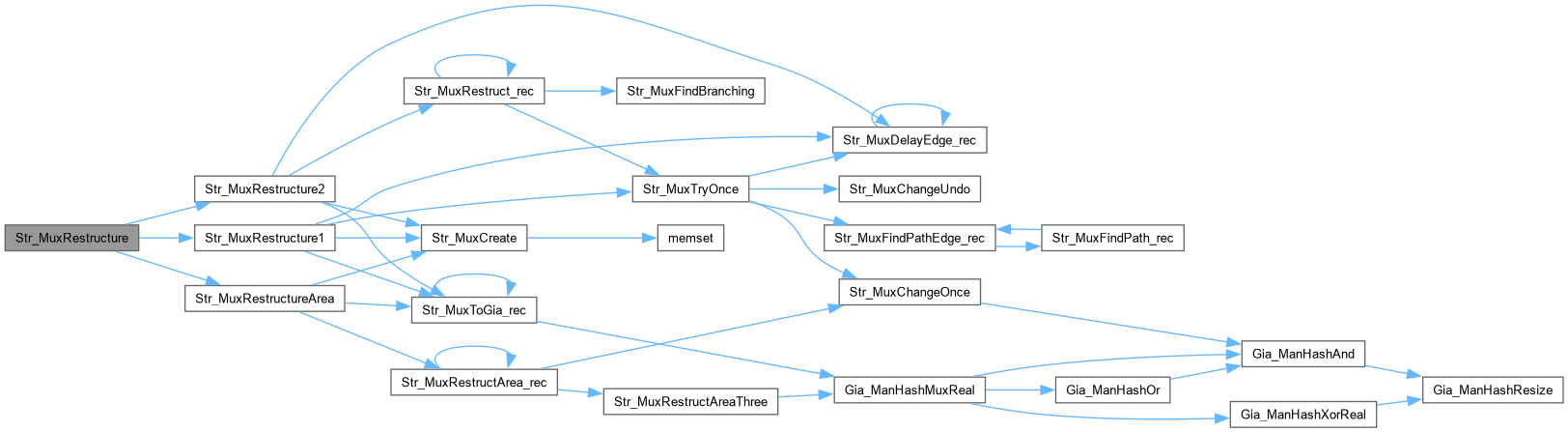
1751{
1752 extern int Str_MuxRestructureArea( Gia_Man_t * pNew, Str_Ntk_t * pNtk, int iMux, int nMuxes, Vec_Int_t * vDelay, int nLutSize, int fVerbose );
1753 if ( fOptArea )
1754 {
1755 if ( nMuxes < 2 )
1756 return Str_MuxRestructure1( pNew, pNtk, iMux, nMuxes, vDelay, nLutSize, fVerbose );
1757 return Str_MuxRestructureArea( pNew, pNtk, iMux, nMuxes, vDelay, nLutSize, fVerbose );
1758 }
1759 if ( fRecursive )
1760 return Str_MuxRestructure2( pNew, pNtk, iMux, nMuxes, vDelay, nLutSize, fVerbose );
1761 return Str_MuxRestructure1( pNew, pNtk, iMux, nMuxes, vDelay, nLutSize, fVerbose );
1762}
int Str_MuxRestructure2(Gia_Man_t *pNew, Str_Ntk_t *pNtk, int iMux, int nMuxes, Vec_Int_t *vDelay, int nLutSize, int fVerbose)
Definition giaStr.c:1704
int Str_MuxRestructureArea(Gia_Man_t *pNew, Str_Ntk_t *pNtk, int iMux, int nMuxes, Vec_Int_t *vDelay, int nLutSize, int fVerbose)
Definition giaStr.c:1851
int Str_MuxRestructure1(Gia_Man_t *pNew, Str_Ntk_t *pNtk, int iMux, int nMuxes, Vec_Int_t *vDelay, int nLutSize, int fVerbose)
Definition giaStr.c:1727
Here is the call graph for this function:
Here is the caller graph for this function:

◆ Str_MuxRestructure1()

int Str_MuxRestructure1 ( Gia_Man_t * pNew,
Str_Ntk_t * pNtk,
int iMux,
int nMuxes,
Vec_Int_t * vDelay,
int nLutSize,
int fVerbose )

Definition at line 1727 of file giaStr.c.
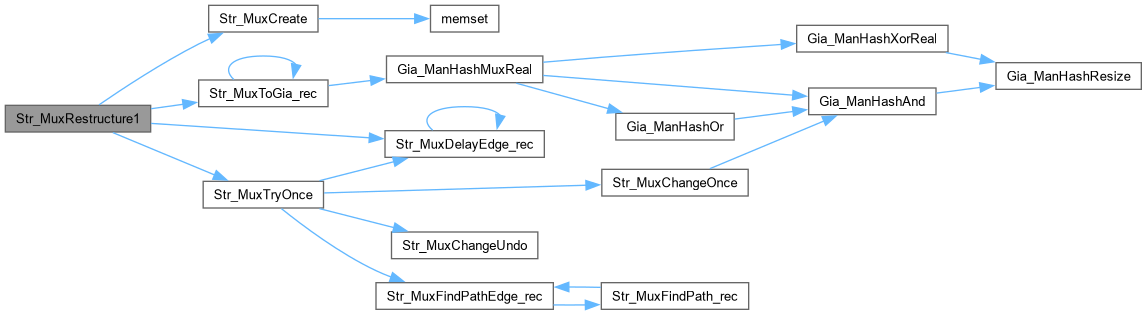
1728{
1729 int Limit = MAX_TREE;
1730 Str_Mux_t pTree[MAX_TREE];
1731 int Delay, Delay2, fChanges = 0;
1732 if ( nMuxes >= Limit )
1733 return -1;
1734 assert( nMuxes < Limit );
1735 Str_MuxCreate( pTree, pNtk, iMux, nMuxes, vDelay, nLutSize );
1736 Delay = Str_MuxDelayEdge_rec( pTree, 0 );
1737 while ( 1 )
1738 {
1739 if ( !Str_MuxTryOnce(pNew, pNtk, pTree, pTree, 0, vDelay, fVerbose) )
1740 break;
1741 fChanges = 1;
1742 }
1743 if ( !fChanges )
1744 return -1;
1745 Delay2 = Str_MuxDelayEdge_rec( pTree, 0 );
1746// printf( "Improved delay for tree %d with %d MUXes (%d -> %d).\n", iMux, nMuxes, Delay, Delay2 );
1747 pNtk->DelayGain += Delay - Delay2;
1748 return Str_MuxToGia_rec( pNew, pTree, 0, vDelay );
1749}
void Str_MuxCreate(Str_Mux_t *pTree, Str_Ntk_t *pNtk, int iMux, int nMuxes, Vec_Int_t *vDelay, int nLutSize)
Definition giaStr.c:1500
#define MAX_TREE
Definition giaStr.c:33
int Str_MuxToGia_rec(Gia_Man_t *pNew, Str_Mux_t *pMux, int i, Vec_Int_t *vDelay)
Definition giaStr.c:1532
int DelayGain
Definition giaStr.c:66
Here is the call graph for this function:
Here is the caller graph for this function:

◆ Str_MuxRestructure2()

int Str_MuxRestructure2 ( Gia_Man_t * pNew,
Str_Ntk_t * pNtk,
int iMux,
int nMuxes,
Vec_Int_t * vDelay,
int nLutSize,
int fVerbose )

Definition at line 1704 of file giaStr.c.
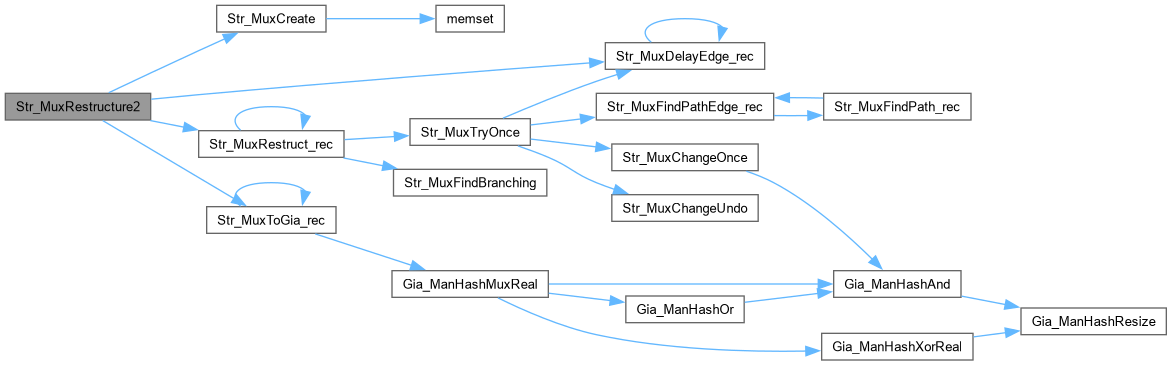
1705{
1706 int Limit = MAX_TREE;
1707 Str_Mux_t pTree[MAX_TREE];
1708 int Delay, Delay2, fChanges = 0;
1709 if ( nMuxes >= Limit )
1710 return -1;
1711 assert( nMuxes < Limit );
1712 Str_MuxCreate( pTree, pNtk, iMux, nMuxes, vDelay, nLutSize );
1713 Delay = Str_MuxDelayEdge_rec( pTree, 0 );
1714 while ( 1 )
1715 {
1716 if ( !Str_MuxRestruct_rec(pNew, pNtk, pTree, pTree, 0, vDelay, fVerbose) )
1717 break;
1718 fChanges = 1;
1719 }
1720 if ( !fChanges )
1721 return -1;
1722 Delay2 = Str_MuxDelayEdge_rec( pTree, 0 );
1723// printf( "Improved delay for tree %d with %d MUXes (%d -> %d).\n", iMux, nMuxes, Delay, Delay2 );
1724 pNtk->DelayGain += Delay - Delay2;
1725 return Str_MuxToGia_rec( pNew, pTree, 0, vDelay );
1726}
Here is the call graph for this function:
Here is the caller graph for this function:

◆ Str_MuxRestructureArea()

int Str_MuxRestructureArea ( Gia_Man_t * pNew,
Str_Ntk_t * pNtk,
int iMux,
int nMuxes,
Vec_Int_t * vDelay,
int nLutSize,
int fVerbose )

Definition at line 1851 of file giaStr.c.

1852{
1853 int Limit = MAX_TREE;
1854 Str_Mux_t pTree[MAX_TREE];
1855 int Result;
1856 if ( nMuxes >= Limit )
1857 return -1;
1858 assert( nMuxes < Limit );
1859 Str_MuxCreate( pTree, pNtk, iMux, nMuxes, vDelay, nLutSize );
1860 Result = Str_MuxRestructArea_rec( pNew, pTree, pTree, 0, vDelay, fVerbose );
1861 assert( Result >= 0 && Result <= 2 );
1862 return Str_MuxToGia_rec( pNew, pTree, 0, vDelay );
1863}
Here is the call graph for this function:
Here is the caller graph for this function:

◆ Str_MuxStructCollect()

void Str_MuxStructCollect ( Gia_Man_t * p,
Gia_Obj_t * pObj,
Vec_Int_t * vNodes )

Definition at line 325 of file giaStr.c.

326{
327 assert( !pObj->fMark0 );
328 pObj->fMark0 = 1;
329 Vec_IntClear( vNodes );
330 Str_MuxStructCollect_rec( p, pObj, vNodes );
331 pObj->fMark0 = 0;
332}
void Str_MuxStructCollect_rec(Gia_Man_t *p, Gia_Obj_t *pObj, Vec_Int_t *vNodes)
Definition giaStr.c:317
Here is the call graph for this function:
Here is the caller graph for this function:

◆ Str_MuxStructCollect_rec()

void Str_MuxStructCollect_rec ( Gia_Man_t * p,
Gia_Obj_t * pObj,
Vec_Int_t * vNodes )

Definition at line 317 of file giaStr.c.

318{
319 if ( !pObj->fMark0 )
320 return;
321 Str_MuxStructCollect_rec( p, Gia_ObjFanin0(pObj), vNodes );
322 Str_MuxStructCollect_rec( p, Gia_ObjFanin1(pObj), vNodes );
323 Vec_IntPush( vNodes, Gia_ObjId(p, pObj) );
324}
Here is the call graph for this function:
Here is the caller graph for this function:

◆ Str_MuxStructDump()

void Str_MuxStructDump ( Gia_Man_t * p,
Gia_Obj_t * pObj,
Vec_Str_t * vStr )

Definition at line 346 of file giaStr.c.

347{
348 assert( !pObj->fMark0 );
349 pObj->fMark0 = 1;
350 Vec_StrClear( vStr );
351 Str_MuxStructDump_rec( p, pObj, vStr );
352 Vec_StrPush( vStr, '\0' );
353 pObj->fMark0 = 0;
354}
void Str_MuxStructDump_rec(Gia_Man_t *p, Gia_Obj_t *pObj, Vec_Str_t *vStr)
Definition giaStr.c:333
Here is the call graph for this function:
Here is the caller graph for this function:

◆ Str_MuxStructDump_rec()

void Str_MuxStructDump_rec ( Gia_Man_t * p,
Gia_Obj_t * pObj,
Vec_Str_t * vStr )

Definition at line 333 of file giaStr.c.
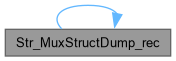
334{
335 if ( !pObj->fMark0 )
336 return;
337 Vec_StrPush( vStr, '[' );
338 Vec_StrPush( vStr, '(' );
339 Vec_StrPrintNum( vStr, Gia_ObjFaninId2p(p, pObj) );
340 Vec_StrPush( vStr, ')' );
341 Str_MuxStructDump_rec( p, Gia_ObjFaninC2(p, pObj) ? Gia_ObjFanin0(pObj) : Gia_ObjFanin1(pObj), vStr );
342 Vec_StrPush( vStr, '|' );
343 Str_MuxStructDump_rec( p, Gia_ObjFaninC2(p, pObj) ? Gia_ObjFanin1(pObj) : Gia_ObjFanin0(pObj), vStr );
344 Vec_StrPush( vStr, ']' );
345}
Here is the call graph for this function:
Here is the caller graph for this function:

◆ Str_MuxToGia_rec()

int Str_MuxToGia_rec ( Gia_Man_t * pNew,
Str_Mux_t * pMux,
int i,
Vec_Int_t * vDelay )

Definition at line 1532 of file giaStr.c.

1533{
1534 if ( pMux->Edge[i].Fan > 0 )
1535 {
1536 Str_Mux_t * pFanin = Str_MuxFanin( pMux, i );
1537 int iLit0 = Str_MuxToGia_rec( pNew, pFanin, 0, vDelay );
1538 int iLit1 = Str_MuxToGia_rec( pNew, pFanin, 1, vDelay );
1539 assert( pFanin->Edge[2].Fan <= 0 );
1540 assert( pFanin->Edge[2].fCompl == 0 );
1541 pMux->Edge[i].Copy = Gia_ManHashMuxReal( pNew, pFanin->Edge[2].Copy, iLit1, iLit0 );
1542 Str_ObjDelay( pNew, Abc_Lit2Var(pMux->Edge[i].Copy), pFanin->nLutSize, vDelay );
1543 }
1544 return Abc_LitNotCond( pMux->Edge[i].Copy, pMux->Edge[i].fCompl );
1545}
Here is the call graph for this function:
Here is the caller graph for this function:

◆ Str_MuxTraverse_rec()

void Str_MuxTraverse_rec ( Gia_Man_t * p,
int i )

Definition at line 432 of file giaStr.c.

433{
434 Gia_Obj_t * pObj;
435 if ( Gia_ObjIsTravIdCurrentId(p, i) )
436 return;
437 Gia_ObjSetTravIdCurrentId(p, i);
438 pObj = Gia_ManObj(p, i);
439 if ( !Gia_ObjIsAnd(pObj) )
440 return;
441 Str_MuxTraverse_rec(p, Gia_ObjFaninId0(pObj, i) );
442 Str_MuxTraverse_rec(p, Gia_ObjFaninId1(pObj, i) );
443 if ( Gia_ObjIsMux(p, pObj) )
444 Str_MuxTraverse_rec(p, Gia_ObjFaninId2(p, i) );
445}
Here is the call graph for this function:
Here is the caller graph for this function:

◆ Str_MuxTryOnce()

int Str_MuxTryOnce ( Gia_Man_t * pNew,
Str_Ntk_t * pNtk,
Str_Mux_t * pTree,
Str_Mux_t * pRoot,
int Edge,
Vec_Int_t * vDelay,
int fVerbose )

Definition at line 1654 of file giaStr.c.
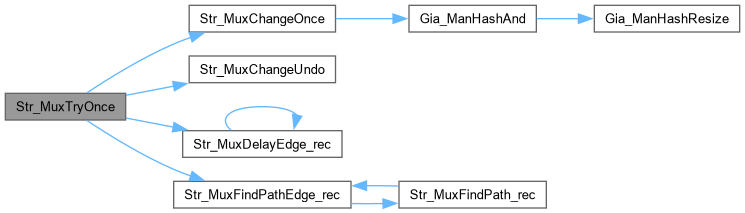
1655{
1656 int pPath[MAX_TREE];
1657 Str_Mux_t pBackup[3];
1658 int Delay, DelayBest = Str_MuxDelayEdge_rec( pRoot, Edge ), DelayInit = DelayBest;
1659 int i, k, nLength = 0, ForkBest = -1, nChecks = 0;
1660 int RetValue = Str_MuxFindPathEdge_rec( pRoot, Edge, pPath, &nLength );
1661 if ( RetValue == 0 )
1662 return 0;
1663 if ( fVerbose )
1664 printf( "Trying node %d with path of length %d.\n", pRoot->Id, nLength );
1665 for ( i = 0; i < nLength; i++ )
1666 for ( k = i+2; k < nLength; k++ )
1667 {
1668 Str_MuxChangeOnce( pTree, pPath, i, k, pBackup, NULL, NULL );
1669 Delay = Str_MuxDelayEdge_rec( pRoot, Edge );
1670 Str_MuxChangeUndo( pTree, pPath, i, k, pBackup );
1671 if ( DelayBest > Delay || (ForkBest > 0 && DelayBest == Delay) )
1672 DelayBest = Delay, ForkBest = (i << 16) | k;
1673 if ( fVerbose )
1674 printf( "%2d %2d -> %3d (%3d)\n", i, k, Delay, DelayBest );
1675 nChecks++;
1676 }
1677 if ( ForkBest == -1 )
1678 {
1679 if ( fVerbose )
1680 printf( "Did not find!\n" );
1681 return 0;
1682 }
1683// Str_MuxDelayPrint_rec( pRoot, Edge ); printf( "\n" );
1684 Str_MuxChangeOnce( pTree, pPath, ForkBest >> 16, ForkBest & 0xFFFF, NULL, pNew, vDelay );
1685// Str_MuxDelayPrint_rec( pRoot, Edge ); printf( "\n" );
1686 if ( fVerbose )
1687 printf( "Node %6d (%3d %3d) : Checks = %d. Delay: %d -> %d.\n",
1688 pRoot->Id, ForkBest >> 16, ForkBest & 0xFFFF, nChecks, DelayInit, DelayBest );
1689 if ( fVerbose )
1690 printf( "\n" );
1691 return 1;
1692}
void Str_MuxChangeUndo(Str_Mux_t *pTree, int *pPath, int i, int k, Str_Mux_t *pBackup)
Definition giaStr.c:1608
Here is the call graph for this function:
Here is the caller graph for this function:

◆ Str_NtkBalance()

Gia_Man_t * Str_NtkBalance ( Gia_Man_t * pGia,
Str_Ntk_t * p,
int nLutSize,
int fUseMuxes,
int fRecursive,
int fOptArea,
int fVerbose )

Definition at line 1293 of file giaStr.c.
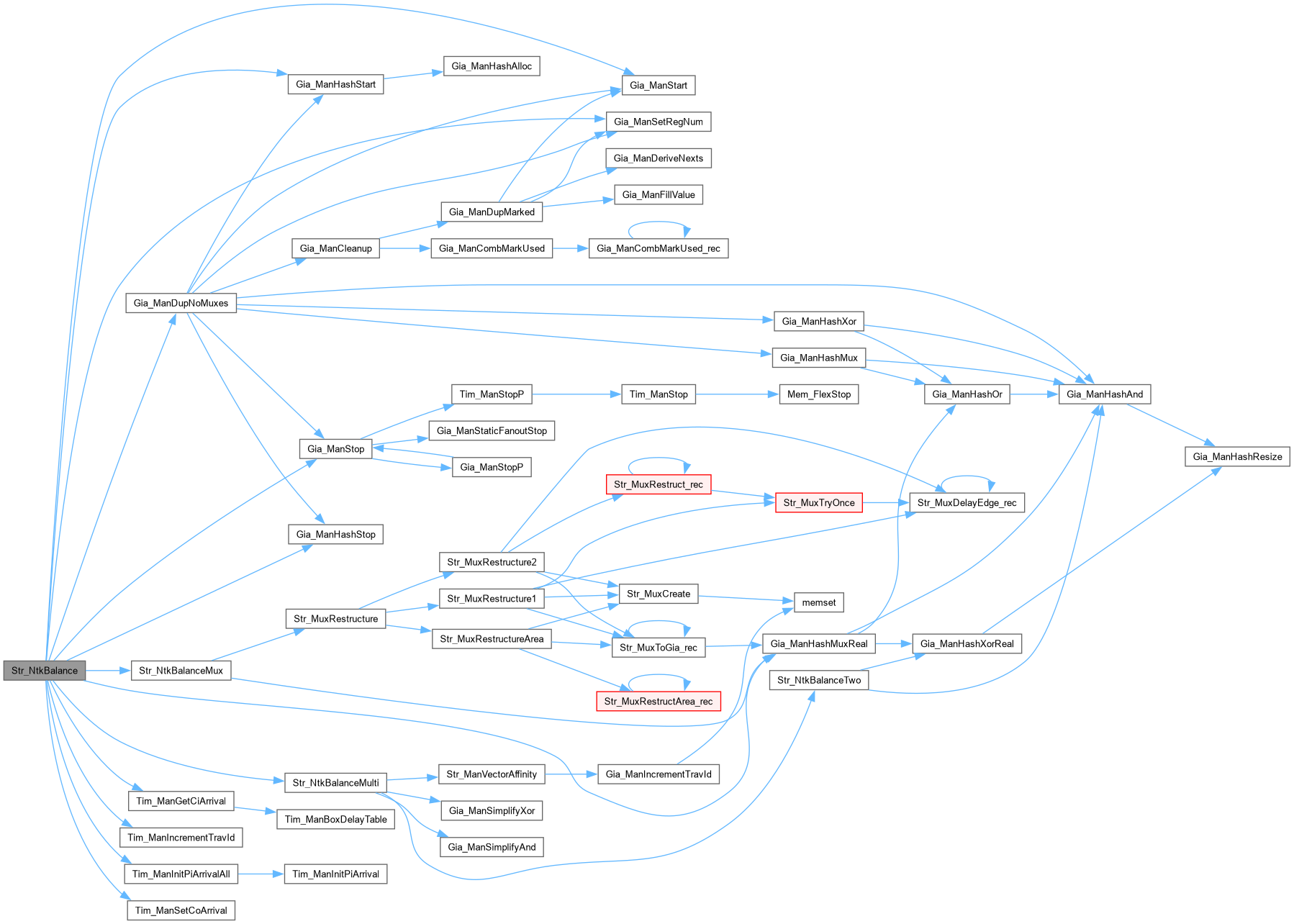
1294{
1295 Gia_Man_t * pNew, * pTemp;
1296 Vec_Int_t * vDelay;
1297 Str_Obj_t * pObj;
1298 int nGroups, nMuxes, CioId;
1299 int arrTime, Delay = 0;
1300 assert( nLutSize < 16 );
1301 assert( pGia->pMuxes == NULL );
1302 pNew = Gia_ManStart( Gia_ManObjNum(pGia) );
1303 pNew->pName = Abc_UtilStrsav( pGia->pName );
1304 pNew->pSpec = Abc_UtilStrsav( pGia->pSpec );
1305 pNew->pMuxes = ABC_CALLOC( unsigned, pNew->nObjsAlloc );
1306 Vec_IntFill( &pNew->vCopies, pNew->nObjsAlloc, -1 );
1307 if ( pNew->vSuper == NULL )
1308 pNew->vSuper = Vec_IntAlloc( 1000 );
1309 if ( pNew->vStore == NULL )
1310 pNew->vStore = Vec_IntAlloc( 1000 );
1311 vDelay = Vec_IntStart( 2*pNew->nObjsAlloc );
1312 Gia_ManHashStart( pNew );
1313 if ( pGia->pManTime != NULL ) // Tim_Man with unit delay 16
1314 {
1317 }
1318 Str_NtkManForEachObj( p, pObj )
1319 {
1320 if ( pObj->Type == STR_PI )
1321 {
1322 pObj->iCopy = Gia_ManAppendCi( pNew );
1323 arrTime = 17;
1324 if ( pGia->pManTime != NULL )
1325 {
1326 CioId = Gia_ObjCioId( Gia_ManObj(pNew, Abc_Lit2Var(pObj->iCopy)) );
1327 arrTime = (int)Tim_ManGetCiArrival( (Tim_Man_t *)pGia->pManTime, CioId );
1328 }
1329 Vec_IntWriteEntry( vDelay, Abc_Lit2Var(pObj->iCopy), arrTime );
1330 }
1331 else if ( pObj->Type == STR_AND || pObj->Type == STR_XOR )
1332 Str_NtkBalanceMulti( pNew, p, pObj, vDelay, nLutSize );
1333 else if ( pObj->Type == STR_MUX && pObj->iTop >= 0 && fUseMuxes )
1334 {
1335 Str_ObjReadGroup( p, pObj, &nGroups, &nMuxes );
1336 assert( nGroups * nMuxes >= 2 );
1337 Str_NtkBalanceMux( pNew, p, pObj, vDelay, nLutSize, nGroups, nMuxes, fRecursive, fOptArea, fVerbose );
1338 pObj += nGroups * nMuxes - 1;
1339 }
1340 else if ( pObj->Type == STR_MUX )
1341 {
1342 pObj->iCopy = Gia_ManHashMuxReal( pNew, Str_ObjFaninCopy(p, pObj, 2), Str_ObjFaninCopy(p, pObj, 1), Str_ObjFaninCopy(p, pObj, 0) );
1343 Str_ObjDelay( pNew, Abc_Lit2Var(pObj->iCopy), nLutSize, vDelay );
1344 }
1345 else if ( pObj->Type == STR_PO )
1346 {
1347 pObj->iCopy = Gia_ManAppendCo( pNew, Str_ObjFaninCopy(p, pObj, 0) );
1348 arrTime = Vec_IntEntry(vDelay, Abc_Lit2Var(Str_ObjFaninCopy(p, pObj, 0)) );
1349 Delay = Abc_MaxInt( Delay, arrTime );
1350 if ( pGia->pManTime != NULL )
1351 {
1352 CioId = Gia_ObjCioId( Gia_ManObj(pNew, Abc_Lit2Var(pObj->iCopy)) );
1353 Tim_ManSetCoArrival( (Tim_Man_t *)pGia->pManTime, CioId, (float)arrTime );
1354 }
1355 }
1356 else if ( pObj->Type == STR_CONST0 )
1357 pObj->iCopy = 0, Vec_IntWriteEntry(vDelay, 0, 17);
1358 else assert( 0 );
1359 }
1360 if ( fVerbose )
1361 printf( "Max delay = %d. Old objs = %d. New objs = %d.\n", Delay >> 4, Gia_ManObjNum(pGia), Gia_ManObjNum(pNew) );
1362 Vec_IntFree( vDelay );
1363 ABC_FREE( pNew->vCopies.pArray );
1364 Gia_ManHashStop( pNew );
1365 Gia_ManSetRegNum( pNew, Gia_ManRegNum(pGia) );
1366 pNew = Gia_ManDupNoMuxes( pTemp = pNew, 0 );
1367 Gia_ManStop( pTemp );
1368// if ( pGia->pManTime != NULL )
1369// pNew->pManTime = Tim_ManDup( (Tim_Man_t *)pGia->pManTime, 0 );
1370 return pNew;
1371}
void Str_NtkBalanceMulti(Gia_Man_t *pNew, Str_Ntk_t *p, Str_Obj_t *pObj, Vec_Int_t *vDelay, int nLutSize)
Definition giaStr.c:1093
void Str_NtkBalanceMux(Gia_Man_t *pNew, Str_Ntk_t *p, Str_Obj_t *pObj, Vec_Int_t *vDelay, int nLutSize, int nGroups, int nMuxes, int fRecursive, int fOptArea, int fVerbose)
Definition giaStr.c:1259
#define Str_NtkManForEachObj(p, pObj)
Definition giaStr.c:89
void Gia_ManHashStart(Gia_Man_t *p)
Definition giaHash.c:125
Gia_Man_t * Gia_ManDupNoMuxes(Gia_Man_t *p, int fSkipBufs)
Definition giaMuxes.c:228
void Gia_ManHashStop(Gia_Man_t *p)
Definition giaHash.c:149
Vec_Int_t * vSuper
Definition gia.h:234
Vec_Int_t vCopies
Definition gia.h:152
Vec_Int_t * vStore
Definition gia.h:235
int iTop
Definition giaStr.c:53
int iCopy
Definition giaStr.c:54
void Tim_ManSetCoArrival(Tim_Man_t *p, int iCo, float Delay)
Definition timTime.c:116
void Tim_ManInitPiArrivalAll(Tim_Man_t *p, float Delay)
Definition timTime.c:78
void Tim_ManIncrementTravId(Tim_Man_t *p)
DECLARATIONS ///.
Definition timTrav.c:44
float Tim_ManGetCiArrival(Tim_Man_t *p, int iCi)
Definition timTime.c:174
Here is the call graph for this function:
Here is the caller graph for this function:

◆ Str_NtkBalanceMulti()

void Str_NtkBalanceMulti ( Gia_Man_t * pNew,
Str_Ntk_t * p,
Str_Obj_t * pObj,
Vec_Int_t * vDelay,
int nLutSize )

Definition at line 1093 of file giaStr.c.
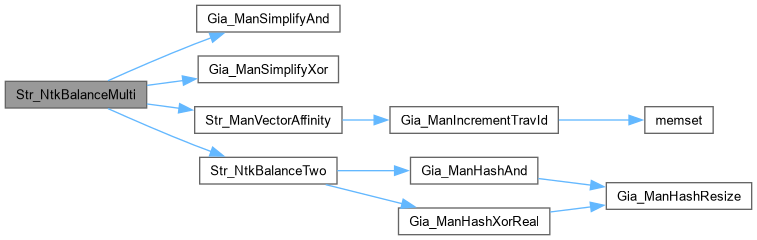
1094{
1095 word * pMatrix = ABC_ALLOC( word, pObj->nFanins+256 );
1096 Vec_Int_t * vSuper = pNew->vSuper;
1097 Vec_Int_t * vCosts = pNew->vStore;
1098 int * pSuper = Vec_IntArray(vSuper);
1099 int * pCost = Vec_IntArray(vCosts);
1100 int k, iLit, MatrixSize = 0;
1101 assert( (int)pObj->nFanins <= Vec_IntCap(vSuper) );
1102 assert( (int)pObj->nFanins <= Vec_IntCap(vCosts) );
1103
1104 // collect nodes
1105 Vec_IntClear( vSuper );
1106 for ( k = 0; k < (int)pObj->nFanins; k++ )
1107 Vec_IntPush( vSuper, Str_ObjFaninCopy(p, pObj, k) );
1108 Vec_IntSort( vSuper, 0 );
1109 if ( pObj->Type == STR_AND )
1110 Gia_ManSimplifyAnd( vSuper );
1111 else
1112 Gia_ManSimplifyXor( vSuper );
1113 assert( Vec_IntSize(vSuper) > 0 );
1114 if ( Vec_IntSize(vSuper) == 1 )
1115 {
1116 pObj->iCopy = Vec_IntEntry(vSuper, 0);
1117 ABC_FREE( pMatrix );
1118 return;
1119 }
1120 if ( Vec_IntSize(vSuper) == 2 )
1121 {
1122 pObj->iCopy = Str_NtkBalanceTwo( pNew, p, pObj, 0, 1, vDelay, pCost, pSuper, pMatrix, 2, nLutSize, -1 );
1123 ABC_FREE( pMatrix );
1124 return;
1125 }
1126
1127 // sort by cost
1128 Vec_IntClear( vCosts );
1129 Vec_IntForEachEntry( vSuper, iLit, k )
1130 Vec_IntPush( vCosts, Vec_IntEntry(vDelay, Abc_Lit2Var(iLit)) );
1131 Vec_IntSelectSortCost2( pSuper, Vec_IntSize(vSuper), pCost );
1132
1133 // compute affinity
1134 if ( Vec_IntSize(vSuper) < 64 )
1135 MatrixSize = Str_ManVectorAffinity( pNew, vSuper, vCosts, pMatrix, pObj->nFanins );
1136
1137 // start the new product
1138 while ( Vec_IntSize(vSuper) > 2 )
1139 {
1140 // pair the first entry with another one on the same level
1141 int i, iStop, iBest,iBest2;
1142 int CostNew, CostBest, CostBest2;
1143 int OccurNew, OccurBest, OccurBest2;
1144
1145 if ( Vec_IntSize(vSuper) > 64 )
1146 {
1147 Str_NtkBalanceTwo( pNew, p, pObj, 0, 1, vDelay, pCost, pSuper, pMatrix, Vec_IntSize(vSuper), nLutSize, -1 );
1148 vSuper->nSize--;
1149 vCosts->nSize--;
1150 continue;
1151 }
1152
1153 // compute affinity
1154 if ( Vec_IntSize(vSuper) == 64 )
1155 MatrixSize = Str_ManVectorAffinity( pNew, vSuper, vCosts, pMatrix, pObj->nFanins );
1156 assert( Vec_IntSize(vSuper) <= 64 );
1157// Str_PrintState( pCost, pSuper, pMatrix, Vec_IntSize(vSuper) );
1158
1159 // if the first two are PIs group them
1160 if ( pCost[0] == 17 && pCost[1] == 17 )
1161 {
1162 Str_NtkBalanceTwo( pNew, p, pObj, 0, 1, vDelay, pCost, pSuper, pMatrix, Vec_IntSize(vSuper), nLutSize, 2 );
1163 vSuper->nSize--;
1164 vCosts->nSize--;
1165 continue;
1166 }
1167
1168 // find the end of the level
1169 for ( iStop = 0; iStop < Vec_IntSize(vSuper); iStop++ )
1170 if ( (pCost[iStop] >> 4) != (pCost[0] >> 4) )
1171 break;
1172 // if there is only one this level, pair it with the best match in the next level
1173 if ( iStop == 1 )
1174 {
1175 iBest = iStop, OccurBest = Str_CountBits(pMatrix[0] & pMatrix[iStop]);
1176 for ( i = iStop + 1; i < Vec_IntSize(vSuper); i++ )
1177 {
1178 if ( (pCost[i] >> 4) != (pCost[iStop] >> 4) )
1179 break;
1180 OccurNew = Str_CountBits(pMatrix[0] & pMatrix[i]);
1181 if ( OccurBest < OccurNew )
1182 iBest = i, OccurBest = OccurNew;
1183 }
1184 assert( iBest > 0 && iBest < Vec_IntSize(vSuper) );
1185 Str_NtkBalanceTwo( pNew, p, pObj, 0, iBest, vDelay, pCost, pSuper, pMatrix, Vec_IntSize(vSuper), nLutSize, -1 );
1186 vSuper->nSize--;
1187 vCosts->nSize--;
1188 continue;
1189 }
1190 // pair the first entry with another one on the same level
1191 iBest = -1; CostBest = -1; OccurBest2 = -1; OccurBest = -1;
1192 for ( i = 1; i < iStop; i++ )
1193 {
1194 CostNew = (pCost[0] & 15) + (pCost[i] & 15);
1195 if ( CostNew > nLutSize )
1196 continue;
1197 OccurNew = Str_CountBits(pMatrix[0] & pMatrix[i]);
1198 if ( CostBest < CostNew || (CostBest == CostNew && OccurBest < OccurNew) )
1199 CostBest = CostNew, iBest = i, OccurBest = OccurNew;
1200 }
1201 // if the best found is perfect, take it
1202 if ( CostBest == nLutSize )
1203 {
1204 assert( iBest > 0 && iBest < Vec_IntSize(vSuper) );
1205 Str_NtkBalanceTwo( pNew, p, pObj, 0, iBest, vDelay, pCost, pSuper, pMatrix, Vec_IntSize(vSuper), nLutSize, CostBest );
1206 vSuper->nSize--;
1207 vCosts->nSize--;
1208 continue;
1209 }
1210 // find the best pair on this level
1211 iBest = iBest2 = -1; CostBest = CostBest2 = -1, OccurBest = OccurBest2 = -1;
1212 for ( i = 0; i < iStop; i++ )
1213 for ( k = i+1; k < iStop; k++ )
1214 {
1215 CostNew = (pCost[i] & 15) + (pCost[k] & 15);
1216 OccurNew = Str_CountBits(pMatrix[i] & pMatrix[k]);
1217 if ( CostNew <= nLutSize ) // the same level
1218 {
1219 if ( OccurBest < OccurNew || (OccurBest == OccurNew && CostBest < CostNew ))
1220 CostBest = CostNew, iBest = (i << 16) | k, OccurBest = OccurNew;
1221 }
1222 else // overflow to the next level
1223 {
1224 if ( OccurBest2 < OccurNew || (OccurBest2 == OccurNew && CostBest2 < CostNew) )
1225 CostBest2 = CostNew, iBest2 = (i << 16) | k, OccurBest2 = OccurNew;
1226 }
1227 }
1228 if ( iBest >= 0 )
1229 {
1230 assert( iBest > 0 );
1231 Str_NtkBalanceTwo( pNew, p, pObj, iBest>>16, iBest&0xFFFF, vDelay, pCost, pSuper, pMatrix, Vec_IntSize(vSuper), nLutSize, CostBest );
1232 vSuper->nSize--;
1233 vCosts->nSize--;
1234 continue;
1235 }
1236 // take any remaining pair
1237 assert( iBest2 > 0 );
1238 Str_NtkBalanceTwo( pNew, p, pObj, iBest2>>16, iBest2&0xFFFF, vDelay, pCost, pSuper, pMatrix, Vec_IntSize(vSuper), nLutSize, -1 );
1239 vSuper->nSize--;
1240 vCosts->nSize--;
1241 continue;
1242 }
1243 pObj->iCopy = Str_NtkBalanceTwo( pNew, p, pObj, 0, 1, vDelay, pCost, pSuper, pMatrix, 2, nLutSize, -1 );
1244 ABC_FREE( pMatrix );
1245
1246/*
1247 // simple
1248 pObj->iCopy = (pObj->Type == STR_AND);
1249 for ( k = 0; k < Vec_IntSize(vSuper); k++ )
1250 {
1251 if ( pObj->Type == STR_AND )
1252 pObj->iCopy = Gia_ManHashAnd( pNew, pObj->iCopy, Vec_IntEntry(vSuper, k) );
1253 else
1254 pObj->iCopy = Gia_ManHashXorReal( pNew, pObj->iCopy, Vec_IntEntry(vSuper, k) );
1255 Str_ObjDelay( pNew, Abc_Lit2Var(pObj->iCopy), nLutSize, vDelay );
1256 }
1257*/
1258}
void Gia_ManSimplifyAnd(Vec_Int_t *vSuper)
Definition giaBalAig.c:98
void Gia_ManSimplifyXor(Vec_Int_t *vSuper)
FUNCTION DEFINITIONS ///.
Definition giaBalAig.c:78
int Str_NtkBalanceTwo(Gia_Man_t *pNew, Str_Ntk_t *p, Str_Obj_t *pObj, int i, int j, Vec_Int_t *vDelay, int *pCost, int *pSuper, word *pMatrix, int nSize, int nLutSize, int CostBest)
Definition giaStr.c:1057
int Str_ManVectorAffinity(Gia_Man_t *p, Vec_Int_t *vSuper, Vec_Int_t *vDelay, word *Matrix, int nLimit)
Definition giaStr.c:862
unsigned nFanins
Definition giaStr.c:51
Here is the call graph for this function:
Here is the caller graph for this function:

◆ Str_NtkBalanceMulti2()

void Str_NtkBalanceMulti2 ( Gia_Man_t * pNew,
Str_Ntk_t * p,
Str_Obj_t * pObj,
Vec_Int_t * vDelay,
int nLutSize )

Function*************************************************************

Synopsis [Perform balancing.]

Description []

SideEffects []

SeeAlso []

Definition at line 1043 of file giaStr.c.

1044{
1045 int k;
1046 pObj->iCopy = (pObj->Type == STR_AND);
1047 for ( k = 0; k < (int)pObj->nFanins; k++ )
1048 {
1049 if ( pObj->Type == STR_AND )
1050 pObj->iCopy = Gia_ManHashAnd( pNew, pObj->iCopy, Str_ObjFaninCopy(p, pObj, k) );
1051 else
1052 pObj->iCopy = Gia_ManHashXorReal( pNew, pObj->iCopy, Str_ObjFaninCopy(p, pObj, k) );
1053 Str_ObjDelay( pNew, Abc_Lit2Var(pObj->iCopy), nLutSize, vDelay );
1054 }
1055}
int Gia_ManHashXorReal(Gia_Man_t *p, int iLit0, int iLit1)
Definition giaHash.c:469
Here is the call graph for this function:

◆ Str_NtkBalanceMux()

void Str_NtkBalanceMux ( Gia_Man_t * pNew,
Str_Ntk_t * p,
Str_Obj_t * pObj,
Vec_Int_t * vDelay,
int nLutSize,
int nGroups,
int nMuxes,
int fRecursive,
int fOptArea,
int fVerbose )

Definition at line 1259 of file giaStr.c.
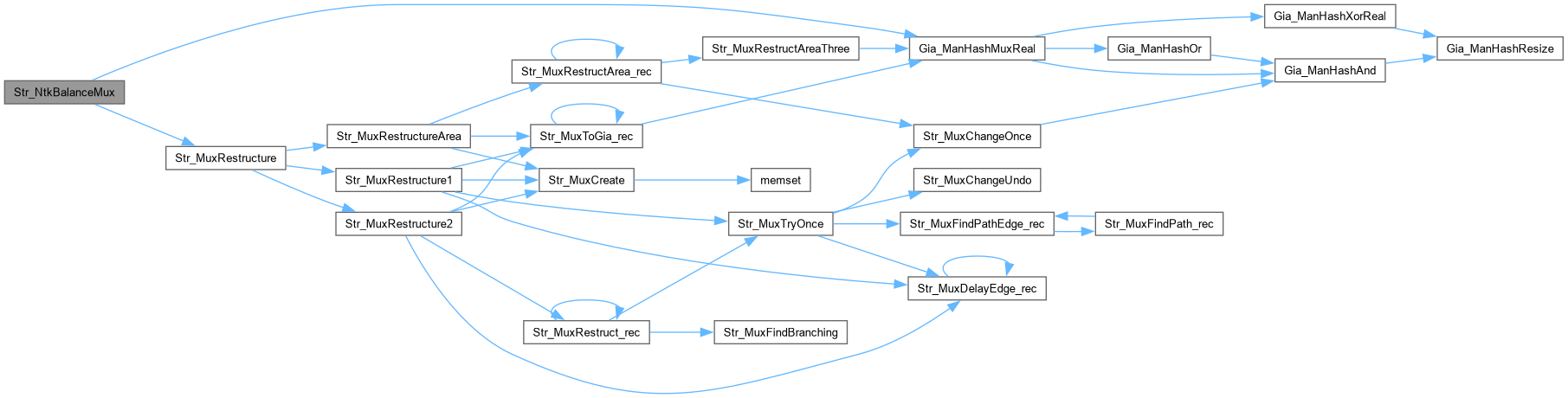
1260{
1261 extern int Str_MuxRestructure( Gia_Man_t * pNew, Str_Ntk_t * pNtk, int iMux, int nMuxes, Vec_Int_t * vDelay, int nLutSize, int fRecursive, int fOptArea, int fVerbose );
1262 int n, m, iRes, fUseRestruct = 1;
1263 if ( fUseRestruct )
1264 {
1265 for ( n = 0; n < nGroups; n++ )
1266 {
1267 iRes = Str_MuxRestructure( pNew, p, Str_ObjId(p, pObj), nMuxes, vDelay, nLutSize, fRecursive, fOptArea, fVerbose );
1268 if ( iRes == -1 )
1269 {
1270 for ( m = 0; m < nMuxes; m++, pObj++ )
1271 {
1272 pObj->iCopy = Gia_ManHashMuxReal( pNew, Str_ObjFaninCopy(p, pObj, 2), Str_ObjFaninCopy(p, pObj, 1), Str_ObjFaninCopy(p, pObj, 0) );
1273 Str_ObjDelay( pNew, Abc_Lit2Var(pObj->iCopy), nLutSize, vDelay );
1274 }
1275 }
1276 else
1277 {
1278 pObj += nMuxes - 1;
1279 pObj->iCopy = iRes;
1280 pObj++;
1281 }
1282 }
1283 }
1284 else
1285 {
1286 for ( n = 0; n < nGroups * nMuxes; n++, pObj++ )
1287 {
1288 pObj->iCopy = Gia_ManHashMuxReal( pNew, Str_ObjFaninCopy(p, pObj, 2), Str_ObjFaninCopy(p, pObj, 1), Str_ObjFaninCopy(p, pObj, 0) );
1289 Str_ObjDelay( pNew, Abc_Lit2Var(pObj->iCopy), nLutSize, vDelay );
1290 }
1291 }
1292}
int Str_MuxRestructure(Gia_Man_t *pNew, Str_Ntk_t *pNtk, int iMux, int nMuxes, Vec_Int_t *vDelay, int nLutSize, int fRecursive, int fOptArea, int fVerbose)
Definition giaStr.c:1750
Here is the call graph for this function:
Here is the caller graph for this function:

◆ Str_NtkBalanceTwo()

int Str_NtkBalanceTwo ( Gia_Man_t * pNew,
Str_Ntk_t * p,
Str_Obj_t * pObj,
int i,
int j,
Vec_Int_t * vDelay,
int * pCost,
int * pSuper,
word * pMatrix,
int nSize,
int nLutSize,
int CostBest )

Definition at line 1057 of file giaStr.c.

1058{
1059 int k, iLitRes, Delay;
1060 assert( i < j );
1061// printf( "Merging node %d and %d\n", i, j );
1062 if ( pObj->Type == STR_AND )
1063 iLitRes = Gia_ManHashAnd( pNew, pSuper[i], pSuper[j] );
1064 else
1065 iLitRes = Gia_ManHashXorReal( pNew, pSuper[i], pSuper[j] );
1066 Delay = Str_ObjDelay( pNew, Abc_Lit2Var(iLitRes), nLutSize, vDelay );
1067 // update
1068 pCost[i] = Delay;
1069 pSuper[i] = iLitRes;
1070 pMatrix[i] |= pMatrix[j];
1071// assert( (pCost[i] & 15) == CostBest || CostBest == -1 );
1072 // remove entry j
1073 nSize--;
1074 for ( k = j; k < nSize; k++ )
1075 {
1076 pCost[k] = pCost[k+1];
1077 pSuper[k] = pSuper[k+1];
1078 pMatrix[k] = pMatrix[k+1];
1079 }
1080 // move up the first one
1081 nSize--;
1082 for ( k = 0; k < nSize; k++ )
1083 {
1084 if ( pCost[k] <= pCost[k+1] )
1085 break;
1086 ABC_SWAP( int, pCost[k], pCost[k+1] );
1087 ABC_SWAP( int, pSuper[k], pSuper[k+1] );
1088 ABC_SWAP( word, pMatrix[k], pMatrix[k+1] );
1089 }
1090 return iLitRes;
1091}
Here is the call graph for this function:
Here is the caller graph for this function:

◆ Str_NtkToGia()

Gia_Man_t * Str_NtkToGia ( Gia_Man_t * pGia,
Str_Ntk_t * p )

Definition at line 172 of file giaStr.c.
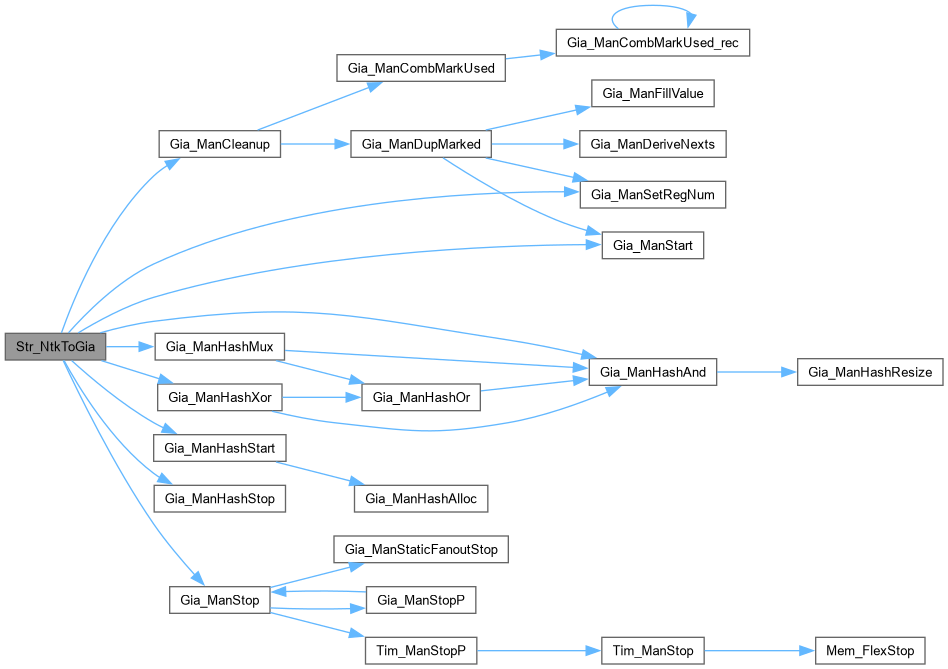
173{
174 Gia_Man_t * pNew, * pTemp;
175 Str_Obj_t * pObj; int k;
176 assert( pGia->pMuxes == NULL );
177 pNew = Gia_ManStart( 3 * Gia_ManObjNum(pGia) / 2 );
178 pNew->pName = Abc_UtilStrsav( pGia->pName );
179 pNew->pSpec = Abc_UtilStrsav( pGia->pSpec );
180 Gia_ManHashStart( pNew );
181 Str_NtkManForEachObj( p, pObj )
182 {
183 if ( pObj->Type == STR_PI )
184 pObj->iCopy = Gia_ManAppendCi( pNew );
185 else if ( pObj->Type == STR_AND )
186 {
187 pObj->iCopy = 1;
188 for ( k = 0; k < (int)pObj->nFanins; k++ )
189 pObj->iCopy = Gia_ManHashAnd( pNew, pObj->iCopy, Str_ObjFaninCopy(p, pObj, k) );
190 }
191 else if ( pObj->Type == STR_XOR )
192 {
193 pObj->iCopy = 0;
194 for ( k = 0; k < (int)pObj->nFanins; k++ )
195 pObj->iCopy = Gia_ManHashXor( pNew, pObj->iCopy, Str_ObjFaninCopy(p, pObj, k) );
196 }
197 else if ( pObj->Type == STR_MUX )
198 pObj->iCopy = Gia_ManHashMux( pNew, Str_ObjFaninCopy(p, pObj, 2), Str_ObjFaninCopy(p, pObj, 1), Str_ObjFaninCopy(p, pObj, 0) );
199 else if ( pObj->Type == STR_PO )
200 pObj->iCopy = Gia_ManAppendCo( pNew, Str_ObjFaninCopy(p, pObj, 0) );
201 else if ( pObj->Type == STR_CONST0 )
202 pObj->iCopy = 0;
203 else assert( 0 );
204 }
205 Gia_ManHashStop( pNew );
206// assert( Gia_ManObjNum(pNew) <= Gia_ManObjNum(pGia) );
207 Gia_ManSetRegNum( pNew, Gia_ManRegNum(pGia) );
208 pNew = Gia_ManCleanup( pTemp = pNew );
209 Gia_ManStop( pTemp );
210 return pNew;
211}
int Gia_ManHashXor(Gia_Man_t *p, int iLit0, int iLit1)
Definition giaHash.c:668
int Gia_ManHashMux(Gia_Man_t *p, int iCtrl, int iData1, int iData0)
Definition giaHash.c:692
Gia_Man_t * Gia_ManCleanup(Gia_Man_t *p)
Definition giaScl.c:84
Here is the call graph for this function: