ABC: A System for Sequential Synthesis and Verification
 
Loading...
Searching...
No Matches
intCheck.c File Reference
#include "intInt.h"
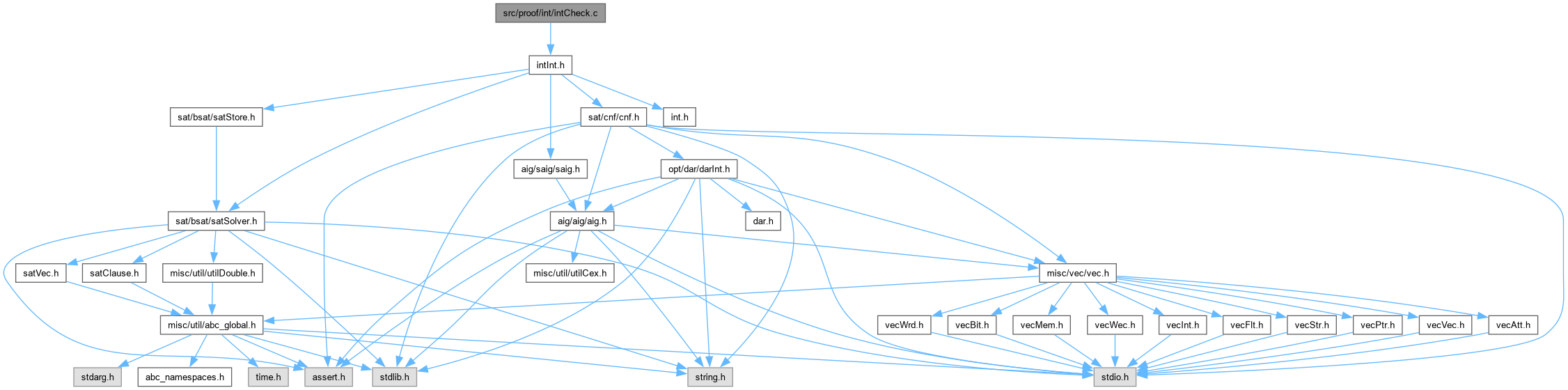
Include dependency graph for intCheck.c:

Go to the source code of this file.

Classes

struct  Inter_Check_t_
 DECLARATIONS ///. More...
 

Functions

Aig_Man_tInter_ManUnrollFrames (Aig_Man_t *pAig, int nFrames)
 FUNCTION DEFINITIONS ///.
 
Inter_Check_tInter_CheckStart (Aig_Man_t *pTrans, int nFramesK)
 MACRO DEFINITIONS ///.
 
void Inter_CheckStop (Inter_Check_t *p)
 
void Inter_CheckAddOrGate (Inter_Check_t *p, int iVarA, int iVarB, int iVarC)
 
void Inter_CheckAddEqual (Inter_Check_t *p, int iVarA, int iVarB)
 
int Inter_CheckPerform (Inter_Check_t *p, Cnf_Dat_t *pCnfInt, abctime nTimeNewOut)
 

Function Documentation

◆ Inter_CheckAddEqual()

void Inter_CheckAddEqual ( Inter_Check_t * p,
int iVarA,
int iVarB )

Function*************************************************************

Synopsis [Creates equality: A = B.]

Description []

SideEffects []

SeeAlso []

Definition at line 194 of file intCheck.c.
195{
196 int RetValue, pLits[3];
197 // add A => B or !A + B
198 pLits[0] = toLitCond(iVarA, 1);
199 pLits[1] = toLitCond(iVarB, 0);
200 RetValue = sat_solver_addclause( p->pSat, pLits, pLits + 2 );
201 assert( RetValue );
202 // add B => A or !B + A
203 pLits[0] = toLitCond(iVarB, 1);
204 pLits[1] = toLitCond(iVarA, 0);
205 RetValue = sat_solver_addclause( p->pSat, pLits, pLits + 2 );
206 assert( RetValue );
207}
#define sat_solver_addclause
Definition cecSatG2.c:37
Cube * p
Definition exorList.c:222
#define assert(ex)
Definition util_old.h:213
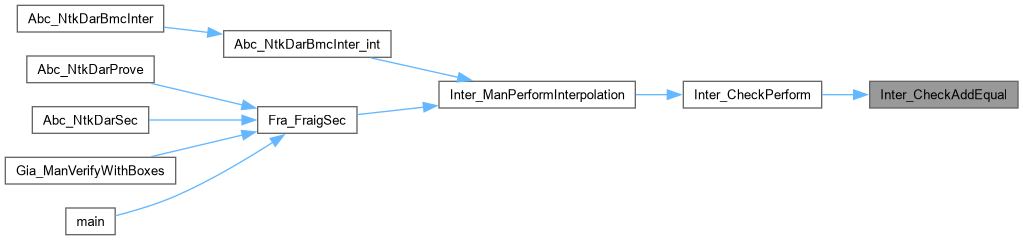
Here is the caller graph for this function:

◆ Inter_CheckAddOrGate()

void Inter_CheckAddOrGate ( Inter_Check_t * p,
int iVarA,
int iVarB,
int iVarC )

Function*************************************************************

Synopsis [Creates one OR-gate: A + B = C.]

Description []

SideEffects []

SeeAlso []

Definition at line 162 of file intCheck.c.
163{
164 int RetValue, pLits[3];
165 // add A => C or !A + C
166 pLits[0] = toLitCond(iVarA, 1);
167 pLits[1] = toLitCond(iVarC, 0);
168 RetValue = sat_solver_addclause( p->pSat, pLits, pLits + 2 );
169 assert( RetValue );
170 // add B => C or !B + C
171 pLits[0] = toLitCond(iVarB, 1);
172 pLits[1] = toLitCond(iVarC, 0);
173 RetValue = sat_solver_addclause( p->pSat, pLits, pLits + 2 );
174 assert( RetValue );
175 // add !A & !B => !C or A + B + !C
176 pLits[0] = toLitCond(iVarA, 0);
177 pLits[1] = toLitCond(iVarB, 0);
178 pLits[2] = toLitCond(iVarC, 1);
179 RetValue = sat_solver_addclause( p->pSat, pLits, pLits + 3 );
180 assert( RetValue );
181}
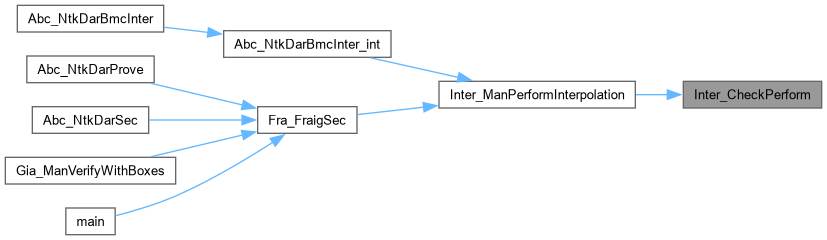
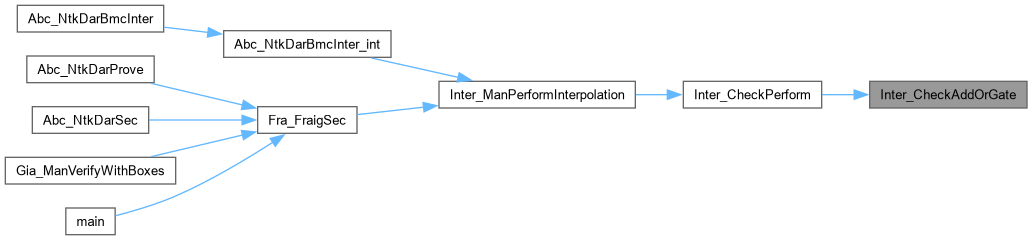
Here is the caller graph for this function:

◆ Inter_CheckPerform()

int Inter_CheckPerform ( Inter_Check_t * p,
Cnf_Dat_t * pCnfInt,
abctime nTimeNewOut )

Function*************************************************************

Synopsis [Perform the checking.]

Description [Returns 1 if the check has passed.]

SideEffects []

SeeAlso []

Definition at line 220 of file intCheck.c.
221{
222 Aig_Obj_t * pObj, * pObj2;
223 int i, f, VarA, VarB, RetValue, Entry, status;
224 int nRegs = Aig_ManCiNum(pCnfInt->pMan);
225 assert( Aig_ManCoNum(p->pCnf->pMan) == p->nFramesK * nRegs );
226 assert( Aig_ManCoNum(pCnfInt->pMan) == 1 );
227
228 // set runtime limit
229 if ( nTimeNewOut )
230 sat_solver_set_runtime_limit( p->pSat, nTimeNewOut );
231
232 // add clauses to the SAT solver
233 Cnf_DataLift( pCnfInt, p->nVars );
234 for ( f = 0; f <= p->nFramesK; f++ )
235 {
236 // add clauses to the solver
237 for ( i = 0; i < pCnfInt->nClauses; i++ )
238 {
239 RetValue = sat_solver_addclause( p->pSat, pCnfInt->pClauses[i], pCnfInt->pClauses[i+1] );
240 assert( RetValue );
241 }
242 // add equality clauses for the flop variables
243 Aig_ManForEachCi( pCnfInt->pMan, pObj, i )
244 {
245 pObj2 = f ? Aig_ManCo(p->pFrames, i + (f-1) * nRegs) : Aig_ManCi(p->pFrames, i);
246 Inter_CheckAddEqual( p, pCnfInt->pVarNums[pObj->Id], p->pCnf->pVarNums[pObj2->Id] );
247 }
248 // add final clauses
249 if ( f < p->nFramesK )
250 {
251 if ( f == Vec_IntSize(p->vOrLits) ) // find time here
252 {
253 // add literal to this frame
254 VarB = pCnfInt->pVarNums[ Aig_ManCo(pCnfInt->pMan, 0)->Id ];
255 Vec_IntPush( p->vOrLits, VarB );
256 }
257 else
258 {
259 // add OR gate for this frame
260 VarA = Vec_IntEntry( p->vOrLits, f );
261 VarB = pCnfInt->pVarNums[ Aig_ManCo(pCnfInt->pMan, 0)->Id ];
262 Inter_CheckAddOrGate( p, VarA, VarB, p->nVars + pCnfInt->nVars );
263 Vec_IntWriteEntry( p->vOrLits, f, p->nVars + pCnfInt->nVars ); // using var ID!
264 }
265 }
266 else
267 {
268 // add AND gate for this frame
269 VarB = pCnfInt->pVarNums[ Aig_ManCo(pCnfInt->pMan, 0)->Id ];
270 Vec_IntPush( p->vAndLits, VarB );
271 }
272 // update variable IDs
273 Cnf_DataLift( pCnfInt, pCnfInt->nVars + 1 );
274 p->nVars += pCnfInt->nVars + 1;
275 }
276 Cnf_DataLift( pCnfInt, -p->nVars );
277 assert( Vec_IntSize(p->vOrLits) == p->nFramesK );
278
279 // collect the assumption literals
280 Vec_IntClear( p->vAssLits );
281 Vec_IntForEachEntry( p->vOrLits, Entry, i )
282 Vec_IntPush( p->vAssLits, toLitCond(Entry, 0) );
283 Vec_IntForEachEntry( p->vAndLits, Entry, i )
284 Vec_IntPush( p->vAssLits, toLitCond(Entry, 1) );
285/*
286 if ( pCnfInt->nLiterals == 3635 )
287 {
288 int s = 0;
289 }
290*/
291 // call the SAT solver
292 status = sat_solver_solve( p->pSat, Vec_IntArray(p->vAssLits),
293 Vec_IntArray(p->vAssLits) + Vec_IntSize(p->vAssLits),
294 (ABC_INT64_T)0, (ABC_INT64_T)0, (ABC_INT64_T)0, (ABC_INT64_T)0 );
295
296 return status == l_False;
297}
#define Aig_ManForEachCi(p, pObj, i)
ITERATORS ///.
Definition aig.h:393
struct Aig_Obj_t_ Aig_Obj_t
Definition aig.h:51
#define l_False
Definition bmcBmcS.c:36
#define sat_solver_solve
Definition cecSatG2.c:45
void Cnf_DataLift(Cnf_Dat_t *p, int nVarsPlus)
Definition cnfMan.c:232
void Inter_CheckAddOrGate(Inter_Check_t *p, int iVarA, int iVarB, int iVarC)
Definition intCheck.c:162
void Inter_CheckAddEqual(Inter_Check_t *p, int iVarA, int iVarB)
Definition intCheck.c:194
int Id
Definition aig.h:85
int nVars
Definition cnf.h:59
int * pVarNums
Definition cnf.h:63
int ** pClauses
Definition cnf.h:62
int nClauses
Definition cnf.h:61
Aig_Man_t * pMan
Definition cnf.h:58
#define Vec_IntForEachEntry(vVec, Entry, i)
MACRO DEFINITIONS ///.
Definition vecInt.h:54
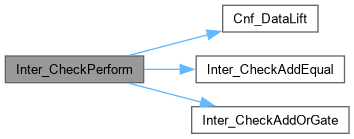
Here is the call graph for this function:
Here is the caller graph for this function:

◆ Inter_CheckStart()

Inter_Check_t * Inter_CheckStart ( Aig_Man_t * pTrans,
int nFramesK )

MACRO DEFINITIONS ///.

Function*************************************************************

Synopsis [This procedure sets default values of interpolation parameters.]

Description []

SideEffects []

SeeAlso []

Definition at line 105 of file intCheck.c.
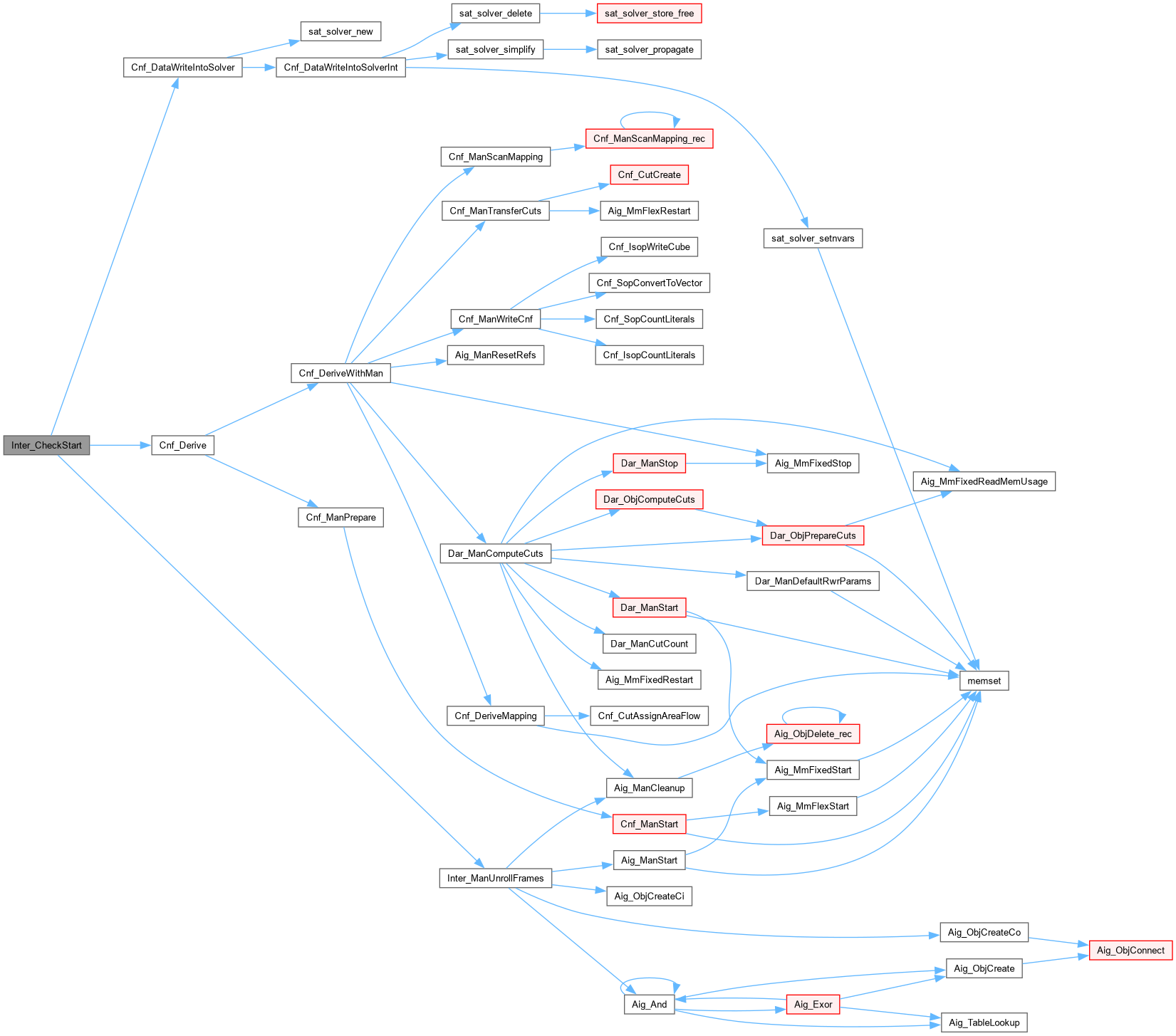
106{
108 // create solver
109 p = ABC_CALLOC( Inter_Check_t, 1 );
110 p->vOrLits = Vec_IntAlloc( 100 );
111 p->vAndLits = Vec_IntAlloc( 100 );
112 p->vAssLits = Vec_IntAlloc( 100 );
113 // generate the timeframes
114 p->pFrames = Inter_ManUnrollFrames( pTrans, nFramesK );
115 assert( Aig_ManCiNum(p->pFrames) == nFramesK * Saig_ManPiNum(pTrans) + Saig_ManRegNum(pTrans) );
116 assert( Aig_ManCoNum(p->pFrames) == nFramesK * Saig_ManRegNum(pTrans) );
117 // convert to CNF
118 p->pCnf = Cnf_Derive( p->pFrames, Aig_ManCoNum(p->pFrames) );
119 p->pSat = (sat_solver *)Cnf_DataWriteIntoSolver( p->pCnf, 1, 0 );
120 // assign parameters
121 p->nFramesK = nFramesK;
122 p->nVars = p->pCnf->nVars;
123 return p;
124}
#define ABC_CALLOC(type, num)
Definition abc_global.h:265
#define sat_solver
Definition cecSatG2.c:34
Cnf_Dat_t * Cnf_Derive(Aig_Man_t *pAig, int nOutputs)
Definition cnfCore.c:165
Aig_Man_t * Inter_ManUnrollFrames(Aig_Man_t *pAig, int nFrames)
FUNCTION DEFINITIONS ///.
Definition intCheck.c:59
struct Inter_Check_t_ Inter_Check_t
Definition intInt.h:84
void * Cnf_DataWriteIntoSolver(Cnf_Dat_t *p, int nFrames, int fInit)
Definition cnfMan.c:579
Here is the call graph for this function:
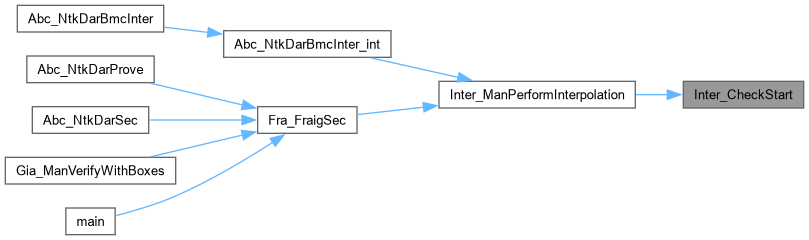
Here is the caller graph for this function:

◆ Inter_CheckStop()

void Inter_CheckStop ( Inter_Check_t * p)

Function*************************************************************

Synopsis [This procedure sets default values of interpolation parameters.]

Description []

SideEffects []

SeeAlso []

Definition at line 137 of file intCheck.c.
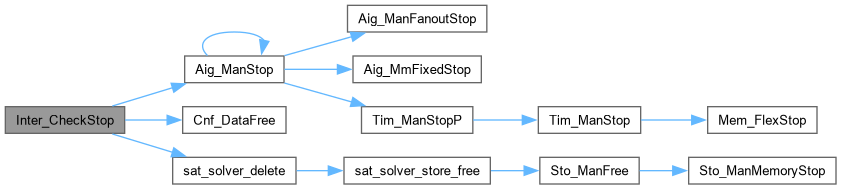
138{
139 if ( p == NULL )
140 return;
141 Vec_IntFree( p->vOrLits );
142 Vec_IntFree( p->vAndLits );
143 Vec_IntFree( p->vAssLits );
144 Cnf_DataFree( p->pCnf );
145 Aig_ManStop( p->pFrames );
146 sat_solver_delete( p->pSat );
147 ABC_FREE( p );
148}
#define ABC_FREE(obj)
Definition abc_global.h:267
void Aig_ManStop(Aig_Man_t *p)
Definition aigMan.c:187
void Cnf_DataFree(Cnf_Dat_t *p)
Definition cnfMan.c:207
void sat_solver_delete(sat_solver *s)
Definition satSolver.c:1341
Here is the call graph for this function:
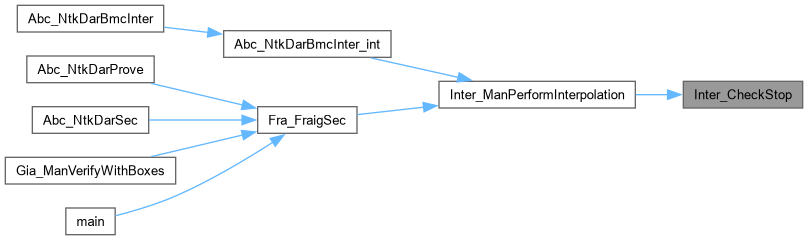
Here is the caller graph for this function:

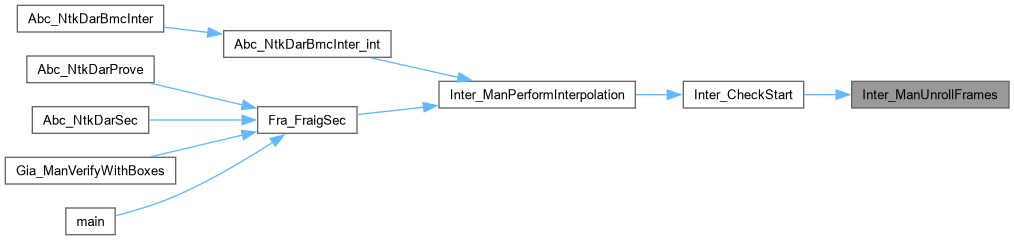
◆ Inter_ManUnrollFrames()

Aig_Man_t * Inter_ManUnrollFrames ( Aig_Man_t * pAig,
int nFrames )

FUNCTION DEFINITIONS ///.

Function*************************************************************

Synopsis [Create timeframes of the manager for interpolation.]

Description [The resulting manager is combinational. The primary inputs corresponding to register outputs are ordered first.]

SideEffects []

SeeAlso []

Definition at line 59 of file intCheck.c.
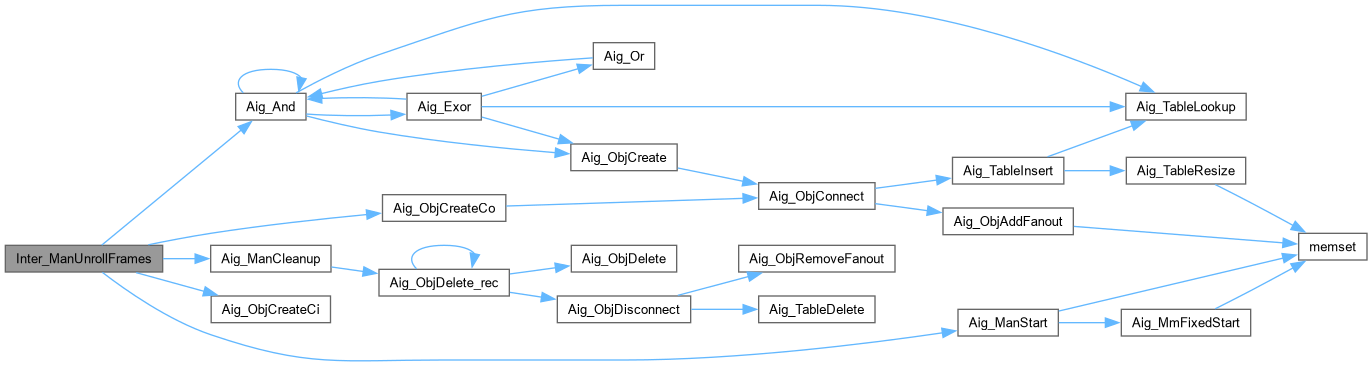
60{
61 Aig_Man_t * pFrames;
62 Aig_Obj_t * pObj, * pObjLi, * pObjLo;
63 int i, f;
64 assert( Saig_ManRegNum(pAig) > 0 );
65 pFrames = Aig_ManStart( Aig_ManNodeNum(pAig) * nFrames );
66 // map the constant node
67 Aig_ManConst1(pAig)->pData = Aig_ManConst1( pFrames );
68 // create variables for register outputs
69 Saig_ManForEachLo( pAig, pObj, i )
70 pObj->pData = Aig_ObjCreateCi( pFrames );
71 // add timeframes
72 for ( f = 0; f < nFrames; f++ )
73 {
74 // create PI nodes for this frame
75 Saig_ManForEachPi( pAig, pObj, i )
76 pObj->pData = Aig_ObjCreateCi( pFrames );
77 // add internal nodes of this frame
78 Aig_ManForEachNode( pAig, pObj, i )
79 pObj->pData = Aig_And( pFrames, Aig_ObjChild0Copy(pObj), Aig_ObjChild1Copy(pObj) );
80 // save register inputs
81 Saig_ManForEachLi( pAig, pObj, i )
82 pObj->pData = Aig_ObjChild0Copy(pObj);
83 // transfer to register outputs
84 Saig_ManForEachLiLo( pAig, pObjLi, pObjLo, i )
85 {
86 pObjLo->pData = pObjLi->pData;
87 Aig_ObjCreateCo( pFrames, (Aig_Obj_t *)pObjLo->pData );
88 }
89 }
90 Aig_ManCleanup( pFrames );
91 return pFrames;
92}
Aig_Obj_t * Aig_And(Aig_Man_t *p, Aig_Obj_t *p0, Aig_Obj_t *p1)
Definition aigOper.c:104
Aig_Obj_t * Aig_ObjCreateCo(Aig_Man_t *p, Aig_Obj_t *pDriver)
Definition aigObj.c:66
Aig_Man_t * Aig_ManStart(int nNodesMax)
DECLARATIONS ///.
Definition aigMan.c:47
#define Aig_ManForEachNode(p, pObj, i)
Definition aig.h:413
typedefABC_NAMESPACE_HEADER_START struct Aig_Man_t_ Aig_Man_t
INCLUDES ///.
Definition aig.h:50
int Aig_ManCleanup(Aig_Man_t *p)
Definition aigMan.c:265
Aig_Obj_t * Aig_ObjCreateCi(Aig_Man_t *p)
DECLARATIONS ///.
Definition aigObj.c:45
#define Saig_ManForEachLiLo(p, pObjLi, pObjLo, i)
Definition saig.h:101
#define Saig_ManForEachLi(p, pObj, i)
Definition saig.h:98
#define Saig_ManForEachLo(p, pObj, i)
Definition saig.h:96
#define Saig_ManForEachPi(p, pObj, i)
Definition saig.h:91
void * pData
Definition aig.h:87
Here is the call graph for this function:
Here is the caller graph for this function: