ABC: A System for Sequential Synthesis and Verification
 
Loading...
Searching...
No Matches
fpgaInt.h File Reference
#include <stdio.h>
#include <stdlib.h>
#include <string.h>
#include "misc/extra/extra.h"
#include "fpga.h"
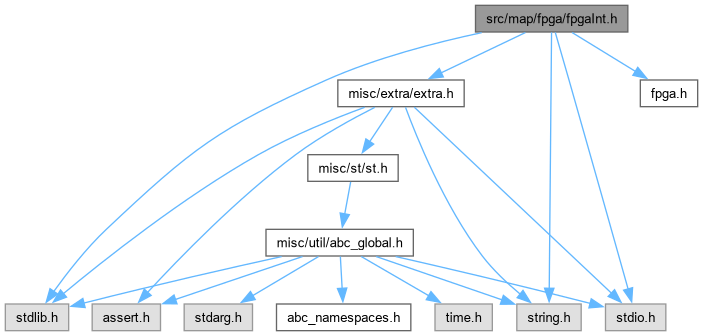
Include dependency graph for fpgaInt.h:
This graph shows which files directly or indirectly include this file:

Go to the source code of this file.

Classes

struct  Fpga_ManStruct_t_
 STRUCTURE DEFINITIONS ///. More...
 
struct  Fpga_LutLibStruct_t_
 
struct  Fpga_NodeStruct_t_
 
struct  Fpga_CutStruct_t_
 
struct  Fpga_NodeVecStruct_t_
 

Macros

#define FPGA_MAX_LEAVES   6
 INCLUDES ///.
 
#define FPGA_MASK(n)
 
#define FPGA_FULL   (~((unsigned)0))
 
#define FPGA_NO_VAR   (-9999.0)
 
#define FPGA_NUM_BYTES(n)
 
#define FPGA_MIN(a, b)
 
#define FPGA_MAX(a, b)
 
#define FPGA_FLOAT_LARGE   ((float)1.0e+20)
 
#define FPGA_FLOAT_SMALL   ((float)1.0e-20)
 
#define FPGA_INT_LARGE   (10000000)
 
#define FPGA_SEQ_SIGN(p)
 
#define Fpga_CutIsComplement(p)
 
#define Fpga_CutRegular(p)
 
#define Fpga_CutNot(p)
 
#define Fpga_CutNotCond(p, c)
 
#define Fpga_SeqIsComplement(p)
 
#define Fpga_SeqRegular(p)
 
#define Fpga_SeqIndex(p)
 
#define Fpga_SeqIndexCreate(p, Ind)
 
#define Fpga_NodeReadRef(p)
 
#define Fpga_NodeRef(p)
 
#define Fpga_NodeIsSimComplement(p)
 
#define FPGA_RANDOM_UNSIGNED   ((((unsigned)rand()) << 24) ^ (((unsigned)rand()) << 12) ^ ((unsigned)rand()))
 
#define Fpga_NodeReadNextFanout(pNode, pFanout)
 
#define Fpga_NodeReadNextFanoutPlace(pNode, pFanout)
 
#define Fpga_NodeForEachFanout(pNode, pFanout)
 
#define Fpga_NodeForEachFanoutSafe(pNode, pFanout, pFanout2)
 

Functions

void Fpga_MappingCuts (Fpga_Man_t *p)
 GLOBAL VARIABLES ///.
 
void Fpga_MappingCreatePiCuts (Fpga_Man_t *p)
 
int Fpga_CutCountAll (Fpga_Man_t *pMan)
 
Fpga_Cut_tFpga_CutAlloc (Fpga_Man_t *p)
 DECLARATIONS ///.
 
Fpga_Cut_tFpga_CutDup (Fpga_Man_t *p, Fpga_Cut_t *pCutOld)
 
void Fpga_CutFree (Fpga_Man_t *p, Fpga_Cut_t *pCut)
 
void Fpga_CutPrint (Fpga_Man_t *p, Fpga_Node_t *pRoot, Fpga_Cut_t *pCut)
 
Fpga_Cut_tFpga_CutCreateSimple (Fpga_Man_t *p, Fpga_Node_t *pNode)
 
float Fpga_CutGetRootArea (Fpga_Man_t *p, Fpga_Cut_t *pCut)
 
Fpga_Cut_tFpga_CutListAppend (Fpga_Cut_t *pSetAll, Fpga_Cut_t *pSets)
 
void Fpga_CutListRecycle (Fpga_Man_t *p, Fpga_Cut_t *pSetList, Fpga_Cut_t *pSave)
 
int Fpga_CutListCount (Fpga_Cut_t *pSets)
 
void Fpga_CutRemoveFanouts (Fpga_Man_t *p, Fpga_Node_t *pNode, Fpga_Cut_t *pCut)
 
void Fpga_CutInsertFanouts (Fpga_Man_t *p, Fpga_Node_t *pNode, Fpga_Cut_t *pCut)
 
float Fpga_CutGetAreaRefed (Fpga_Man_t *pMan, Fpga_Cut_t *pCut)
 
float Fpga_CutGetAreaDerefed (Fpga_Man_t *pMan, Fpga_Cut_t *pCut)
 
float Fpga_CutRef (Fpga_Man_t *pMan, Fpga_Node_t *pNode, Fpga_Cut_t *pCut, int fFanouts)
 
float Fpga_CutDeref (Fpga_Man_t *pMan, Fpga_Node_t *pNode, Fpga_Cut_t *pCut, int fFanouts)
 
float Fpga_CutGetAreaFlow (Fpga_Man_t *pMan, Fpga_Cut_t *pCut)
 
void Fpga_CutGetParameters (Fpga_Man_t *pMan, Fpga_Cut_t *pCut)
 
void Fpga_NodeAddFaninFanout (Fpga_Node_t *pFanin, Fpga_Node_t *pFanout)
 
void Fpga_NodeRemoveFaninFanout (Fpga_Node_t *pFanin, Fpga_Node_t *pFanoutToRemove)
 
int Fpga_NodeGetFanoutNum (Fpga_Node_t *pNode)
 
Fpga_LutLib_tFpga_LutLibRead (char *FileName, int fVerbose)
 
void Fpga_LutLibFree (Fpga_LutLib_t *p)
 
void Fpga_LutLibPrint (Fpga_LutLib_t *pLutLib)
 
int Fpga_LutLibDelaysAreDiscrete (Fpga_LutLib_t *pLutLib)
 
int Fpga_MappingMatches (Fpga_Man_t *p, int fDelayOriented)
 FUNCTION DEFINITIONS ///.
 
int Fpga_MappingMatchesArea (Fpga_Man_t *p)
 
int Fpga_MappingMatchesSwitch (Fpga_Man_t *p)
 
void Fpga_MappingShow (Fpga_Man_t *pMan, char *pFileName)
 
void Fpga_MappingShowNodes (Fpga_Man_t *pMan, Fpga_Node_t **ppRoots, int nRoots, char *pFileName)
 
float Fpga_CutGetSwitchDerefed (Fpga_Man_t *pMan, Fpga_Node_t *pNode, Fpga_Cut_t *pCut)
 DECLARATIONS ///.
 
float Fpga_CutRefSwitch (Fpga_Man_t *pMan, Fpga_Node_t *pNode, Fpga_Cut_t *pCut, int fFanouts)
 
float Fpga_CutDerefSwitch (Fpga_Man_t *pMan, Fpga_Node_t *pNode, Fpga_Cut_t *pCut, int fFanouts)
 
float Fpga_MappingGetSwitching (Fpga_Man_t *pMan, Fpga_NodeVec_t *vMapping)
 
float Fpga_TimeCutComputeArrival (Fpga_Man_t *pMan, Fpga_Cut_t *pCut)
 DECLARATIONS ///.
 
float Fpga_TimeCutComputeArrival_rec (Fpga_Man_t *pMan, Fpga_Cut_t *pCut)
 
float Fpga_TimeComputeArrivalMax (Fpga_Man_t *p)
 
void Fpga_TimeComputeRequiredGlobal (Fpga_Man_t *p, int fFirstTime)
 
void Fpga_TimeComputeRequired (Fpga_Man_t *p, float fRequired)
 
void Fpga_TimePropagateRequired (Fpga_Man_t *p, Fpga_NodeVec_t *vNodes)
 
void Fpga_TimePropagateArrival (Fpga_Man_t *p)
 
Fpga_NodeVec_tFpga_NodeVecAlloc (int nCap)
 FUNCTION DEFINITIONS ///.
 
void Fpga_NodeVecFree (Fpga_NodeVec_t *p)
 
Fpga_Node_t ** Fpga_NodeVecReadArray (Fpga_NodeVec_t *p)
 
int Fpga_NodeVecReadSize (Fpga_NodeVec_t *p)
 
void Fpga_NodeVecGrow (Fpga_NodeVec_t *p, int nCapMin)
 
void Fpga_NodeVecShrink (Fpga_NodeVec_t *p, int nSizeNew)
 
void Fpga_NodeVecClear (Fpga_NodeVec_t *p)
 
void Fpga_NodeVecPush (Fpga_NodeVec_t *p, Fpga_Node_t *Entry)
 
int Fpga_NodeVecPushUnique (Fpga_NodeVec_t *p, Fpga_Node_t *Entry)
 
Fpga_Node_tFpga_NodeVecPop (Fpga_NodeVec_t *p)
 
void Fpga_NodeVecWriteEntry (Fpga_NodeVec_t *p, int i, Fpga_Node_t *Entry)
 
Fpga_Node_tFpga_NodeVecReadEntry (Fpga_NodeVec_t *p, int i)
 
void Fpga_NodeVecSortByLevel (Fpga_NodeVec_t *p)
 
void Fpga_SortNodesByArrivalTimes (Fpga_NodeVec_t *p)
 
void Fpga_NodeVecUnion (Fpga_NodeVec_t *p, Fpga_NodeVec_t *p1, Fpga_NodeVec_t *p2)
 
void Fpga_NodeVecPushOrder (Fpga_NodeVec_t *vNodes, Fpga_Node_t *pNode, int fIncreasing)
 
void Fpga_NodeVecReverse (Fpga_NodeVec_t *vNodes)
 
Fpga_NodeVec_tFpga_MappingDfs (Fpga_Man_t *pMan, int fCollectEquiv)
 FUNCTION DEFINITIONS ///.
 
Fpga_NodeVec_tFpga_MappingDfsNodes (Fpga_Man_t *pMan, Fpga_Node_t **ppNodes, int nNodes, int fEquiv)
 
int Fpga_CountLevels (Fpga_Man_t *pMan)
 
float Fpga_MappingGetAreaFlow (Fpga_Man_t *p)
 
float Fpga_MappingArea (Fpga_Man_t *pMan)
 
float Fpga_MappingAreaTrav (Fpga_Man_t *pMan)
 
float Fpga_MappingSetRefsAndArea (Fpga_Man_t *pMan)
 
void Fpga_MappingPrintOutputArrivals (Fpga_Man_t *p)
 
void Fpga_MappingSetupTruthTables (unsigned uTruths[][2])
 
void Fpga_MappingSetupMask (unsigned uMask[], int nVarsMax)
 
void Fpga_MappingSortByLevel (Fpga_Man_t *pMan, Fpga_NodeVec_t *vNodes, int fIncreasing)
 
Fpga_NodeVec_tFpga_DfsLim (Fpga_Man_t *pMan, Fpga_Node_t *pNode, int nLevels)
 
Fpga_NodeVec_tFpga_MappingLevelize (Fpga_Man_t *pMan, Fpga_NodeVec_t *vNodes)
 
int Fpga_MappingMaxLevel (Fpga_Man_t *pMan)
 
void Fpga_ManReportChoices (Fpga_Man_t *pMan)
 
void Fpga_MappingSetChoiceLevels (Fpga_Man_t *pMan)
 

Macro Definition Documentation

◆ Fpga_CutIsComplement

#define Fpga_CutIsComplement ( p)
Value:
(((int)((ABC_PTRUINT_T)(p) & 01)))
Cube * p
Definition exorList.c:222

Definition at line 73 of file fpgaInt.h.

◆ Fpga_CutNot

#define Fpga_CutNot ( p)
Value:
((Fpga_Cut_t *)((ABC_PTRUINT_T)(p) ^ 01))
struct Fpga_CutStruct_t_ Fpga_Cut_t
Definition fpga.h:46

Definition at line 75 of file fpgaInt.h.

◆ Fpga_CutNotCond

#define Fpga_CutNotCond ( p,
c )
Value:
((Fpga_Cut_t *)((ABC_PTRUINT_T)(p) ^ (c)))

Definition at line 76 of file fpgaInt.h.

◆ Fpga_CutRegular

#define Fpga_CutRegular ( p)
Value:
((Fpga_Cut_t *)((ABC_PTRUINT_T)(p) & ~01))

Definition at line 74 of file fpgaInt.h.

◆ FPGA_FLOAT_LARGE

#define FPGA_FLOAT_LARGE   ((float)1.0e+20)

Definition at line 65 of file fpgaInt.h.

◆ FPGA_FLOAT_SMALL

#define FPGA_FLOAT_SMALL   ((float)1.0e-20)

Definition at line 66 of file fpgaInt.h.

◆ FPGA_FULL

#define FPGA_FULL   (~((unsigned)0))

Definition at line 56 of file fpgaInt.h.

◆ FPGA_INT_LARGE

#define FPGA_INT_LARGE   (10000000)

Definition at line 67 of file fpgaInt.h.

◆ FPGA_MASK

#define FPGA_MASK ( n)
Value:
((~((unsigned)0)) >> (32-(n)))

Definition at line 55 of file fpgaInt.h.

◆ FPGA_MAX

#define FPGA_MAX ( a,
b )
Value:
(((a) > (b))? (a) : (b))

Definition at line 62 of file fpgaInt.h.

◆ FPGA_MAX_LEAVES

#define FPGA_MAX_LEAVES   6

INCLUDES ///.

CFile****************************************************************

FileName [fpgaInt.h]

PackageName [MVSIS 2.0: Multi-valued logic synthesis system.]

Synopsis [Technology mapping for variable-size-LUT FPGAs.]

Author [MVSIS Group]

Affiliation [UC Berkeley]

Date [Ver. 2.0. Started - August 18, 2004.]

Revision [

Id
fpgaInt.h,v 1.8 2004/09/30 21:18:10 satrajit Exp

] PARAMETERS /// MACRO DEFINITIONS ///

Definition at line 52 of file fpgaInt.h.

◆ FPGA_MIN

#define FPGA_MIN ( a,
b )
Value:
(((a) < (b))? (a) : (b))

Definition at line 61 of file fpgaInt.h.

◆ FPGA_NO_VAR

#define FPGA_NO_VAR   (-9999.0)

Definition at line 57 of file fpgaInt.h.

◆ Fpga_NodeForEachFanout

#define Fpga_NodeForEachFanout ( pNode,
pFanout )
Value:
for ( pFanout = (pNode)->pFanPivot; pFanout; \
pFanout = Fpga_NodeReadNextFanout(pNode, pFanout) )
#define Fpga_NodeReadNextFanout(pNode, pFanout)
Definition fpgaInt.h:258

Definition at line 269 of file fpgaInt.h.

269#define Fpga_NodeForEachFanout( pNode, pFanout ) \
270 for ( pFanout = (pNode)->pFanPivot; pFanout; \
271 pFanout = Fpga_NodeReadNextFanout(pNode, pFanout) )

◆ Fpga_NodeForEachFanoutSafe

#define Fpga_NodeForEachFanoutSafe ( pNode,
pFanout,
pFanout2 )
Value:
for ( pFanout = (pNode)->pFanPivot, \
pFanout2 = Fpga_NodeReadNextFanout(pNode, pFanout); \
pFanout; \
pFanout = pFanout2, \
pFanout2 = Fpga_NodeReadNextFanout(pNode, pFanout) )

Definition at line 274 of file fpgaInt.h.

274#define Fpga_NodeForEachFanoutSafe( pNode, pFanout, pFanout2 ) \
275 for ( pFanout = (pNode)->pFanPivot, \
276 pFanout2 = Fpga_NodeReadNextFanout(pNode, pFanout); \
277 pFanout; \
278 pFanout = pFanout2, \
279 pFanout2 = Fpga_NodeReadNextFanout(pNode, pFanout) )

◆ Fpga_NodeIsSimComplement

#define Fpga_NodeIsSimComplement ( p)
Value:
(Fpga_IsComplement(p)? !(Fpga_Regular(p)->fInv) : (p)->fInv)
#define Fpga_IsComplement(p)
GLOBAL VARIABLES ///.
Definition fpga.h:57
#define Fpga_Regular(p)
Definition fpga.h:58

Definition at line 89 of file fpgaInt.h.

◆ Fpga_NodeReadNextFanout

#define Fpga_NodeReadNextFanout ( pNode,
pFanout )
Value:
( ( pFanout == NULL )? NULL : \
((Fpga_Regular((pFanout)->p1) == (pNode))? \
(pFanout)->pFanFanin1 : (pFanout)->pFanFanin2) )

Definition at line 258 of file fpgaInt.h.

258#define Fpga_NodeReadNextFanout( pNode, pFanout ) \
259 ( ( pFanout == NULL )? NULL : \
260 ((Fpga_Regular((pFanout)->p1) == (pNode))? \
261 (pFanout)->pFanFanin1 : (pFanout)->pFanFanin2) )

◆ Fpga_NodeReadNextFanoutPlace

#define Fpga_NodeReadNextFanoutPlace ( pNode,
pFanout )
Value:
( (Fpga_Regular((pFanout)->p1) == (pNode))? \
&(pFanout)->pFanFanin1 : &(pFanout)->pFanFanin2 )

Definition at line 264 of file fpgaInt.h.

264#define Fpga_NodeReadNextFanoutPlace( pNode, pFanout ) \
265 ( (Fpga_Regular((pFanout)->p1) == (pNode))? \
266 &(pFanout)->pFanFanin1 : &(pFanout)->pFanFanin2 )

◆ Fpga_NodeReadRef

#define Fpga_NodeReadRef ( p)
Value:
((Fpga_Regular(p))->nRefs)

Definition at line 85 of file fpgaInt.h.

◆ Fpga_NodeRef

#define Fpga_NodeRef ( p)
Value:
((Fpga_Regular(p))->nRefs++)

Definition at line 86 of file fpgaInt.h.

◆ FPGA_NUM_BYTES

#define FPGA_NUM_BYTES ( n)
Value:
(((n)/16 + (((n)%16) > 0))*16)

Definition at line 58 of file fpgaInt.h.

◆ FPGA_RANDOM_UNSIGNED

#define FPGA_RANDOM_UNSIGNED   ((((unsigned)rand()) << 24) ^ (((unsigned)rand()) << 12) ^ ((unsigned)rand()))

Definition at line 92 of file fpgaInt.h.

◆ FPGA_SEQ_SIGN

#define FPGA_SEQ_SIGN ( p)
Value:
(1 << (((ABC_PTRUINT_T)p)%31));

Definition at line 70 of file fpgaInt.h.

◆ Fpga_SeqIndex

#define Fpga_SeqIndex ( p)
Value:
((((ABC_PTRUINT_T)(p)) >> 1) & 07)

Definition at line 81 of file fpgaInt.h.

◆ Fpga_SeqIndexCreate

#define Fpga_SeqIndexCreate ( p,
Ind )
Value:
(((ABC_PTRUINT_T)(p)) | (1 << (((ABC_PTRUINT_T)(Ind)) & 07)))

Definition at line 82 of file fpgaInt.h.

◆ Fpga_SeqIsComplement

#define Fpga_SeqIsComplement ( p)
Value:
(((int)((ABC_PTRUINT_T) (p) & 01)))

Definition at line 79 of file fpgaInt.h.

◆ Fpga_SeqRegular

#define Fpga_SeqRegular ( p)
Value:
((Fpga_Node_t *)((ABC_PTRUINT_T)(p) & ~015))
struct Fpga_NodeStruct_t_ Fpga_Node_t
Definition fpga.h:44

Definition at line 80 of file fpgaInt.h.

Function Documentation

◆ Fpga_CountLevels()

int Fpga_CountLevels ( Fpga_Man_t * pMan)
extern

◆ Fpga_CutAlloc()

Fpga_Cut_t * Fpga_CutAlloc ( Fpga_Man_t * p)
extern

DECLARATIONS ///.

CFile****************************************************************

FileName [fpgaCutUtils.c]

PackageName [MVSIS 1.3: Multi-valued logic synthesis system.]

Synopsis [Generic technology mapping engine.]

Author [MVSIS Group]

Affiliation [UC Berkeley]

Date [Ver. 2.0. Started - August 18, 2004.]

Revision [

Id
fpgaCutUtils.h,v 1.0 2003/09/08 00:00:00 alanmi Exp

] FUNCTION DEFINITIONS /// Function*************************************************************

Synopsis [Allocates the cut.]

Description []

SideEffects []

SeeAlso []

Definition at line 43 of file fpgaCutUtils.c.
44{
45 Fpga_Cut_t * pCut;
46 pCut = (Fpga_Cut_t *)Extra_MmFixedEntryFetch( p->mmCuts );
47 memset( pCut, 0, sizeof(Fpga_Cut_t) );
48 return pCut;
49}
char * Extra_MmFixedEntryFetch(Extra_MmFixed_t *p)
char * memset()
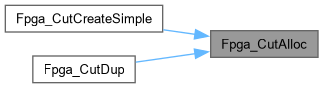
Here is the caller graph for this function:

◆ Fpga_CutCountAll()

int Fpga_CutCountAll ( Fpga_Man_t * pMan)
extern

Function*************************************************************

Synopsis [Counts all the cuts.]

Description []

SideEffects []

SeeAlso []

Definition at line 767 of file fpgaCut.c.
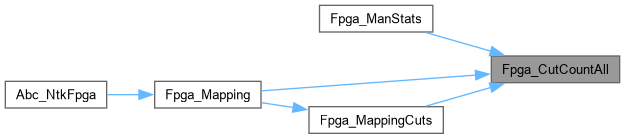
768{
769 Fpga_Node_t * pNode;
770 Fpga_Cut_t * pCut;
771 int i, nCuts;
772 // go through all the nodes in the unique table of the manager
773 nCuts = 0;
774 for ( i = 0; i < pMan->nBins; i++ )
775 for ( pNode = pMan->pBins[i]; pNode; pNode = pNode->pNext )
776 for ( pCut = pNode->pCuts; pCut; pCut = pCut->pNext )
777 if ( pCut->nLeaves > 1 ) // skip the elementary cuts
778 {
779// Fpga_CutVolume( pCut );
780 nCuts++;
781 }
782 return nCuts;
783}
Fpga_Cut_t * pNext
Definition fpgaInt.h:246
Fpga_Node_t ** pBins
Definition fpgaInt.h:102
Fpga_Cut_t * pCuts
Definition fpgaInt.h:224
Fpga_Node_t * pNext
Definition fpgaInt.h:183
Here is the caller graph for this function:

◆ Fpga_CutCreateSimple()

Fpga_Cut_t * Fpga_CutCreateSimple ( Fpga_Man_t * p,
Fpga_Node_t * pNode )
extern

Function*************************************************************

Synopsis []

Description []

SideEffects []

SeeAlso []

Definition at line 123 of file fpgaCutUtils.c.

124{
125 Fpga_Cut_t * pCut;
126 pCut = Fpga_CutAlloc( p );
127 pCut->pRoot = pNode;
128 pCut->nLeaves = 1;
129 pCut->ppLeaves[0] = pNode;
130 pCut->uSign = FPGA_SEQ_SIGN(pCut->ppLeaves[0]);
131 return pCut;
132}
ABC_NAMESPACE_IMPL_START Fpga_Cut_t * Fpga_CutAlloc(Fpga_Man_t *p)
DECLARATIONS ///.
#define FPGA_SEQ_SIGN(p)
Definition fpgaInt.h:70
Fpga_Node_t * pRoot
Definition fpgaInt.h:236
Fpga_Node_t * ppLeaves[FPGA_MAX_LEAVES+1]
Definition fpgaInt.h:237
unsigned uSign
Definition fpgaInt.h:239
Here is the call graph for this function:

◆ Fpga_CutDeref()

float Fpga_CutDeref ( Fpga_Man_t * pMan,
Fpga_Node_t * pNode,
Fpga_Cut_t * pCut,
int fFanouts )
extern

function*************************************************************

synopsis [Dereferences the cut.]

description [This procedure is similar to the procedure NodeRecusiveDeref.]

sideeffects []

seealso []

Definition at line 421 of file fpgaCutUtils.c.
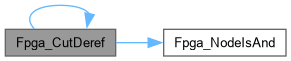
422{
423 Fpga_Node_t * pNodeChild;
424 float aArea;
425 int i;
426
427 // deref the fanouts
428// if ( fFanouts )
429// Fpga_CutRemoveFanouts( pMan, pNode, pCut );
430
431 // start the area of this cut
432 aArea = pMan->pLutLib->pLutAreas[(int)pCut->nLeaves];
433 // go through the children
434 for ( i = 0; i < pCut->nLeaves; i++ )
435 {
436 pNodeChild = pCut->ppLeaves[i];
437 assert( pNodeChild->nRefs > 0 );
438 if ( --pNodeChild->nRefs > 0 )
439 continue;
440 if ( !Fpga_NodeIsAnd(pNodeChild) )
441 continue;
442 aArea += Fpga_CutDeref( pMan, pNodeChild, pNodeChild->pCutBest, fFanouts );
443 }
444 return aArea;
445}
float Fpga_CutDeref(Fpga_Man_t *pMan, Fpga_Node_t *pNode, Fpga_Cut_t *pCut, int fFanouts)
int Fpga_NodeIsAnd(Fpga_Node_t *p)
Definition fpgaCreate.c:127
float pLutAreas[FPGA_MAX_LUTSIZE+1]
Definition fpgaInt.h:175
Fpga_LutLib_t * pLutLib
Definition fpgaInt.h:137
#define assert(ex)
Definition util_old.h:213
Here is the call graph for this function:
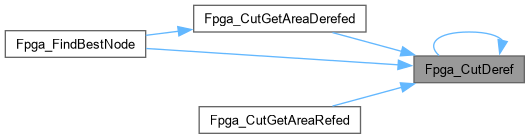
Here is the caller graph for this function:

◆ Fpga_CutDerefSwitch()

float Fpga_CutDerefSwitch ( Fpga_Man_t * pMan,
Fpga_Node_t * pNode,
Fpga_Cut_t * pCut,
int fFanouts )
extern

function*************************************************************

synopsis [Dereferences the cut.]

description [This procedure is similar to the procedure NodeRecusiveDeref.]

sideeffects []

seealso []

Definition at line 95 of file fpgaSwitch.c.
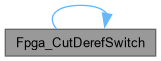
96{
97 Fpga_Node_t * pNodeChild;
98 float aArea;
99 int i;
100 // start the area of this cut
101 aArea = pNode->Switching;
102 if ( pCut->nLeaves == 1 )
103 return aArea;
104 // go through the children
105 for ( i = 0; i < pCut->nLeaves; i++ )
106 {
107 pNodeChild = pCut->ppLeaves[i];
108 assert( pNodeChild->nRefs > 0 );
109 if ( --pNodeChild->nRefs > 0 )
110 continue;
111 aArea += Fpga_CutDerefSwitch( pMan, pNodeChild, pNodeChild->pCutBest, fFanouts );
112 }
113 return aArea;
114}
float Fpga_CutDerefSwitch(Fpga_Man_t *pMan, Fpga_Node_t *pNode, Fpga_Cut_t *pCut, int fFanouts)
Definition fpgaSwitch.c:95
Fpga_Cut_t * pCutBest
Definition fpgaInt.h:222
Here is the call graph for this function:
Here is the caller graph for this function:

◆ Fpga_CutDup()

Fpga_Cut_t * Fpga_CutDup ( Fpga_Man_t * p,
Fpga_Cut_t * pCutOld )
extern

Function*************************************************************

Synopsis [Duplicates the cut.]

Description []

SideEffects []

SeeAlso []

Definition at line 62 of file fpgaCutUtils.c.

63{
64 Fpga_Cut_t * pCutNew;
65 int i;
66 pCutNew = Fpga_CutAlloc( p );
67 pCutNew->pRoot = pCutOld->pRoot;
68 pCutNew->nLeaves = pCutOld->nLeaves;
69 for ( i = 0; i < pCutOld->nLeaves; i++ )
70 pCutNew->ppLeaves[i] = pCutOld->ppLeaves[i];
71 return pCutNew;
72}
Here is the call graph for this function:

◆ Fpga_CutFree()

void Fpga_CutFree ( Fpga_Man_t * p,
Fpga_Cut_t * pCut )
extern

Function*************************************************************

Synopsis [Deallocates the cut.]

Description []

SideEffects []

SeeAlso []

Definition at line 85 of file fpgaCutUtils.c.

86{
87 if ( pCut )
88 Extra_MmFixedEntryRecycle( p->mmCuts, (char *)pCut );
89}
void Extra_MmFixedEntryRecycle(Extra_MmFixed_t *p, char *pEntry)
Here is the call graph for this function:

◆ Fpga_CutGetAreaDerefed()

float Fpga_CutGetAreaDerefed ( Fpga_Man_t * pMan,
Fpga_Cut_t * pCut )
extern

function*************************************************************

synopsis [Computes the exact area associated with the cut.]

description []

sideeffects []

seealso []

Definition at line 362 of file fpgaCutUtils.c.
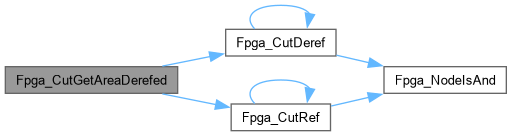
363{
364 float aResult, aResult2;
365 if ( pCut->nLeaves == 1 )
366 return 0;
367 aResult2 = Fpga_CutRef( pMan, NULL, pCut, 0 );
368 aResult = Fpga_CutDeref( pMan, NULL, pCut, 0 );
369 assert( Fpga_FloatEqual( pMan, aResult, aResult2 ) );
370 return aResult;
371}
float Fpga_CutRef(Fpga_Man_t *pMan, Fpga_Node_t *pNode, Fpga_Cut_t *pCut, int fFanouts)
Here is the call graph for this function:
Here is the caller graph for this function:

◆ Fpga_CutGetAreaFlow()

float Fpga_CutGetAreaFlow ( Fpga_Man_t * pMan,
Fpga_Cut_t * pCut )
extern

function*************************************************************

synopsis [Computes the area flow of the cut.]

description []

sideeffects []

seealso []

Definition at line 314 of file fpgaCutUtils.c.

315{
316 Fpga_Cut_t * pCutFanin;
317 int i;
318 pCut->aFlow = pMan->pLutLib->pLutAreas[(int)pCut->nLeaves];
319 for ( i = 0; i < pCut->nLeaves; i++ )
320 {
321 // get the cut implementing this phase of the fanin
322 pCutFanin = pCut->ppLeaves[i]->pCutBest;
323 assert( pCutFanin );
324 pCut->aFlow += pCutFanin->aFlow / pCut->ppLeaves[i]->nRefs;
325 }
326 return pCut->aFlow;
327}

◆ Fpga_CutGetAreaRefed()

float Fpga_CutGetAreaRefed ( Fpga_Man_t * pMan,
Fpga_Cut_t * pCut )
extern

function*************************************************************

synopsis [Computes the exact area associated with the cut.]

description []

sideeffects []

seealso []

Definition at line 340 of file fpgaCutUtils.c.
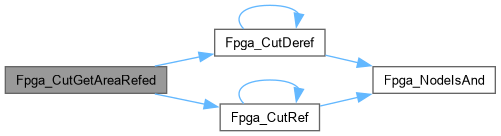
341{
342 float aResult, aResult2;
343 if ( pCut->nLeaves == 1 )
344 return 0;
345 aResult = Fpga_CutDeref( pMan, NULL, pCut, 0 );
346 aResult2 = Fpga_CutRef( pMan, NULL, pCut, 0 );
347 assert( Fpga_FloatEqual( pMan, aResult, aResult2 ) );
348 return aResult;
349}
Here is the call graph for this function:

◆ Fpga_CutGetParameters()

void Fpga_CutGetParameters ( Fpga_Man_t * pMan,
Fpga_Cut_t * pCut )
extern

Function*************************************************************

Synopsis [Computes the arrival time and the area flow of the cut.]

Description []

SideEffects []

SeeAlso []

Definition at line 279 of file fpgaCutUtils.c.

280{
281 Fpga_Cut_t * pFaninCut;
282 int i;
283 pCut->tArrival = -FPGA_FLOAT_LARGE;
284 pCut->aFlow = pMan->pLutLib->pLutAreas[(int)pCut->nLeaves];
285 for ( i = 0; i < pCut->nLeaves; i++ )
286 {
287 pFaninCut = pCut->ppLeaves[i]->pCutBest;
288 if ( pCut->tArrival < pFaninCut->tArrival )
289 pCut->tArrival = pFaninCut->tArrival;
290 // if the fanout count is not set, assume it to be 1
291 if ( pCut->ppLeaves[i]->nRefs == 0 )
292 pCut->aFlow += pFaninCut->aFlow;
293 else
294// pCut->aFlow += pFaninCut->aFlow / pCut->ppLeaves[i]->nRefs;
295 pCut->aFlow += pFaninCut->aFlow / pCut->ppLeaves[i]->aEstFanouts;
296 }
297 // use the first pin to compute the delay of the LUT
298 // (this mapper does not support the variable pin delay model)
299 pCut->tArrival += pMan->pLutLib->pLutDelays[(int)pCut->nLeaves][0];
300}
#define FPGA_FLOAT_LARGE
Definition fpgaInt.h:65
float pLutDelays[FPGA_MAX_LUTSIZE+1][FPGA_MAX_LUTSIZE+1]
Definition fpgaInt.h:176

◆ Fpga_CutGetRootArea()

float Fpga_CutGetRootArea ( Fpga_Man_t * p,
Fpga_Cut_t * pCut )
extern

function*************************************************************

synopsis [Computes the exact area associated with the cut.]

description []

sideeffects []

seealso []

Definition at line 146 of file fpgaCutUtils.c.

147{
148 return p->pLutLib->pLutAreas[(int)pCut->nLeaves];
149}

◆ Fpga_CutGetSwitchDerefed()

float Fpga_CutGetSwitchDerefed ( Fpga_Man_t * pMan,
Fpga_Node_t * pNode,
Fpga_Cut_t * pCut )
extern

DECLARATIONS ///.

CFile****************************************************************

FileName [fpgaSwitch.c]

PackageName [MVSIS 1.3: Multi-valued logic synthesis system.]

Synopsis [Generic technology mapping engine.]

Author [MVSIS Group]

Affiliation [UC Berkeley]

Date [Ver. 1.0. Started - September 8, 2003.]

Revision [

Id
fpgaSwitch.h,v 1.0 2003/09/08 00:00:00 alanmi Exp

] FUNCTION DEFINITIONS /// function*************************************************************

synopsis [Computes the exact area associated with the cut.]

description []

sideeffects []

seealso []

Definition at line 43 of file fpgaSwitch.c.
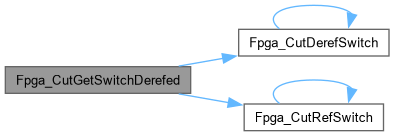
44{
45 float aResult, aResult2;
46 aResult2 = Fpga_CutRefSwitch( pMan, pNode, pCut, 0 );
47 aResult = Fpga_CutDerefSwitch( pMan, pNode, pCut, 0 );
48// assert( aResult == aResult2 );
49 return aResult;
50}
float Fpga_CutRefSwitch(Fpga_Man_t *pMan, Fpga_Node_t *pNode, Fpga_Cut_t *pCut, int fFanouts)
Definition fpgaSwitch.c:63
Here is the call graph for this function:

◆ Fpga_CutInsertFanouts()

void Fpga_CutInsertFanouts ( Fpga_Man_t * p,
Fpga_Node_t * pNode,
Fpga_Cut_t * pCut )
extern

◆ Fpga_CutListAppend()

Fpga_Cut_t * Fpga_CutListAppend ( Fpga_Cut_t * pSetAll,
Fpga_Cut_t * pSets )
extern

Function*************************************************************

Synopsis []

Description []

SideEffects []

SeeAlso []

Definition at line 162 of file fpgaCutUtils.c.

163{
164 Fpga_Cut_t * pPrev = NULL; // Suppress "might be used uninitialized"
165 Fpga_Cut_t * pTemp;
166 if ( pSetAll == NULL )
167 return pSets;
168 if ( pSets == NULL )
169 return pSetAll;
170 // find the last one
171 for ( pTemp = pSets; pTemp; pTemp = pTemp->pNext )
172 pPrev = pTemp;
173 // append all the end of the current set
174 assert( pPrev->pNext == NULL );
175 pPrev->pNext = pSetAll;
176 return pSets;
177}

◆ Fpga_CutListCount()

int Fpga_CutListCount ( Fpga_Cut_t * pSets)
extern

Function*************************************************************

Synopsis []

Description []

SideEffects []

SeeAlso []

Definition at line 211 of file fpgaCutUtils.c.

212{
213 Fpga_Cut_t * pTemp;
214 int i;
215 for ( i = 0, pTemp = pSets; pTemp; pTemp = pTemp->pNext, i++ );
216 return i;
217}

◆ Fpga_CutListRecycle()

void Fpga_CutListRecycle ( Fpga_Man_t * p,
Fpga_Cut_t * pSetList,
Fpga_Cut_t * pSave )
extern

Function*************************************************************

Synopsis []

Description []

SideEffects []

SeeAlso []

Definition at line 190 of file fpgaCutUtils.c.

191{
192 Fpga_Cut_t * pNext, * pTemp;
193 for ( pTemp = pSetList, pNext = pTemp? pTemp->pNext : NULL;
194 pTemp;
195 pTemp = pNext, pNext = pNext? pNext->pNext : NULL )
196 if ( pTemp != pSave )
197 Extra_MmFixedEntryRecycle( p->mmCuts, (char *)pTemp );
198}
Here is the call graph for this function:

◆ Fpga_CutPrint()

void Fpga_CutPrint ( Fpga_Man_t * p,
Fpga_Node_t * pRoot,
Fpga_Cut_t * pCut )
extern

Function*************************************************************

Synopsis []

Description []

SideEffects []

SeeAlso []

Definition at line 102 of file fpgaCutUtils.c.

103{
104 int i;
105 printf( "CUT: Delay = %4.2f. Area = %4.2f. Nodes = %d -> {",
106 pCut->tArrival, pCut->aFlow, pRoot->Num );
107 for ( i = 0; i < pCut->nLeaves; i++ )
108 printf( " %d", pCut->ppLeaves[i]->Num );
109 printf( " } \n" );
110}

◆ Fpga_CutRef()

float Fpga_CutRef ( Fpga_Man_t * pMan,
Fpga_Node_t * pNode,
Fpga_Cut_t * pCut,
int fFanouts )
extern

function*************************************************************

synopsis [References the cut.]

description [This procedure is similar to the procedure NodeReclaim.]

sideeffects []

seealso []

Definition at line 384 of file fpgaCutUtils.c.
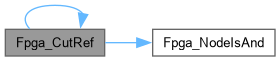
385{
386 Fpga_Node_t * pNodeChild;
387 float aArea;
388 int i;
389
390 // deref the fanouts
391// if ( fFanouts )
392// Fpga_CutInsertFanouts( pMan, pNode, pCut );
393
394 // start the area of this cut
395 aArea = pMan->pLutLib->pLutAreas[(int)pCut->nLeaves];
396 // go through the children
397 for ( i = 0; i < pCut->nLeaves; i++ )
398 {
399 pNodeChild = pCut->ppLeaves[i];
400 assert( pNodeChild->nRefs >= 0 );
401 if ( pNodeChild->nRefs++ > 0 )
402 continue;
403 if ( !Fpga_NodeIsAnd(pNodeChild) )
404 continue;
405 aArea += Fpga_CutRef( pMan, pNodeChild, pNodeChild->pCutBest, fFanouts );
406 }
407 return aArea;
408}
Here is the call graph for this function:
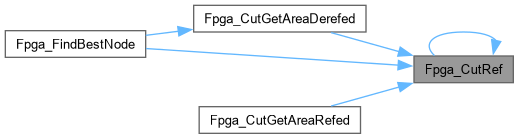
Here is the caller graph for this function:

◆ Fpga_CutRefSwitch()

float Fpga_CutRefSwitch ( Fpga_Man_t * pMan,
Fpga_Node_t * pNode,
Fpga_Cut_t * pCut,
int fFanouts )
extern

function*************************************************************

synopsis [References the cut.]

description [This procedure is similar to the procedure NodeReclaim.]

sideeffects []

seealso []

Definition at line 63 of file fpgaSwitch.c.
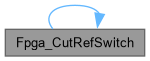
64{
65 Fpga_Node_t * pNodeChild;
66 float aArea;
67 int i;
68 // start the area of this cut
69 aArea = pNode->Switching;
70 if ( pCut->nLeaves == 1 )
71 return aArea;
72 // go through the children
73 for ( i = 0; i < pCut->nLeaves; i++ )
74 {
75 pNodeChild = pCut->ppLeaves[i];
76 assert( pNodeChild->nRefs >= 0 );
77 if ( pNodeChild->nRefs++ > 0 )
78 continue;
79 aArea += Fpga_CutRefSwitch( pMan, pNodeChild, pNodeChild->pCutBest, fFanouts );
80 }
81 return aArea;
82}
Here is the call graph for this function:
Here is the caller graph for this function:

◆ Fpga_CutRemoveFanouts()

void Fpga_CutRemoveFanouts ( Fpga_Man_t * p,
Fpga_Node_t * pNode,
Fpga_Cut_t * pCut )
extern

◆ Fpga_DfsLim()

Fpga_NodeVec_t * Fpga_DfsLim ( Fpga_Man_t * pMan,
Fpga_Node_t * pNode,
int nLevels )
extern

Function*************************************************************

Synopsis [Computes the limited DFS ordering for one node.]

Description []

SideEffects []

SeeAlso []

Definition at line 606 of file fpgaUtils.c.

607{
608 Fpga_NodeVec_t * vNodes;
609 int i;
610 // perform the traversal
611 vNodes = Fpga_NodeVecAlloc( 100 );
612 Fpga_DfsLim_rec( pNode, nLevels, vNodes );
613 for ( i = 0; i < vNodes->nSize; i++ )
614 vNodes->pArray[i]->fMark0 = 0;
615 return vNodes;
616}
Fpga_NodeVec_t * Fpga_NodeVecAlloc(int nCap)
FUNCTION DEFINITIONS ///.
Definition fpgaVec.c:45
struct Fpga_NodeVecStruct_t_ Fpga_NodeVec_t
Definition fpga.h:45
unsigned fMark0
Definition fpgaInt.h:189
Fpga_Node_t ** pArray
Definition fpgaInt.h:252
Here is the call graph for this function:

◆ Fpga_LutLibDelaysAreDiscrete()

int Fpga_LutLibDelaysAreDiscrete ( Fpga_LutLib_t * pLutLib)
extern

Function*************************************************************

Synopsis [Returns 1 if the delays are discrete.]

Description []

SideEffects []

SeeAlso []

Definition at line 236 of file fpgaLib.c.

237{
238 float Delay;
239 int i;
240 for ( i = 1; i <= pLutLib->LutMax; i++ )
241 {
242 Delay = pLutLib->pLutDelays[i][0];
243 if ( ((float)((int)Delay)) != Delay )
244 return 0;
245 }
246 return 1;
247}

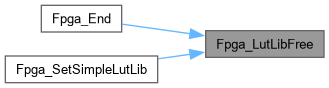
◆ Fpga_LutLibFree()

void Fpga_LutLibFree ( Fpga_LutLib_t * pLutLib)
extern

Function*************************************************************

Synopsis [Frees the LUT library.]

Description []

SideEffects []

SeeAlso []

Definition at line 185 of file fpgaLib.c.
186{
187 if ( pLutLib == NULL )
188 return;
189 ABC_FREE( pLutLib->pName );
190 ABC_FREE( pLutLib );
191}
#define ABC_FREE(obj)
Definition abc_global.h:267
Here is the caller graph for this function:

◆ Fpga_LutLibPrint()

void Fpga_LutLibPrint ( Fpga_LutLib_t * pLutLib)
extern

Function*************************************************************

Synopsis [Prints the LUT library.]

Description []

SideEffects []

SeeAlso []

Definition at line 205 of file fpgaLib.c.

206{
207 int i, k;
208 printf( "# The area/delay of k-variable LUTs:\n" );
209 printf( "# k area delay\n" );
210 if ( pLutLib->fVarPinDelays )
211 {
212 for ( i = 1; i <= pLutLib->LutMax; i++ )
213 {
214 printf( "%d %7.2f ", i, pLutLib->pLutAreas[i] );
215 for ( k = 0; k < i; k++ )
216 printf( " %7.2f", pLutLib->pLutDelays[i][k] );
217 printf( "\n" );
218 }
219 }
220 else
221 for ( i = 1; i <= pLutLib->LutMax; i++ )
222 printf( "%d %7.2f %7.2f\n", i, pLutLib->pLutAreas[i], pLutLib->pLutDelays[i][0] );
223}

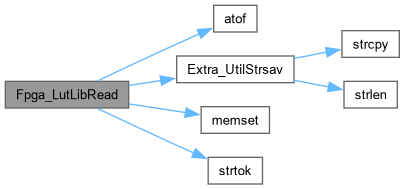
◆ Fpga_LutLibRead()

Fpga_LutLib_t * Fpga_LutLibRead ( char * FileName,
int fVerbose )
extern

Function*************************************************************

Synopsis [Reads the description of LUTs from the LUT library file.]

Description []

SideEffects []

SeeAlso []

Definition at line 58 of file fpgaLib.c.
59{
60 char pBuffer[1000], * pToken;
62 FILE * pFile;
63 int i, k;
64
65 pFile = fopen( FileName, "r" );
66 if ( pFile == NULL )
67 {
68 printf( "Cannot open LUT library file \"%s\".\n", FileName );
69 return NULL;
70 }
71
73 memset( p, 0, sizeof(Fpga_LutLib_t) );
74 p->pName = Extra_UtilStrsav( FileName );
75
76 i = 1;
77 while ( fgets( pBuffer, 1000, pFile ) != NULL )
78 {
79 pToken = strtok( pBuffer, " \t\n" );
80 if ( pToken == NULL )
81 continue;
82 if ( pToken[0] == '#' )
83 continue;
84 if ( i != atoi(pToken) )
85 {
86 printf( "Error in the LUT library file \"%s\".\n", FileName );
87 ABC_FREE( p );
88 return NULL;
89 }
90
91 // read area
92 pToken = strtok( NULL, " \t\n" );
93 p->pLutAreas[i] = (float)atof(pToken);
94
95 // read delays
96 k = 0;
97 while ( (pToken = strtok( NULL, " \t\n" )) )
98 p->pLutDelays[i][k++] = (float)atof(pToken);
99
100 // check for out-of-bound
101 if ( k > i )
102 {
103 printf( "LUT %d has too many pins (%d). Max allowed is %d.\n", i, k, i );
104 return NULL;
105 }
106
107 // check if var delays are specifies
108 if ( k > 1 )
109 p->fVarPinDelays = 1;
110
111 if ( i == FPGA_MAX_LUTSIZE )
112 {
113 printf( "Skipping LUTs of size more than %d.\n", i );
114 return NULL;
115 }
116 i++;
117 }
118 p->LutMax = i-1;
119/*
120 if ( p->LutMax > FPGA_MAX_LEAVES )
121 {
122 p->LutMax = FPGA_MAX_LEAVES;
123 printf( "Warning: LUTs with more than %d inputs will not be used.\n", FPGA_MAX_LEAVES );
124 }
125*/
126 // check the library
127 if ( p->fVarPinDelays )
128 {
129 for ( i = 1; i <= p->LutMax; i++ )
130 for ( k = 0; k < i; k++ )
131 {
132 if ( p->pLutDelays[i][k] <= 0.0 )
133 printf( "Warning: Pin %d of LUT %d has delay %f. Pin delays should be non-negative numbers. Technology mapping may not work correctly.\n",
134 k, i, p->pLutDelays[i][k] );
135 if ( k && p->pLutDelays[i][k-1] > p->pLutDelays[i][k] )
136 printf( "Warning: Pin %d of LUT %d has delay %f. Pin %d of LUT %d has delay %f. Pin delays should be in non-decreasing order. Technology mapping may not work correctly.\n",
137 k-1, i, p->pLutDelays[i][k-1],
138 k, i, p->pLutDelays[i][k] );
139 }
140 }
141 else
142 {
143 for ( i = 1; i <= p->LutMax; i++ )
144 {
145 if ( p->pLutDelays[i][0] <= 0.0 )
146 printf( "Warning: LUT %d has delay %f. Pin delays should be non-negative numbers. Technology mapping may not work correctly.\n",
147 i, p->pLutDelays[i][0] );
148 }
149 }
150
151 return p;
152}
#define ABC_ALLOC(type, num)
Definition abc_global.h:264
char * Extra_UtilStrsav(const char *s)
#define FPGA_MAX_LUTSIZE
INCLUDES ///.
Definition fpga.h:37
struct Fpga_LutLibStruct_t_ Fpga_LutLib_t
Definition fpga.h:47
char * strtok()
double atof()
Here is the call graph for this function:

◆ Fpga_ManReportChoices()

void Fpga_ManReportChoices ( Fpga_Man_t * pMan)
extern

Function*************************************************************

Synopsis [Reports statistics on choice nodes.]

Description [The number of choice nodes is the number of primary nodes, which has pNextE set to a pointer. The number of choices is the number of entries in the equivalent-node lists of the primary nodes.]

SideEffects []

SeeAlso []

Definition at line 897 of file fpgaUtils.c.

898{
899 Fpga_Node_t * pNode, * pTemp;
900 int nChoiceNodes, nChoices;
901 int i, LevelMax1, LevelMax2;
902
903 // report the number of levels
904 LevelMax1 = Fpga_MappingMaxLevel( pMan );
905 pMan->nTravIds++;
906 for ( i = 0; i < pMan->nOutputs; i++ )
908 LevelMax2 = Fpga_MappingMaxLevel( pMan );
909
910 // report statistics about choices
911 nChoiceNodes = nChoices = 0;
912 for ( i = 0; i < pMan->vAnds->nSize; i++ )
913 {
914 pNode = pMan->vAnds->pArray[i];
915 if ( pNode->pRepr == NULL && pNode->pNextE != NULL )
916 { // this is a choice node = the primary node that has equivalent nodes
917 nChoiceNodes++;
918 for ( pTemp = pNode; pTemp; pTemp = pTemp->pNextE )
919 nChoices++;
920 }
921 }
922 if ( pMan->fVerbose )
923 {
924 printf( "Maximum level: Original = %d. Reduced due to choices = %d.\n", LevelMax1, LevelMax2 );
925 printf( "Choice stats: Choice nodes = %d. Total choices = %d.\n", nChoiceNodes, nChoices );
926 }
927/*
928 {
929 FILE * pTable;
930 pTable = fopen( "stats_choice.txt", "a+" );
931 fprintf( pTable, "%s ", pMan->pFileName );
932 fprintf( pTable, "%4d ", LevelMax1 );
933 fprintf( pTable, "%4d ", pMan->vAnds->nSize - pMan->nInputs );
934 fprintf( pTable, "%4d ", LevelMax2 );
935 fprintf( pTable, "%7d ", nChoiceNodes );
936 fprintf( pTable, "%7d ", nChoices + nChoiceNodes );
937 fprintf( pTable, "\n" );
938 fclose( pTable );
939 }
940*/
941}
int Fpga_MappingUpdateLevel_rec(Fpga_Man_t *pMan, Fpga_Node_t *pNode, int fMaximum)
Definition fpgaUtils.c:826
int Fpga_MappingMaxLevel(Fpga_Man_t *pMan)
Definition fpgaUtils.c:804
Fpga_NodeVec_t * vAnds
Definition fpgaInt.h:112
Fpga_Node_t ** pOutputs
Definition fpgaInt.h:106
Fpga_Node_t * pNextE
Definition fpgaInt.h:202
Fpga_Node_t * pRepr
Definition fpgaInt.h:203
Here is the call graph for this function:
Here is the caller graph for this function:

◆ Fpga_MappingArea()

float Fpga_MappingArea ( Fpga_Man_t * pMan)
extern

Function*************************************************************

Synopsis [Computes the area of the current mapping.]

Description []

SideEffects []

SeeAlso []

Definition at line 177 of file fpgaUtils.c.

178{
179 Fpga_Node_t * pNode;
180 float aTotal;
181 int i;
182 // perform the traversal
183 aTotal = 0;
184 for ( i = 0; i < pMan->vMapping->nSize; i++ )
185 {
186 pNode = pMan->vMapping->pArray[i];
187 aTotal += pMan->pLutLib->pLutAreas[(int)pNode->pCutBest->nLeaves];
188 }
189 return aTotal;
190}
Fpga_NodeVec_t * vMapping
Definition fpgaInt.h:113

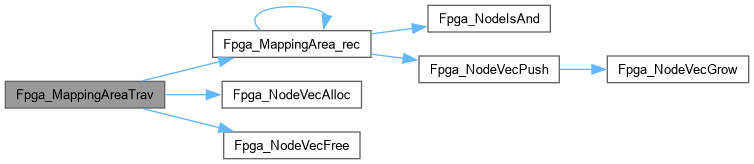
◆ Fpga_MappingAreaTrav()

float Fpga_MappingAreaTrav ( Fpga_Man_t * pMan)
extern

Function*************************************************************

Synopsis [Computes the area of the current mapping.]

Description []

SideEffects []

SeeAlso []

Definition at line 239 of file fpgaUtils.c.
240{
241 Fpga_NodeVec_t * vNodes;
242 float aTotal;
243 int i;
244 // perform the traversal
245 aTotal = 0;
246 vNodes = Fpga_NodeVecAlloc( 100 );
247 for ( i = 0; i < pMan->nOutputs; i++ )
248 aTotal += Fpga_MappingArea_rec( pMan, Fpga_Regular(pMan->pOutputs[i]), vNodes );
249 for ( i = 0; i < vNodes->nSize; i++ )
250 vNodes->pArray[i]->fMark0 = 0;
251 Fpga_NodeVecFree( vNodes );
252 return aTotal;
253}
void Fpga_NodeVecFree(Fpga_NodeVec_t *p)
Definition fpgaVec.c:68
float Fpga_MappingArea_rec(Fpga_Man_t *pMan, Fpga_Node_t *pNode, Fpga_NodeVec_t *vNodes)
Definition fpgaUtils.c:203
Here is the call graph for this function:

◆ Fpga_MappingCreatePiCuts()

void Fpga_MappingCreatePiCuts ( Fpga_Man_t * p)
extern

Function*************************************************************

Synopsis [Performs technology mapping for variable-size-LUTs.]

Description []

SideEffects []

SeeAlso []

Definition at line 181 of file fpgaCut.c.

182{
183 Fpga_Cut_t * pCut;
184 int i;
185
186 // set the elementary cuts for the PI variables
187 for ( i = 0; i < p->nInputs; i++ )
188 {
189 pCut = Fpga_CutAlloc( p );
190 pCut->nLeaves = 1;
191 pCut->ppLeaves[0] = p->pInputs[i];
192 pCut->uSign = (1 << (i%31));
193 p->pInputs[i]->pCuts = pCut;
194 p->pInputs[i]->pCutBest = pCut;
195 // set the input arrival times
196// p->pInputs[i]->pCut[1]->tArrival = p->pInputArrivals[i];
197 }
198}
Fpga_Cut_t * Fpga_CutAlloc(Fpga_Man_t *p)
DECLARATIONS ///.
Here is the caller graph for this function:

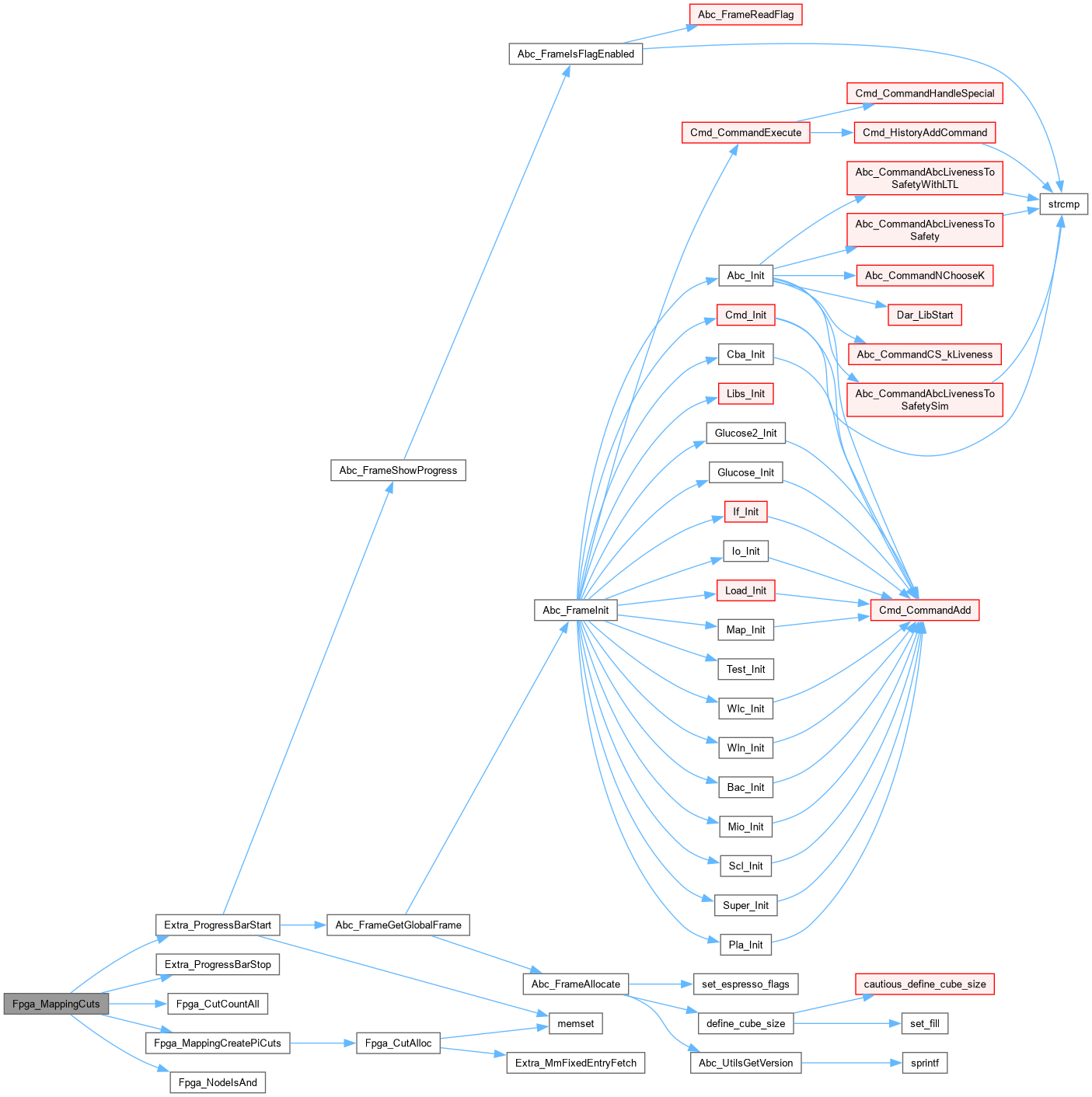
◆ Fpga_MappingCuts()

void Fpga_MappingCuts ( Fpga_Man_t * p)
extern

GLOBAL VARIABLES ///.

FUNCTION DEFINITIONS ///

GLOBAL VARIABLES ///.

Function*************************************************************

Synopsis [Computes the cuts for each node in the object graph.]

Description [The cuts are computed in one sweep over the mapping graph. First, the elementary cuts, which include the node itself, are assigned to the PI nodes. The internal nodes are considered in the DFS order. Each node is two-input AND-gate. So to compute the cuts at a node, we need to merge the sets of cuts of its two predecessors. The merged set contains only unique cuts with the number of inputs equal to k or less. Finally, the elementary cut, composed of the node itself, is added to the set of cuts for the node.

This procedure is pretty fast for 5-feasible cuts, but it dramatically slows down on some "dense" networks when computing 6-feasible cuts. The problem is that there are too many cuts in this case. We should think how to heuristically trim the number of cuts in such cases, to have reasonable runtime.]

SideEffects []

SeeAlso []

Definition at line 130 of file fpgaCut.c.
131{
132 ProgressBar * pProgress;
133 Fpga_CutTable_t * pTable;
134 Fpga_Node_t * pNode;
135 int nCuts, nNodes, i;
136 clock_t clk = clock();
137
138 // set the elementary cuts for the PI variables
139 assert( p->nVarsMax > 1 && p->nVarsMax < 11 );
141
142 // compute the cuts for the internal nodes
143 nNodes = p->vAnds->nSize;
144 pProgress = Extra_ProgressBarStart( stdout, nNodes );
145 pTable = Fpga_CutTableStart( p );
146 for ( i = 0; i < nNodes; i++ )
147 {
148 Extra_ProgressBarUpdate( pProgress, i, "Cuts ..." );
149 pNode = p->vAnds->pArray[i];
150 if ( !Fpga_NodeIsAnd( pNode ) )
151 continue;
152 Fpga_CutCompute( p, pTable, pNode );
153 }
154 Extra_ProgressBarStop( pProgress );
155 Fpga_CutTableStop( pTable );
156
157 // report the stats
158 if ( p->fVerbose )
159 {
160 nCuts = Fpga_CutCountAll(p);
161 printf( "Nodes = %6d. Total %d-cuts = %d. Cuts per node = %.1f. ",
162 p->nNodes, p->nVarsMax, nCuts, ((float)nCuts)/p->nNodes );
163 ABC_PRT( "Time", clock() - clk );
164 }
165
166 // print the cuts for the first primary output
167// Fpga_CutListPrint( p, Fpga_Regular(p->pOutputs[0]) );
168}
#define ABC_PRT(a, t)
Definition abc_global.h:255
ABC_NAMESPACE_IMPL_START typedef char ProgressBar
Definition bbrNtbdd.c:27
void Extra_ProgressBarStop(ProgressBar *p)
ProgressBar * Extra_ProgressBarStart(FILE *pFile, int nItemsTotal)
FUNCTION DEFINITIONS ///.
typedefABC_NAMESPACE_IMPL_START struct Fpga_CutTableStrutct_t Fpga_CutTable_t
DECLARATIONS ///.
Definition fpgaCut.c:28
void Fpga_MappingCreatePiCuts(Fpga_Man_t *p)
Definition fpgaCut.c:181
int Fpga_CutCountAll(Fpga_Man_t *pMan)
Definition fpgaCut.c:767
Here is the call graph for this function:
Here is the caller graph for this function:

◆ Fpga_MappingDfs()

Fpga_NodeVec_t * Fpga_MappingDfs ( Fpga_Man_t * pMan,
int fCollectEquiv )
extern

FUNCTION DEFINITIONS ///.

Function*************************************************************

Synopsis [Computes the DFS ordering of the nodes.]

Description []

SideEffects []

SeeAlso []

Definition at line 54 of file fpgaUtils.c.

55{
56 Fpga_NodeVec_t * vNodes;//, * vNodesCo;
57 Fpga_Node_t * pNode;
58 int i;
59 // collect the CO nodes by level
60// vNodesCo = Fpga_MappingOrderCosByLevel( pMan );
61 // start the array
62 vNodes = Fpga_NodeVecAlloc( 100 );
63 // collect the PIs
64 for ( i = 0; i < pMan->nInputs; i++ )
65 {
66 pNode = pMan->pInputs[i];
67 Fpga_NodeVecPush( vNodes, pNode );
68 pNode->fMark0 = 1;
69 }
70 // perform the traversal
71 for ( i = 0; i < pMan->nOutputs; i++ )
72 Fpga_MappingDfs_rec( Fpga_Regular(pMan->pOutputs[i]), vNodes, fCollectEquiv );
73// for ( i = vNodesCo->nSize - 1; i >= 0 ; i-- )
74// for ( pNode = vNodesCo->pArray[i]; pNode; pNode = (Fpga_Node_t *)pNode->pData0 )
75// Fpga_MappingDfs_rec( pNode, vNodes, fCollectEquiv );
76 // clean the node marks
77 for ( i = 0; i < vNodes->nSize; i++ )
78 vNodes->pArray[i]->fMark0 = 0;
79// for ( i = 0; i < pMan->nOutputs; i++ )
80// Fpga_MappingUnmark_rec( Fpga_Regular(pMan->pOutputs[i]) );
81// Fpga_NodeVecFree( vNodesCo );
82 return vNodes;
83}
void Fpga_NodeVecPush(Fpga_NodeVec_t *p, Fpga_Node_t *Entry)
Definition fpgaVec.c:169
Fpga_Node_t ** pInputs
Definition fpgaInt.h:104
Here is the call graph for this function:
Here is the caller graph for this function:

◆ Fpga_MappingDfsNodes()

Fpga_NodeVec_t * Fpga_MappingDfsNodes ( Fpga_Man_t * pMan,
Fpga_Node_t ** ppNodes,
int nNodes,
int fEquiv )
extern

Function*************************************************************

Synopsis [Computes the DFS ordering of the nodes.]

Description []

SideEffects []

SeeAlso []

Definition at line 129 of file fpgaUtils.c.

130{
131 Fpga_NodeVec_t * vNodes;
132 int i;
133 // perform the traversal
134 vNodes = Fpga_NodeVecAlloc( 200 );
135 for ( i = 0; i < nNodes; i++ )
136 Fpga_MappingDfs_rec( ppNodes[i], vNodes, fEquiv );
137 for ( i = 0; i < vNodes->nSize; i++ )
138 vNodes->pArray[i]->fMark0 = 0;
139 return vNodes;
140}
Here is the call graph for this function:

◆ Fpga_MappingGetAreaFlow()

float Fpga_MappingGetAreaFlow ( Fpga_Man_t * p)
extern

Function*************************************************************

Synopsis []

Description []

SideEffects []

SeeAlso []

Definition at line 153 of file fpgaUtils.c.

154{
155 float aFlowFlowTotal = 0;
156 int i;
157 for ( i = 0; i < p->nOutputs; i++ )
158 {
159 if ( Fpga_NodeIsConst(p->pOutputs[i]) )
160 continue;
161 aFlowFlowTotal += Fpga_Regular(p->pOutputs[i])->pCutBest->aFlow;
162 }
163 return aFlowFlowTotal;
164}
int Fpga_NodeIsConst(Fpga_Node_t *p)
Definition fpgaCreate.c:125
Here is the call graph for this function:

◆ Fpga_MappingGetSwitching()

float Fpga_MappingGetSwitching ( Fpga_Man_t * pMan,
Fpga_NodeVec_t * vMapping )
extern

Function*************************************************************

Synopsis [Computes the array of mapping.]

Description []

SideEffects []

SeeAlso []

Definition at line 127 of file fpgaSwitch.c.
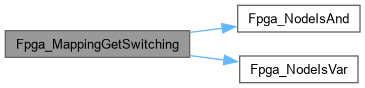
128{
129 Fpga_Node_t * pNode;
130 float Switch;
131 int i;
132 Switch = 0.0;
133 for ( i = 0; i < vMapping->nSize; i++ )
134 {
135 pNode = vMapping->pArray[i];
136 // at least one phase has the best cut assigned
137 assert( !Fpga_NodeIsAnd(pNode) || pNode->pCutBest != NULL );
138 // at least one phase is used in the mapping
139 assert( pNode->nRefs > 0 );
140 // compute the array due to the supergate
141 Switch += pNode->Switching;
142 }
143 // add buffer for each CO driven by a CI
144 for ( i = 0; i < pMan->nOutputs; i++ )
145 if ( Fpga_NodeIsVar(Fpga_Regular(pMan->pOutputs[i])) && !Fpga_IsComplement(pMan->pOutputs[i]) )
146 Switch += Fpga_Regular(pMan->pOutputs[i])->Switching;
147 return Switch;
148}
int Fpga_NodeIsVar(Fpga_Node_t *p)
Definition fpgaCreate.c:126
Here is the call graph for this function:

◆ Fpga_MappingLevelize()

Fpga_NodeVec_t * Fpga_MappingLevelize ( Fpga_Man_t * pMan,
Fpga_NodeVec_t * vNodes )
extern

Function*************************************************************

Synopsis [Levelizes the nodes accessible from the POs.]

Description []

SideEffects []

SeeAlso []

Definition at line 747 of file fpgaUtils.c.
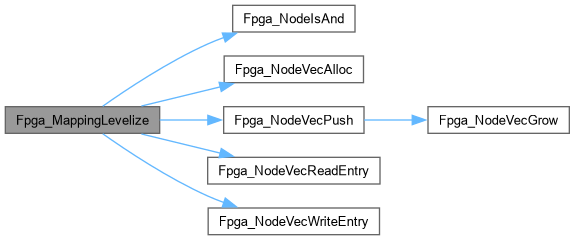
748{
749 Fpga_NodeVec_t * vLevels;
750 Fpga_Node_t ** ppNodes;
751 Fpga_Node_t * pNode;
752 int nNodes, nLevelsMax, i;
753
754 // reassign the levels (this may be necessary for networks which choices)
755 ppNodes = vNodes->pArray;
756 nNodes = vNodes->nSize;
757 for ( i = 0; i < nNodes; i++ )
758 {
759 pNode = ppNodes[i];
760 if ( !Fpga_NodeIsAnd(pNode) )
761 {
762 pNode->Level = 0;
763 continue;
764 }
765 pNode->Level = 1 + FPGA_MAX( Fpga_Regular(pNode->p1)->Level, Fpga_Regular(pNode->p2)->Level );
766 }
767
768 // get the max levels
769 nLevelsMax = 0;
770 for ( i = 0; i < pMan->nOutputs; i++ )
771 nLevelsMax = FPGA_MAX( nLevelsMax, (int)Fpga_Regular(pMan->pOutputs[i])->Level );
772 nLevelsMax++;
773
774 // allocate storage for levels
775 vLevels = Fpga_NodeVecAlloc( nLevelsMax );
776 for ( i = 0; i < nLevelsMax; i++ )
777 Fpga_NodeVecPush( vLevels, NULL );
778
779 // go through the nodes and add them to the levels
780 for ( i = 0; i < nNodes; i++ )
781 {
782 pNode = ppNodes[i];
783 pNode->pLevel = NULL;
784 if ( !Fpga_NodeIsAnd(pNode) )
785 continue;
786 // attach the node to this level
787 pNode->pLevel = Fpga_NodeVecReadEntry( vLevels, pNode->Level );
788 Fpga_NodeVecWriteEntry( vLevels, pNode->Level, pNode );
789 }
790 return vLevels;
791}
void Fpga_NodeVecWriteEntry(Fpga_NodeVec_t *p, int i, Fpga_Node_t *Entry)
Definition fpgaVec.c:229
#define FPGA_MAX(a, b)
Definition fpgaInt.h:62
Fpga_Node_t * Fpga_NodeVecReadEntry(Fpga_NodeVec_t *p, int i)
Definition fpgaVec.c:246
Fpga_Node_t * p1
Definition fpgaInt.h:200
Fpga_Node_t * p2
Definition fpgaInt.h:201
Fpga_Node_t * pLevel
Definition fpgaInt.h:184
Here is the call graph for this function:

◆ Fpga_MappingMatches()

int Fpga_MappingMatches ( Fpga_Man_t * p,
int fDelayOriented )
extern

FUNCTION DEFINITIONS ///.

Function*************************************************************

Synopsis [Finds the best delay assignment of LUTs.]

Description [This procedure iterates through all the nodes of the object graph reachable from the POs and assigns the best match to each of them. If the flag fDelayOriented is set to 1, it tries to minimize the arrival time and uses the area flow as a tie-breaker. If the flag is set to 0, it considers all the cuts, whose arrival times matches the required time at the node, and minimizes the area flow using the arrival time as a tie-breaker.

Before this procedure is called, the required times should be set and the fanout counts should be computed. In the first iteration, the required times are set to very large number (by NodeCreate) and the fanout counts are set to the number of fanouts in the AIG. In the following iterations, the required times are set by the backward traversal, while the fanouts are estimated approximately.

If the arrival times of the PI nodes are given, they should be assigned to the PIs after the cuts are computed and before this procedure is called for the first time.]

SideEffects []

SeeAlso []

Definition at line 67 of file fpgaMatch.c.
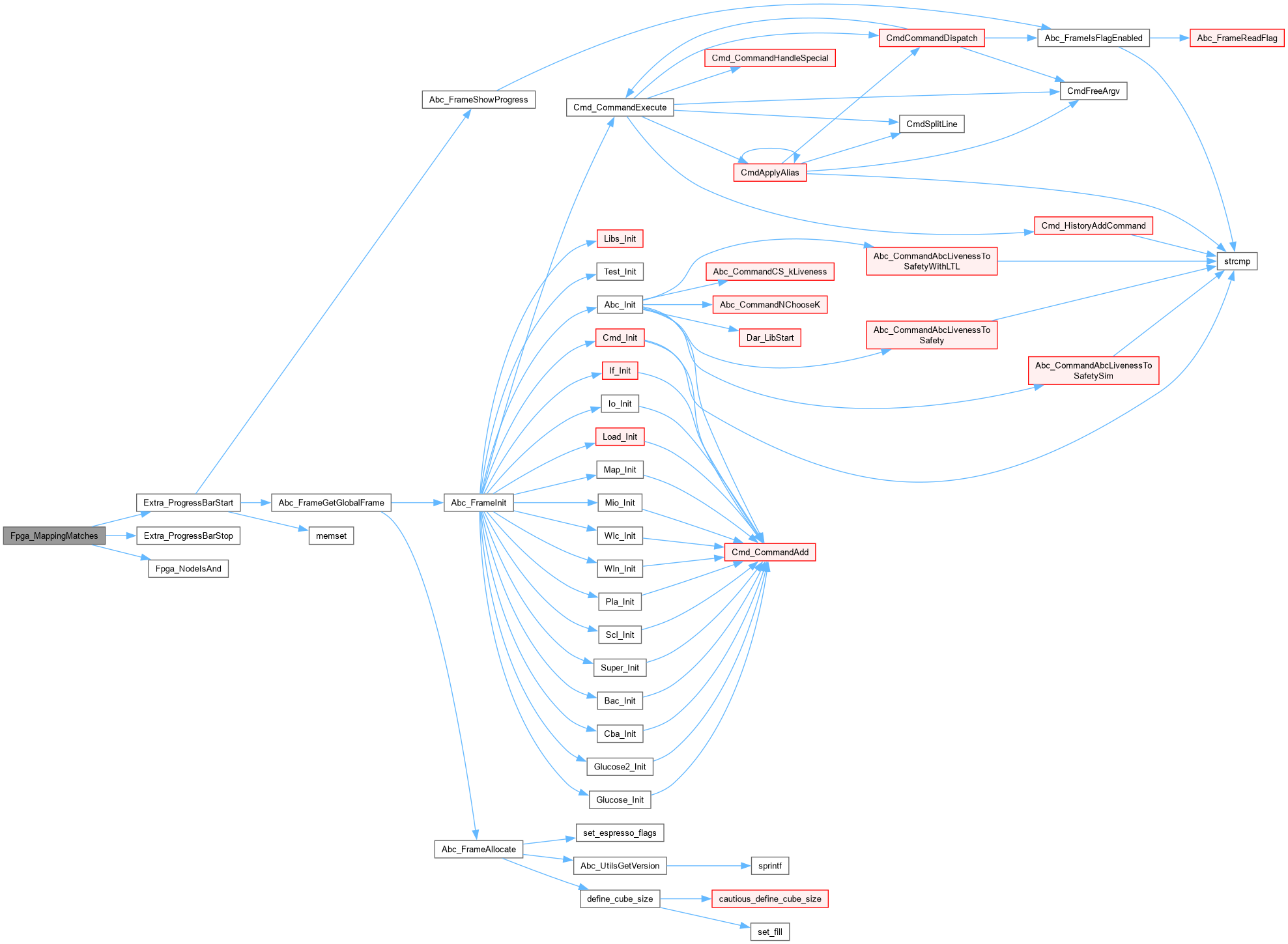
68{
69 ProgressBar * pProgress;
70 Fpga_Node_t * pNode;
71 int i, nNodes;
72
73 // assign the arrival times of the PIs
74 for ( i = 0; i < p->nInputs; i++ )
75 p->pInputs[i]->pCutBest->tArrival = p->pInputArrivals[i];
76
77 // match LUTs with nodes in the topological order
78 nNodes = p->vAnds->nSize;
79 pProgress = Extra_ProgressBarStart( stdout, nNodes );
80 for ( i = 0; i < nNodes; i++ )
81 {
82 pNode = p->vAnds->pArray[i];
83 if ( !Fpga_NodeIsAnd( pNode ) )
84 continue;
85 // skip a secondary node
86 if ( pNode->pRepr )
87 continue;
88 // match the node
89 Fpga_MatchNode( p, pNode, fDelayOriented );
90 Extra_ProgressBarUpdate( pProgress, i, "Matches ..." );
91 }
92 Extra_ProgressBarStop( pProgress );
93/*
94 if ( !fDelayOriented )
95 {
96 float Area = 0.0;
97 for ( i = 0; i < p->nOutputs; i++ )
98 {
99 printf( "%5.2f ", Fpga_Regular(p->pOutputs[i])->pCutBest->aFlow );
100 Area += Fpga_Regular(p->pOutputs[i])->pCutBest->aFlow;
101 }
102 printf( "\nTotal = %5.2f\n", Area );
103 }
104*/
105 return 1;
106}
Here is the call graph for this function:
Here is the caller graph for this function:

◆ Fpga_MappingMatchesArea()

int Fpga_MappingMatchesArea ( Fpga_Man_t * p)
extern

Function*************************************************************

Synopsis [Finds the best area assignment of LUTs.]

Description []

SideEffects []

SeeAlso []

Definition at line 196 of file fpgaMatch.c.
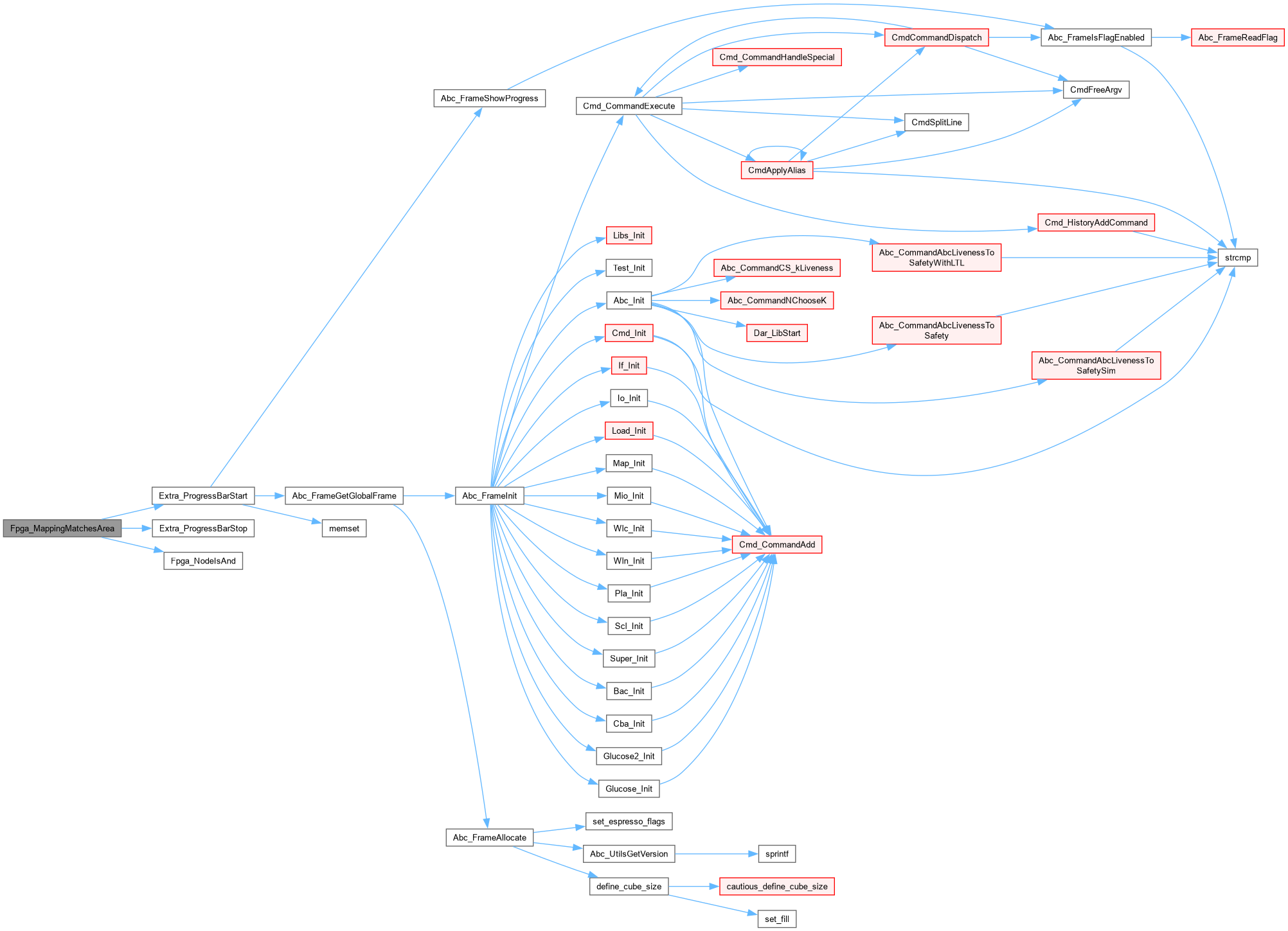
197{
198 ProgressBar * pProgress;
199 Fpga_Node_t * pNode;
200 int i, nNodes;
201
202 // assign the arrival times of the PIs
203 for ( i = 0; i < p->nInputs; i++ )
204 p->pInputs[i]->pCutBest->tArrival = p->pInputArrivals[i];
205
206 // match LUTs with nodes in the topological order
207 nNodes = p->vAnds->nSize;
208 pProgress = Extra_ProgressBarStart( stdout, nNodes );
209 for ( i = 0; i < nNodes; i++ )
210 {
211 pNode = p->vAnds->pArray[i];
212 if ( !Fpga_NodeIsAnd( pNode ) )
213 continue;
214 // skip a secondary node
215 if ( pNode->pRepr )
216 continue;
217 // match the node
218 Fpga_MatchNodeArea( p, pNode );
219 Extra_ProgressBarUpdate( pProgress, i, "Matches ..." );
220 }
221 Extra_ProgressBarStop( pProgress );
222 return 1;
223}
Here is the call graph for this function:

◆ Fpga_MappingMatchesSwitch()

int Fpga_MappingMatchesSwitch ( Fpga_Man_t * p)
extern

Function*************************************************************

Synopsis [Finds the best area assignment of LUTs.]

Description []

SideEffects []

SeeAlso []

Definition at line 349 of file fpgaMatch.c.
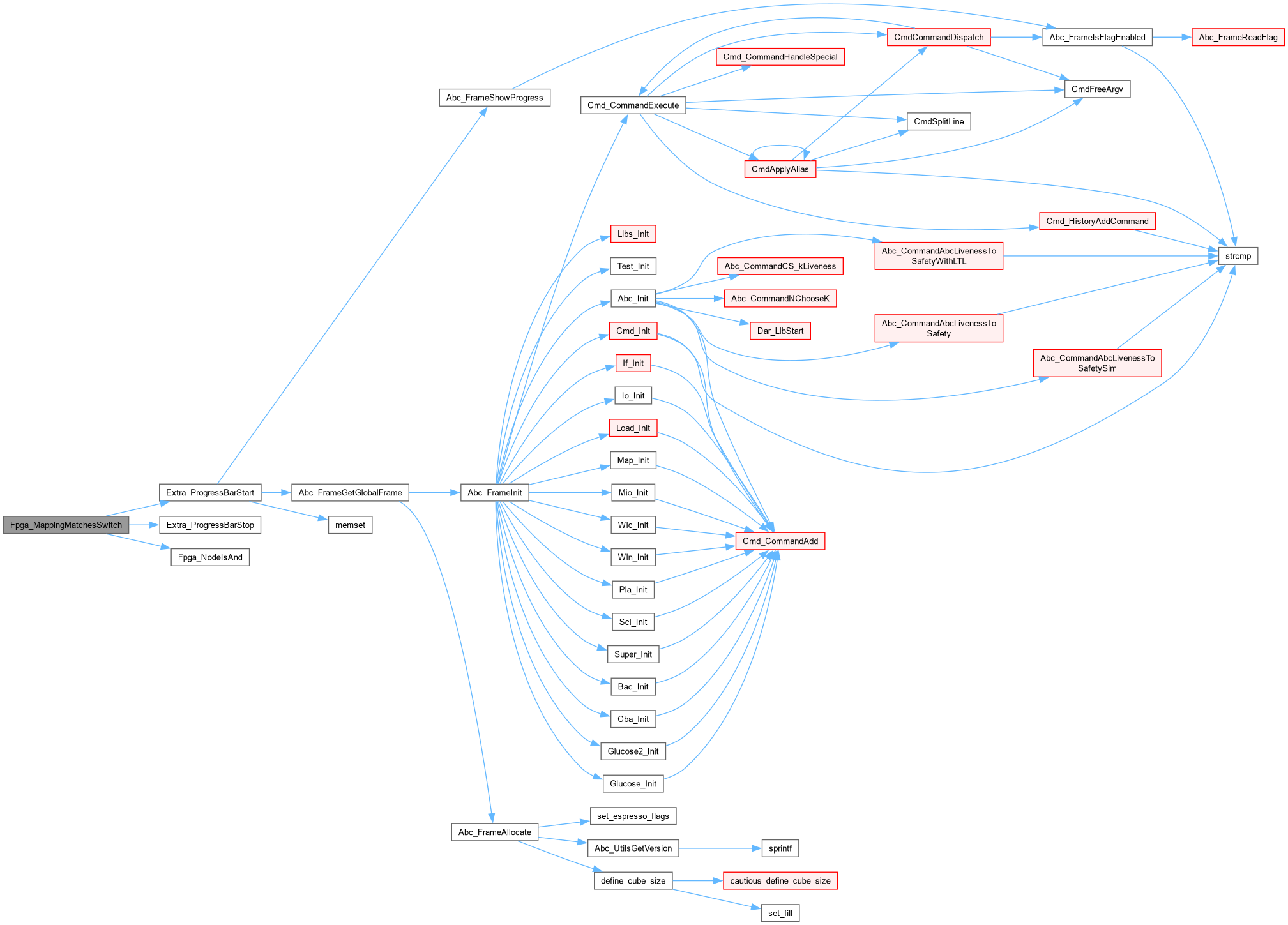
350{
351 ProgressBar * pProgress;
352 Fpga_Node_t * pNode;
353 int i, nNodes;
354
355 // assign the arrival times of the PIs
356 for ( i = 0; i < p->nInputs; i++ )
357 p->pInputs[i]->pCutBest->tArrival = p->pInputArrivals[i];
358
359 // match LUTs with nodes in the topological order
360 nNodes = p->vAnds->nSize;
361 pProgress = Extra_ProgressBarStart( stdout, nNodes );
362 for ( i = 0; i < nNodes; i++ )
363 {
364 pNode = p->vAnds->pArray[i];
365 if ( !Fpga_NodeIsAnd( pNode ) )
366 continue;
367 // skip a secondary node
368 if ( pNode->pRepr )
369 continue;
370 // match the node
371 Fpga_MatchNodeSwitch( p, pNode );
372 Extra_ProgressBarUpdate( pProgress, i, "Matches ..." );
373 }
374 Extra_ProgressBarStop( pProgress );
375 return 1;
376}
Here is the call graph for this function:

◆ Fpga_MappingMaxLevel()

int Fpga_MappingMaxLevel ( Fpga_Man_t * pMan)
extern

Function*************************************************************

Synopsis [Sets up the mask.]

Description []

SideEffects []

SeeAlso []

Definition at line 804 of file fpgaUtils.c.

805{
806 int nLevelMax, i;
807 nLevelMax = 0;
808 for ( i = 0; i < pMan->nOutputs; i++ )
809 nLevelMax = nLevelMax > (int)Fpga_Regular(pMan->pOutputs[i])->Level?
810 nLevelMax : (int)Fpga_Regular(pMan->pOutputs[i])->Level;
811 return nLevelMax;
812}
Here is the caller graph for this function:

◆ Fpga_MappingPrintOutputArrivals()

void Fpga_MappingPrintOutputArrivals ( Fpga_Man_t * p)
extern

Function*************************************************************

Synopsis [Prints a bunch of latest arriving outputs.]

Description []

SideEffects []

SeeAlso []

Definition at line 402 of file fpgaUtils.c.

403{
404 Fpga_Node_t * pNode;
405 int pSorted[FPGA_CO_LIST_SIZE];
406 int fCompl, Limit, MaxNameSize, i;
407
408 // determine the number of nodes to print
409 Limit = (p->nOutputs > FPGA_CO_LIST_SIZE)? FPGA_CO_LIST_SIZE : p->nOutputs;
410
411 // determine the order
412 Fpga_MappingFindLatest( p, pSorted, Limit );
413
414 // determine max size of the node's name
415 MaxNameSize = 0;
416 for ( i = 0; i < Limit; i++ )
417 if ( MaxNameSize < (int)strlen(p->ppOutputNames[pSorted[i]]) )
418 MaxNameSize = strlen(p->ppOutputNames[pSorted[i]]);
419
420 // print the latest outputs
421 for ( i = 0; i < Limit; i++ )
422 {
423 // get the i-th latest output
424 pNode = Fpga_Regular(p->pOutputs[pSorted[i]]);
425 fCompl = Fpga_IsComplement(p->pOutputs[pSorted[i]]);
426 // print out the best arrival time
427 printf( "Output %-*s : ", MaxNameSize + 3, p->ppOutputNames[pSorted[i]] );
428 printf( "Delay = %8.2f ", (double)pNode->pCutBest->tArrival );
429 if ( fCompl )
430 printf( "NEG" );
431 else
432 printf( "POS" );
433 printf( "\n" );
434 }
435}
#define FPGA_CO_LIST_SIZE
DECLARATIONS ///.
Definition fpgaUtils.c:28
int strlen()
Here is the call graph for this function:

◆ Fpga_MappingSetChoiceLevels()

void Fpga_MappingSetChoiceLevels ( Fpga_Man_t * pMan)
extern

Function*************************************************************

Synopsis [Resets the levels of the nodes in the choice graph.]

Description [Makes the level of the choice nodes to be equal to the maximum of the level of the nodes in the equivalence class. This way sorting by level leads to the reverse topological order, which is needed for the required time computation.]

SideEffects []

SeeAlso []

Definition at line 876 of file fpgaUtils.c.

877{
878 int i;
879 pMan->nTravIds++;
880 for ( i = 0; i < pMan->nOutputs; i++ )
882}
Here is the call graph for this function:
Here is the caller graph for this function:

◆ Fpga_MappingSetRefsAndArea()

float Fpga_MappingSetRefsAndArea ( Fpga_Man_t * pMan)
extern

Function*************************************************************

Synopsis [Sets the correct reference counts for the mapping.]

Description [Collects the nodes in reverse topological order and places in them in array pMan->vMapping.]

SideEffects []

SeeAlso []

Definition at line 299 of file fpgaUtils.c.
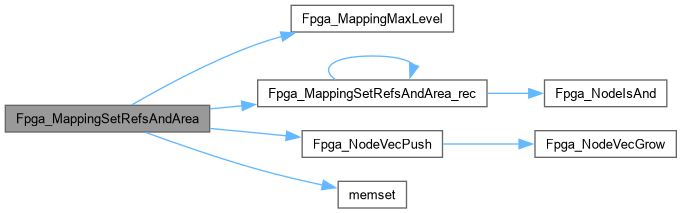
300{
301 Fpga_Node_t * pNode, ** ppStore;
302 float aArea;
303 int i, LevelMax;
304
305 // clean all references
306 for ( i = 0; i < pMan->vNodesAll->nSize; i++ )
307 pMan->vNodesAll->pArray[i]->nRefs = 0;
308
309 // allocate place to store the nodes
310 LevelMax = Fpga_MappingMaxLevel( pMan );
311 ppStore = ABC_ALLOC( Fpga_Node_t *, LevelMax + 1 );
312 memset( ppStore, 0, sizeof(Fpga_Node_t *) * (LevelMax + 1) );
313
314 // collect nodes reachable from POs in the DFS order through the best cuts
315 aArea = 0;
316 for ( i = 0; i < pMan->nOutputs; i++ )
317 {
318 pNode = Fpga_Regular(pMan->pOutputs[i]);
319 if ( pNode == pMan->pConst1 )
320 continue;
321 aArea += Fpga_MappingSetRefsAndArea_rec( pMan, pNode, ppStore );
322 pNode->nRefs++;
323 }
324
325 // reconnect the nodes in reverse topological order
326 pMan->vMapping->nSize = 0;
327 for ( i = LevelMax; i >= 0; i-- )
328 for ( pNode = ppStore[i]; pNode; pNode = (Fpga_Node_t *)pNode->pData0 )
329 Fpga_NodeVecPush( pMan->vMapping, pNode );
330 ABC_FREE( ppStore );
331 return aArea;
332}
float Fpga_MappingSetRefsAndArea_rec(Fpga_Man_t *pMan, Fpga_Node_t *pNode, Fpga_Node_t **ppStore)
Definition fpgaUtils.c:267
Fpga_NodeVec_t * vNodesAll
Definition fpgaInt.h:111
Fpga_Node_t * pConst1
Definition fpgaInt.h:110
Here is the call graph for this function:

◆ Fpga_MappingSetupMask()

void Fpga_MappingSetupMask ( unsigned uMask[],
int nVarsMax )
extern

Function*************************************************************

Synopsis [Sets up the mask.]

Description []

SideEffects []

SeeAlso []

Definition at line 475 of file fpgaUtils.c.

476{
477 if ( nVarsMax == 6 )
478 uMask[0] = uMask[1] = FPGA_FULL;
479 else
480 {
481 uMask[0] = FPGA_MASK(1 << nVarsMax);
482 uMask[1] = 0;
483 }
484}
#define FPGA_FULL
Definition fpgaInt.h:56
#define FPGA_MASK(n)
Definition fpgaInt.h:55

◆ Fpga_MappingSetupTruthTables()

void Fpga_MappingSetupTruthTables ( unsigned uTruths[][2])
extern

Function*************************************************************

Synopsis [Sets up the truth tables.]

Description []

SideEffects []

SeeAlso []

Definition at line 449 of file fpgaUtils.c.

450{
451 int m, v;
452 // set up the truth tables
453 for ( m = 0; m < 32; m++ )
454 for ( v = 0; v < 5; v++ )
455 if ( m & (1 << v) )
456 uTruths[v][0] |= (1 << m);
457 // make adjustments for the case of 6 variables
458 for ( v = 0; v < 5; v++ )
459 uTruths[v][1] = uTruths[v][0];
460 uTruths[5][0] = 0;
461 uTruths[5][1] = FPGA_FULL;
462}

◆ Fpga_MappingShow()

void Fpga_MappingShow ( Fpga_Man_t * pMan,
char * pFileName )
extern

◆ Fpga_MappingShowNodes()

void Fpga_MappingShowNodes ( Fpga_Man_t * pMan,
Fpga_Node_t ** ppRoots,
int nRoots,
char * pFileName )
extern

◆ Fpga_MappingSortByLevel()

void Fpga_MappingSortByLevel ( Fpga_Man_t * pMan,
Fpga_NodeVec_t * vNodes,
int fIncreasing )
extern

Function*************************************************************

Synopsis [Orders the nodes in the decreasing order of levels.]

Description []

SideEffects []

SeeAlso []

Definition at line 584 of file fpgaUtils.c.
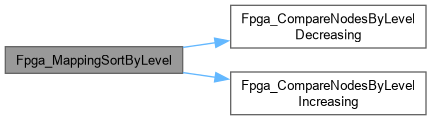
585{
586 if ( fIncreasing )
587 qsort( (void *)vNodes->pArray, (size_t)vNodes->nSize, sizeof(Fpga_Node_t *),
588 (int (*)(const void *, const void *)) Fpga_CompareNodesByLevelIncreasing );
589 else
590 qsort( (void *)vNodes->pArray, (size_t)vNodes->nSize, sizeof(Fpga_Node_t *),
591 (int (*)(const void *, const void *)) Fpga_CompareNodesByLevelDecreasing );
592// assert( Fpga_CompareNodesByLevel( vNodes->pArray, vNodes->pArray + vNodes->nSize - 1 ) <= 0 );
593}
int Fpga_CompareNodesByLevelIncreasing(Fpga_Node_t **ppS1, Fpga_Node_t **ppS2)
Definition fpgaUtils.c:564
int Fpga_CompareNodesByLevelDecreasing(Fpga_Node_t **ppS1, Fpga_Node_t **ppS2)
Definition fpgaUtils.c:544
Here is the call graph for this function:

◆ Fpga_NodeAddFaninFanout()

void Fpga_NodeAddFaninFanout ( Fpga_Node_t * pFanin,
Fpga_Node_t * pFanout )
extern
Here is the caller graph for this function:

◆ Fpga_NodeGetFanoutNum()

int Fpga_NodeGetFanoutNum ( Fpga_Node_t * pNode)
extern

◆ Fpga_NodeRemoveFaninFanout()

void Fpga_NodeRemoveFaninFanout ( Fpga_Node_t * pFanin,
Fpga_Node_t * pFanoutToRemove )
extern

◆ Fpga_NodeVecAlloc()

Fpga_NodeVec_t * Fpga_NodeVecAlloc ( int nCap)
extern

FUNCTION DEFINITIONS ///.

Function*************************************************************

Synopsis [Allocates a vector with the given capacity.]

Description []

SideEffects []

SeeAlso []

Definition at line 45 of file fpgaVec.c.
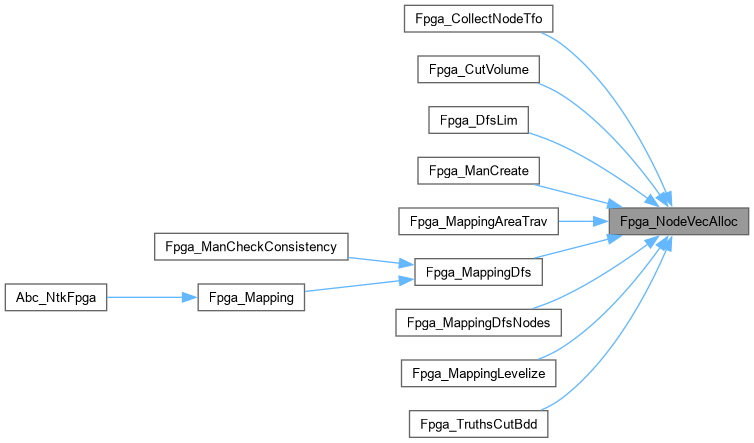
46{
49 if ( nCap > 0 && nCap < 16 )
50 nCap = 16;
51 p->nSize = 0;
52 p->nCap = nCap;
53 p->pArray = p->nCap? ABC_ALLOC( Fpga_Node_t *, p->nCap ) : NULL;
54 return p;
55}
Here is the caller graph for this function:

◆ Fpga_NodeVecClear()

void Fpga_NodeVecClear ( Fpga_NodeVec_t * p)
extern

Function*************************************************************

Synopsis []

Description []

SideEffects []

SeeAlso []

Definition at line 153 of file fpgaVec.c.

154{
155 p->nSize = 0;
156}
Here is the caller graph for this function:

◆ Fpga_NodeVecFree()

void Fpga_NodeVecFree ( Fpga_NodeVec_t * p)
extern

Function*************************************************************

Synopsis []

Description []

SideEffects []

SeeAlso []

Definition at line 68 of file fpgaVec.c.

69{
70 ABC_FREE( p->pArray );
71 ABC_FREE( p );
72}
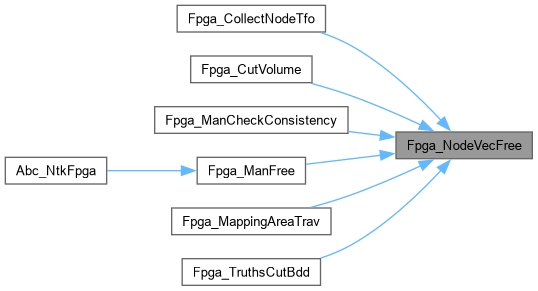
Here is the caller graph for this function:

◆ Fpga_NodeVecGrow()

void Fpga_NodeVecGrow ( Fpga_NodeVec_t * p,
int nCapMin )
extern

Function*************************************************************

Synopsis [Resizes the vector to the given capacity.]

Description []

SideEffects []

SeeAlso []

Definition at line 117 of file fpgaVec.c.

118{
119 if ( p->nCap >= nCapMin )
120 return;
121 p->pArray = ABC_REALLOC( Fpga_Node_t *, p->pArray, nCapMin );
122 p->nCap = nCapMin;
123}
#define ABC_REALLOC(type, obj, num)
Definition abc_global.h:268
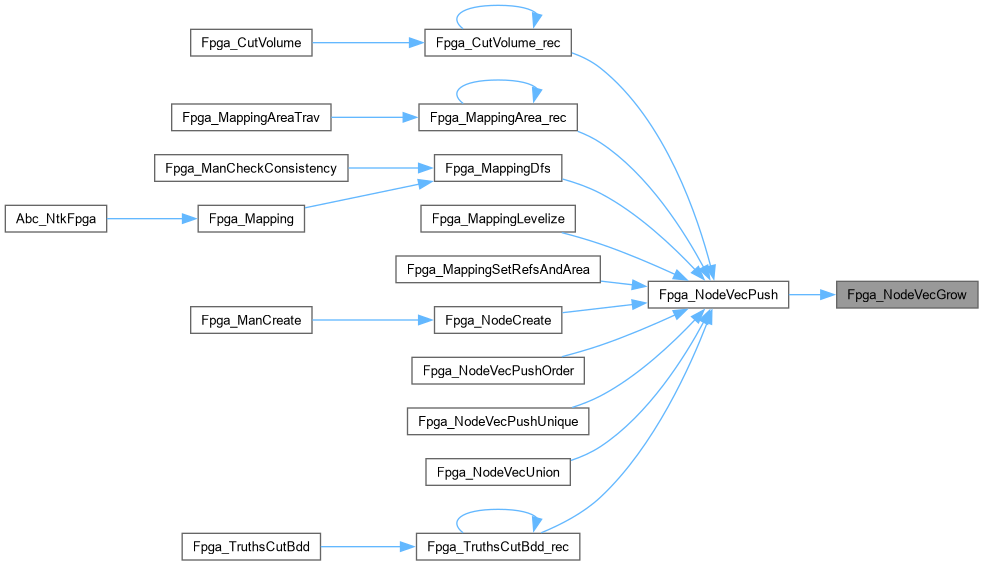
Here is the caller graph for this function:

◆ Fpga_NodeVecPop()

Fpga_Node_t * Fpga_NodeVecPop ( Fpga_NodeVec_t * p)
extern

Function*************************************************************

Synopsis []

Description []

SideEffects []

SeeAlso []

Definition at line 213 of file fpgaVec.c.

214{
215 return p->pArray[--p->nSize];
216}

◆ Fpga_NodeVecPush()

void Fpga_NodeVecPush ( Fpga_NodeVec_t * p,
Fpga_Node_t * Entry )
extern

Function*************************************************************

Synopsis []

Description []

SideEffects []

SeeAlso []

Definition at line 169 of file fpgaVec.c.

170{
171 if ( p->nSize == p->nCap )
172 {
173 if ( p->nCap < 16 )
174 Fpga_NodeVecGrow( p, 16 );
175 else
176 Fpga_NodeVecGrow( p, 2 * p->nCap );
177 }
178 p->pArray[p->nSize++] = Entry;
179}
void Fpga_NodeVecGrow(Fpga_NodeVec_t *p, int nCapMin)
Definition fpgaVec.c:117
Here is the call graph for this function:
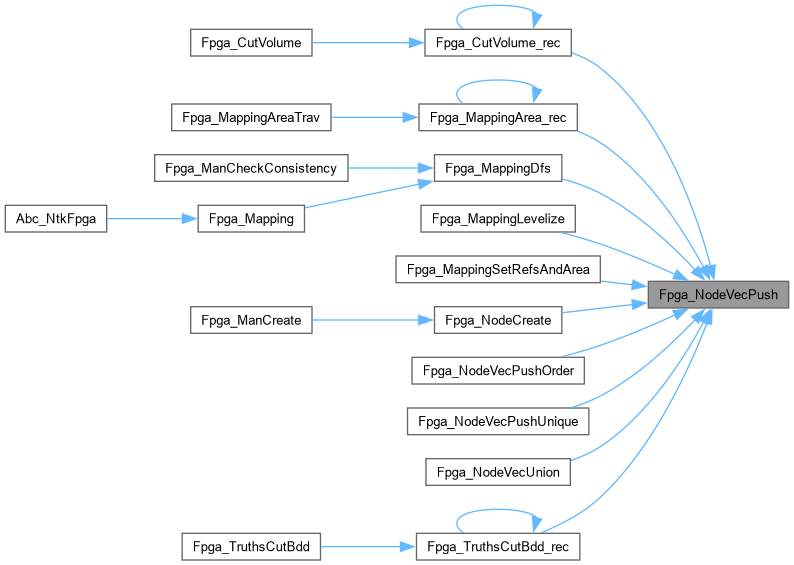
Here is the caller graph for this function:

◆ Fpga_NodeVecPushOrder()

void Fpga_NodeVecPushOrder ( Fpga_NodeVec_t * vNodes,
Fpga_Node_t * pNode,
int fIncreasing )
extern

Function*************************************************************

Synopsis [Inserts a new node in the order by arrival times.]

Description []

SideEffects []

SeeAlso []

Definition at line 366 of file fpgaVec.c.

367{
368 Fpga_Node_t * pNode1, * pNode2;
369 int i;
370 Fpga_NodeVecPush( vNodes, pNode );
371 // find the place of the node
372 for ( i = vNodes->nSize-1; i > 0; i-- )
373 {
374 pNode1 = vNodes->pArray[i ];
375 pNode2 = vNodes->pArray[i-1];
376 if (( fIncreasing && pNode1->pCutBest->tArrival >= pNode2->pCutBest->tArrival) ||
377 (!fIncreasing && pNode1->pCutBest->tArrival <= pNode2->pCutBest->tArrival) )
378 break;
379 vNodes->pArray[i ] = pNode2;
380 vNodes->pArray[i-1] = pNode1;
381 }
382}
void Fpga_NodeVecPush(Fpga_NodeVec_t *p, Fpga_Node_t *Entry)
Definition fpgaVec.c:169
Here is the call graph for this function:

◆ Fpga_NodeVecPushUnique()

int Fpga_NodeVecPushUnique ( Fpga_NodeVec_t * p,
Fpga_Node_t * Entry )
extern

Function*************************************************************

Synopsis [Add the element while ensuring uniqueness.]

Description [Returns 1 if the element was found, and 0 if it was new. ]

SideEffects []

SeeAlso []

Definition at line 192 of file fpgaVec.c.

193{
194 int i;
195 for ( i = 0; i < p->nSize; i++ )
196 if ( p->pArray[i] == Entry )
197 return 1;
198 Fpga_NodeVecPush( p, Entry );
199 return 0;
200}
Here is the call graph for this function:

◆ Fpga_NodeVecReadArray()

Fpga_Node_t ** Fpga_NodeVecReadArray ( Fpga_NodeVec_t * p)
extern

Function*************************************************************

Synopsis []

Description []

SideEffects []

SeeAlso []

Definition at line 85 of file fpgaVec.c.

86{
87 return p->pArray;
88}

◆ Fpga_NodeVecReadEntry()

Fpga_Node_t * Fpga_NodeVecReadEntry ( Fpga_NodeVec_t * p,
int i )
extern

Function*************************************************************

Synopsis []

Description []

SideEffects []

SeeAlso []

Definition at line 246 of file fpgaVec.c.

247{
248 assert( i >= 0 && i < p->nSize );
249 return p->pArray[i];
250}
Here is the caller graph for this function:

◆ Fpga_NodeVecReadSize()

int Fpga_NodeVecReadSize ( Fpga_NodeVec_t * p)
extern

Function*************************************************************

Synopsis []

Description []

SideEffects []

SeeAlso []

Definition at line 101 of file fpgaVec.c.

102{
103 return p->nSize;
104}

◆ Fpga_NodeVecReverse()

void Fpga_NodeVecReverse ( Fpga_NodeVec_t * vNodes)
extern

Function*************************************************************

Synopsis [Inserts a new node in the order by arrival times.]

Description []

SideEffects []

SeeAlso []

Definition at line 395 of file fpgaVec.c.

396{
397 Fpga_Node_t * pNode1, * pNode2;
398 int i;
399 for ( i = 0; i < vNodes->nSize/2; i++ )
400 {
401 pNode1 = vNodes->pArray[i];
402 pNode2 = vNodes->pArray[vNodes->nSize-1-i];
403 vNodes->pArray[i] = pNode2;
404 vNodes->pArray[vNodes->nSize-1-i] = pNode1;
405 }
406}

◆ Fpga_NodeVecShrink()

void Fpga_NodeVecShrink ( Fpga_NodeVec_t * p,
int nSizeNew )
extern

Function*************************************************************

Synopsis []

Description []

SideEffects []

SeeAlso []

Definition at line 136 of file fpgaVec.c.

137{
138 assert( p->nSize >= nSizeNew );
139 p->nSize = nSizeNew;
140}

◆ Fpga_NodeVecSortByLevel()

void Fpga_NodeVecSortByLevel ( Fpga_NodeVec_t * p)
extern

Function*************************************************************

Synopsis [Sorting the entries by their integer value.]

Description []

SideEffects []

SeeAlso []

Definition at line 289 of file fpgaVec.c.

290{
291 qsort( (void *)p->pArray, (size_t)p->nSize, sizeof(Fpga_Node_t *),
292 (int (*)(const void *, const void *)) Fpga_NodeVecCompareLevels );
293}

◆ Fpga_NodeVecUnion()

void Fpga_NodeVecUnion ( Fpga_NodeVec_t * p,
Fpga_NodeVec_t * p1,
Fpga_NodeVec_t * p2 )
extern

Function*************************************************************

Synopsis [Computes the union of nodes in two arrays.]

Description []

SideEffects []

SeeAlso []

Definition at line 345 of file fpgaVec.c.

346{
347 int i;
349 for ( i = 0; i < p1->nSize; i++ )
350 Fpga_NodeVecPush( p, p1->pArray[i] );
351 for ( i = 0; i < p2->nSize; i++ )
352 Fpga_NodeVecPush( p, p2->pArray[i] );
353}
void Fpga_NodeVecClear(Fpga_NodeVec_t *p)
Definition fpgaVec.c:153
Here is the call graph for this function:

◆ Fpga_NodeVecWriteEntry()

void Fpga_NodeVecWriteEntry ( Fpga_NodeVec_t * p,
int i,
Fpga_Node_t * Entry )
extern

Function*************************************************************

Synopsis []

Description []

SideEffects []

SeeAlso []

Definition at line 229 of file fpgaVec.c.

230{
231 assert( i >= 0 && i < p->nSize );
232 p->pArray[i] = Entry;
233}
Here is the caller graph for this function:

◆ Fpga_SortNodesByArrivalTimes()

void Fpga_SortNodesByArrivalTimes ( Fpga_NodeVec_t * p)
extern

Function*************************************************************

Synopsis [Orders the nodes in the increasing order of the arrival times.]

Description []

SideEffects []

SeeAlso []

Definition at line 326 of file fpgaVec.c.

327{
328 qsort( (void *)p->pArray, (size_t)p->nSize, sizeof(Fpga_Node_t *),
329 (int (*)(const void *, const void *)) Fpga_NodeVecCompareArrivals );
330// assert( Fpga_CompareNodesByLevel( p->pArray, p->pArray + p->nSize - 1 ) <= 0 );
331}
int Fpga_NodeVecCompareArrivals(Fpga_Node_t **ppS1, Fpga_Node_t **ppS2)
Definition fpgaVec.c:306
Here is the call graph for this function:

◆ Fpga_TimeComputeArrivalMax()

float Fpga_TimeComputeArrivalMax ( Fpga_Man_t * p)
extern

Function*************************************************************

Synopsis [Computes the maximum arrival times.]

Description []

SideEffects []

SeeAlso []

Definition at line 89 of file fpgaTime.c.

90{
91 float fRequired;
92 int i;
93 if ( p->fLatchPaths && p->nLatches == 0 )
94 {
95 printf( "Delay optimization of latch path is not performed because there is no latches.\n" );
96 p->fLatchPaths = 0;
97 }
98 // get the critical PO arrival time
99 fRequired = -FPGA_FLOAT_LARGE;
100 if ( p->fLatchPaths )
101 {
102 for ( i = p->nOutputs - p->nLatches; i < p->nOutputs; i++ )
103 {
104 if ( Fpga_NodeIsConst(p->pOutputs[i]) )
105 continue;
106 fRequired = FPGA_MAX( fRequired, Fpga_Regular(p->pOutputs[i])->pCutBest->tArrival );
107// printf( " %5.1f", Fpga_Regular(p->pOutputs[i])->pCutBest->tArrival );
108 }
109// printf( "Required latches = %5.1f\n", fRequired );
110 }
111 else
112 {
113 for ( i = 0; i < p->nOutputs; i++ )
114 {
115 if ( Fpga_NodeIsConst(p->pOutputs[i]) )
116 continue;
117 fRequired = FPGA_MAX( fRequired, Fpga_Regular(p->pOutputs[i])->pCutBest->tArrival );
118// printf( " %5.1f", Fpga_Regular(p->pOutputs[i])->pCutBest->tArrival );
119 }
120// printf( "Required outputs = %5.1f\n", fRequired );
121 }
122 return fRequired;
123}
Here is the call graph for this function:
Here is the caller graph for this function:

◆ Fpga_TimeComputeRequired()

void Fpga_TimeComputeRequired ( Fpga_Man_t * p,
float fRequired )
extern

Function*************************************************************

Synopsis [Computes the required times of all nodes.]

Description []

SideEffects []

SeeAlso []

Definition at line 168 of file fpgaTime.c.

169{
170 int i;
171 // clean the required times and the fanout counts for all nodes
172 for ( i = 0; i < p->vAnds->nSize; i++ )
173 p->vAnds->pArray[i]->tRequired = FPGA_FLOAT_LARGE;
174 // set the required times for the POs
175 if ( p->fLatchPaths )
176 for ( i = p->nOutputs - p->nLatches; i < p->nOutputs; i++ )
177 Fpga_Regular(p->pOutputs[i])->tRequired = fRequired;
178 else
179 for ( i = 0; i < p->nOutputs; i++ )
180 Fpga_Regular(p->pOutputs[i])->tRequired = fRequired;
181 // collect nodes reachable from POs in the DFS order through the best cuts
182 Fpga_TimePropagateRequired( p, p->vMapping );
183/*
184 {
185 int Counter = 0;
186 for ( i = 0; i < p->vAnds->nSize; i++ )
187 if ( p->vAnds->pArray[i]->tRequired > FPGA_FLOAT_LARGE - 100 )
188 Counter++;
189 printf( "The number of nodes with large required times = %d.\n", Counter );
190 }
191*/
192}
void Fpga_TimePropagateRequired(Fpga_Man_t *p, Fpga_NodeVec_t *vNodes)
Definition fpgaTime.c:205
Here is the call graph for this function:
Here is the caller graph for this function:

◆ Fpga_TimeComputeRequiredGlobal()

void Fpga_TimeComputeRequiredGlobal ( Fpga_Man_t * p,
int fFirstTime )
extern

Function*************************************************************

Synopsis [Computes the required times of all nodes.]

Description []

SideEffects []

SeeAlso []

Definition at line 136 of file fpgaTime.c.

137{
138 p->fRequiredGlo = Fpga_TimeComputeArrivalMax( p );
139 // update the required times according to the target
140 if ( p->DelayTarget != -1 )
141 {
142 if ( p->fRequiredGlo > p->DelayTarget + p->fEpsilon )
143 {
144 if ( fFirstTime )
145 printf( "Cannot meet the target required times (%4.2f). Mapping continues anyway.\n", p->DelayTarget );
146 }
147 else if ( p->fRequiredGlo < p->DelayTarget - p->fEpsilon )
148 {
149 if ( fFirstTime )
150 printf( "Relaxing the required times from (%4.2f) to the target (%4.2f).\n", p->fRequiredGlo, p->DelayTarget );
151 p->fRequiredGlo = p->DelayTarget;
152 }
153 }
154 Fpga_TimeComputeRequired( p, p->fRequiredGlo );
155}
void Fpga_TimeComputeRequired(Fpga_Man_t *p, float fRequired)
Definition fpgaTime.c:168
float Fpga_TimeComputeArrivalMax(Fpga_Man_t *p)
Definition fpgaTime.c:89
Here is the call graph for this function:

◆ Fpga_TimeCutComputeArrival()

float Fpga_TimeCutComputeArrival ( Fpga_Man_t * pMan,
Fpga_Cut_t * pCut )
extern

DECLARATIONS ///.

CFile****************************************************************

FileName [fpgaTime.c]

PackageName [MVSIS 1.3: Multi-valued logic synthesis system.]

Synopsis [Technology mapping for variable-size-LUT FPGAs.]

Author [MVSIS Group]

Affiliation [UC Berkeley]

Date [Ver. 2.0. Started - August 18, 2004.]

Revision [

Id
fpgaTime.c,v 1.1 2005/01/23 06:59:42 alanmi Exp

] FUNCTION DEFINITIONS /// Function*************************************************************

Synopsis [Computes the arrival times of the cut.]

Description [Computes the maximum arrival time of the cut leaves and adds the delay of the LUT.]

SideEffects []

SeeAlso []

Definition at line 44 of file fpgaTime.c.
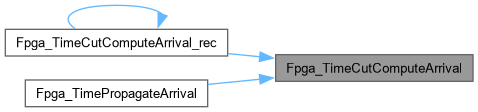
45{
46 int i;
47 float tArrival;
48 tArrival = -FPGA_FLOAT_LARGE;
49 for ( i = 0; i < pCut->nLeaves; i++ )
50 if ( tArrival < pCut->ppLeaves[i]->pCutBest->tArrival )
51 tArrival = pCut->ppLeaves[i]->pCutBest->tArrival;
52 tArrival += pMan->pLutLib->pLutDelays[(int)pCut->nLeaves][0];
53 return tArrival;
54}
Here is the caller graph for this function:

◆ Fpga_TimeCutComputeArrival_rec()

float Fpga_TimeCutComputeArrival_rec ( Fpga_Man_t * pMan,
Fpga_Cut_t * pCut )
extern

Function*************************************************************

Synopsis [Computes the arrival times of the cut recursively.]

Description [When computing the arrival time for the previously unused cuts, their arrival time may be incorrect because their fanins have incorrect arrival time. This procedure is called to fix this problem.]

SideEffects []

SeeAlso []

Definition at line 69 of file fpgaTime.c.

70{
71 int i;
72 for ( i = 0; i < pCut->nLeaves; i++ )
73 if ( pCut->ppLeaves[i]->nRefs == 0 )
75 return Fpga_TimeCutComputeArrival( pMan, pCut );
76}
float Fpga_TimeCutComputeArrival_rec(Fpga_Man_t *pMan, Fpga_Cut_t *pCut)
Definition fpgaTime.c:69
ABC_NAMESPACE_IMPL_START float Fpga_TimeCutComputeArrival(Fpga_Man_t *pMan, Fpga_Cut_t *pCut)
DECLARATIONS ///.
Definition fpgaTime.c:44
Here is the call graph for this function:
Here is the caller graph for this function:

◆ Fpga_TimePropagateArrival()

void Fpga_TimePropagateArrival ( Fpga_Man_t * p)
extern

Function*************************************************************

Synopsis [Computes the required times of all nodes.]

Description []

SideEffects []

SeeAlso []

Definition at line 245 of file fpgaTime.c.

246{
247 Fpga_Node_t * pNode;
248 Fpga_Cut_t * pCut;
249 int i;
250
251 // clean the required times and the fanout counts for all nodes
252 for ( i = 0; i < p->vAnds->nSize; i++ )
253 {
254 pNode = p->vAnds->pArray[i];
255 for ( pCut = pNode->pCuts->pNext; pCut; pCut = pCut->pNext )
256 pCut->tArrival = Fpga_TimeCutComputeArrival( p, pCut );
257 }
258}
Here is the call graph for this function:

◆ Fpga_TimePropagateRequired()

void Fpga_TimePropagateRequired ( Fpga_Man_t * p,
Fpga_NodeVec_t * vNodes )
extern

Function*************************************************************

Synopsis [Computes the required times of the given nodes.]

Description []

SideEffects []

SeeAlso []

Definition at line 205 of file fpgaTime.c.

206{
207 Fpga_Node_t * pNode, * pChild;
208 float fRequired;
209 int i, k;
210
211 // sorts the nodes in the decreasing order of levels
212// Fpga_MappingSortByLevel( p, vNodes, 0 );
213 // the nodes area already sorted in Fpga_MappingSetRefsAndArea()
214
215 // go through the nodes in the reverse topological order
216 for ( k = 0; k < vNodes->nSize; k++ )
217 {
218 pNode = vNodes->pArray[k];
219 if ( !Fpga_NodeIsAnd(pNode) )
220 continue;
221 // get the required time for children
222 fRequired = pNode->tRequired - p->pLutLib->pLutDelays[(int)pNode->pCutBest->nLeaves][0];
223 // update the required time of the children
224 for ( i = 0; i < pNode->pCutBest->nLeaves; i++ )
225 {
226 pChild = pNode->pCutBest->ppLeaves[i];
227 pChild->tRequired = FPGA_MIN( pChild->tRequired, fRequired );
228 }
229 }
230}
#define FPGA_MIN(a, b)
Definition fpgaInt.h:61
Here is the call graph for this function:
Here is the caller graph for this function: